
Aviation
Wi-Fi at 35,000 Feet: The Real Economics of Installing Starlink on an Airline
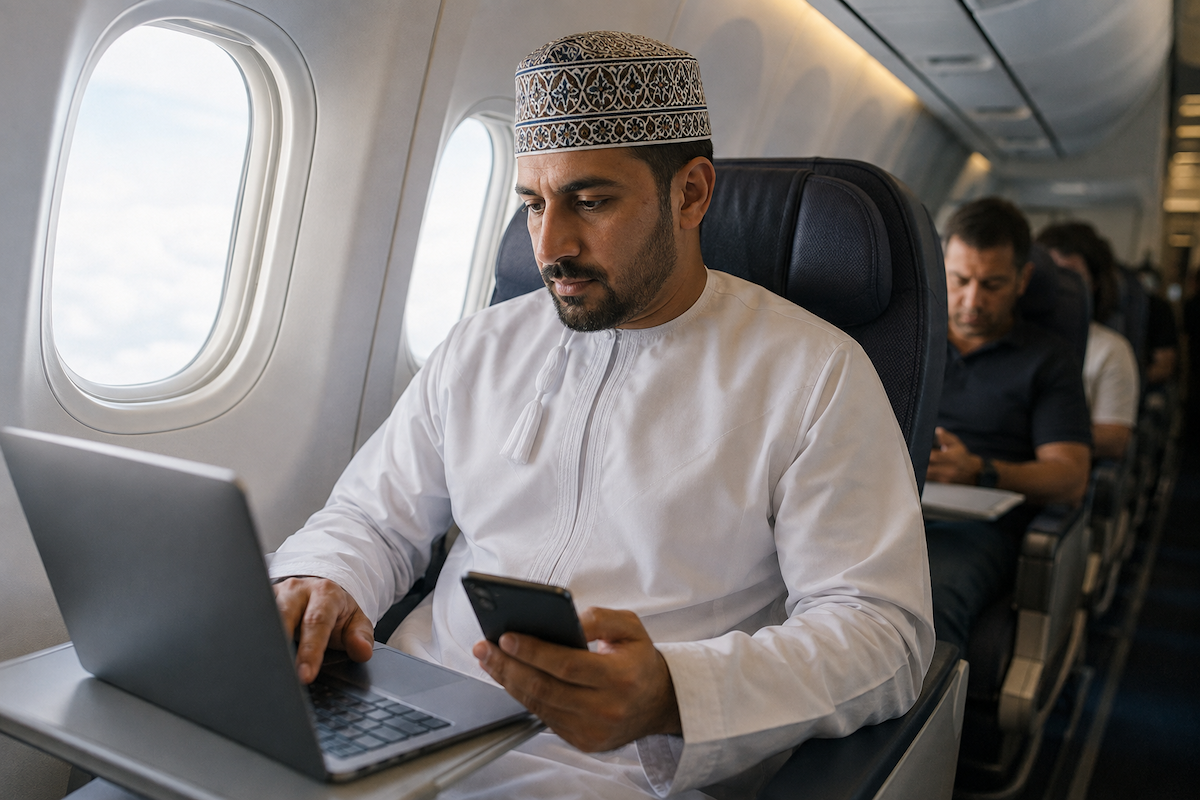
An OERLive investigation examines whether Starlink’s speed justifies its cost, revealing how airlines recover investments through loyalty, premium demand, commerce and operational efficiency at 35,000 feet.
For years, in-flight Wi-Fi was treated as a secondary airline product: slow, expensive and often unreliable. Passengers might pay for it to send emails or messages, but few expected the connection to support video calls, live sports, cloud-based work or streaming.
Low-Earth-orbit satellite systems such as Starlink are changing that expectation. By orbiting much closer to Earth than conventional geostationary satellites, Starlink can provide lower latency and significantly higher speeds. Qatar Airways, for instance, advertises speeds of up to 500 Mbps per aircraft, while United Airlines has reported up to 250 Mbps on some of its Starlink-equipped regional aircraft.
The technology is impressive – but the more important question for airlines is whether the economics are equally convincing.
Installing satellite internet across a fleet can cost hundreds of millions of dollars, and the equipment adds weight and drag, aircraft must be modified and certified, and the airline assumes a recurring connectivity bill. If Wi-Fi is then offered free to passengers, where does the return come from?
The answer is that Starlink is rarely justified by Wi-Fi sales alone. Its strongest business case is built around customer acquisition, loyalty membership, premium-passenger retention, advertising, onboard commerce and, eventually, connected-aircraft operations.
For some airlines, that makes high-speed connectivity strategically important and for others – particularly ultra-low-cost airlines operating short sectors – it may remain an expensive extra.
What does installing Starlink actually involve?
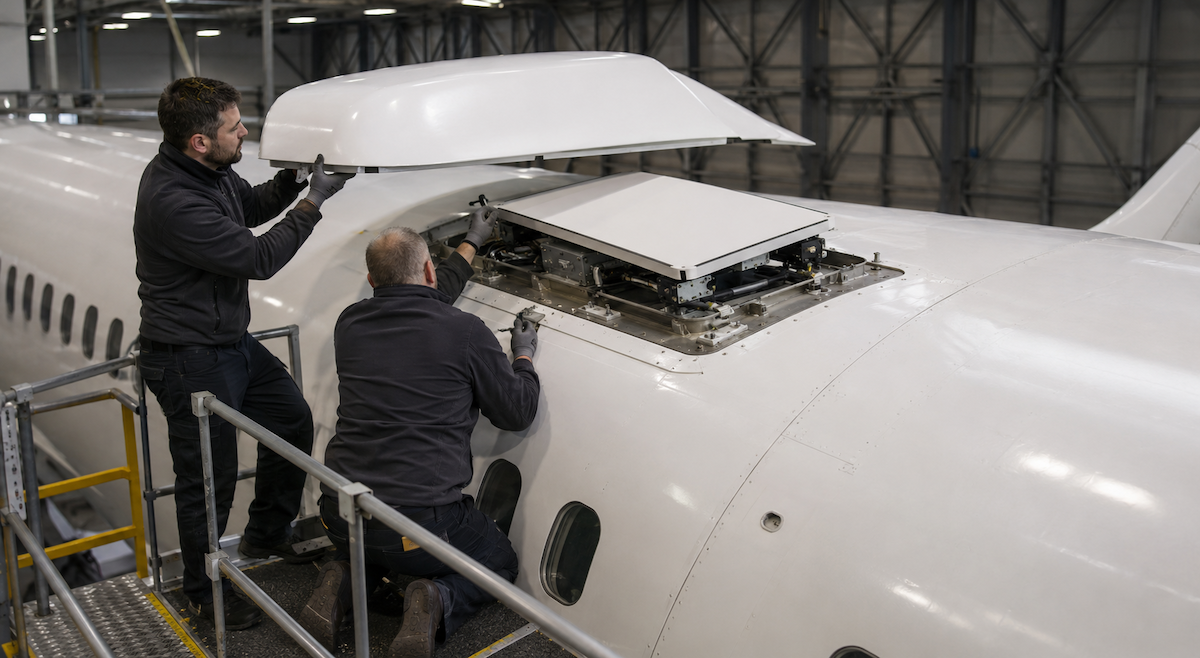
Starlink is not simply a router placed inside the cabin. An airline installation ordinarily requires:
- An electronically steered antenna mounted on the aircraft fuselage
- A protective aerodynamic radome
- Power and data cabling
- Cabin wireless access points
- Servers, network-control equipment and passenger portals
- Separation between passenger, crew and aircraft operational networks
- Engineering approvals and aircraft-type certification
- Physical installation, testing and return-to-service inspections
A retrofit must be covered by the appropriate Supplemental Type Certificate or equivalent aviation approval for that aircraft type. Certification is important because the equipment affects the aircraft’s structure, electrical system, aerodynamics and cybersecurity environment.
The cost therefore extends well beyond the antenna itself. Commercial contracts between Starlink and airlines are confidential, and there is no universal public price list for a Boeing 737, Airbus A320 or Boeing 777 installation. Prices can vary according to fleet size, aircraft type, installation responsibility, bandwidth commitments, contract duration and whether the equipment is purchased, leased or partly subsidised by the service provider.
Jefferies analysts estimated that American Airlines’ plan to install Starlink on more than 500 narrowbody aircraft could require between $150 million and $250 million for equipment and installation. That translates into approximately $300,000 to $500,000 per aircraft.
Annual connectivity charges across the programme could exceed $60 million – or more than $120,000 per aircraft per year – before maintenance, fuel effects and other expenses are included, as per a Reuters report.
Separately, aviation consultancy Valour Consultancy estimated Starlink’s service cost at approximately $170,000 per aircraft, depending on the airline, before hardware and installation. Albeit, these figures should be treated as market estimates rather than a standard Starlink tariff.
The cost stack
A large commercial airline must account for four main categories of expenditure.
| Cost component | Indicative commercial-airline exposure |
|---|---|
| Equipment and installation | Approximately $300,000 to $500,000 per aircraft |
| Annual connectivity service | Approximately $120,000 to $170,000 or more per aircraft |
| Aircraft downtime | From one overnight maintenance window to several days |
| Additional operating costs | Maintenance, support, weight, drag, power consumption and cybersecurity |
The hidden variable is aircraft (inevitably) downtime. A widebody aircraft removed from service for several days can lose valuable flying time, particularly during peak periods.
Qatar Airways offers an example of how this cost can be reduced. The airline said it cut the Starlink retrofit time for its Boeing 777s from three days to approximately 9.5 hours per aircraft. It has furthermore completed 54 installations in nine months without disrupting scheduled operations.
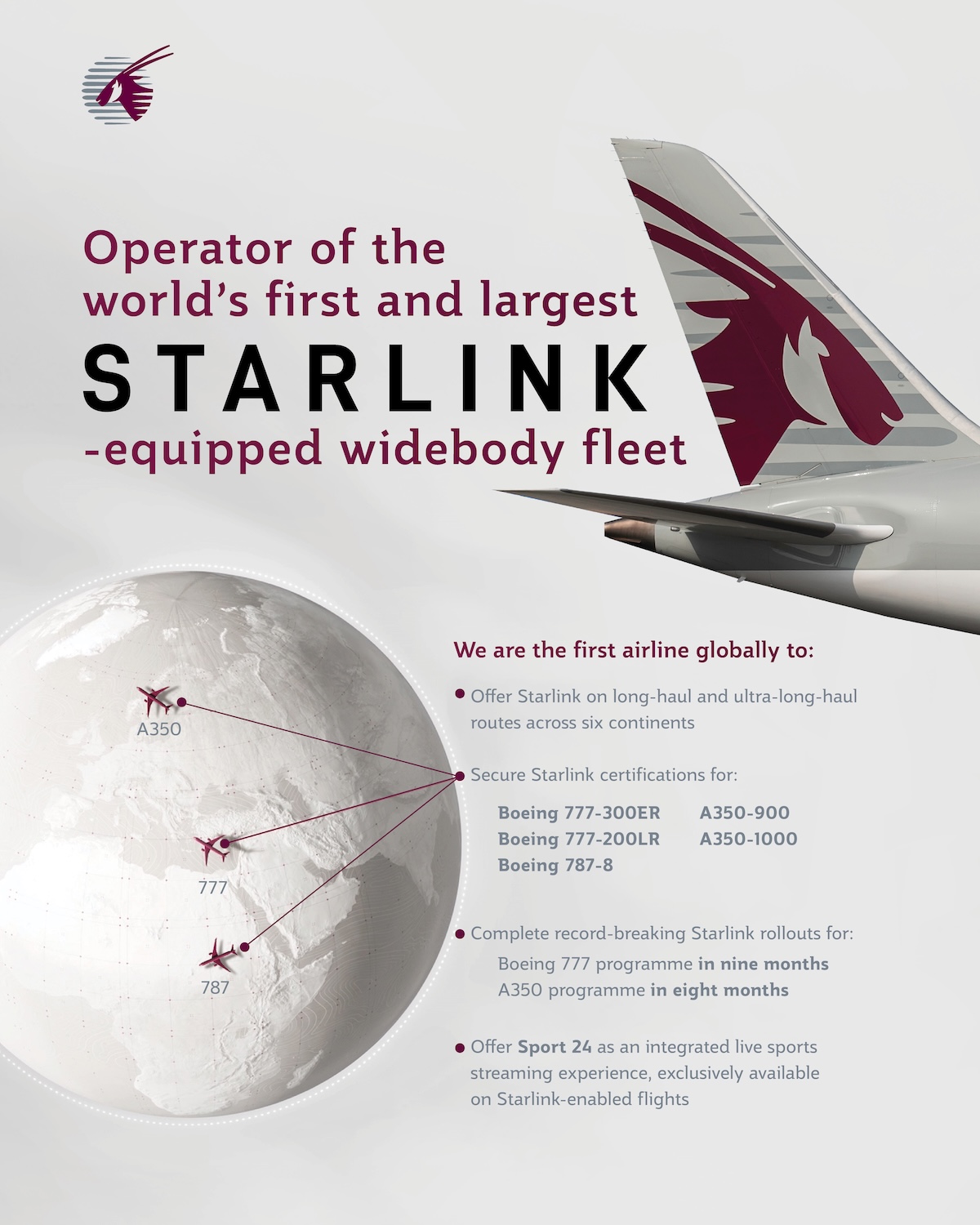
An installation completed during an overnight maintenance window has a very different economic impact from one requiring a revenue-generating aircraft to be grounded for several days.
What does it cost per passenger?
Consider an illustrative 180-seat narrowbody aircraft:
- Average load factor: 85 per cent
- Passenger sectors per day: four
- Operating days per year: 365
- Annual passenger journeys: approximately 223,000
- Installed Starlink cost: $300,000 – $500,000
- Capital amortisation period: seven years
- Annual service charge: $120,000 – $170,000
Amortising the equipment over seven years produces an annual capital cost of approximately $43,000 to $71,000. Adding the estimated connectivity charge brings the direct annual cost to approximately $163,000 to $241,000 per aircraft.
Divided across 223,000 annual passenger journeys, that equates to roughly $0.73 to $1.08 per passenger, before maintenance, financing, fuel, technical support and other overheads.
Once those additional expenses are included, an airline might reasonably model the fully loaded cost at around $1 to $1.50 per passenger, although the actual figure will depend heavily on utilisation and contractual terms.
That is not insignificant in an industry where margins are measured in a few dollars per passenger. But it is also small enough to be recovered indirectly through modest improvements in ticket yield, loyalty engagement or ancillary spending.
Can an airline recover the cost by selling Wi-Fi?
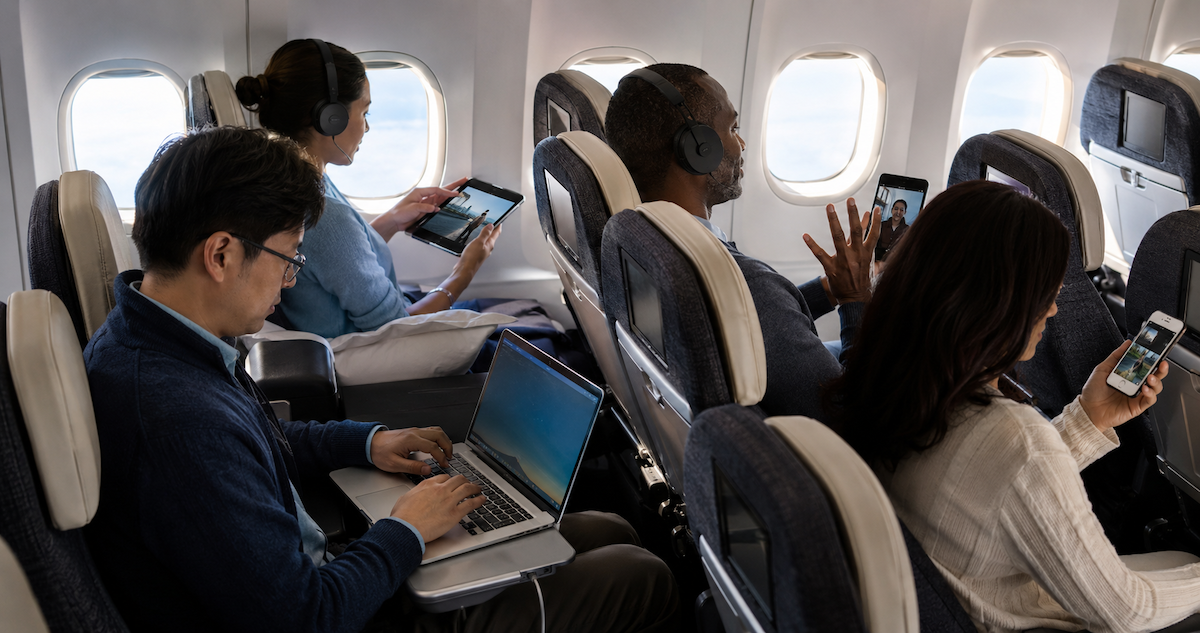
In theory, yes. But in practice, it is becoming increasingly difficult. Using the same narrowbody example, assume an airline charges $8 for Wi-Fi and 10 per cent of passengers purchase it:
- 223,000 annual passengers
- 10 per cent take-up
- $8 per purchase
- Gross annual Wi-Fi revenue: approximately $178,000
That could cover the lower end of the annual Starlink cost. However, the calculation excludes taxes, payment-processing fees, revenue sharing, customer-service expenses and complimentary access given to premium passengers or loyalty members.
The problem here is take-up; passengers have historically resisted paying for unreliable in-flight internet, especially on flights lasting only one or two hours.
Ryanair has argued that fewer than 10 per cent of its passengers would pay even €1 to €2 for Wi-Fi on a short flight. At €2 and a 10 per cent take-up rate, a 180-seat aircraft carrying approximately 223,000 passengers annually would generate only about €44,600 – which is well below the probable annual cost of the system.
This explains why paid Wi-Fi is losing relevance as a standalone business model: if passengers are unwilling to pay enough to cover the service, the airline must either offer it free and monetise it elsewhere or decide that it does not suit its business model.
How airlines actually make the money back
1. Loyalty-programme enrolment
This is arguably the most important part of the modern connectivity business case. United offers complimentary Starlink access to MileagePlus members. Qatar Airways similarly uses Privilege Club authentication for full-flight access on eligible aircraft. Membership is free, but the passenger provides an identifiable relationship with the airline.
That gives the carrier:
- A verified customer profile
- Permission-based marketing opportunities
- Better travel and purchasing data
- Opportunities to sell future flights
- Credit-card and financial-services promotions
- More effective personalisation
- A greater chance of retaining the passenger
The economic value of a new loyalty member can continue for years after the original flight. A passenger who joins to access free Wi-Fi may later purchase tickets, upgrades, additional baggage, lounge access, partner products or a co-branded credit card. The Wi-Fi session is therefore not merely a service but rather a customer-acquisition channel.
2. Higher ticket yield
An airline does not necessarily need to add a separate Wi-Fi charge. A very small improvement in average ticket revenue can cover the cost. For the illustrative narrowbody carrying 223,000 passengers annually, an additional average yield of just $1 per passenger would generate approximately $223,000 – enough to cover much of the estimated annual connectivity cost.
But the airline does not need to advertise a “$1 Starlink surcharge”. The value may be captured through:
- Higher fares on connected aircraft
- Better conversion among business travellers
- More passengers selecting the airline over a competitor
- Stronger premium-economy and business-class demand
- Reduced discounting required to fill seats
This is particularly relevant on routes where passengers have several airlines offering similar schedules and fares.
3. Retaining premium and corporate travellers
The economics become more compelling on long-haul routes. A passenger travelling for eight or 12 hours places greater value on connectivity than one taking a 60-minute flight. Business travellers can answer emails, access cloud platforms, attend meetings and remain available to colleagues. Leisure passengers can stream content, play games, communicate with family and follow live events.
For a network carrier, retaining even a relatively small number of high-value corporate accounts or premium passengers can justify the expense. One additional business-class booking may contribute more revenue than dozens of paid Wi-Fi passes.
This is why Air France-KLM CEO Ben Smith described high-speed Wi-Fi as effectively unavoidable when competing for American travellers, comparing it with internet access in a hotel.
International premium-class traffic is also economically important. IATA reported that premium travel grew 11.8 per cent in 2024, slightly faster than economy-class travel.
4. Advertising and sponsorship
High-speed connectivity creates digital inventory that did not previously exist onboard. An airline can sell sponsorships on:
- The Wi-Fi login page
- The airline’s mobile application
- Streaming or entertainment interfaces
- Destination pages
- Digital menus
- Seatback screens
- Shopping and upgrade offers
A telecommunications company, bank, card issuer or tourism authority could sponsor free connectivity for a route, market or fleet. In this model, passengers receive complimentary internet while the commercial partner contributes towards the airline’s connectivity bill.
The airline must manage this carefully. Excessive advertising could weaken the premium experience, while passenger tracking and personalisation must comply with applicable data-protection laws.
5. Onboard retail and ancillary sales
A connected aircraft allows the airline to sell products and services in real time rather than relying on an offline catalogue. Passengers could purchase:
- Seat upgrades
- Extra-legroom seats on a connecting flight
- Lounge access
- Airport transfers
- Hotels and car rentals
- Duty-free products
- Meals or beverages
- Additional baggage
- Tourism experiences
- Travel insurance
- Future flights
Real-time connectivity also enables immediate card authorisation, potentially reducing payment fraud and rejected transactions.
The opportunity is not simply to sell more during one flight. It is to keep the passenger inside the airline’s digital ecosystem at a point when the airline has several hours of their attention.
6. Lower entertainment costs
If passengers can stream content on their own devices, some airlines may reduce their dependence on heavy seatback entertainment systems, content servers and extensive onboard media libraries.
This does not mean every airline will remove seatback screens. Long-haul premium carriers may retain them because passengers value a large dedicated display. However, high-speed Wi-Fi can provide a lower-cost entertainment alternative for regional aircraft and low-cost configurations.
It can also support live television and sports without storing the content onboard. Qatar Airways has already demonstrated live sports streaming and even conducted an in-flight gaming event using Starlink.
7. Connected-aircraft operations
The longer-term business case extends beyond passengers. Subject to technical approvals, cybersecurity controls and separation from safety-critical systems, high-bandwidth connectivity can support:
- Real-time maintenance-data transmission
- Predictive fault monitoring
- Faster preparation of replacement parts and engineering teams
- Crew communication with ground operations
- Updated passenger-connection information
- Disruption management and rebooking
- Live catering and inventory information
- Electronic-flight-bag updates
- Telemedicine support during onboard emergencies
Airbus describes connected-aircraft systems as a means of synchronising flight and ground data, supporting predictive maintenance and improving on-time performance. It also identifies telemedicine as a potential way to obtain live medical advice and reduce unnecessary diversions.
These operational benefits should not be overstated. Passenger Starlink cannot automatically be used for safety-critical aviation functions. Each application needs the appropriate architecture, security and regulatory approval. Nevertheless, the same connectivity investment can ultimately support more than entertainment.
Evidence that passengers notice the difference
One difficulty in assessing the return is that airlines rarely disclose how much incremental revenue is directly attributable to Wi-Fi. Customer-response data nevertheless provides an important clue.
In its second-quarter 2026 results, United Airlines said Starlink had been installed on 450 mainline and regional aircraft. It reported that customer-satisfaction scores on Starlink flights were more than twice those of aircraft using its other Wi-Fi systems.
That does not prove that the Starlink tech paid for itself; satisfaction is not the same as profit. But customer satisfaction can influence repeat bookings, recommendations, loyalty participation and an airline’s ability to defend its fares.
The scale of engagement is also significant as Delta has said that more than 163 million SkyMiles members have used its complimentary Wi-Fi service since 2023. This demonstrates why airlines increasingly view connectivity as a loyalty and digital-engagement platform rather than merely an onboard amenity.
The fuel and drag debate
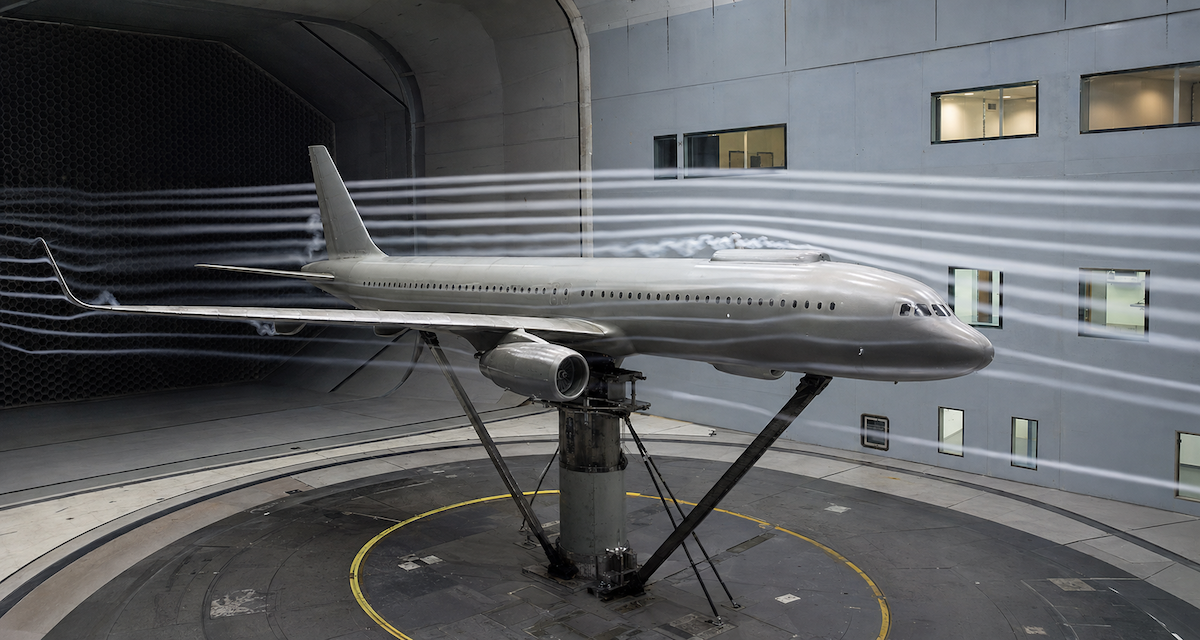
Any equipment mounted outside an aircraft affects aerodynamics to some degree. The antenna, radome, internal equipment and cabling also add weight. Both can increase fuel consumption.
The size of that penalty remains contested.
Ryanair CEO Michael O’Leary has cited antenna drag and fuel costs as reasons for rejecting Starlink across the airline’s short-haul fleet. However, Elon Musk has disputed the scale of the impact and argued that the drag is negligible.
The answer is unlikely to be identical for every airline. The effect depends on:
- Antenna and radome design
- Number of antennas
- Aircraft type
- Flight duration
- Cruise speed
- Annual utilisation
- Existing equipment that can be removed
- Fuel price
- Whether the installation is line-fitted or retrofitted
Even a small percentage increase in fuel consumption can become material across hundreds of aircraft. Airlines – specifically low-cost ones – should therefore demand independently verified aircraft-specific fuel data rather than relying solely on claims from either the supplier or its critics.
Who has the strongest business case?
| Airline model | Likely Starlink business case |
|---|---|
| Long-haul premium network carrier | Strong |
| Full-service regional or medium-haul airline | Moderate to strong |
| Hybrid carrier with loyalty and ancillary platforms | Conditional but potentially attractive |
| Ultra-low-cost short-haul carrier | Weak unless sponsored or heavily subsidised |
| Cargo airline | Primarily operational rather than passenger-driven |
For a Gulf network carrier flying long sectors and competing for international premium traffic, fast connectivity can support brand differentiation, corporate travel, loyalty acquisition and premium-cabin revenue. The cost is spread across longer journeys and higher-value passengers.
For a short-haul airline built around the lowest possible fare, rapid turnarounds and minimal complexity, the calculation is different. Passengers may have little time to use the service, willingness to pay may be low, and even a small fuel or maintenance penalty can undermine the model.
Aircraft utilisation also matters as a highly utilised aircraft spreads its fixed installation cost across more passengers. A lightly utilised or older aircraft approaching retirement may never generate enough remaining value to justify a retrofit.
The risks airlines should not ignore
Starlink can offer strong performance, but adopting it creates strategic and financial risks:
- Commercial pricing may change over a multi-year fleet cycle
- The airline may become dependent on one proprietary network
- Switching providers can require another expensive aircraft modification
- Service may be restricted in certain national airspaces
- Capacity could become constrained as usage increases
- Cybersecurity and passenger-data obligations will grow
- Technology may evolve faster than the aircraft investment cycle
- A free service becomes difficult to withdraw once customers expect it
Airlines should negotiate service-level agreements, pricing protections, performance guarantees, equipment support and exit provisions. They should also consider whether the installation architecture allows future network or terminal changes without reopening the aircraft fuselage.
Novelty or genuine business case?
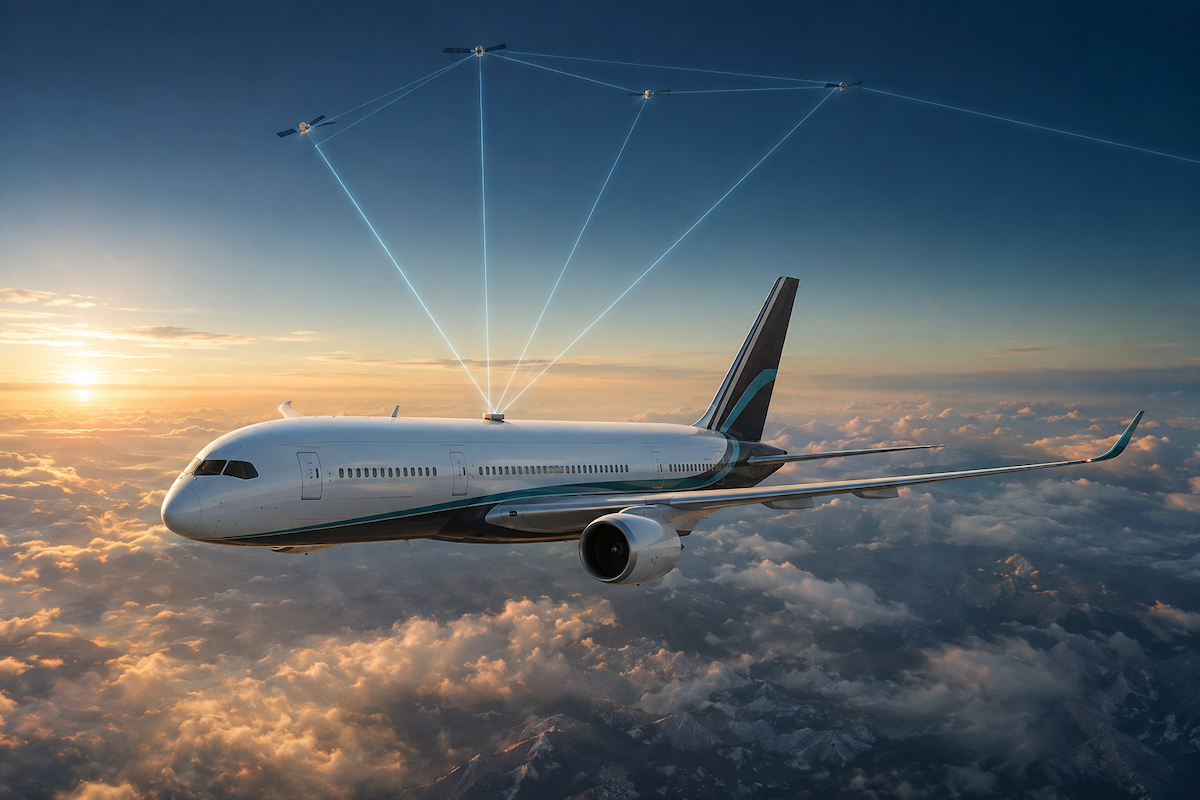
Starlink is not merely a novelty, but it is not automatically profitable. The narrowest business case, selling internet passes, is often the weakest. Paid uptake is unlikely to cover the full cost on many short flights, particularly where passengers are highly price-sensitive.
The broader business case is considerably stronger. High-speed connectivity can help an airline attract premium passengers, enrol loyalty members, defend ticket yields, sell advertising, increase onboard commerce and improve selected operational processes.
For long-haul and premium airlines, reliable broadband is increasingly becoming part of the basic product, much like a functioning airline app, a modern lounge or a quality business-class seat. An airline may not be able to identify one line of revenue that “pays for Starlink”, but it may lose higher-value customers if competitors offer it and it does not.
For ultra-low-cost airlines, the opposite can also be true. If passengers will not pay, flights are short and the airline does not have a sophisticated loyalty or advertising platform, Starlink may remain an avoidable expense.
The final test is therefore not whether passengers enjoy having internet at 35,000 feet – they clearly do. The real test is whether the airline can convert that attention and satisfaction into loyalty, yield, commerce or operating efficiency.



Win OMR 3,000: ROP & Bank Muscat Launch Cyber Fraud Awareness Short Film Competition

EXCLUSIVE INTERVIEW: Yango’s Big Vision for Oman

Leadership, Transformation Forum Reviews Inspiring Women’s Experiences

OPINION: GCC Navigates Global Macro Volatility as Worldwide Growth Moderates to 2.6%

City Centre Muscat Celebrates 25 Years of Great Moments as Mall of Oman Marks Its Fifth Anniversary

HM The Sultan Accorded Official Reception Ceremony at Windsor Castle

61.7% of Middle Eastern Families Involve the Next Generation As Business Successors or Consultants

Future Fund Oman’s $5.2B Outlook: Where Will the Sultanate’s Next Big Businesses Come From?

Oman and the UK: From Historical Legacy of Over 220 Years to Future Partnership

Sohar International Launches Expatriate Banking Proposition with Housing Loans, Cashback, Insurance & Digital Remittance Solutions

Power And Beyond: The Path To A Low-carbon Future

Al Mouj Muscat unveils Ghadeer Villas

Time to Buy Saudi Stocks? Some Investors Look at Dubai Instead

Hospitality Industry in Oman Estimated 90% Growth in 2022

Renewables are booming, but not fast enough to cap greenhouse emissions

Retail Abu Dhabi’s ‘Unbox Amazing’ generates sales of more than AED 2 billion in participating stores

Saudis Sign Deals From Energy to Metals in Bid to Salvage Forum

Saudi Arabia’s Gold Miner Plans to Be a Global Top-20 Supplier

Technology to drive Sultanate’s downstream industry

Digitization and Logistics Service Providers Can Help SMEs Make the Most of Peak Season Retail Trends

VIDEO: Building Oman’s Future – SAH’s Vision for Infrastructure, Innovation and Growth

VIDEO: Oman Cables Breaks Ground on OMR 10 Million-Plus Plant to Power Oman’s Industrial Future

VIDEO: Hitesh Akarte on Khimji Ramdas Infrastructure’s Role in Oman Vision 2040

Oman’s Hospitality Sector Enters a New Phase of Growth: Sadiq Al Matwani Al Lawati

Amr Baabood: Oman Climate Week Is About Moving From Climate Ambition to Climate Action

Mayan Al Asfoor on Leadership, Legacy and Empowering Omani Talent

LEADERSPEAK: Dhofar Insurance CEO Sunil Kohli on Oman’s Insurance Sector, Reinsurance & Market Outlook

VIDEO: Robert MacLean on how NHI is Shaping Oman’s Next Generation of Hospitality Leaders

The Future of Oman: Decoding The Sultanate of Oman’s Strategic Promotional Nation Brand

EXCLUSIVE: AI, Robotics & Wearable Sensors are Changing the Lives of Dementia Patients
-

 Artificial Intelligence1 month ago
Top 5 Interesting Things AI Did This Month – September 2026 Edition
-

 Economy4 weeks ago
OER Magazine September Edition 2026
-

 Fashion4 weeks ago
Luxury Watches That Could Appreciate Over the Next Decade [2026 Auction Buyer Guide]
-

 Banking & Finance2 months ago
The GCC’s 10 Richest Billionaires: Inside US$253.5 Billion of Wealth
-

 Alamaliktistaad Magazines3 weeks ago
Alam Al-Iktisaad Magazine September 2026 Edition
-

 Banking & Finance2 months ago
INVESTIGATION: What If You Bought Apple Stock Every Time You Bought an iPhone?
-

 News2 months ago
OPEC+ Holds Output Steady for October as Focus Shifts to 2027 Quotas
-

 Artificial Intelligence1 month ago
What the World’s Top 10 Tech CEOs Really Earn