
Banking & Finance
OERLive ANALYSIS: The Coldcard Hack Shows Why Bitcoin Self-Custody Remains Difficult for Ordinary Users
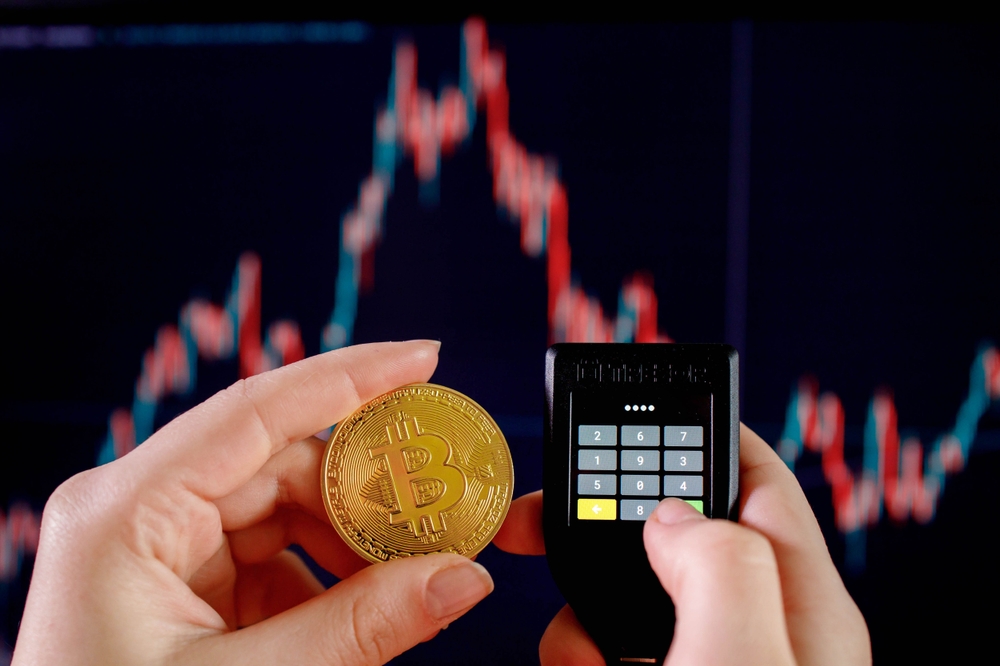
Disclaimer: Bitcoin’s underlying network was not compromised in the Coldcard incident. Instead, a flaw in the device’s seed-generation process exposed how protecting the cryptocurrency can remain technically demanding – even when users follow accepted cold-storage practices.
A security flaw affecting Coldcard hardware wallets has reportedly enabled attackers to steal Bitcoin worth more than US$100 million, raising fresh questions about the practical challenges of cryptocurrency self-custody.
Blockchain researchers estimate that up to 2,055 BTC – worth approximately US$130 million at the time – may have been taken from thousands of addresses. The precise figure remains subject to investigation because analysts are still determining which transactions are connected to the vulnerability.
TRM Labs placed the observed total near 1,816 BTC, while Galaxy Research said the figure could be higher if an additional suspected wave is confirmed. TRM Labs and TechCrunch reported that multiple attackers may have exploited the weakness.
The incident does not represent a breach of the Bitcoin blockchain. Bitcoin’s consensus mechanism, transaction history and cryptographic network remained operational. Instead, the failure occurred in one of the tools used by holders to generate and protect the private keys controlling their funds.
Bitcoin can remain a resilient crypto commodity while the systems surrounding its ownership – wallets, firmware, backups and recovery procedures – remain vulnerable to errors.
A flaw at the beginning of the security process
A hardware wallet does not physically store Bitcoin. The Bitcoin remains recorded on the blockchain, while the device protects the private keys required to authorise transactions.
When a new wallet is created, the device generates a recovery phrase, commonly called a seed phrase. That phrase is used to derive the wallet’s private keys and restore access if the original device is lost or damaged. Its security depends heavily on randomness: the words must be selected from a sufficiently large and unpredictable set of possibilities.
Coldcard manufacturer Coinkite said a firmware integration problem caused affected devices to use weaker software-generated randomness than intended. The company described the issue as inherited platform behaviour activated by a link-time error, rather than a deliberate design decision. Nevertheless, the result was that some recovery phrases contained considerably less entropy – or unpredictability – than users expected.
This did not make every affected phrase immediately readable but rather reduced the number of possible combinations sufficiently for attackers with the required technical resources to reconstruct candidate seeds offline, derive their corresponding Bitcoin addresses and compare those addresses with publicly visible blockchain records.
The attackers also did not necessarily need physical access to the Coldcard device, an internet connection to the wallet or possession of the written recovery phrase. Once a weak phrase had been generated and the resulting address could be identified, keeping the device offline could not correct the original weakness.
Coinkite’s technical explanation said the hardware random-number generator itself had not failed. Rather, an error in the way software components were connected prevented the intended source of randomness from being used correctly.
Cold storage reduced one risk – but not every risk
Cold wallets are generally considered safer than wallets that keep their keys on internet-connected phones, browsers or computers. By isolating the keys, they can reduce exposure to malware, phishing and remote account takeovers.
The Coldcard incident does not invalidate that security model. It does, however, demonstrate its limits. A wallet can remain disconnected from the internet and still produce an insecure key. Air-gapping protects a properly generated private key from online exposure, but it cannot make a weak key stronger after it has already been created.
This is where self-custody becomes difficult for less experienced users. A customer buying a specialist hardware wallet may reasonably believe that following the device’s instructions is enough. In practice, the user is also relying on several elements that are largely invisible: the quality of the random-number generator, the firmware build, the implementation of cryptographic libraries and the manufacturer’s testing and disclosure procedures.
The user may also need to understand the difference between updating a device and replacing a compromised wallet. In this case, installing corrected firmware prevents the same problem from affecting newly generated seeds, but it does not repair an existing seed phrase.
According to Coinkite’s security advisory, affected customers must generate a new recovery phrase using fixed firmware and transfer their Bitcoin to addresses derived from that new phrase. Restoring the old phrase on another device does not solve the problem because the weakness belongs to the seed itself, not to the physical Coldcard holding it.
The company said seeds supplemented at creation with at least 50 independent and private dice rolls were not considered exposed to this particular randomness issue. A strong and unique BIP-39 passphrase could also reduce immediate exposure, although Coinkite said users should still migrate because a passphrase does not repair the underlying seed.
These distinctions are technically meaningful but may be difficult for a novice to assess – particularly during a fast-moving security incident involving irreversible transactions.
The cost of removing the intermediary
Self-custody is built around a straightforward principle: the holder controls the keys and therefore does not need to depend on a bank, exchange or custodian to release the asset.
That independence removes some forms of counterparty risk. Essentially, an exchange cannot freeze, misuse or lose coins it does not hold. But the same arrangement transfers responsibility for security, recovery and transaction accuracy to the individual.
Traditional financial institutions can reverse certain fraudulent transfers, reset passwords or reimburse qualifying losses. Bitcoin transactions generally cannot be reversed once confirmed. If an attacker obtains a valid private key and moves the funds, the blockchain processes the transaction in the same manner as one authorised by the rightful owner.
This makes self-custody unusually unforgiving. Therefore, the user must protect the seed from theft, accidental destruction and loss while also ensuring that the technology used to create it worked correctly. Additional security measures such as passphrases and multisignature wallets can reduce reliance on a single key, but they add further steps, backups and recovery risks.
For experienced holders, that complexity may be manageable. For newcomers, it creates a gap between buying Bitcoin and storing it securely over several years.
Responsibility beyond the user
It would be incomplete to present the incident solely as a failure by individual holders. Many affected customers appear to have used a dedicated offline wallet precisely because it was marketed as a safer method of long-term storage.
Coinkite has acknowledged the firmware defect, issued corrected releases and advised affected users to migrate their funds. The company said it accepted responsibility for the bug and was continuing its investigation. It also noted that TAPSIGNER, OPENDIME and SATSCARD were not affected because they use different codebases.
At the same time, the incident illustrates the difficulty of guaranteeing security in complex hardware and software products. Open or publicly reviewable code can enable independent scrutiny, but it does not ensure that every implementation, dependency or build configuration will be examined before release.
Independent audits, reproducible builds, multiple entropy sources and multisignature arrangements using separately designed devices can provide additional protection. Yet a system that expects ordinary holders to evaluate these controls is unlikely to be simple enough for mass adoption without better safeguards and clearer defaults.
A custody problem rather than a Bitcoin failure
The Coldcard losses do not show that Bitcoin’s blockchain was hacked or that its core monetary rules failed. They show that ownership ultimately depends on private keys – and that the process used to create and protect those keys can be a point of failure.
Bitcoin continues to offer characteristics that distinguish it from many other digital assets: a decentralised network, a fixed issuance framework and a long record of uninterrupted transaction settlement. Those qualities help explain why it is frequently treated as the strongest crypto commodity.
However, protocol strength and user accessibility are separate questions. Bitcoin can be technically robust while remaining operationally difficult to hold safely.
For self-custody to become suitable for a broader public, security cannot depend primarily on every user understanding entropy, firmware versions, seed migration, passphrase quality and multisignature architecture. Hardware manufacturers and wallet developers will need to make secure practices easier to verify, harder to misuse and more resilient when individual components fail.



The Hidden Price of Convenience: What People in Oman Spend on Food Delivery, Coffee & Subscriptions

VIDEO: Oman Cables Breaks Ground on OMR 10 Million-Plus Plant to Power Oman’s Industrial Future

Liva Insurance Recognised for Leadership in Insurance Innovation and Digital Transformation at OERLive DX Oman

Oman Air Launches Winter Schedule with Additional Frequencies, Expanded Capacity & New Codeshare Destinations

IHE and Eicher Trucks and Buses promote school bus safety awareness among students

India’s rising edge in oil, gas and construction projects is enabling Middle East’s growth

The Financial Services Authority organises the National Health Insurance Platform Forum ‘Dhamani’

Is India’s accelerating export engine driving manufacturing towards global scale?

SAH wins double honours at Dossier Construction Awards & Summit 2026

VIDEO: Hitesh Akarte on Khimji Ramdas Infrastructure’s Role in Oman Vision 2040

Power And Beyond: The Path To A Low-carbon Future

Al Mouj Muscat unveils Ghadeer Villas

Time to Buy Saudi Stocks? Some Investors Look at Dubai Instead

Hospitality Industry in Oman Estimated 90% Growth in 2022

Renewables are booming, but not fast enough to cap greenhouse emissions

Retail Abu Dhabi’s ‘Unbox Amazing’ generates sales of more than AED 2 billion in participating stores

Saudis Sign Deals From Energy to Metals in Bid to Salvage Forum

Saudi Arabia’s Gold Miner Plans to Be a Global Top-20 Supplier

Technology to drive Sultanate’s downstream industry

Digitization and Logistics Service Providers Can Help SMEs Make the Most of Peak Season Retail Trends
VIDEO: Oman Cables Breaks Ground on OMR 10 Million-Plus Plant to Power Oman’s Industrial Future
VIDEO: Hitesh Akarte on Khimji Ramdas Infrastructure’s Role in Oman Vision 2040

Oman’s Hospitality Sector Enters a New Phase of Growth: Sadiq Al Matwani Al Lawati

Amr Baabood: Oman Climate Week Is About Moving From Climate Ambition to Climate Action

Mayan Al Asfoor on Leadership, Legacy and Empowering Omani Talent

LEADERSPEAK: Dhofar Insurance CEO Sunil Kohli on Oman’s Insurance Sector, Reinsurance & Market Outlook

VIDEO: Robert MacLean on how NHI is Shaping Oman’s Next Generation of Hospitality Leaders

The Future of Oman: Decoding The Sultanate of Oman’s Strategic Promotional Nation Brand

EXCLUSIVE: AI, Robotics & Wearable Sensors are Changing the Lives of Dementia Patients

EXCLUSIVE: Talking Renewable Projects & Sustainability in Oman and Beyond with Vipul Tuli
-

 Artificial Intelligence1 month ago
Top 5 Interesting Things AI Did This Month – September 2026 Edition
-

 Fashion3 weeks ago
Luxury Watches That Could Appreciate Over the Next Decade [2026 Auction Buyer Guide]
-

 Economy3 weeks ago
OER Magazine September Edition 2026
-

 Banking & Finance1 month ago
The GCC’s 10 Richest Billionaires: Inside US$253.5 Billion of Wealth
-

 Magazines2 months ago
OER Magazine July Edition 2026
-

 Magazines2 months ago
Al Mar’a Magazine July 2026
-

 Banking & Finance1 month ago
INVESTIGATION: What If You Bought Apple Stock Every Time You Bought an iPhone?
-

 Alamaliktistaad Magazines2 months ago
Alam Al-Iktisaad Magazine July 2026 Edition