
Economy
Oman Records OMR1.54 Billion Trade Surplus In Q1 2026 Despite Lower Oil And Gas Exports
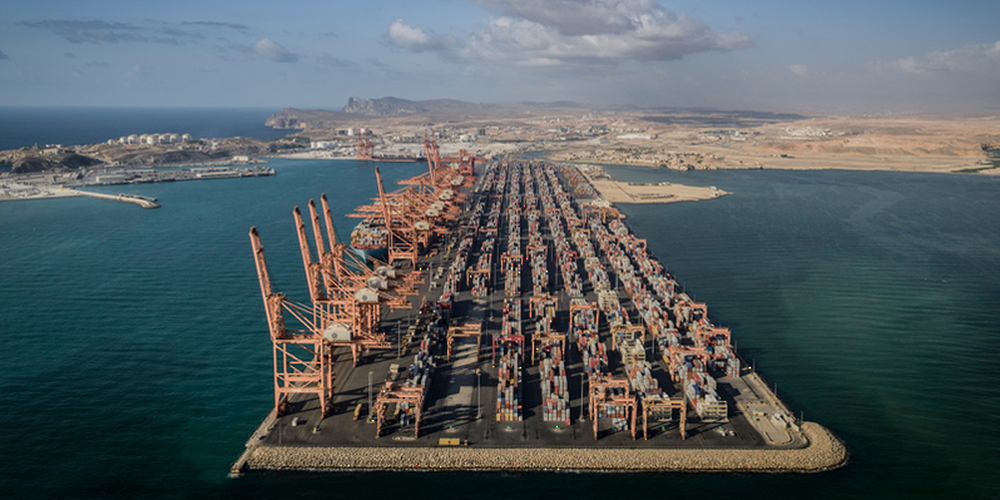
Oman’s trade balance remained firmly in surplus by the end of the first quarter of 2026, underscoring the resilience of the Sultanate of Oman’s external trade position despite a challenging global backdrop marked by lower hydrocarbon export earnings, regional uncertainty and shifting import patterns.
According to preliminary data released by the National Centre for Statistics and Information (NCSI), Oman recorded a trade surplus of OMR1.54 billion by the end of March 2026, marginally higher than the OMR1.53 billion surplus posted during the corresponding period of 2025.
The stability of the surplus came even as total merchandise exports declined by 8.5 percent year-on-year to OMR5.3 billion, compared with OMR5.8 billion in the first quarter of 2025. Merchandise imports fell at a sharper pace, declining 11.7 percent to OMR3.8 billion from OMR4.3 billion a year earlier. This deeper contraction in imports helped preserve the overall trade surplus despite weaker export receipts.
The main drag on exports came from the oil and gas segment, which continues to remain the largest contributor to Oman’s merchandise export base. Oil and gas exports totalled OMR3.4 billion by the end of March 2026, down 13 percent from OMR3.9 billion in the same period last year.
The decline points to the continued sensitivity of Oman’s external trade performance to movements in global energy markets, export volumes and regional logistics conditions. While oil prices experienced periods of volatility in the first quarter amid heightened geopolitical risk, the headline export figures suggest that price movements alone were not sufficient to offset the broader decline in oil and gas export revenues.
Non-oil merchandise exports, however, showed notable resilience. The segment remained broadly stable at OMR1.61 billion, slipping by just 0.6 percent from OMR1.62 billion in the first quarter of 2025. This relative stability is significant as Oman continues to advance its long-term economic diversification agenda under Oman Vision 2040, with greater emphasis on manufacturing, logistics, mining, fisheries, food security, industrial value chains and export-oriented non-oil sectors.
Re-exports also provided a positive signal, rising 4.6 percent to OMR367 million compared with OMR351 million a year earlier. The growth in re-export activity highlights Oman’s strengthening role as a regional logistics and redistribution hub, supported by its ports, free zones and connectivity with GCC, Asian and wider international markets.
The United Arab Emirates remained Oman’s largest trading partner for non-oil exports, receiving OMR382 million worth of shipments. The UAE also led as a destination for Omani re-exports, with goods valued at OMR102 million. Total trade between Oman and the UAE reached OMR1.1 billion during the period, reflecting the depth of bilateral trade flows and the continued importance of the UAE as a commercial gateway.
Saudi Arabia ranked second among destinations for Oman’s non-oil exports at OMR201 million, followed by India at OMR156 million. For re-exports, Saudi Arabia also accounted for OMR102 million, while Iran ranked third at OMR48 million.
On the import side, China remained one of Oman’s largest suppliers, accounting for OMR537 million in imports, followed by Saudi Arabia with OMR308 million. The import data reflects Oman’s continued reliance on Asian and regional supply chains for industrial inputs, consumer goods, machinery, equipment and intermediate products.
How Regional Conflict Reflected In The Numbers
The first-quarter figures should also be read against the wider regional and global trade environment. The war and associated maritime disruptions in the region placed renewed attention on the importance of safe shipping corridors, energy security and supply-chain resilience, particularly around the Strait of Hormuz and connected Gulf trade routes.
For Oman, the impact appears to have been indirect rather than singular. The data does not suggest a collapse in trade activity. Instead, it points to a more nuanced picture: lower hydrocarbon export earnings, resilient non-oil exports, growing re-exports and a sharper fall in imports.
The decline in imports may partly reflect a combination of factors, including lower domestic import demand, inventory adjustments, delayed shipments, cautious procurement by businesses and higher freight or insurance costs in certain trade lanes. In periods of regional uncertainty, companies often reassess shipment timing, stock levels and sourcing routes. This can reduce import volumes temporarily, even when underlying demand remains intact.
At the same time, re-export growth suggests that Oman’s logistics channels continued to function effectively. This is important. In a more uncertain shipping environment, markets that can offer reliable port infrastructure, alternative routing options and stable trade facilitation become more valuable. Oman’s geographic position outside the narrowest points of the Gulf, combined with its investments in ports and logistics infrastructure, gives the Sultanate of Oman a strategic role in regional trade continuity.
Oil and gas export revenues were more directly exposed to the shifting energy market environment. Regional conflict can influence energy trade in two opposing ways. On one hand, geopolitical risk can support oil prices by raising concerns over supply security. On the other, disruptions to shipping, production, refining, insurance and demand can affect actual export earnings and trade flows. Oman’s 13 percent decline in oil and gas exports suggests that the net effect in Q1 was not simply a price story, but also reflected broader market and logistical conditions.
The figures also show why diversification remains central to Oman’s trade strategy. A trade surplus that is maintained mainly because imports fall is different from one driven by strong export growth. While the surplus remains positive, the decline in total exports underlines the need to keep expanding non-oil export capacity, deepen industrial value addition and strengthen the competitiveness of Omani products in regional and global markets.
The near-flat performance of non-oil exports is encouraging, but the next stage of growth will depend on moving from stability to scale. Sectors such as petrochemicals, metals, food processing, mining products, manufacturing, logistics services and technology-enabled trade can play a larger role in strengthening Oman’s external account over the medium term.
The growth in re-exports also deserves attention. It signals that Oman is not only exporting what it produces, but also building its role as a trade platform. As global supply chains become more risk-sensitive, countries with dependable infrastructure, efficient customs systems, free-zone capabilities and strong regional connectivity will be better positioned to capture redistribution and transit opportunities.



Win OMR 3,000: ROP & Bank Muscat Launch Cyber Fraud Awareness Short Film Competition

EXCLUSIVE INTERVIEW: Yango’s Big Vision for Oman

Leadership, Transformation Forum Reviews Inspiring Women’s Experiences

OPINION: GCC Navigates Global Macro Volatility as Worldwide Growth Moderates to 2.6%

City Centre Muscat Celebrates 25 Years of Great Moments as Mall of Oman Marks Its Fifth Anniversary

HM The Sultan Accorded Official Reception Ceremony at Windsor Castle

61.7% of Middle Eastern Families Involve the Next Generation As Business Successors or Consultants

Future Fund Oman’s $5.2B Outlook: Where Will the Sultanate’s Next Big Businesses Come From?

Oman and the UK: From Historical Legacy of Over 220 Years to Future Partnership

Sohar International Launches Expatriate Banking Proposition with Housing Loans, Cashback, Insurance & Digital Remittance Solutions

Power And Beyond: The Path To A Low-carbon Future

Al Mouj Muscat unveils Ghadeer Villas

Time to Buy Saudi Stocks? Some Investors Look at Dubai Instead

Hospitality Industry in Oman Estimated 90% Growth in 2022

Renewables are booming, but not fast enough to cap greenhouse emissions

Retail Abu Dhabi’s ‘Unbox Amazing’ generates sales of more than AED 2 billion in participating stores

Saudis Sign Deals From Energy to Metals in Bid to Salvage Forum

Saudi Arabia’s Gold Miner Plans to Be a Global Top-20 Supplier

Technology to drive Sultanate’s downstream industry

Digitization and Logistics Service Providers Can Help SMEs Make the Most of Peak Season Retail Trends

VIDEO: Building Oman’s Future – SAH’s Vision for Infrastructure, Innovation and Growth

VIDEO: Oman Cables Breaks Ground on OMR 10 Million-Plus Plant to Power Oman’s Industrial Future

VIDEO: Hitesh Akarte on Khimji Ramdas Infrastructure’s Role in Oman Vision 2040

Oman’s Hospitality Sector Enters a New Phase of Growth: Sadiq Al Matwani Al Lawati

Amr Baabood: Oman Climate Week Is About Moving From Climate Ambition to Climate Action

Mayan Al Asfoor on Leadership, Legacy and Empowering Omani Talent

LEADERSPEAK: Dhofar Insurance CEO Sunil Kohli on Oman’s Insurance Sector, Reinsurance & Market Outlook

VIDEO: Robert MacLean on how NHI is Shaping Oman’s Next Generation of Hospitality Leaders

The Future of Oman: Decoding The Sultanate of Oman’s Strategic Promotional Nation Brand

EXCLUSIVE: AI, Robotics & Wearable Sensors are Changing the Lives of Dementia Patients
-

 Artificial Intelligence1 month ago
Top 5 Interesting Things AI Did This Month – September 2026 Edition
-

 Fashion4 weeks ago
Luxury Watches That Could Appreciate Over the Next Decade [2026 Auction Buyer Guide]
-

 Economy4 weeks ago
OER Magazine September Edition 2026
-

 Banking & Finance2 months ago
The GCC’s 10 Richest Billionaires: Inside US$253.5 Billion of Wealth
-

 Alamaliktistaad Magazines3 weeks ago
Alam Al-Iktisaad Magazine September 2026 Edition
-

 Banking & Finance1 month ago
INVESTIGATION: What If You Bought Apple Stock Every Time You Bought an iPhone?
-

 News2 months ago
OPEC+ Holds Output Steady for October as Focus Shifts to 2027 Quotas
-

 Artificial Intelligence1 month ago
What the World’s Top 10 Tech CEOs Really Earn