
News
How Fake 7-Zip Software Exposed a Much Bigger Criminal Proxy Business
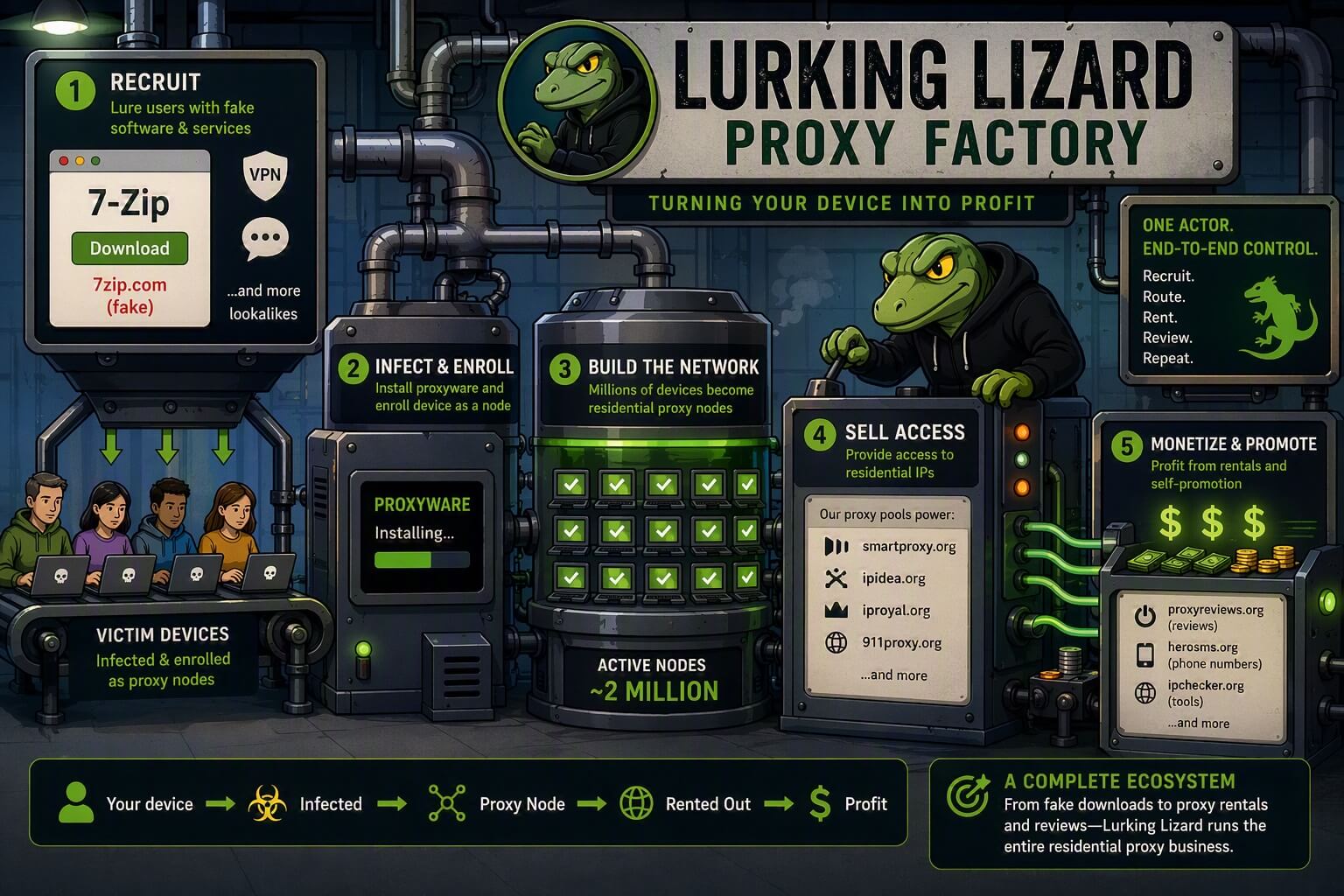
Residential proxies are one of cybersecurity’s hottest topics, but many are not residential at all. Infoblox Threat Intel researchers traced what initially appeared to be an isolated malware campaign to a broader operation dating back several years.
The actor, tracked as Lurking Lizard, is linked to more than 230 domains used to infect victim devices, operate proxy infrastructure, impersonate known proxy providers and market related services.
Lurking Lizard appears to be a Chinese actor who affiliates with other proxy providers to resell access to bandwidth from compromised residential proxies. External researchers previously identified overlap between infrastructure connected to Lurking Lizard and IPIDEA, a major proxy provider that was disrupted earlier this year by a coordinated industry and law enforcement action.
While there have been multiple disruptions of proxy providers this year, the ability for threat actors like Lurking Lizard to continue operating the botnet devices demonstrates how hard it remains to dismantle the malicious residential proxy market.
The operation is vertically integrated, controlling several stages of acquisition, promotion and monetization. It builds new proxy nodes by distributing malware through lookalike domains tied to major software brands, then boosts those lures through search poisoning and online ads.
One such campaign, impersonating 7-Zip, drew attention earlier this year, but this was only one visible piece of a much larger system.
Infoblox Threat Intel also found that the actor sold access through lookalike domains posing as other commercial proxy services. By connecting those domains, the researchers were able to map the wider scope of the activity.

“What matters here is not one fake installer, but the business model behind it,” said Dr. Renée Burton, VP of Infoblox Threat Intel. “When criminal services can scale by borrowing trust from consumer software, app stores and review sites, the risk moves beyond the security team. It becomes an operations, fraud and brand issue for every company online.”
You can read the full research here.



OERLive ANALYSIS: Which Companies in Oman Have Paid Investors the Most Dividends?

OTE Group and SINOPEC Lubricant Company Partner to Expand Lubricants Business in Oman

Phaze Ventures Announces US$75M+ Global Venture Platform from Oman

INVESTIGATION: Top 20 Jobs to Watch in Oman by 2030 – and What You Could Earn

National Finance & Dar Al Atta’a Renew Partnership to Empower Omani Women Through Tamkeen Beekeeping Program

VIDEO: DEEPAL Unveils New Flagship Model S09 in Oman

Win OMR 3,000: ROP & Bank Muscat Launch Cyber Fraud Awareness Short Film Competition

EXCLUSIVE INTERVIEW: Yango’s Big Vision for Oman

Leadership, Transformation Forum Reviews Inspiring Women’s Experiences

OPINION: GCC Navigates Global Macro Volatility as Worldwide Growth Moderates to 2.6%

Power And Beyond: The Path To A Low-carbon Future

Al Mouj Muscat unveils Ghadeer Villas

Time to Buy Saudi Stocks? Some Investors Look at Dubai Instead

Hospitality Industry in Oman Estimated 90% Growth in 2022

Renewables are booming, but not fast enough to cap greenhouse emissions

Retail Abu Dhabi’s ‘Unbox Amazing’ generates sales of more than AED 2 billion in participating stores

Saudis Sign Deals From Energy to Metals in Bid to Salvage Forum

Saudi Arabia’s Gold Miner Plans to Be a Global Top-20 Supplier

Technology to drive Sultanate’s downstream industry

Digitization and Logistics Service Providers Can Help SMEs Make the Most of Peak Season Retail Trends

VIDEO: Building Oman’s Future – SAH’s Vision for Infrastructure, Innovation and Growth

VIDEO: Oman Cables Breaks Ground on OMR 10 Million-Plus Plant to Power Oman’s Industrial Future

VIDEO: Hitesh Akarte on Khimji Ramdas Infrastructure’s Role in Oman Vision 2040

Oman’s Hospitality Sector Enters a New Phase of Growth: Sadiq Al Matwani Al Lawati

Amr Baabood: Oman Climate Week Is About Moving From Climate Ambition to Climate Action

Mayan Al Asfoor on Leadership, Legacy and Empowering Omani Talent

LEADERSPEAK: Dhofar Insurance CEO Sunil Kohli on Oman’s Insurance Sector, Reinsurance & Market Outlook

VIDEO: Robert MacLean on how NHI is Shaping Oman’s Next Generation of Hospitality Leaders

The Future of Oman: Decoding The Sultanate of Oman’s Strategic Promotional Nation Brand

EXCLUSIVE: AI, Robotics & Wearable Sensors are Changing the Lives of Dementia Patients
-

 Artificial Intelligence1 month ago
Top 5 Interesting Things AI Did This Month – September 2026 Edition
-

 Economy1 month ago
OER Magazine September Edition 2026
-

 Fashion1 month ago
Luxury Watches That Could Appreciate Over the Next Decade [2026 Auction Buyer Guide]
-

 Alamaliktistaad Magazines4 weeks ago
Alam Al-Iktisaad Magazine September 2026 Edition
-

 Banking & Finance2 months ago
The GCC’s 10 Richest Billionaires: Inside US$253.5 Billion of Wealth
-

 Banking & Finance2 months ago
INVESTIGATION: What If You Bought Apple Stock Every Time You Bought an iPhone?
-

 News2 months ago
OPEC+ Holds Output Steady for October as Focus Shifts to 2027 Quotas
-

 Artificial Intelligence1 month ago
What the World’s Top 10 Tech CEOs Really Earn