
News
INVESTIGATION: Why Nokia Could Matter More in the Quantum Age Than It Ever Did in Mobile
Once the world’s most recognisable mobile phone brand, Nokia is quietly repositioning itself as a critical infrastructure company for the AI and quantum era. Its comeback will not be measured by smartphones, but by something far more consequential: the networks that will carry artificial intelligence, secure national data, connect data centres, and defend economies from the next cryptographic shock.
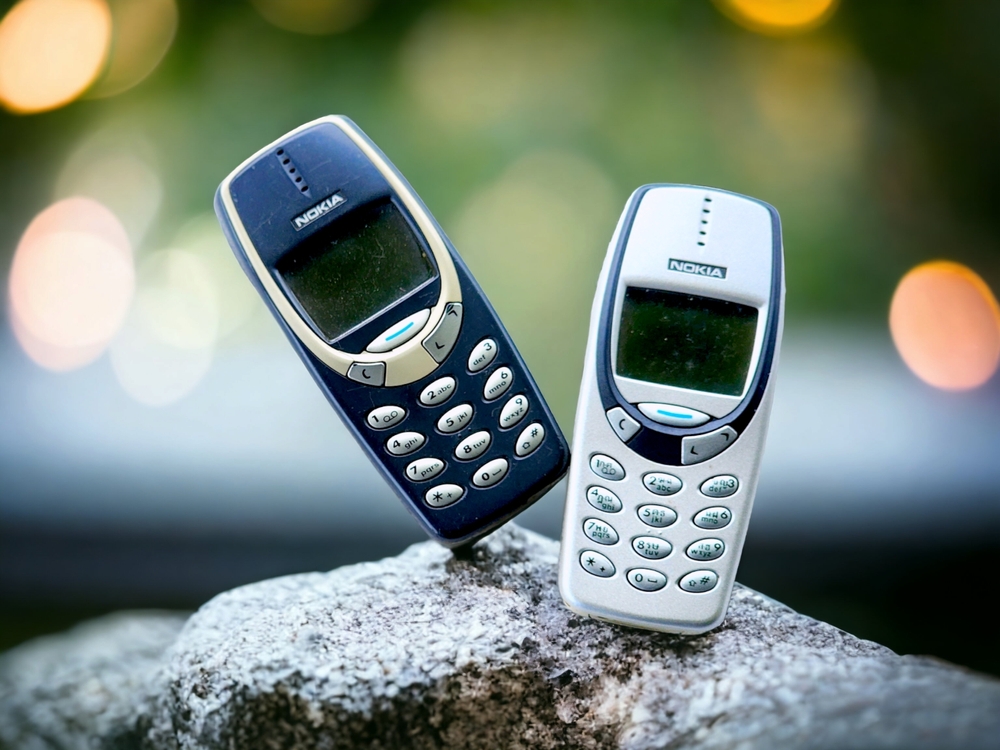
For a generation of consumers, Nokia remains a memory: indestructible handsets, monochrome screens, Snake, and the early confidence of mobile connectivity. But the company now taking shape in Espoo, Finland, is no longer trying to win the phone in your pocket. That battle was effectively closed when Nokia completed the sale of substantially all of its Devices & Services business to Microsoft in April 2014.
The more interesting story is what came after. Nokia did not disappear but rather migrated deeper into the digital economy, away from consumer electronics and into the hard infrastructure layer; fixed networks, mobile networks, optical transport, IP routing, data-centre interconnects, patents, security and research through Nokia Bell Labs.
From handset icon to network power broker
The core of Nokia’s reinvention is a bet that the next technology supercycle will not be built only on chips and software. It will also require networks with far greater capacity, lower latency, stronger security and more automation. Nokia’s own Technology Strategy 2030 projects global network traffic demand growing at a compound annual rate of 22 percent to 25 percent from 2022 to 2030, driven by artificial intelligence, cloud, extended reality, digital twins, automation and billions of connected devices.
Its 2025 Annual Report says the company is “advancing connectivity for the AI era” across fixed, mobile and transport networks, while its new strategy is built around AI & Cloud growth, AI-native networks and 6G, customer co-innovation, focused capital allocation and sustainable returns.
The financial picture suggests the pivot is gaining substance. Nokia also reported that full-year 2025 net sales grew 3 percent on a reported basis, comparable operating profit reached EUR 2.0 billion, and free cash flow came in at EUR 1.5 billion. It also introduced 2026 guidance targeting EUR 2.0 billion to EUR 2.5 billion in comparable operating profit.
Why the Infinera deal matters
The strongest signal of Nokia’s new direction was its acquisition of Infinera, completed in February 2025. Infinera, a US-based optical networking specialist, gives Nokia greater scale in the optical market at exactly the moment when AI data centres are forcing the world to rethink how information moves between compute clusters, clouds and users. Nokia said the acquisition would expand its presence in the webscale segment and help meet the network and power demands of the AI era.
Training and deploying AI models requires vast movement of data between chips, servers, data centres and cloud regions. That traffic does not travel by magic; it moves through optical fibre, routers, switches, photonic systems and transport networks. In that world, optical networking becomes a strategic asset.
Reuters reported that Nokia’s Infinera acquisition would make it the second-largest optical networking vendor with around 20 percent market share, behind Huawei. Dell’Oro Group later noted that Nokia gained share in the telecom equipment market in 2025, partly driven by the Infinera acquisition, while the wider telecom equipment market returned to growth after two years of declining investment.
This is the heart of the comeback thesis: Nokia is trying to move from being one of several telecom equipment vendors into becoming a strategic supplier for the AI infrastructure buildout.
Nvidia’s endorsement changes the optics
The second major signal came in October 2025, when Nvidia announced a USD 1 billion equity investment in Nokia as part of a strategic partnership to accelerate AI-RAN innovation and the transition from 5G to 6G. Nokia said Nvidia would become a 2.90 percent shareholder and that proceeds would be used to advance trusted connectivity for the AI supercycle.
The partnership is significant for two reasons. First, it positions Nokia inside Nvidia’s broader AI infrastructure ecosystem, rather than merely adjacent to it. Second, it reframes telecom networks as distributed AI platforms.
Nokia said it intends to accelerate development of 5G and 6G RAN software to run on Nvidia’s architecture, while both companies will explore incorporating Nokia’s data-centre switching and optical technologies into Nvidia’s future AI infrastructure architecture.
In simple terms, Nokia is arguing that future networks will not just carry AI traffic. They will become AI-native systems themselves that are capable of sensing, optimising, securing and automating connectivity in real time.
That is also why Nokia appointed Justin Hotard as President and CEO from April 1, 2025. Hotard previously led Intel’s Data Center & AI Group, giving Nokia a CEO whose background aligns closely with AI infrastructure rather than traditional handset nostalgia.
The quantum layer: Nokia’s less understood advantage
The most underappreciated part of Nokia’s strategy is quantum. But it is important to define this correctly. Nokia is not positioning itself mainly as a consumer-facing quantum computing company. Its nearer-term opportunity is quantum-safe communications: protecting networks, governments, banks, data centres and critical infrastructure from a future where quantum computers could break today’s encryption.
Nokia Bell Labs states that quantum security must be central to any quantum technology discussion because powerful quantum computers could break widely used security systems protecting data and communications. It also warns of the “harvest now, decrypt later” problem: attackers can collect encrypted data today and wait until a cryptographically relevant quantum computer becomes available to decrypt it.
This is no longer a purely theoretical concern. NIST says organisations should begin migrating now to post-quantum encryption standards, noting that three standards developed through an international process are ready for implementation. The Global Risk Institute’s 2025 Quantum Threat Timeline Report, published in March 2026, found that surveyed experts see a cryptographically relevant quantum computer as “quite possible” within the next 10 years and likely within 15 years.
The implication is quite clear: quantum risk is not about whether a company owns a quantum computer. It is about whether its data has a long shelf life. Banking records, government archives, defence communications, health data, energy infrastructure designs and sovereign digital systems may need to remain confidential for decades. That makes quantum-safe networking a present-day procurement issue, not a future academic question.
Nokia’s quantum-safe playbook
Nokia’s quantum-safe networking portfolio is built around a defence-in-depth approach across multiple layers, including optical networks, IP networks, broadband access and 5G cybersecurity. Its quantum-safe optical networking solution uses encryption, key management and intrusion detection to protect in-flight data. Nokia says its 1830 Security Management Server supports encryption engines across network elements such as the 1830 Photonic Service Switch and Photonic Service Interconnect platforms.
The company is also moving beyond product pages into field validation. In February 2026, Nokia and KDDI demonstrated quantum-safe optical transport capabilities at KDDI’s Sakai Data Center in Japan, designed to support secure AI workloads and distributed data-centre infrastructure. The test used Nokia’s 1830 Photonic Service Switch and 1830 Security Management Server to validate secure, scalable and AI-ready infrastructure with at-speed quantum-safe encryption.
The same month, Nokia, Numana and partners validated a quantum-safe network blueprint at Canada’s Kirq testbed for critical infrastructure networks used by banks, hospitals and governments. The testing brought together Nokia Canada, Numana, Crypto4A, evolutionQ and NowQuantum, and integrated cryptographic capabilities including secure key generation, quantum key distribution orchestration and quantum-safe optical networking technologies.
These are early-stage deployments, but they point to the commercial direction of travel: quantum-safe networks will likely begin in high-value, high-risk sectors before becoming standard across wider telecom and enterprise infrastructure.
The Bell Labs wildcard
Nokia’s long-term quantum credibility is strengthened by Nokia Bell Labs. The research arm is working across quantum computing, quantum security, quantum sensing and quantum networking. Nokia Bell Labs says it is researching topological quantum computing, a route that aims to create more stable qubits by using electromagnetic fields to manoeuvre charges around a supercooled electron liquid.
This is highly experimental and should not be overstated. Nokia is not suddenly about to overtake the major quantum computing players. But Bell Labs gives Nokia something many telecom vendors lack: a deep research base that connects quantum physics, photonics, networking and security.
That matters because the coming decade may not produce one single “quantum industry”. It may produce several overlapping markets: post-quantum cryptography, quantum-safe transport, quantum key distribution, quantum sensing, quantum data-centre interconnects, and eventually quantum networks connecting quantum computers – and Nokia’s advantage is that it already operates in the physical network layer where many of these technologies will need to be deployed.
Why this matters for the GCC
For Oman and the wider Gulf, Nokia’s reinvention is not a distant European technology story. The region is investing heavily in data centres, cloud, AI, subsea connectivity, digital government, smart logistics, energy automation and financial technology. These sectors all depend on secure, high-capacity networks.
Nokia already has a visible Oman link. Its partnership with Ooredoo Oman involves deploying a nationwide Dense Wavelength Division Multiplexing wholesale network powered by Nokia’s 1830 Photonic Service Switch. Nokia says the project is intended to meet the needs of AI and cloud providers, data centres, AI-driven applications and cloud platforms, while helping position Oman as a connectivity hub between the Indian Ocean, the Gulf and Europe.
That makes the quantum question especially relevant for the nation. If Oman is to position itself as a trusted digital corridor, then network security will become part of its competitiveness. In future, cloud providers, banks, government entities, energy companies and hyperscalers will not only ask about bandwidth and latency. They will ask whether networks are resilient against future cryptographic threats.
This could create a new layer of opportunity for telecom operators in Oman and the GCC. Quantum-safe connectivity could become a premium service for banks, oil and gas companies, ports, airports, ministries, healthcare networks and data-centre operators. The market, obviously, will not mature overnight, but the direction is clear: security, sovereignty and data trust will increasingly shape infrastructure decisions.
The risks behind the comeback
Nokia’s has the obvious opportunity on paper, but it is far from guaranteed. The telecom equipment market remains cyclical, price-sensitive and fiercely competitive. Huawei remains a powerful global player, Ericsson is deeply entrenched in mobile infrastructure, and Ciena, Cisco and others remain strong in parts of optical, routing and data-centre networking. Dell’Oro’s 2026 assessment said the RAN market stabilised in 2025, with Huawei and Nokia gaining ground, but it also projected only modest long-term RAN growth of around 1 percent CAGR from 2025 to 2030.
There is also a risk of hype in this space. Quantum-safe networking is important, but enterprise adoption will depend on budgets, standards, interoperability, regulation and clear return on investment. NIST’s own migration guidance stresses the need for cryptographic inventories, roadmaps, interoperability testing and prioritisation before organisations can move safely from quantum-vulnerable algorithms to post-quantum systems.
Nokia’s challenge, therefore, is execution. It must integrate Infinera effectively, convert Nvidia’s endorsement into commercial traction, defend margins in a competitive market, and convince conservative infrastructure buyers that quantum-safe networking is a practical investment rather than a futuristic luxury.
The comeback of Nokia is not the comeback consumers expected. There will be no mass emotional return to the glory days of the 3310. Instead, Nokia is trying to become something less visible and more critical: a trusted infrastructure supplier for the next phase of the digital economy.
That strategy is built around three converging forces. AI is increasing the demand for high-capacity optical and data-centre networks. 6G is pushing telecom networks towards AI-native architectures; and Quantum computing is forcing governments and enterprises to rethink the security of today’s encrypted data.
If Nokia succeeds, its relevance in the coming decade will not come from devices people hold in their hands, but from networks they rarely see – the fibre routes, optical systems, mobile infrastructure, security layers and research breakthroughs that allow economies to function in real time.
The irony is striking. Nokia became famous by connecting people. Its second act may depend on connecting intelligence, and protecting it before the quantum era arrives.
Editorial featured photo credit: Nidnids / Shutterstock.com


IHE and Eicher Trucks and Buses promote school bus safety awareness among students

India’s rising edge in oil, gas and construction projects is enabling Middle East’s growth

The Financial Services Authority organises the National Health Insurance Platform Forum ‘Dhamani’

Is India’s accelerating export engine driving manufacturing towards global scale?

SAH wins double honours at Dossier Construction Awards & Summit 2026

VIDEO: Hitesh Akarte on Khimji Ramdas Infrastructure’s Role in Oman Vision 2040

Alam Al-Iktisaad Magazine September 2026 Edition

A decade of investing: Tech portfolio returned 1,342% versus Nasdaq-100’s 636%

His Majesty the Sultan arrives in Kazakhstan

Oman’s trade surplus reaches RO5.5 billion in July 2026

Power And Beyond: The Path To A Low-carbon Future

Al Mouj Muscat unveils Ghadeer Villas

Time to Buy Saudi Stocks? Some Investors Look at Dubai Instead

Hospitality Industry in Oman Estimated 90% Growth in 2022

Renewables are booming, but not fast enough to cap greenhouse emissions

Retail Abu Dhabi’s ‘Unbox Amazing’ generates sales of more than AED 2 billion in participating stores

Saudis Sign Deals From Energy to Metals in Bid to Salvage Forum

Saudi Arabia’s Gold Miner Plans to Be a Global Top-20 Supplier

Technology to drive Sultanate’s downstream industry

Digitization and Logistics Service Providers Can Help SMEs Make the Most of Peak Season Retail Trends
VIDEO: Hitesh Akarte on Khimji Ramdas Infrastructure’s Role in Oman Vision 2040

Oman’s Hospitality Sector Enters a New Phase of Growth: Sadiq Al Matwani Al Lawati

Amr Baabood: Oman Climate Week Is About Moving From Climate Ambition to Climate Action

Mayan Al Asfoor on Leadership, Legacy and Empowering Omani Talent

LEADERSPEAK: Dhofar Insurance CEO Sunil Kohli on Oman’s Insurance Sector, Reinsurance & Market Outlook

VIDEO: Robert MacLean on how NHI is Shaping Oman’s Next Generation of Hospitality Leaders

The Future of Oman: Decoding The Sultanate of Oman’s Strategic Promotional Nation Brand

EXCLUSIVE: AI, Robotics & Wearable Sensors are Changing the Lives of Dementia Patients

EXCLUSIVE: Talking Renewable Projects & Sustainability in Oman and Beyond with Vipul Tuli

VIDEO: Eng. Salim Al Thuhli, CEO, Khazaen Economic City on Investment Opportunities
-

 Artificial Intelligence4 weeks ago
Top 5 Interesting Things AI Did This Month – September 2026 Edition
-

 Fashion2 weeks ago
Luxury Watches That Could Appreciate Over the Next Decade [2026 Auction Buyer Guide]
-
 Highlights2 months ago
OERLive: Top 10 Mathematical Problems AI Has Solved or Transformed
-
 Banking & Finance1 month ago
The GCC’s 10 Richest Billionaires: Inside US$253.5 Billion of Wealth
-
 Magazines2 months ago
OER Magazine July Edition 2026
-

 Economy2 weeks ago
OER Magazine September Edition 2026
-

 Magazines2 months ago
Al Mar’a Magazine July 2026
-

 Alamaliktistaad Magazines2 months ago
Alam Al-Iktisaad Magazine July 2026 Edition