
Economy
OP-ED: Why The Stronger Dollar Matters For Oman As Global Markets Reprice Risk
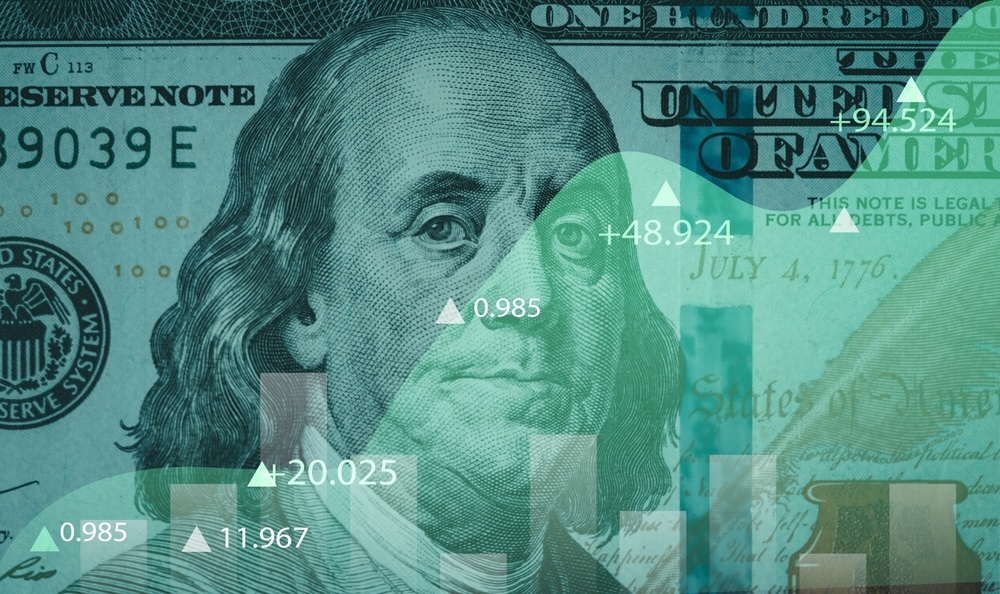
The US dollar’s latest surge is not just a currency-market move. It is a clear signal that global investors are turning more defensive as technology stocks retreat, inflation concerns persist and expectations build that the Federal Reserve may be forced to raise interest rates again.
On Wednesday, 24 June 2026, the dollar index climbed to as high as 101.71, its strongest level since May 2025. Earlier trading showed the index around 101.44, already marking a 13-month peak against a basket of major currencies. The move reflected a sharp shift in investor positioning: away from risk assets and toward the liquidity and safety of the US dollar.
The currency moves were broad-based too: the euro fell to around $1.134, its weakest level in more than a year, while sterling dropped to $1.3149, a seven-month low. The Australian dollar weakened to $0.6885, its lowest level since early April, while the Japanese yen traded near 161.66 per dollar, keeping alive concerns over further weakness and possible intervention risks.
The immediate driver was a combination of two forces – pressure in global technology stocks and rising expectations of US rate hikes.
Technology and semiconductor shares have come under selling pressure after a long rally driven by artificial intelligence optimism. When high-growth sectors such as technology correct sharply, global investors typically reduce exposure to riskier assets. In such moments, the dollar often benefits because of its role as the world’s primary reserve currency and the depth of US financial markets.
At the same time, markets are now assigning a much higher probability to further Federal Reserve tightening. Investors are pricing in around a 35 percent chance of a rate hike at the Fed’s July meeting, compared with just 9 percent a week earlier. For September, the probability of a rate rise has moved above 70 percent, up from 29 percent. That is a major repricing in a short period.
This matters because higher US interest rates increase the appeal of dollar-denominated assets. If investors believe the Fed will keep rates higher for longer – or raise them again – the dollar gains support from yield differentials. In simple terms, capital moves toward the currency where returns appear stronger and risk appears lower.
For the euro, the pressure reflects a widening gap between market expectations for the Fed and the European Central Bank. While US markets are pricing in the possibility of more tightening, investors appear less convinced that the eurozone will need the same degree of rate action. That divergence has pushed EUR/USD lower.
For Japan, the challenge is even sharper. The yen’s weakness near 161-162 per dollar reflects the wide interest-rate gap between Japan and the United States. If US yields rise further, pressure on the yen could intensify, raising the risk of official intervention or policy adjustment by Japanese authorities.
For emerging markets, a stronger dollar often creates financial stress. Dollar-denominated debt becomes more expensive to service, imported inflation can rise for countries with weakening currencies, and foreign investors may demand higher returns to compensate for currency volatility.
The Sultanate of Oman, however, sits in a different position because the Omani Riyal is pegged to the US dollar. Since 1986, the Riyal has been fixed at USD 2.6008 per OMR. This means the Rial strengthens alongside the dollar against currencies such as the euro, yen, pound and Indian rupee.
But in hindsight that creates both advantages and challenges for Oman.
On the positive side, a stronger dollar-linked Riyal can reduce the cost of imports from countries whose currencies are weakening. This is relevant for Omani businesses importing vehicles, machinery, electronics, food products, industrial equipment and technology systems from Europe, Japan, India and other non-dollar markets. Importers may find improved purchasing power when paying in currencies that have weakened against OMR.
The same applies to consumers and expatriate remittances. For residents sending money to countries with weaker currencies, the Riyal’s strength can increase the local-currency value received by families abroad. This is particularly relevant given Oman’s large expatriate workforce and strong remittance corridors with India and other Asian economies.
There is also a corporate treasury angle: Omani companies with exposure to euro, sterling, yen or rupee payments may have an opportunity to renegotiate supplier terms, lock in favourable rates or improve margins on imported goods. Companies with global contracts should closely review currency exposure rather than treating the Riyal’s stability as a reason to ignore foreign-exchange risk.
But the dollar’s rise also brings risks. Because Oman’s monetary system is linked to the dollar, US interest-rate trends matter directly for domestic financial conditions. If the Federal Reserve raises rates, or if markets expect rates to stay elevated, borrowing costs in Oman can remain under pressure. This affects companies seeking project finance, SMEs managing working capital, real-estate developers, and consumers exposed to lending rates.
The impact is especially important at a time when Oman is working to sustain investment momentum, diversify non-oil sectors and support private-sector growth. Higher financing costs can slow expansion plans, delay capital expenditure and make businesses more cautious.
The dollar’s strength also intersects with Oman’s oil-linked external position. Oil is priced globally in dollars. A stronger dollar can make crude more expensive for buyers using other currencies, potentially affecting demand expectations. For Oman, this matters because hydrocarbons remain a key contributor to export earnings and fiscal revenues.
Recent trade data underline the point. Oman recorded a trade surplus of OMR1.54 billion by the end of March 2026, slightly higher than OMR1.53 billion during the same period in 2025. Total goods exports stood at OMR5.3 billion, down 8.5 percent year-on-year, while imports fell more sharply by 11.7 percent to OMR3.8 billion.
The decline in exports was driven largely by oil and gas, where export value fell 13 percent to OMR3.4 billion from OMR3.9 billion a year earlier. Non-oil merchandise exports, however, remained broadly stable at OMR1.61 billion, slipping only 0.6 percent from OMR1.62 billion.
These figures show why dollar strength matters for Oman in two directions. Stronger OMR can help contain some import costs, but if dollar strength weighs on oil demand or global trade sentiment, export revenues could face pressure. Oman’s external position remains strong, but the quality of that strength increasingly depends on non-oil resilience.
Inflation is another channel to watch. Oman’s CPI rose 3.8 percent year-on-year in May 2026, while average inflation for January to May stood at 2.8 percent. Transport prices rose 9.2 percent and food and non-alcoholic beverages increased 6.6 percent. The stronger Riyal can also help soften imported inflation from non-dollar markets, but global energy, shipping and food-price dynamics remain important risks.
For investors in Oman, the dollar rally sends a clear message: global markets are becoming more selective. High-growth equities, especially technology stocks, may remain volatile if US rate expectations continue to rise. Fixed-income and cash-like instruments may attract more attention, while gold and commodities could face pressure if the dollar and real yields strengthen further.
And for Omani businesses, the priority should be practical. Importers should review whether the stronger Riyal provides a near-term purchasing advantage. Borrowers should stress-test financing costs under a higher-rate environment. Exporters should monitor whether weaker global currencies affect customer demand in key markets. Companies with international suppliers should revisit contract pricing, payment schedules and hedging policies.
For Oman, the dollar peg remains an anchor of stability. But stability does not mean immunity. A stronger dollar can improve purchasing power and protect confidence, yet it can also tighten financial conditions and complicate the outlook for energy-linked revenues.



Oman’s Road Network Is Longer Than Those of These 10 Countries

Diamond Market Set to Double by 2034 as AI’s Heat Problem Fuels Demand

Wi-Fi at 35,000 Feet: The Real Economics of Installing Starlink on an Airline

Oman’s state revenues rise 13% by end of Q2 2026

The India–Australia Uranium agreement will fuel the future

Talabat Appoints Abdulaziz Al Haddad as General Manager to Lead tMart Oman

Al Mar’a Magazine July 2026

Alam Al-Iktisaad Magazine July 2026 Edition

OER Magazine July Edition 2026

Sohar Aluminium and OMIFCO support construction of investment building for Al Rahma Association

Power And Beyond: The Path To A Low-carbon Future

Al Mouj Muscat unveils Ghadeer Villas

Time to Buy Saudi Stocks? Some Investors Look at Dubai Instead

Hospitality Industry in Oman Estimated 90% Growth in 2022

Renewables are booming, but not fast enough to cap greenhouse emissions

Retail Abu Dhabi’s ‘Unbox Amazing’ generates sales of more than AED 2 billion in participating stores

Saudis Sign Deals From Energy to Metals in Bid to Salvage Forum

Saudi Arabia’s Gold Miner Plans to Be a Global Top-20 Supplier

Technology to drive Sultanate’s downstream industry

Digitization and Logistics Service Providers Can Help SMEs Make the Most of Peak Season Retail Trends

Mayan Al Asfoor on Leadership, Legacy and Empowering Omani Talent

LEADERSPEAK: Dhofar Insurance CEO Sunil Kohli on Oman’s Insurance Sector, Reinsurance & Market Outlook

VIDEO: Robert MacLean on how NHI is Shaping Oman’s Next Generation of Hospitality Leaders

The Future of Oman: Decoding The Sultanate of Oman’s Strategic Promotional Nation Brand

EXCLUSIVE: AI, Robotics & Wearable Sensors are Changing the Lives of Dementia Patients

EXCLUSIVE: Talking Renewable Projects & Sustainability in Oman and Beyond with Vipul Tuli

VIDEO: Eng. Salim Al Thuhli, CEO, Khazaen Economic City on Investment Opportunities

H.E. Salim Al Aufi, Minister of Energy & Minerals talks about Oman’s Green Hydrogen Goals

VIDEO: Talking Latest Developments in Aircraft Ground Guidance & More at Oman Airports

VIDEO: Dr. Firas Al-Abduwani Discusses Green Hydrogen, Potential Regions for Development & Creating a Green Ecosystem
-

 News2 months ago
INVESTIGATION: Why Nokia Could Matter More in the Quantum Age Than It Ever Did in Mobile
-

 News2 months ago
INVESTIGATION: Is AI in a Bubble? Inside the Trillion-Dollar Question Reshaping Global Markets
-

 News2 months ago
Thales & Ankaa to Deliver Multi-Mission Air Traffic Surveillance Radars for Oman, Capable of Supporting Civil & Military Operations
-
 Economy2 months ago
What Higher Oil Prices Mean for Oman’s Economy in 2026
-
 Economy2 months ago
OMIFCO Successfully Completes Bookbuilding & Sets Final IPO Offer Price
-

 Business2 months ago
Oman India Fertiliser Company Lists on Muscat Stock Exchange
-

 Banking & Finance1 month ago
Bank Muscat posts net profit of RO137.49 million in H1 2026
-
 Insurance2 months ago
LEADERSPEAK: Dhofar Insurance CEO Sunil Kohli on Oman’s Insurance Sector, Reinsurance & Market Outlook