
Economy
The Economics of Khareef in Dhofar: What Is Two Months of Rain Worth in OMR?
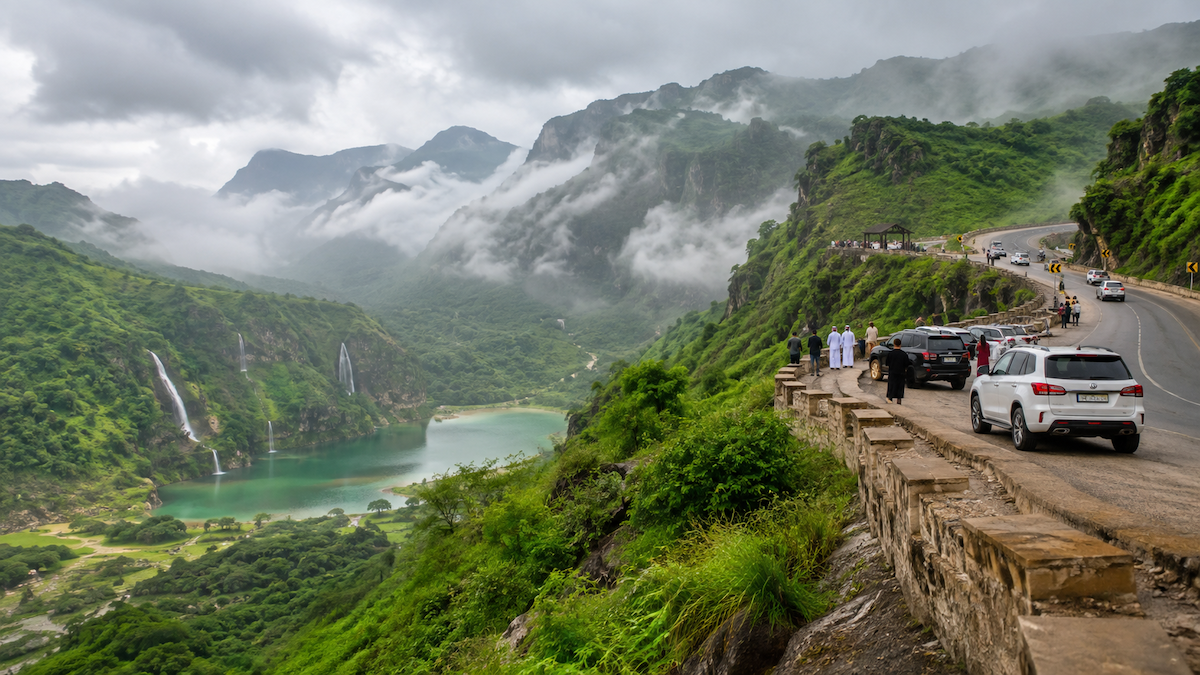
Khareef in Dhofar is already bigger in 2026 than it was during the entirety of last year. But beneath the record visitor numbers lies a more important economic question: is Dhofar becoming better at attracting people, or better at monetising them? OERLive analyses the numbers behind accommodation, food, aviation, visitor spending and tourism infrastructure to determine where the real growth opportunities lie.
By the end of August 2026, Khareef Dhofar had already broken last year’s full-season visitor record.
Preliminary figures from the National Centre for Statistics and Information (NCSI), released through the Oman News Agency, show that 1,116,051 people visited Dhofar between June 21 and August 31, 2026, an increase of 8.6% from 1,027,255 during the comparable period of 2025. Of these, 643,602 arrived during August alone.
The significance of that number becomes clearer when compared with the entirety of previous seasons. Khareef attracted 962,196 visitors in 2023, 1,047,751 in 2024 and 1,070,738 in 2025.
In other words, Dhofar had already attracted 45,313 more visitors by August 31, 2026 than it did during the complete 2025 Khareef season, which extended until September 21. Visitor traffic through August is already 4.2% above last year’s final total.
But visitor numbers tell only half the economic story. The more revealing question is what happens after those visitors arrive.
So how much does an individual tourist spend in Dhofar for Khareef?
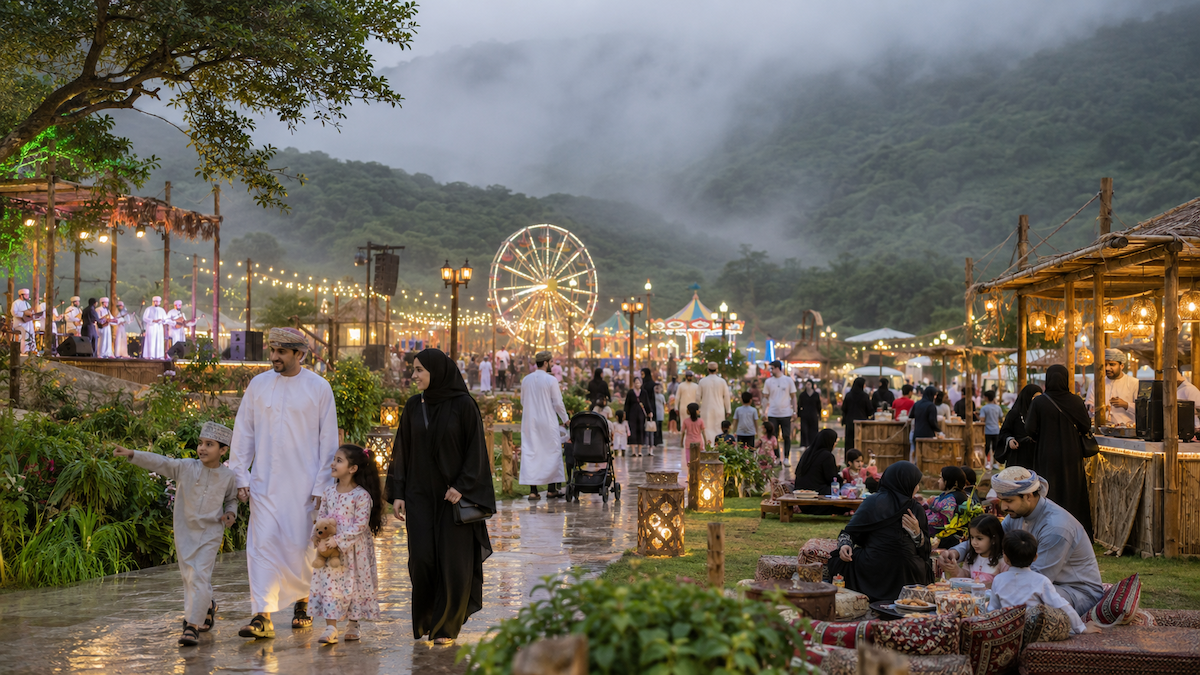
The latest complete official expenditure estimate is for the previous Khareef in 2025, in which NCSI estimated that visitors spent OMR124.64mn during the 2025 season, up from OMR120.52mn in 2024 and OMR102.63mn in 2023.
That represents growth of 3.4% in 2025 and 21.4% over two years. Over the same 2023-2025 period, visitor numbers increased by only 11.3%.
So it is evident that spending has grown almost twice as quickly as visitor numbers over the two-year period, meaning Khareef has become economically more valuable per visitor than it was in 2023.
In fact, average expenditure works out at approximately:
- OMR106.7 per visitor in 2023
- OMR115.0 in 2024
- OMR116.4 in 2025
These are based on OERLive calculations from NCSI data – and at first glance, that is encouraging. But look at the most recent year and the picture becomes more nuanced. Visitor spending increased 3.4% in 2025, while visitors increased 2.2%. Average spending per visitor therefore improved by only around 1.2%.
The larger jump in visitor yield had occurred between 2023 and 2024, though that could also be attributed to the post-COVID effects on travellers. And with 2026 visitor numbers rising 8.6% through August, that distinction becomes critical.
Until NCSI releases the final 2026 expenditure estimate, it would be misleading to multiply the latest visitor count by last year’s average spending and present the result as Khareef revenue. The composition of visitors, length of stay, prices and spending behaviour can all change.
The OMR124.64mn from 2025 therefore remains the latest defensible monetary benchmark.
It is also important to clarify what that figure represents: it is estimated visitor expenditure, not GDP, profit or government revenue. NCSI calculates the Khareef expenditure estimate using visitor numbers, previous expenditure patterns and price movements in Dhofar.
Omani Riyals spent by a tourist does not translate into OMR in GDP because businesses incur intermediate costs before economic value added is calculated.
But as a measure of money mobilised by one seasonal tourism phenomenon, OMR125mn is substantial. The more interesting question, however, is where it went.
Accommodation Is Doing Most of the Heavy Lifting
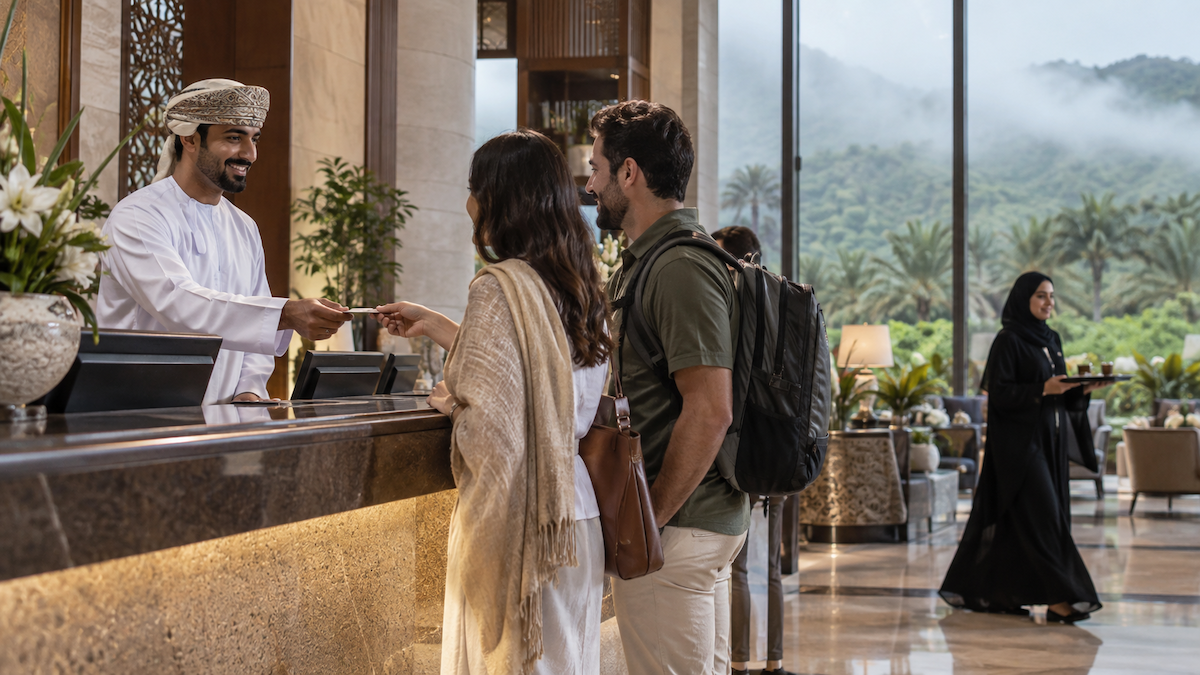
Of the OMR124.64mn spent during Khareef 2025, OMR49.24mn went towards accommodation, while food & beverages accounted for OMR28.51mn, travel tickets for OMR19.22mn and NCSI’s broader “other” category for OMR27.67mn.
Accommodation therefore captured 39.5% of all measured visitor expenditure, followed by food and beverages at 22.9%, travel tickets at 15.4% and other spending at 22.2%.
But the year-on-year change is more revealing than the percentages themselves. Accommodation spending increased from OMR45.90mn in 2024 to OMR49.24mn in 2025 – that’s a growth of 7.3%.
But food spending increased only 2.2%, travel-ticket spending increased just 0.4%, and the “other” category increased by only 0.3%. Khareef generated approximately OMR4.12mn of additional expenditure in 2025 compared with 2024. Of that increase, OMR3.34mn came from accommodation alone.
Put differently, accommodation accounted for approximately 81% of all additional visitor expenditure generated by Khareef in 2025.
That may be the single most important economic finding in the data. It is not yet increasing spending on everything visitors do once they wake up at anything close to the same rate.
This presents creates a clear growth opportunity: restaurants, cafés, attractions, guided experiences, adventure tourism, cultural products, entertainment, local retail, transport services and other visitor activities represent the next layer of the Khareef economy.
NCSI does not publish a sufficiently granular Khareef expenditure breakdown to put a reliable separate monetary value on car rentals, retail or entertainment, so any attempt to assign individual revenue figures to those sectors would be speculative from our end.
What the official data does show, however, is that non-accommodation expenditure is not keeping pace with accommodation growth.
Seven Million Nights… And a Yield Question
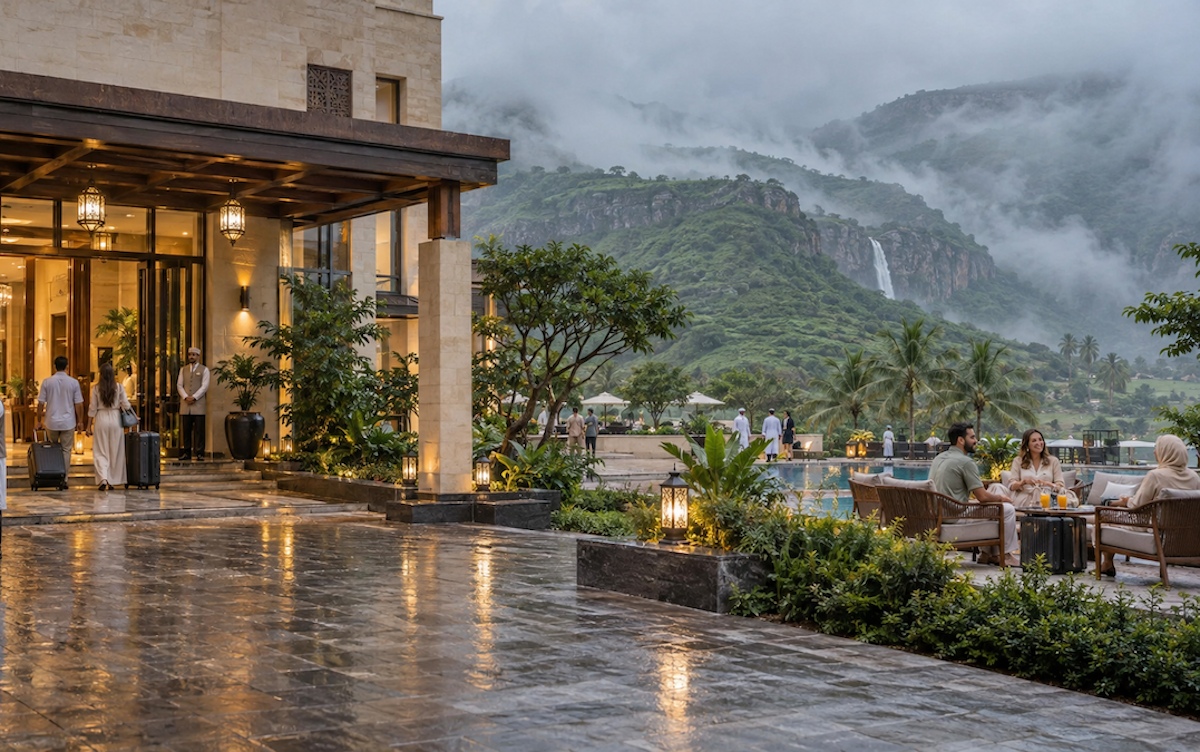
There is another way to look at Khareef’s economics. NCSI estimates visitors generated 6.69 million visitor-nights in 2023, 7.10 million in 2024 and 7.39 million in 2025.
That means visitor-nights increased about 4% in 2025, faster than the 2.2% growth in visitor numbers. Average stay consequently recovered from roughly 6.8 nights in 2024 to 6.9 nights in 2025.
Yet total visitor expenditure divided across those nights tells an interesting story. OERLive calculations put expenditure at approximately:
- OMR15.35 per visitor-night in 2023
- OMR16.96 in 2024
- OMR16.87 in 2025
So although total Khareef expenditure reached a record in 2025, spending per visitor-night actually slipped marginally – by around 0.5% – from the previous year. This is why simply celebrating rising visitor numbers can obscure the larger economic opportunity.
Dhofar already has millions of consumer-days concentrated within the governorate. The task is to generate more economic activity from each one.
At the 2025 level of 7.39 million visitor-nights, every additional OMR1 of average local expenditure per visitor-night would translate mathematically into almost OMR7.4mn of additional seasonal spending.
An additional OMR5 per visitor-night would represent almost OMR37mn. It may also be economically preferable to attempting to generate the same amount purely by adding more visitors, because significantly higher footfall brings additional pressure on roads, natural attractions, waste management, parking and public infrastructure.
Hotels Are Growing Fast But Seasonality Remains the Problem
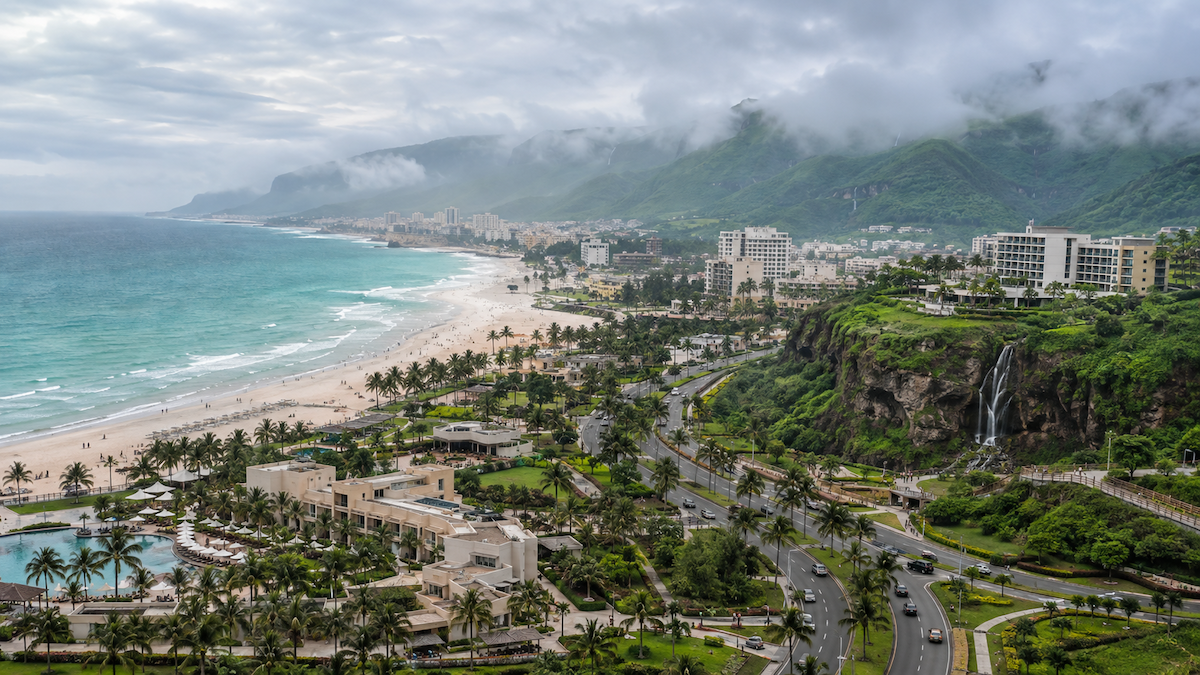
The broader Dhofar accommodation industry reinforces the same story. NCSI’s Tourism Statistics Bulletin 2026 reports that hotel revenues in Dhofar reached approximately OMR56.91mn in 2025, compared with OMR47.44mn in 2024 and OMR42.71mn in 2023.
That means hotel revenue expanded by almost 20% in a single year and by approximately 33% between 2023 and 2025. NCSI officially lists the 2026 Tourism Statistics Bulletin among its current tourism publications.
For comparison, the earlier NCSI bulletin records Dhofar hotel revenues of OMR28.33mn in 2022 and just OMR13.50mn in 2021. The industry has therefore undergone a considerable revenue expansion following the pandemic years.
Supply is expanding too: NCSI’s 2026 Statistical Year Book records 114 accommodation establishments in Dhofar in 2025, compared with 64 in 2024 and 52 in 2023.
Albeit, this requires careful interpretation. The number of five-star hotels remained unchanged at eight between 2023 and 2025. Four-star properties increased from five to six and three-star properties from eight to nine.
The dramatic overall increase came primarily from establishments classified as “other”, which increased from 25 in 2023 to 37 in 2024 and 85 in 2025. That could suggest the accommodation market is broadening beyond traditional hotels, alongside greater formalisation of alternative tourism accommodation.
For a destination with an extreme seasonal peak, that could also be economically useful. A diversified accommodation base can absorb peak demand without requiring every additional visitor to be accommodated through capital-intensive full-service hotels.
But supply expansion comes with a warning – Dhofar’s annual hotel occupancy rate was only 40.9% in 2025. That was an improvement from 39.1% in 2024 and 37% in 2023, so the direction is positive. However, it also exposes the fundamental economics of tourism investment in Dhofar: enormous demand during Khareef has to compensate for considerably softer utilisation across the rest of the year.
This is arguably the biggest structural constraint on Khareef-led tourism investment. Building a hotel for August is easy to justify operationally, though making that hotel productive in November, February or May is the harder economic problem.
For investors, therefore, the real prize is not simply continued Khareef growth; it is the development of Dhofar as a twelve-month destination, using Khareef demand to anchor assets that can subsequently generate revenue through winter tourism, Sarb (post-Khareef period), conferences, sports, wellness, heritage, adventure travel and other forms of tourism.
Dhofar Has a High-Value GCC Opportunity
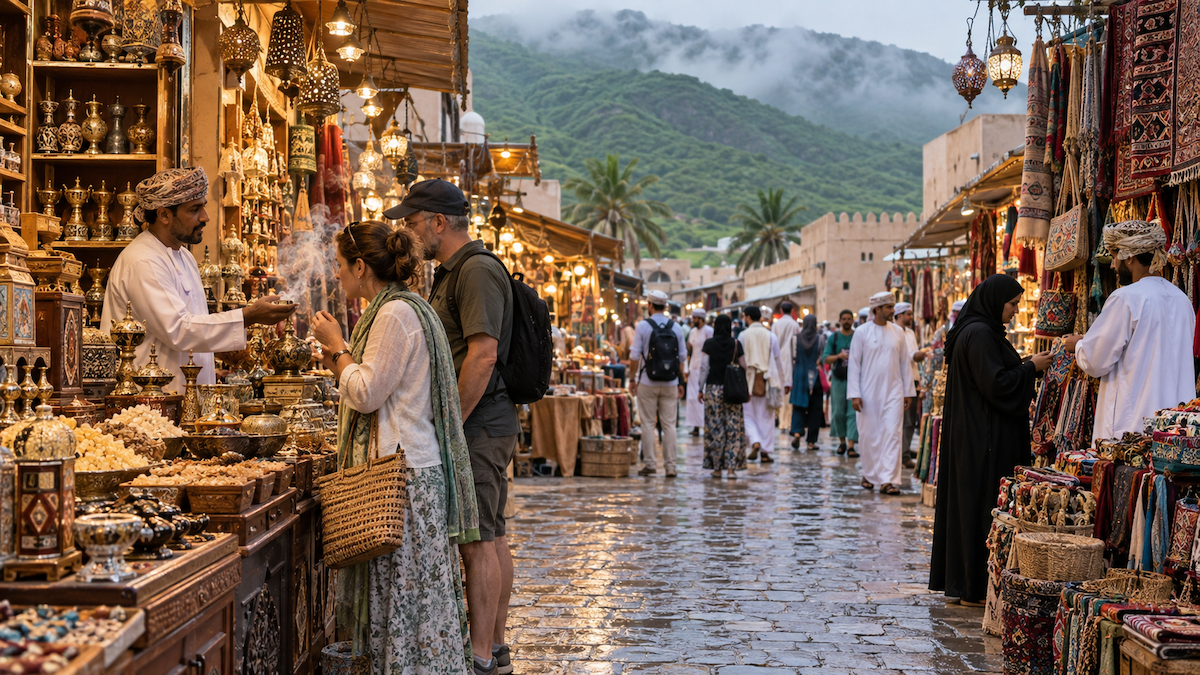
The composition of Khareef visitors offers another important clue. In 2025, Omanis represented 757,453 of the 1.07 million visitors, or 70.7%. GCC visitors numbered 184,811, representing 17.3%, while Asian visitors accounted for 81,112, other Arab visitors 35,726 and Europeans only 7,731.
Yet expenditure was distributed differently. Omanis accounted for 62.5% of spending, below their 70.7% share of visitors, and GCC visitors generated 23% of spending despite accounting for only 17.3% of visitor numbers.
OERLive calculations using NCSI data put average expenditure at approximately:
- OMR103 per Omani visitor
- OMR155 per GCC visitor
- OMR180 per visitor from other Arab countries
So, a GCC visitor generated approximately 50% more expenditure per person than an Omani visitor during the 2025 season. And while that does not make one visitor “better” than another, domestic tourism is fundamental to Khareef’s scale and resilience, and differences in expenditure can reflect accommodation choices, transport costs and whether visitors stay with friends or relatives.
Economically, however, the numbers show where incremental revenue can be found. Increasing the GCC share of visitors – particularly visitors staying in commercial accommodation and purchasing organised tourism products – could raise Khareef expenditure faster than visitor numbers alone.
The 2026 figures show the domestic market remains dominant. Of the 1.116 million visitors recorded through August, 816,719 were Omanis, equivalent to 73.2% of the total, while 183,861 came from other GCC states.
Dhofar’s current growth is therefore still overwhelmingly an Oman-and-GCC story. That gives Khareef extraordinary regional strength, but also highlights how little of its potential global addressable market is currently being captured.
Aviation Is Growing, But Khareef Still Remains a Road Destination
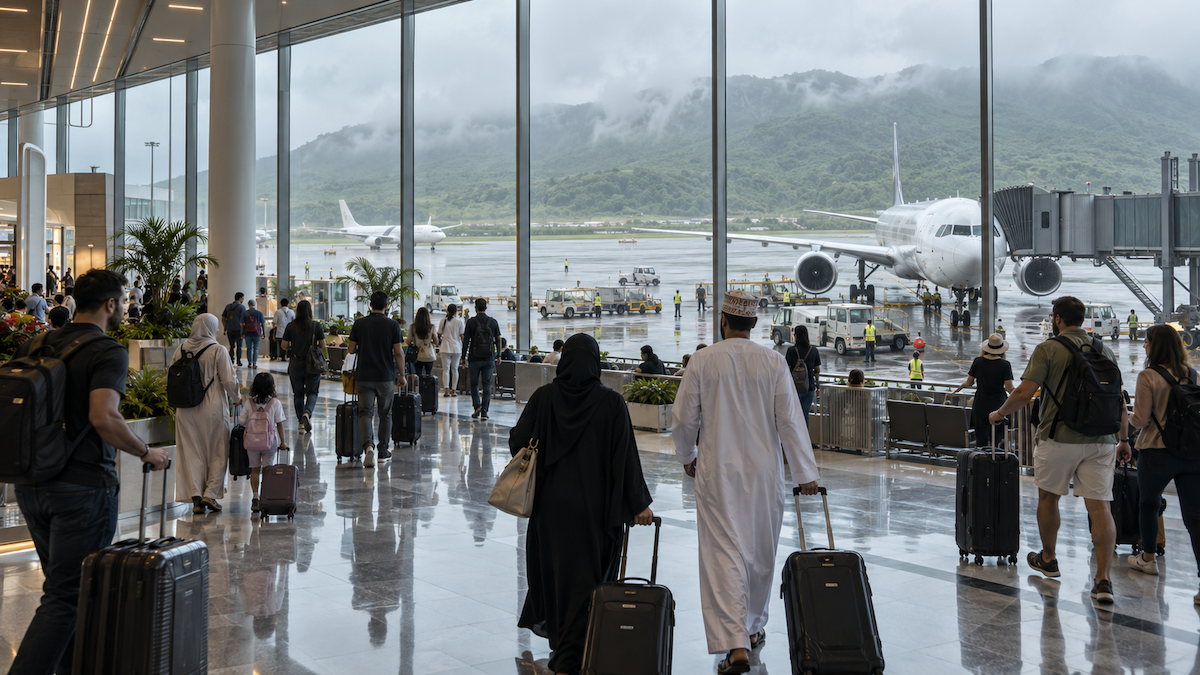
Transport data tells much the same story. In 2023, around 239,401 Khareef visitors arrived by air, and that increased to 253,155 in 2024 and 286,023 in 2025.
Air arrivals therefore grew approximately 13% in 2025 alone. Land arrivals, meanwhile, were 722,795 in 2023, 794,596 in 2024 and 784,715 in 2025.
Despite aviation growth, 73.3% of all Khareef visitors in 2025 still arrived by land. And of the 286,023 air arrivals, 195,744 – more than two-thirds – travelled on domestic flights, while international flight arrivals accounted for only 90,279.
The 2026 data points to continued aviation momentum. By August 31, 284,667 Khareef visitors had already arrived by air, almost matching the entire 2025 season’s air-arrival total before September was counted. Another 831,384 had entered by land.
Salalah Airport’s wider performance supports the trend. NCSI data showed passenger traffic through Salalah Airport increased 9.3% year-on-year to approximately 1.35 million passengers by the end of September 2025.
This makes air connectivity one of the clearest potential growth levers. At present, Khareef’s economics benefit enormously from visitors who can drive to Dhofar from Oman and neighbouring markets.
But the opportunity should arguably be pursued as a yield strategy rather than a mass-volume strategy. International travellers who package Salalah with hotels, excursions, restaurants and other experiences have the potential to generate greater local expenditure without requiring visitor volumes to increase at the same pace.
Food, Entertainment & Experiences
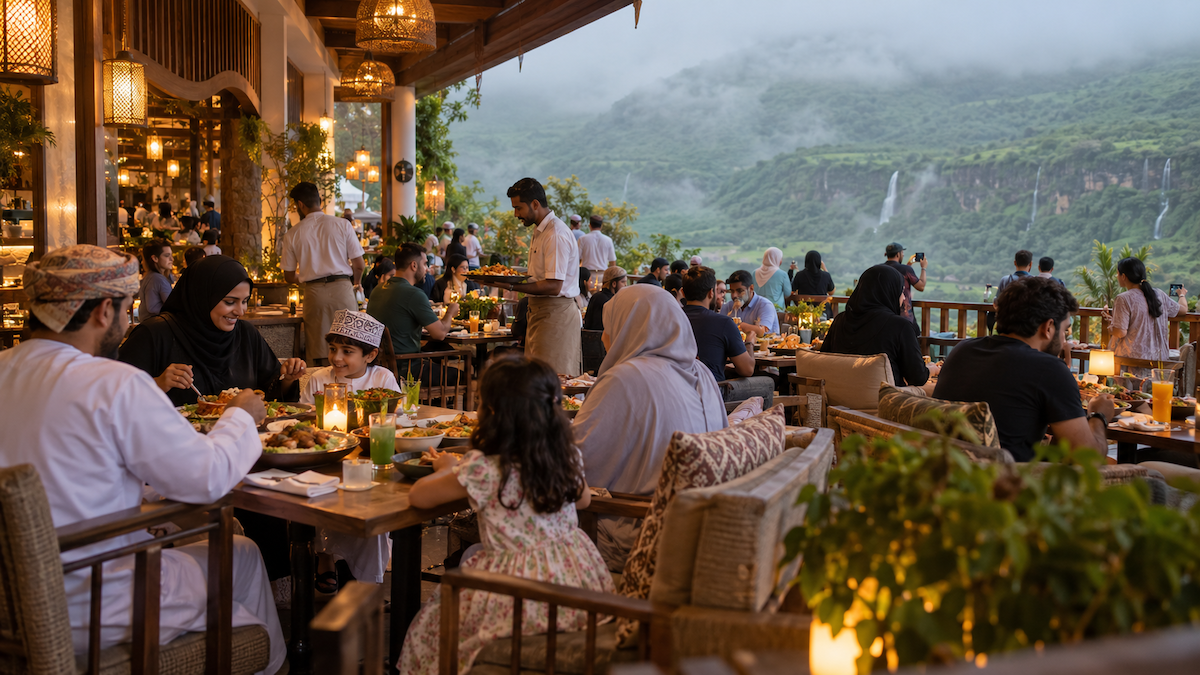
Khareef has historically succeeded because the product itself is free. Rain, mist, green mountains, waterfalls, wadis and cooler temperatures are the attraction.
Visitors do not necessarily have to purchase much to experience Khareef. A family can drive to Dhofar, stay with relatives or in lower-cost accommodation, visit natural sites, prepare food independently and spend relatively little on formal tourism products.
That still creates economic activity through fuel, supermarkets, accommodation and general consumption, but it limits the destination’s tourism yield. The 2025 expenditure figures support this:
- Accommodation spending rose 7.3%.
- Food and beverage expenditure rose just 2.2%.
- Travel-ticket expenditure was virtually flat.
- Other expenditure was also virtually flat.
If Khareef is to move from a OMR125mn visitor economy towards a significantly larger one, the greatest opportunity therefore appears to lie outside the hotel room.
Paid natural and cultural experiences, professionally operated heritage attractions, local culinary products, adventure tourism, guided trails, wellness, family entertainment, festivals with commercial components and high-quality locally produced retail all create mechanisms for converting footfall into value.
This is particularly relevant for SMEs. Hotels are capital intensive and naturally favour larger investors. Food, entertainment, tourism experiences, guided services, specialist transport and retail have much lower barriers to entry.
Khareef’s Importance to Oman’s Non-Oil Economy Is Bigger Than One Season
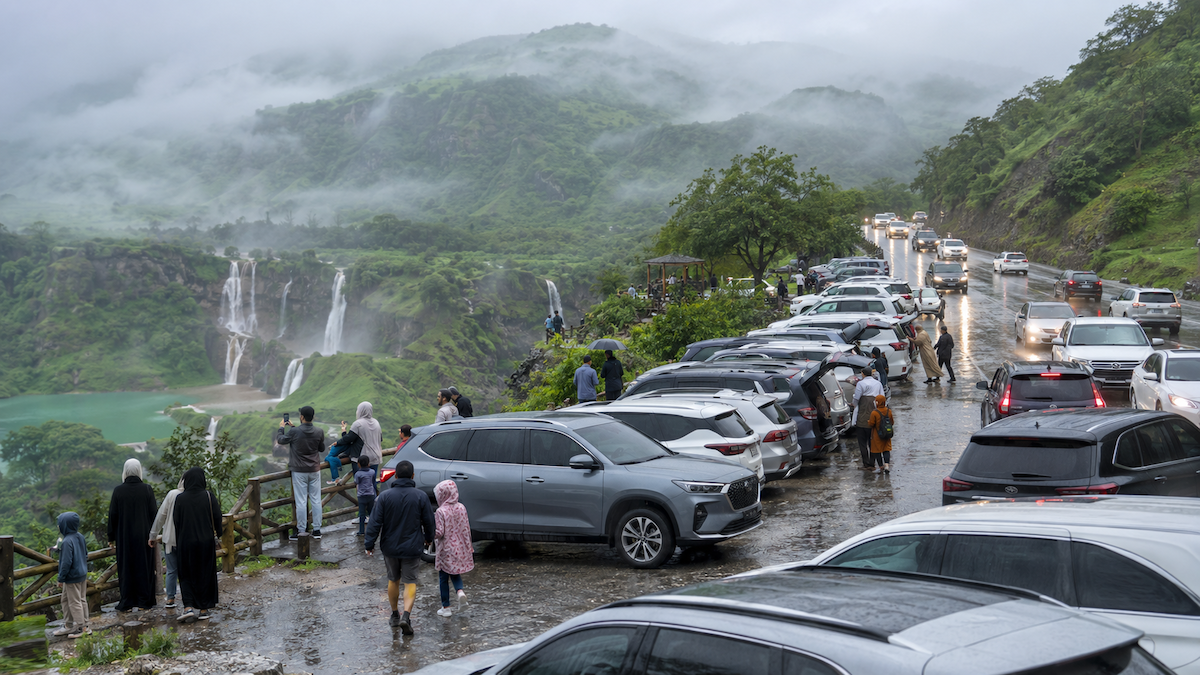
This matters because tourism itself is becoming a larger component of Oman’s diversification strategy. NCSI’s latest national accounts for tourism show that direct tourism GDP reached OMR1.135bn in 2025, compared with OMR1.095bn in 2024 and OMR1.005bn in 2023.
Direct tourism value added increased from OMR979.4mn in 2023 to OMR1.065bn in 2024 and OMR1.107bn in 2025. Total tourism production reached OMR2.284bn in 2025.
Tourism’s direct share of Oman’s GDP consequently stood at 2.7% in 2025, compared with 2.5% in 2023. The Ministry of Heritage and Tourism separately reported that Oman received 3.97 million international visitors in 2025, up from 3.90 million in 2024, while the country’s accommodation base continued to expand.
Khareef’s OMR124.64mn expenditure figure should not be directly compared with Oman’s OMR1.135bn tourism GDP because they measure different things: the first is gross visitor spending during a specific regional season, while the second measures economic value added nationally.
But the relationship demonstrates why Khareef matters to diversification. Tourism converts a natural climatic advantage into demand for accommodation, transport, restaurants, retail, aviation, events, construction, property investment and labour.
Unlike the export of a commodity, much of the value chain must physically operate in Oman. The sector therefore has the potential to create locally retained economic activity alongside foreign and regional visitor expenditure.
At the national level, the Ministry reported 169,800 workers in tourism by September 2025. There is, however, no official published figure isolating how many permanent or temporary jobs are attributable specifically to Khareef, and it would be misleading for OERLive to manufacture such a number.
The employment opportunity nevertheless expands as more spending migrates from passive sightseeing into labour-intensive activities such as hospitality, food service, events, guiding, entertainment and tourism operations.
Data note: All Khareef visitor, expenditure and visitor-night figures used in this analysis are based on NCSI data. The 2026 visitor figures are preliminary estimates through August 31, 2026. As of September 15, 2026, NCSI has not released a final comparable expenditure estimate for the 2026 Khareef season; this analysis therefore does not present an estimated 2026 spending figure as fact. OERLive calculations are derived solely from the cited official datasets.



The Economics of Khareef in Dhofar: What Is Two Months of Rain Worth in OMR?

OPINION: The Sultan Haitham City Residency Rule Most Buyers Don’t Know About

Global & Regional Leaders Open Oman Climate Week 2026

HORECA Oman Opens Its Fifth Edition, Bringing the Hospitality Industry Together

Oman Participates in Gastech 2026 Conference and Exhibition in Thailand

Gulf Financial Markets Post US$618B in Trading Volume

The Top 10 Things Oman Exports to India – And How CEPA Could Reshape the US$11.2bn Trade Corridor

Sohar International Expands Global Footprint with Hong Kong Office

INVESTIGATION: What If You Bought Apple Stock Every Time You Bought an iPhone?

OPINION: Apple’s AED 8,499 iPhone Duo Puts UAE Consumers’ Appetite for Premium Devices to the Test

Power And Beyond: The Path To A Low-carbon Future

Al Mouj Muscat unveils Ghadeer Villas

Time to Buy Saudi Stocks? Some Investors Look at Dubai Instead

Hospitality Industry in Oman Estimated 90% Growth in 2022

Renewables are booming, but not fast enough to cap greenhouse emissions

Retail Abu Dhabi’s ‘Unbox Amazing’ generates sales of more than AED 2 billion in participating stores

Saudis Sign Deals From Energy to Metals in Bid to Salvage Forum

Saudi Arabia’s Gold Miner Plans to Be a Global Top-20 Supplier

Technology to drive Sultanate’s downstream industry

Digitization and Logistics Service Providers Can Help SMEs Make the Most of Peak Season Retail Trends

Amr Baabood: Oman Climate Week Is About Moving From Climate Ambition to Climate Action

Mayan Al Asfoor on Leadership, Legacy and Empowering Omani Talent

LEADERSPEAK: Dhofar Insurance CEO Sunil Kohli on Oman’s Insurance Sector, Reinsurance & Market Outlook

VIDEO: Robert MacLean on how NHI is Shaping Oman’s Next Generation of Hospitality Leaders

The Future of Oman: Decoding The Sultanate of Oman’s Strategic Promotional Nation Brand

EXCLUSIVE: AI, Robotics & Wearable Sensors are Changing the Lives of Dementia Patients

EXCLUSIVE: Talking Renewable Projects & Sustainability in Oman and Beyond with Vipul Tuli

VIDEO: Eng. Salim Al Thuhli, CEO, Khazaen Economic City on Investment Opportunities

H.E. Salim Al Aufi, Minister of Energy & Minerals talks about Oman’s Green Hydrogen Goals

VIDEO: Talking Latest Developments in Aircraft Ground Guidance & More at Oman Airports
-

 Highlights4 weeks ago
OERLive: Top 10 Mathematical Problems AI Has Solved or Transformed
-
 Magazines3 weeks ago
OER Magazine July Edition 2026
-
 Banking & Finance2 months ago
Oman Housing Bank launches digital waiting list for housing loans
-

 Magazines3 weeks ago
Al Mar’a Magazine July 2026
-
 Alamaliktistaad Magazines3 weeks ago
Alam Al-Iktisaad Magazine July 2026 Edition
-

 Banking & Finance1 month ago
Oman Arab Bank CEO Sulaiman Al Harthi Retires as Ali Al Mani Is Named Successor
-

 Banking & Finance1 month ago
OERLive ANALYSIS: The Coldcard Hack Shows Why Bitcoin Self-Custody Remains Difficult for Ordinary Users
-

 News1 month ago
Made by Google 2026: Top 10 Biggest Launches You Need to Know – From the New Pixel 11 to a Life-Saving AI Watch