
News
Report: How India & The Middle East Are Exploiting Immense Economic Synergies
By April 2025, over 40 Indian corporate giants, including L&T, Tata Motors, Wipro, TCS, have established their regional offices in Saudi Arabia. The substantial presence of Indian-origin companies in Saudi Arabia is a precursor to their commitment to the Bilateral Investment Treaty (BIT), which, in November 2025, was announced to close soon.
By April 2025, over 40 Indian corporate giants, including L&T, Tata Motors, Wipro, TCS, have established their regional offices in Saudi Arabia. The substantial presence of Indian-origin companies in Saudi Arabia is a precursor to their commitment to the Bilateral Investment Treaty (BIT), which, in November 2025, was announced to close soon.
The treaty stands to protect and encourage investments in each other’s countries and deepen mutual economic cooperation. Although foreign direct investment (FDI) from Saudi Arabia to India reached around $3.3 billion as of March 2025, experts believe this represents only a small portion of the untapped economic potential between the two countries.
This is just a glimpse of the economic synergies that exist between India and the economies in the Middle East. Also contributing to the economic partnerships is the ambitious India-Middle East-Europe Economic Corridor, a comprehensive transportation network comprising rail, road and sea routes connecting India, the Middle East, and Europe.
The corridor, being considered a new chapter of Global Connectivity, aims to integrate existing and future transportation, energy, and digital infrastructure. It is not only expected to enhance transportation efficiency, but will also increase economic unity, generate employment, and lower Greenhouse Gas (GHG) emissions, especially across India and the Middle East.
Economic diversification is central to India as well as West Asia’s growth agenda, allowing access to diverse markets. An important example of the same is the India-UAE Comprehensive Economic Partnership Agreement (CEPA), which amplified trade, investment, and innovation across the two economies in 2022. Courtesy CEPA, the India-UAE bilateral trade has increased from $50 billion in 2021 to $85 billion in 2024.
Apart from boosting growth, these partnerships lead to economic security for the countries. The recent wave of tariff barriers triggered by US President Donald Trump strengthened India’s economic ties with the Gulf countries. In this spirit, India has further intensified the gems and jewellery trade with the region.
Under CEPA, the tariff reductions bolstered Indian exports in gems and jewellery, and with India’s 100 percent FDI policy for the sector, the Indian jewellery exports to the UAE have experienced a 60 percent rise in gold jewellery and 17 percent in diamond jewellery since 2022. Moreover, to further utilise the potential, the focus has been laid on promoting joint ventures for processing critical minerals to support clean energy technologies.
This has led to the initiative of announcing the Geological Survey of India Training Institute (GSITI) as a centre of excellence under the Future Minerals Forum (FMF), set to provide specialised training programs for geologists from Saudi Arabia, Africa, and Central Asia, strengthening global mining capabilities and capacity building in the sector.
The digital financial infrastructure is another sphere where the two economies are mingling. The marriage of India’s UPI (Unified Payments Interface) with AANI (Arab Monetary Fund’s Buna platform) is enabling INR-AED transactions, facilitating financial inclusion, trade, remittances, and digital innovation between India and the UAE.
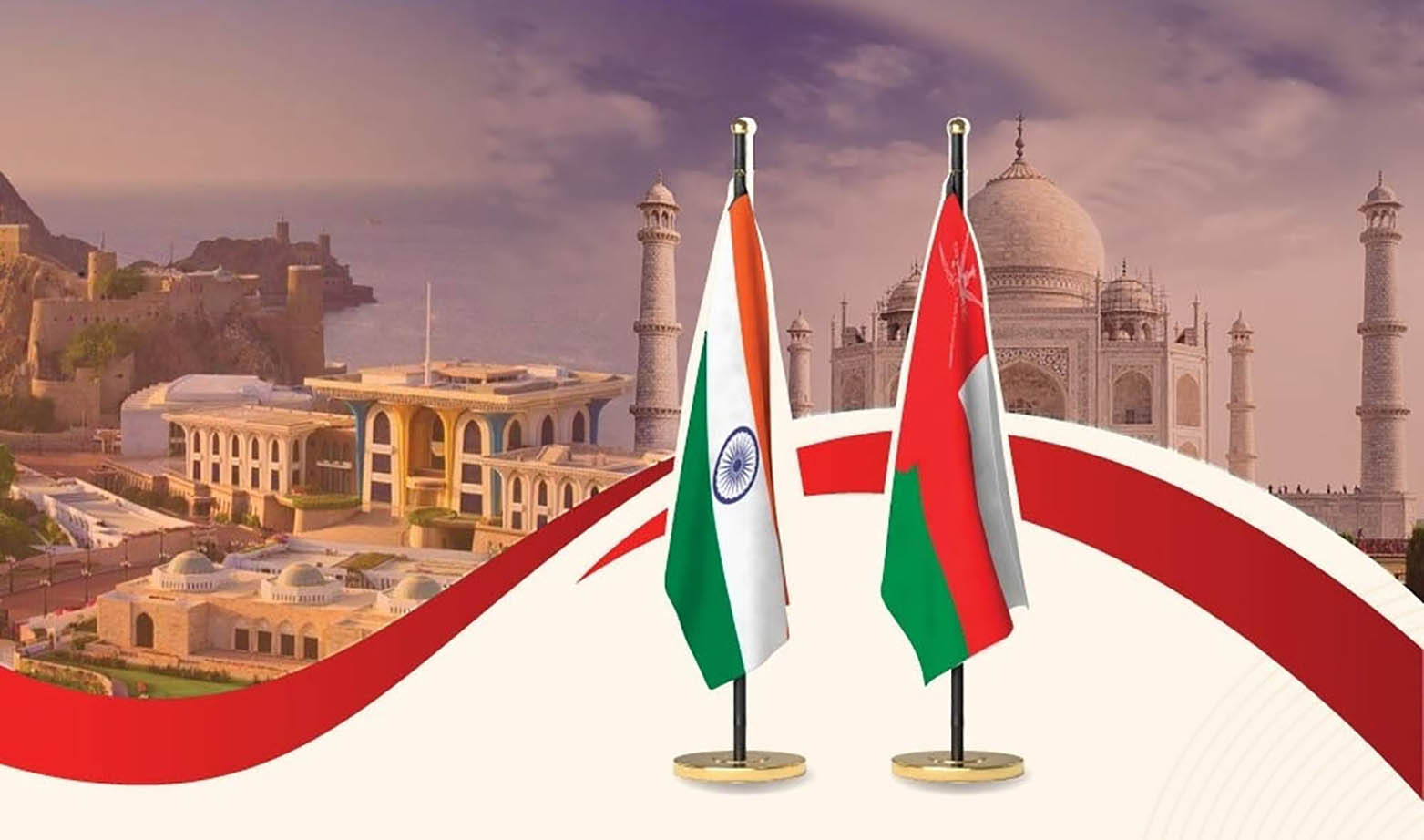
The strengthening economic ties between India and Oman deserve special attention in this case. India and Oman are not just strategic partners, but also historical, cultural, and diplomatic partners, with trade exceeding US$10 billion in 2024-25. Apart from being India’s oldest strategic partner in the region, Oman is a crucial part of India’s West Asia policy.
Moreover, there are over 6,000 India-Oman joint ventures in Oman with an estimated investment of over US$776 million. For the economic cooperation, the two economies have institutionalised the Oman-India Joint Investment Fund (OIJIF), which manages Private Equity Funds focused on growth capital investments in India.
Over the last 25 years, the cumulative FDI equity inflow from Oman to India has been US$605.57 million. Given the emergence of Oman as a manufacturing hub, Indian company ACME is building a large green ammonia complex at Duqm with long-term offtake agreements, a crucial energy transition venture.
Another important chapter in the Oman-India economic ties is ‘soon to be signed’ Comprehensive Economic Partnership Agreement (CEPA). The agreement is expected to enable diversification of their trade basket to include more commodities and exchange of services, and significantly reduce or eliminate customs duties on a maximum number of goods traded between them.
India and the Middle East relations are built on historical ties, economic exchange, and strategic partnership. The multilateral engagements through the India-Middle East-Europe Economic Corridor (IMEC), trade diversification, and pursuing barrier-free trade through CEPA are testimony to the fact that India-Middle East relations are beyond transactionalism.
India has been an important supplier of manpower for the infrastructural development of West Asia, reaping in return, remittances. The process of deepening India–Middle East relations is as much a story of India looking westward as it is about the Middle East turning its gaze eastward.
As the Middle East steers away from its dependence on hydrocarbons, the scope of entrenching ties only proliferates. The scope of developing tourism for Indians in the Middle East is just one aspect of the untapped potential. The Gulf nations are investing in India’s agriculture sector to ensure their food security. The economic synergies are immense, with the possibility to tap the unexploited economic potential between India and West Asia, as India emerges as a global economic power.
The deepening of the economic partnership is not only generating alternative centres of economic and diplomatic power globally, but also its unprecedented bilateral and multilateral engagements provide a global model for regional economic cooperation and economic development.



Real Estate Price Index in Oman Grows By 13.9%

Oil Surges More Than 2% as Supply Disruptions Mount

Ibri Industrial City Localises Two Projects Worth RO2M in 2025

VIDEO: Al Khamayil Oman Scales Up Production with New Rusail Facility

Cadillac Enhances Ramadan Ownership Value With Premium Benefits Package

CONNECT and OCEC Partnership Strengthens Oman’s Position as a Global Events Destination

Exclusive: Inside Oman’s Evolving MSME Finance Ecosystem – An Interview with Hussain Al Lawati, CEO, Development Bank

Middle East Tensions Heighten Risks to Strait of Hormuz, Raising Uncertainty for Global Oil Markets

Air India Express Announces ‘Payday Sale’; Offers Lowest Fares Across Domestic & International Network

OER, February 26

Power And Beyond: The Path To A Low-carbon Future

Al Mouj Muscat unveils Ghadeer Villas

Time to Buy Saudi Stocks? Some Investors Look at Dubai Instead

Renewables are booming, but not fast enough to cap greenhouse emissions

Hospitality Industry in Oman Estimated 90% Growth in 2022

Retail Abu Dhabi’s ‘Unbox Amazing’ generates sales of more than AED 2 billion in participating stores

Saudis Sign Deals From Energy to Metals in Bid to Salvage Forum

Saudi Arabia’s Gold Miner Plans to Be a Global Top-20 Supplier

Technology to drive Sultanate’s downstream industry

Digitization and Logistics Service Providers Can Help SMEs Make the Most of Peak Season Retail Trends

VIDEO: Robert MacLean on how NHI is Shaping Oman’s Next Generation of Hospitality Leaders

The Future of Oman: Decoding The Sultanate of Oman’s Strategic Promotional Nation Brand

EXCLUSIVE: AI, Robotics & Wearable Sensors are Changing the Lives of Dementia Patients

EXCLUSIVE: Talking Renewable Projects & Sustainability in Oman and Beyond with Vipul Tuli

VIDEO: Eng. Salim Al Thuhli, CEO, Khazaen Economic City on Investment Opportunities

H.E. Salim Al Aufi, Minister of Energy & Minerals talks about Oman’s Green Hydrogen Goals

VIDEO: Talking Latest Developments in Aircraft Ground Guidance & More at Oman Airports

VIDEO: Dr. Firas Al-Abduwani Discusses Green Hydrogen, Potential Regions for Development & Creating a Green Ecosystem

VIDEO: Discussing The Future of Green Hydrogen in Oman with H.E. Salim Al Aufi

Celebrating Infoline’s Remarkable 20-Year Journey
-

 Dossier1 month ago
Dossier, 2026
-
 Banking & Finance1 month ago
Sohar International and Sohar Islamic Supports Over 100 Families in Al Wusta Governorate Through Its ‘Sohar Al Attaa’ Initiative
-
 Banking & Finance1 month ago
National Finance Unveils Exclusive Ramadan Offers on Auto Financing
-
 OER Magazines4 weeks ago
OER, February 26
-
 Economy1 month ago
Analysis: Oman-India CEPA Opens Path to Deeper Trade Investment and Growth
-

 Economy1 month ago
New Regulations Issued for Buy Now, Pay Later Services in Oman
-

 Economy1 month ago
ANALYSIS: Oil Near Seven-Month Highs Amid US, Iran Tensions
-
 Economy4 weeks ago
Middle East Tensions Heighten Risks to Strait of Hormuz, Raising Uncertainty for Global Oil Markets