
News
Qatar’s Emir Unlikely to Attend Gulf Summit in Riyadh

(Bloomberg) –Qatar’s emir isn’t likely to attend the Gulf Cooperation Council heads of state summit starting Tuesday in Saudi Arabia, according to people familiar with the matter who confirmed progress toward mending a drawn-out regional rift while tempering expectations of a breakthrough this week.
Sheikh Tamim bin Hamad Al Thani was invited to the meeting last week by Saudi Arabia’s King Salman, potentially paving the way for major progress toward ending the 30-month feud between the emirate and several of its neighbors.
While Saudi Arabia and Qatar have made strides toward a possible reconciliation, Qatar’s prime minister is expected to represent his country at the meeting in Riyadh, one of the people said, asking not to be identified because the information isn’t official. Things haven’t been finalized and the situation remains fluid, the person said.
On Monday, Qatar’s minister of state for foreign affairs arrived in the Saudi capital for a meeting of Gulf foreign ministers ahead of the gathering of rulers.
Qatar Says Holding Talks With Saudi Arabia to End Gulf Crisis
Sheikh Tamim is traveling to Rwanda on Monday to present an international anti-corruption excellence award in his name, according to the official Qatar News Agency.
The Gulf rift began in June 2017, when Saudi Arabia, the U.A.E., Bahrain and Egypt cut diplomatic and trade links with Qatar, accusing the gas-rich emirate of building close ties with regional foe, Iran, and funding militant groups. Doha denies the claims and has weathered the embargo, digging into its deep pockets and strengthening alliances with other countries including Turkey.
30-Month Rift
Qatar’s emir rebuffed an invitation to the GCC summit last year, sending a minister instead. But as tensions between the U.S. and Iran escalated in May, Gulf nations started showing an openness to working together. Qatar’s prime minister attended a meeting of Gulf leaders in Mecca that month, after attacks on tankers near the Strait of Hormuz sparked concerns that the region was nearing conflict with Iran. In recent weeks, signals of a rapprochement have multiplied.
Gulf states, spooked by the possibility of a devastating confrontation with Iran and its proxies, are backing away from Donald Trump and his campaign to crush the Iranian economy. A brazen September strike on Saudi oil facilities, which knocked out half of the kingdom’s crude production, drove home the risks and shattered any illusion that Washington would protect its Gulf allies from an Iranian attack. Qatari Foreign Minister Mohammed bin Abdulrahman Al Thani recently traveled to Riyadh, and last week said the countries discussed “a future vision regarding ties,” according to Qatari broadcaster Al Jazeera.
The diplomacy has also extended to the soccer field, with Saudi Arabia, the U.A.E. and Bahrain sending teams to participate in the Arabian Gulf Cup, a tournament currently taking place in Doha.



IHE and Eicher Trucks and Buses promote school bus safety awareness among students

India’s rising edge in oil, gas and construction projects is enabling Middle East’s growth

The Financial Services Authority organises the National Health Insurance Platform Forum ‘Dhamani’

Is India’s accelerating export engine driving manufacturing towards global scale?

SAH wins double honours at Dossier Construction Awards & Summit 2026

VIDEO: Hitesh Akarte on Khimji Ramdas Infrastructure’s Role in Oman Vision 2040

Alam Al-Iktisaad Magazine September 2026 Edition

A decade of investing: Tech portfolio returned 1,342% versus Nasdaq-100’s 636%

His Majesty the Sultan arrives in Kazakhstan

Oman’s trade surplus reaches RO5.5 billion in July 2026

Power And Beyond: The Path To A Low-carbon Future

Al Mouj Muscat unveils Ghadeer Villas

Time to Buy Saudi Stocks? Some Investors Look at Dubai Instead

Hospitality Industry in Oman Estimated 90% Growth in 2022

Renewables are booming, but not fast enough to cap greenhouse emissions

Retail Abu Dhabi’s ‘Unbox Amazing’ generates sales of more than AED 2 billion in participating stores

Saudis Sign Deals From Energy to Metals in Bid to Salvage Forum

Saudi Arabia’s Gold Miner Plans to Be a Global Top-20 Supplier

Technology to drive Sultanate’s downstream industry

Digitization and Logistics Service Providers Can Help SMEs Make the Most of Peak Season Retail Trends
VIDEO: Hitesh Akarte on Khimji Ramdas Infrastructure’s Role in Oman Vision 2040

Oman’s Hospitality Sector Enters a New Phase of Growth: Sadiq Al Matwani Al Lawati

Amr Baabood: Oman Climate Week Is About Moving From Climate Ambition to Climate Action

Mayan Al Asfoor on Leadership, Legacy and Empowering Omani Talent

LEADERSPEAK: Dhofar Insurance CEO Sunil Kohli on Oman’s Insurance Sector, Reinsurance & Market Outlook

VIDEO: Robert MacLean on how NHI is Shaping Oman’s Next Generation of Hospitality Leaders

The Future of Oman: Decoding The Sultanate of Oman’s Strategic Promotional Nation Brand

EXCLUSIVE: AI, Robotics & Wearable Sensors are Changing the Lives of Dementia Patients

EXCLUSIVE: Talking Renewable Projects & Sustainability in Oman and Beyond with Vipul Tuli

VIDEO: Eng. Salim Al Thuhli, CEO, Khazaen Economic City on Investment Opportunities
-

 Artificial Intelligence4 weeks ago
Top 5 Interesting Things AI Did This Month – September 2026 Edition
-

 Fashion2 weeks ago
Luxury Watches That Could Appreciate Over the Next Decade [2026 Auction Buyer Guide]
-

 Highlights2 months ago
OERLive: Top 10 Mathematical Problems AI Has Solved or Transformed
-
 Banking & Finance1 month ago
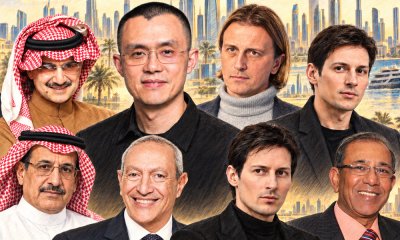
The GCC’s 10 Richest Billionaires: Inside US$253.5 Billion of Wealth
-
 Magazines2 months ago
OER Magazine July Edition 2026
-

 Magazines2 months ago
Al Mar’a Magazine July 2026
-
 Alamaliktistaad Magazines2 months ago
Alam Al-Iktisaad Magazine July 2026 Edition
-

 Economy2 weeks ago
OER Magazine September Edition 2026