
Entertainment
How Much Does It Cost to Buy at the World’s Leading Auction Houses?

Buying at the world’s leading auction houses is not reserved exclusively for billionaires. From affordable collectibles to multimillion-dollar masterpieces, understanding bidding requirements, buyer’s premiums and additional costs is essential for anyone looking to enter the global auction market.
One of the most persistent misconceptions surrounding the luxury auction industry is that participation requires either billionaire status or a substantial membership fee, when the reality is that most major houses do not impose one universal minimum purchase amount across all their auctions.
Instead, the financial commitment depends on the particular object being offered, the bidding requirements of the sale, the applicable buyer’s premium and any additional verification or deposit conditions imposed by the auctioneer.
Christie’s, for example, explicitly describes its auction categories as covering price points beginning at approximately US$500, while houses such as Bonhams, Heritage and Dorotheum regularly handle specialist collectibles and decorative objects that may be accessible to buyers operating with comparatively modest budgets.
Also Read: A Look at the World’s Greatest Auction Houses & Their Record-Breaking Sales
At the other end of the market, flagship evening auctions and significant collector-car sales may require considerably greater financial resources, including evidence that a prospective purchaser can complete a substantial transaction.
Illustrative Budgets for Prospective Collectors
The following ranges are suggested collecting budgets, not published minimum-bid requirements or guarantees that suitable objects will be available at these prices.
| Indicative Budget | Potential Collecting Categories |
|---|---|
| OMR 200-1,000 | Selected coins, decorative objects, prints, historical memorabilia and smaller collectibles |
| OMR 1,000-5,000 | Selected artworks, vintage accessories, jewellery, prints and collectible objects |
| OMR 5,000-25,000 | Vintage watches, designer furniture, fine jewellery and more established artworks |
| OMR 25,000-100,000 | High-end timepieces, substantial artworks, important jewellery and certain collector cars |
| Above OMR 100,000 | Rare watches, significant paintings, important historic automobiles and prestigious private collections |
The actual availability of objects within these categories will fluctuate considerably, and a bidder should avoid treating these bands as reliable indications of market value.
An exceptional watch or painting may command a radically different price from another example produced by the same manufacturer or artist, particularly when rarity, historical ownership or condition creates intense competition.
The Buyer’s Premium: Why the Winning Bid Is Not the Final Price

Beyond the advertised estimate and eventual hammer price, one of the most important financial considerations for any auction participant is the buyer’s premium, which represents an additional charge payable to the auction house.
These fees are generally calculated as a percentage of the hammer price, with different rates sometimes applying to successive portions of higher-value purchases, while taxes, shipping, insurance, storage and other charges can further increase the final acquisition cost.
Under the buyer’s premium schedules published for September 2026, Christie’s and Sotheby’s both specify a 28% rate on the initial US$2 million of hammer price for relevant New York sales, followed by lower marginal percentages on higher price bands. Heritage’s September 2026 fine-jewellery auction specified a 25% premium with a US$49 minimum per lot.
These examples illustrate why buyers must consult the actual conditions of sale rather than assuming a single commission rate applies universally across different auction houses, locations and collecting categories.
For example, assuming a 28% buyer’s premium, an item purchased at a hammer price of US$10,000 would generate an additional premium of US$2,800, taking the total invoice to US$12,800, or approximately OMR 4,922, before any other applicable charges.
The difference becomes particularly consequential as purchase prices increase, which is why experienced collectors calculate their maximum bids using the expected final invoice rather than the hammer price alone.
For first-time participants, registration typically involves opening an account, completing identity-verification requirements and applying for permission to bid in the relevant auction.
Depending on the auction house, sale category and anticipated expenditure, additional financial references, documentation or deposits may be requested, particularly when a bidder wishes to participate in a substantial transaction.
Christie’s, for example, requires proof of identity and address from individual clients and may request financial references or a deposit before authorising bidding, making advance preparation particularly important for international buyers.
The Benefits of Purchasing Through Established Auction Houses
Provenance, Authentication and Historical Documentation

Perhaps the most significant advantage of purchasing through a reputable international auction house is access to specialist research concerning an object’s history, condition, authenticity and previous ownership. Established auction businesses employ or consult experts in areas ranging from fine art and historical manuscripts to gemstones, vintage watches and classic automobiles, enabling them to compile catalogues that provide prospective buyers with information which may be difficult to obtain through an ordinary retail transaction. However, even the most respected auction house cannot eliminate every authentication or attribution risk, and the exact warranties available depend on the published conditions of sale.
Access to Objects Rarely Available Through Conventional Retail

For collectors seeking exceptional examples of watches, paintings, jewellery, automobiles or historical artefacts, the principal attraction of an auction often lies in the opportunity to purchase an object that cannot simply be ordered from a boutique or manufacturer. Discontinued watches with unusual specifications, artworks held privately for generations, rare automotive prototypes and jewellery associated with distinguished historical personalities may appear only occasionally in the public market. Access to such objects can be especially important to established collectors whose purchasing decisions are driven by rarity and collection quality rather than the acquisition of contemporary luxury products.
Public Price Discovery and Comparable Transactions
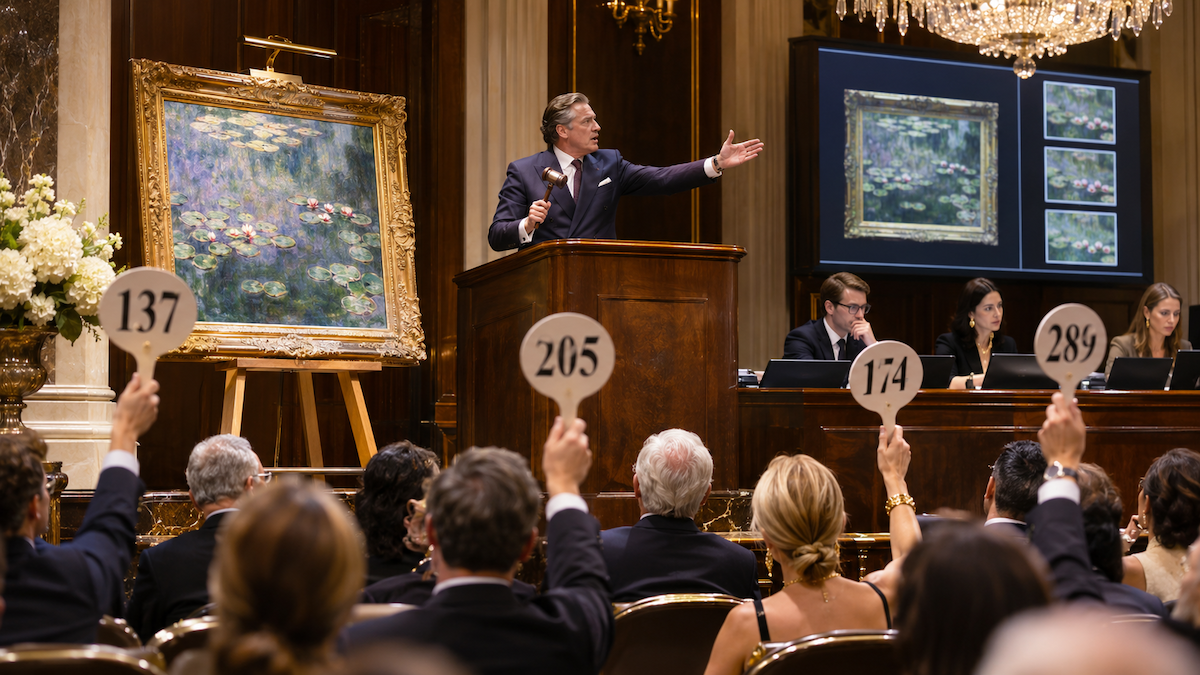
Although the art and collectibles market has historically been characterised by limited transparency, public auction results provide valuable evidence of the amounts buyers were prepared to pay for particular objects at specific moments in time. Historical sale databases can help collectors assess comparable transactions, examine how different examples have performed and distinguish genuine market demand from ambitious retail asking prices. Nevertheless, auction prices reflect the circumstances of an individual sale, including the number of competing bidders, the condition of the object and prevailing market sentiment, and should not be treated as dependable forecasts of future returns.
Estate Planning, Diversification and Collection Management

For high-net-worth individuals and family offices, auction houses can provide services that extend considerably beyond the acquisition of individual objects, including private sales, valuations, estate dispersals, collection management and introductions to specialist advisers. These services can be useful when organising substantial collections, establishing values for insurance or inheritance planning, or disposing of assets that require access to an international audience of qualified buyers. However, artworks, vintage watches and collectible automobiles are generally illiquid assets that involve ownership expenses and can fluctuate substantially in value, making them different from conventional financial investments.
Private Sales and Confidentiality

For collectors who prefer discretion to the publicity of a competitive auction, many leading houses provide private-sale services through which buyers and sellers can negotiate transactions outside the traditional saleroom. Such arrangements may offer greater control over timing, confidentiality and commercial terms, although they also provide less public evidence of the agreed price. Private sales are particularly relevant to wealthy collectors seeking to acquire or dispose of exceptional assets without announcing their intentions to the wider market.
What Collectors in the GCC Should Know Before Buying Internationally

For buyers based in Oman and the GCC, participation in a major international auction has become considerably easier through digital catalogues, online bidding, telephone bidding and dedicated client-service teams, but the practical implications of completing a purchase remain important.
A collectible purchased in London, Geneva or New York may require specialist packaging, transit insurance, customs documentation and careful consideration of any import restrictions or applicable taxes before it can be brought into the Sultanate.
An especially important consideration for collectors purchasing historically significant objects is the distinction between legal ownership and permission to export an item from the country in which it is located.
Antiquities, historically important manuscripts, protected artworks and certain culturally significant objects may be subject to additional restrictions or licensing requirements, while items manufactured using regulated natural materials may face separate international trade controls.
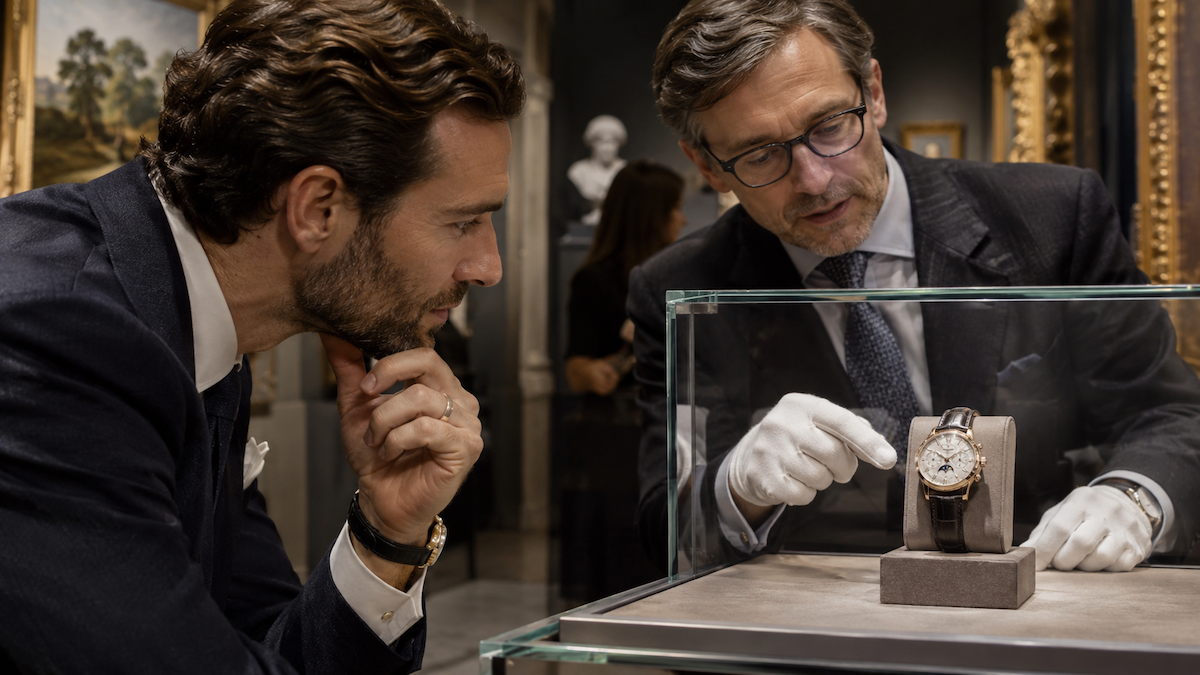
Before bidding, prospective buyers should confirm with the auction house and the relevant authorities whether the object can legally be exported and imported, rather than assuming that a successful sale guarantees unrestricted international movement.
Collectors considering jewellery and rare watches should also examine the documentation accompanying each lot, including manufacturer archives where available, gemstone laboratory reports, service histories and any evidence of replacement or modified components.
In the collector-car market, buyers should pay similar attention to chassis identification, originality, restoration records and the requirements for registration in Oman, particularly when purchasing vehicles that may not satisfy local road-use or import requirements.

From a financial perspective, purchasers should calculate the full landed cost of an acquisition before bidding, rather than using the auction estimate as the basis for their budget.
This calculation should incorporate the buyer’s premium, any relevant local or foreign taxes, shipping, insurance, customs charges, foreign-exchange costs and expected maintenance or preservation expenditure.
Because the Omani rial is pegged to the US dollar but not to the euro, pound sterling or Swiss franc, foreign-exchange movements can also affect the local-currency cost of transactions conducted in European auction centres.
Beyond the Hammer: The Enduring Value of the World’s Greatest Auctions

Throughout their long histories, the world’s leading auction houses have developed into considerably more than intermediaries between individuals wishing to buy and sell expensive objects, becoming influential institutions through which cultural heritage, historical significance and luxury craftsmanship are assigned financial value.
Their landmark transactions reveal how the identity of a former owner, the rarity of an object, the circumstances of its creation and the strength of competitive demand can combine to produce valuations that would have seemed unimaginable when many of these objects were originally manufactured or commissioned.
For established collectors, the importance of institutions such as Sotheby’s, Christie’s, Phillips and their specialist counterparts lies in their ability to provide access to exceptional objects, research expertise and international networks that can be difficult to replicate through private transactions.
For emerging collectors, their wider catalogues offer opportunities to acquire distinctive objects at more modest price points, potentially creating the foundation for collections developed over many years.
Ultimately, the most meaningful acquisitions are not necessarily those that achieve the highest headline prices, but those that combine genuine rarity, documented authenticity, historical importance and personal significance.
While the auction market will continue to generate extraordinary financial records, its enduring appeal rests on something more fundamental: the opportunity to become the next custodian of an object whose story began long before the auctioneer’s hammer fell.



How Much Does It Cost to Buy at the World’s Leading Auction Houses?

A Look at the World’s Greatest Auction Houses & Their Record-Breaking Sales

The World’s Most Extraordinary Watches: What Makes Them Worth Millions?

Sohar International Signs 3 Strategic Agreements at Investment Partnerships Horizons Conference

Car Loan vs Cash: The Hidden Financial Advantage of Taking a Car Loan in Oman

Al Mouj Muscat Welcomes First Residents to Exclusive Jinan Island Community

Inside Binance’s $6.3 Billion Hack: How the Attack Unfolded and What Happens Next

National Finance Marks Exceptional Growth With Strong Q3 2026 Performance

Energy Oman announces OMR 50 million Sukuk (Series 2)

OERLive ANALYSIS: Which Companies in Oman Have Paid Investors the Most Dividends?

Power And Beyond: The Path To A Low-carbon Future

Al Mouj Muscat unveils Ghadeer Villas

Time to Buy Saudi Stocks? Some Investors Look at Dubai Instead

Hospitality Industry in Oman Estimated 90% Growth in 2022

Renewables are booming, but not fast enough to cap greenhouse emissions

Retail Abu Dhabi’s ‘Unbox Amazing’ generates sales of more than AED 2 billion in participating stores

Saudis Sign Deals From Energy to Metals in Bid to Salvage Forum

Saudi Arabia’s Gold Miner Plans to Be a Global Top-20 Supplier

Technology to drive Sultanate’s downstream industry

Digitization and Logistics Service Providers Can Help SMEs Make the Most of Peak Season Retail Trends

VIDEO: Building Oman’s Future – SAH’s Vision for Infrastructure, Innovation and Growth

VIDEO: Oman Cables Breaks Ground on OMR 10 Million-Plus Plant to Power Oman’s Industrial Future

VIDEO: Hitesh Akarte on Khimji Ramdas Infrastructure’s Role in Oman Vision 2040

Oman’s Hospitality Sector Enters a New Phase of Growth: Sadiq Al Matwani Al Lawati

Amr Baabood: Oman Climate Week Is About Moving From Climate Ambition to Climate Action

Mayan Al Asfoor on Leadership, Legacy and Empowering Omani Talent

LEADERSPEAK: Dhofar Insurance CEO Sunil Kohli on Oman’s Insurance Sector, Reinsurance & Market Outlook

VIDEO: Robert MacLean on how NHI is Shaping Oman’s Next Generation of Hospitality Leaders

The Future of Oman: Decoding The Sultanate of Oman’s Strategic Promotional Nation Brand

EXCLUSIVE: AI, Robotics & Wearable Sensors are Changing the Lives of Dementia Patients
-

 Artificial Intelligence2 months ago
Top 5 Interesting Things AI Did This Month – September 2026 Edition
-

 Economy1 month ago
OER Magazine September Edition 2026
-

 Fashion1 month ago
Luxury Watches That Could Appreciate Over the Next Decade [2026 Auction Buyer Guide]
-

 Alamaliktistaad Magazines4 weeks ago
Alam Al-Iktisaad Magazine September 2026 Edition
-

 Banking & Finance2 months ago
The GCC’s 10 Richest Billionaires: Inside US$253.5 Billion of Wealth
-

 Banking & Finance2 months ago
INVESTIGATION: What If You Bought Apple Stock Every Time You Bought an iPhone?
-

 News2 months ago
OPEC+ Holds Output Steady for October as Focus Shifts to 2027 Quotas
-

 Artificial Intelligence1 month ago
What the World’s Top 10 Tech CEOs Really Earn