
Banking & Finance
Oman’s Net Wealth Hits $336B in 2025; Expected to Reach $465B by 2030: Report
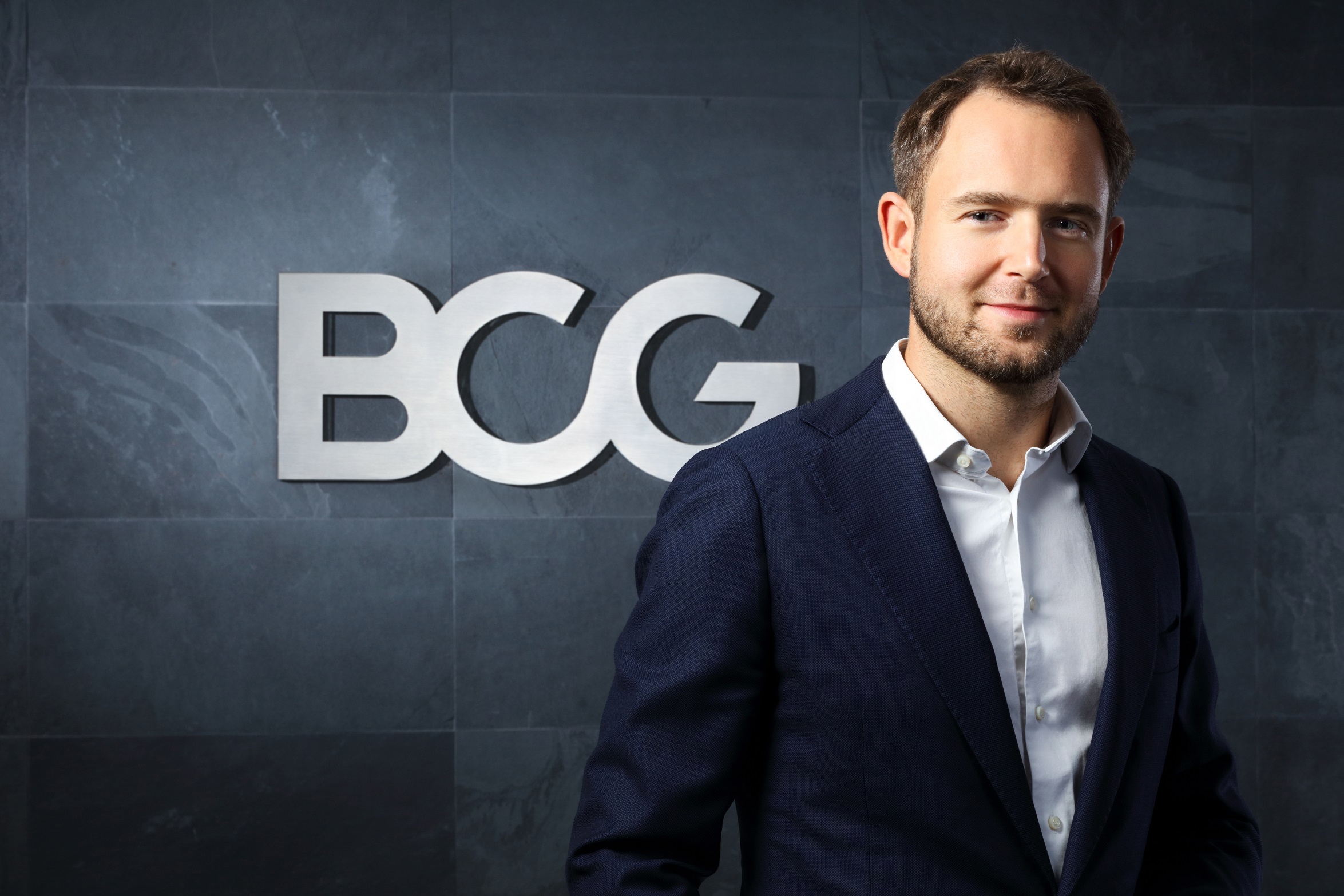
Oman’s net wealth grew by 3.6% between 2024 and 2025, rising from $325 billion to $336 billion, according to Boston Consulting Group’s (BCG) Global Wealth Report 2026: The Great Reordering.
Total Net wealth is forecast to reach $465 billion by 2030 with a CAGR of 6.7%. This represents an increase of $129 billion over the next five years, underscoring Oman’s long-term wealth creation potential.
Financial wealth, including both investable and non-investable wealth, grew by 4.3% between 2024 and 2025, rising from $140 billion to $146 billion and is set to rise to $207 billion by 2030 at a CAGR of 7.2%. Real assets reached $203 billion in 2025 from $197 billion in 2024, with projected growth to $276 billion by 2030.
The findings underscore the resilience of Oman’s wealth market amid a volatile global environment and heightened geopolitical uncertainty. “Oman’s steady wealth accumulation demonstrates the effectiveness of the Sultanate’s Vision 2040 agenda and its commitment to economic diversification beyond hydrocarbons,” said Lukasz Rey, Managing Director and Partner at BCG.
“With net wealth projected to grow by nearly $130 billion over the next five years, Oman presents a compelling opportunity for wealth managers who can deliver sophisticated, locally-attuned advisory services. The growth in both real assets and financial wealth signals a maturing investor base increasingly seeking professional guidance to preserve and grow intergenerational wealth.”
The report identifies a broader reordering underway across the global wealth-management industry, spanning geographic shifts, emerging-market wealth creation, intergenerational succession, and AI-driven operating model transformation.
Shifting Wealth Concentration Across Oman Population Segments
According to the report, Oman’s financial wealth remains highly concentrated among highernetworth segments. Ultrahighnetworth (UHNW) individuals, those with more than US$100 million in assets, number approximately 70 in 2025, while their share of total financial wealth is expected to rise from 22.5% in 2025 to 23.4% by 2030.
The upper high-net-worth segment (US$20-100 million) is projected to grow from approximately 400 to 600 individuals between 2025 and 2030, with its share of financial wealth wealth forecasted to remain broadly stable, increasing slightly from 10.6% in 2025 to 10.7% by 2030.
In contrast, the lower high-net-worth segment (US$1-20 million) comprises approximately 10.7K individuals in 2025, while its share of financial wealth is expected to remain broadly stable, declining only slightly from 23% in 2025 to 22.7% by 2030. The affluent segment (US$0.25-1 million) is set to expand from approximately 31.6K to 43.9K individuals, while its share of wealth is projected to decline slightly from 10.1% in 2025 to 9.9% by 2030.
The mass segment (below US$0.25 million) is forecast to remain the largest by population, from roughly 3.9M to 4.4M individuals, but its share of financial wealth is estimated to decline modestly from 33.8% in 2025 to 33.2% by 2030.
The key Oman findings of BCG’s proprietary analysis are:
- Financial wealth reaches $146 billion in 2025, with strong projected growth to $207 billion by 2030 (CAGR: 7.2%)
- Real assets rose to $203 billion in 2025 and are expected to hit $276 billion by 2030 (CAGR: 6.4%)
- Liabilities reached $13 billion in 2025, with projections indicating $19 billion by 2030 (CAGR: 7.7%)
- Cross-border wealth surged by 1.8% between 2024 – 2025 in Oman, reaching $45.3 billion. It is forecast to grow to $64.5 billion with a CAGR of 7.4% between 2025–2030
- Currency & Deposits, valued at $35.6 billion in 2025, is projected to grow to $54.9 billion by 2030, with a CAGR of 9%
- Bonds are expected to remain stable at $1.5 billion in 2025 and $1.6 billion in 2030, with a CAGR of 2.4%
- Equities, valued at $62.3 billion in 2025, is expected to reach $83.8 billion by 2030 at a CAGR of 6.1%
- Life Insurance & Pensions are valued at $1.5 billion in 2025 and projected to grow to $2.1 billion by 2030 (CAGR: 7.8%)
AI Is Reshaping the Economics of Wealth Management
BCG’s report finds that AI is beginning to fundamentally reshape wealth-management economics and operating models. AI-powered tools are already drafting financial plans, automating compliance documentation, generating portfolio rationales, and predicting client churn. According to BCG analysis, AI-first wealth managers could unlock 25%-30% capacity gains across key workflows while increasing revenue per advisor by 15%-20%. The report argues that the industry is approaching a structural divide between firms redesigning workflows around AI agents and those layering AI tools onto legacy processes.
“With Oman’s financial wealth projected to grow to $207 billion by 2030 and cross-border wealth expected to reach $64.5 billion, the opportunity for wealth managers is substantial, but so is the competitive pressure,” said Lukasz Rey, Managing Director and Partner at BCG.
“The rapid growth in currency and deposits signals that significant client assets remain under-deployed and ripe for advisory conversion. Wealth managers who harness AI to deliver personalized portfolio recommendations and real-time insights will be best positioned to capture this opportunity. Those still relying on manual processes will struggle to serve Oman’s expanding affluent and high-net-worth segments with the speed and sophistication they increasingly demand.”
Wealth managers must choose: adapt incrementally or commit to an AI-first future. We believe the latter is more sustainable. Key priorities include:
- Map value chain exposure: Identify rules-based, templatized processes most vulnerable to automation. Distinguish truly bespoke, relationship-dependent work from structured, repeatable tasks to guide investment decisions.
- Attack high-cost workflows: Scale AI now in financial planning, portfolio management, and compliance, automated drafting, AI-generated rationales, knowledge assistants.
- Rebuild the advisor experience around AI: Integrate next-best-action prompts, retention alerts, automated documentation, and personalized outreach into a unified system.
- Encode institutional knowledge into agents: Pair top practitioners with engineers to build and refine AI agents. Embed advisor judgment into today’s agents, without centralized ownership and outcome-based evaluation, differentiation erodes.
- Prepare the tech stack for agents. Introduce a decoupled data layer separating operational systems from data consumption, delivering real-time, API-accessible data while maintaining deterministic control through transaction systems and rules engines.



Energy Oman Highlights Sukuk Series 2 and Strategic Energy Priorities at Media Roundtable

Oman’s Net Wealth Hits $336B in 2025; Expected to Reach $465B by 2030: Report

MPH sets New Benchmark for Interventional Cardiology in Oman

Jensen Huang Resigns as NVIDIA CEO Amid Scandal, Shaking Global AI Industry

OPINION: Nvidia’s Biggest Risk May No Longer Be Its Chips, but Its CEO

Seven Perfumes That Capture Oman’s High-Perfumery Identity

Ubhar Capital Hosts Investment Dialogue in Muscat with Ominvest as Strategic Partner

OPINION: Why Oman’s ESG Reporting is Being Tested Where Resilience, Carbon & Capital Meet

The Rise of Oman in the World of High Perfumery

HH Sayyid Bilarab Bin Haitham Presides Over Official Unveiling of Al Yazan ITC in Wilayat Muttrah

Power And Beyond: The Path To A Low-carbon Future

Al Mouj Muscat unveils Ghadeer Villas

Time to Buy Saudi Stocks? Some Investors Look at Dubai Instead

Hospitality Industry in Oman Estimated 90% Growth in 2022

Renewables are booming, but not fast enough to cap greenhouse emissions

Retail Abu Dhabi’s ‘Unbox Amazing’ generates sales of more than AED 2 billion in participating stores

Saudis Sign Deals From Energy to Metals in Bid to Salvage Forum

Saudi Arabia’s Gold Miner Plans to Be a Global Top-20 Supplier

Technology to drive Sultanate’s downstream industry

Digitization and Logistics Service Providers Can Help SMEs Make the Most of Peak Season Retail Trends

VIDEO: Building Oman’s Future – SAH’s Vision for Infrastructure, Innovation and Growth

VIDEO: Oman Cables Breaks Ground on OMR 10 Million-Plus Plant to Power Oman’s Industrial Future

VIDEO: Hitesh Akarte on Khimji Ramdas Infrastructure’s Role in Oman Vision 2040

Oman’s Hospitality Sector Enters a New Phase of Growth: Sadiq Al Matwani Al Lawati

Amr Baabood: Oman Climate Week Is About Moving From Climate Ambition to Climate Action

Mayan Al Asfoor on Leadership, Legacy and Empowering Omani Talent

LEADERSPEAK: Dhofar Insurance CEO Sunil Kohli on Oman’s Insurance Sector, Reinsurance & Market Outlook

VIDEO: Robert MacLean on how NHI is Shaping Oman’s Next Generation of Hospitality Leaders

The Future of Oman: Decoding The Sultanate of Oman’s Strategic Promotional Nation Brand

EXCLUSIVE: AI, Robotics & Wearable Sensors are Changing the Lives of Dementia Patients
-

 Economy2 months ago
OER Magazine September Edition 2026
-

 Fashion2 months ago
Luxury Watches That Could Appreciate Over the Next Decade [2026 Auction Buyer Guide]
-

 Alamaliktistaad Magazines1 month ago
Alam Al-Iktisaad Magazine September 2026 Edition
-

 Artificial Intelligence2 months ago
What the World’s Top 10 Tech CEOs Really Earn
-

 Construction1 month ago
SAH wins double honours at Dossier Construction Awards & Summit 2026
-
 Magazines2 months ago
OER Magazine August Edition 2026
-
 Real Estate1 month ago
Agreements worth over RO1 billion signed at Urban October 2026
-

 Banking & Finance2 months ago
Can You Earn 4.5% on Your Savings in Oman? The Truth About Money Market Funds