
Economy
INVESTIGATION: What Happens to Oman’s Economy at $60, $80, $100 and $120 Oil?
From government finances and business confidence to jobs, borrowing costs and household spending, the consequences of changing oil prices reach far beyond the energy industry. For Oman, the value of a barrel matters enormously, but the durability of the price, the volume sold and the way the proceeds are used matter just as much.
When oil prices rise, Oman gains the possibility of stronger public finances, greater investment capacity and faster debt reduction, yet the benefits reaching your household or a business depend on a much longer chain of decisions. Additional export earnings must first translate into government receipts and company cash flows, after which they can support spending, savings, investment and employment. Along the way, higher freight charges, imported inflation and financing costs can absorb part of the gain.
A comparison between $60, $80, $100 and $120 oil therefore reveals four different economic environments, each carrying its own opportunities and pressures. At the lower end, the challenge is to sustain development while managing tighter finances; towards the upper end, the challenge shifts to preserving the windfall, containing costs and preventing temporary prosperity from creating permanent obligations.
For this analysis, the four prices represent sustained annual averages for the oil Oman sells, with volumes initially held constant to isolate the price effect. They are scenarios, rather than forecasts for the remainder of 2026, and a Brent quotation on a particular trading day should not be treated as identical to Oman’s realised selling price.
How Much Does Oman Still Depend on Oil?
The starting point is the Ministry of Finance’s approved 2026 budget, announced on January 1 and reported by Oman News Agency. Prepared at an assumed oil price of $60 a barrel, it provides for OMR11.447 billion in revenue and OMR11.977 billion in expenditure, leaving a planned deficit of OMR530 million. Revenue comprises OMR5.752 billion from net oil receipts, OMR1.961 billion from net gas receipts and OMR3.734 billion from other sources.
Calculated from those allocations, oil supplies approximately 50.2 per cent of budgeted revenue, while oil and gas together contribute 67.4 per cent. Oman has consequently broadened its revenue base, but around two-thirds of the budget still depends directly on hydrocarbons. That exposure concerns the financing of government; it should not be confused with the share of national economic output accounted for by oil and gas.
The distinction between a budget assumption and a fiscal break-even price is particularly important. The former is a planning input, while the latter is the price required to balance revenue and expenditure under a specific set of production, spending and revenue assumptions. Because the approved budget already includes a deficit at $60, that price cannot be presented as the point at which Oman automatically balances its books.
Recent fiscal results demonstrate how much else influences the outcome, with the Ministry of Finance’s final accounts for 2025, published on June 21, 2026, reporting a realised oil price of $72, revenue of OMR12.122 billion, expenditure of OMR12.583 billion and a deficit of OMR461 million. Although revenue exceeded the original budget by OMR942 million, spending exceeded it by OMR783 million, leaving a much smaller improvement in the balance than the revenue gain alone might suggest.
For the first half of 2026, the ministry’s second-quarter Fiscal Performance Bulletin reported preliminary revenue of OMR6.602 billion and expenditure of OMR6.619 billion, producing a deficit of OMR17 million. The realised oil price averaged $74, with production averaging 1.074 million barrels a day. These cumulative January-to-June results show a position close to balance, but they neither establish a permanent $74 break-even price nor determine the full-year outcome.
The practical lesson here is that an oil-price gain can finance additional development, support consumers, reduce borrowing or accumulate as savings, with each choice producing a different fiscal result. A smaller surplus is not automatically evidence of poor performance if productive investment has increased, just as a larger surplus does not necessarily indicate stronger underlying economic diversification.
Why Oil Prices Take Time to Reach the Budget
Timing creates another important complication, especially when interpreting headlines late in the year. The Ministry of Finance’s first-quarter 2026 bulletin explains that oil receipts generally enter the accounts around three months after the sales contract: a January sale, for example, may be delivered in March and collected in April. Under this mechanism, oil revenue recorded in fiscal 2026 broadly reflects sales from October 2025 through September 2026.
A price surge in October therefore cannot simply be multiplied across the remaining months and added to the current year’s budget. Nor does a brief spell at $120 constitute a $120 oil economy; with broadly equal monthly sales, one month at $120 and eleven months at $60 would produce an annual average of roughly $65.
What the Four Price Scenarios Are Worth
To illustrate the scale of the price effect, OERLive has calculated the annual gross value of a hypothetical, unchanged sales stream of one million barrels a day. The conversion uses the Central Bank of Oman’s stated exchange-rate parity of OMR1 to US$2.6008. This is a standardised arithmetic comparison, not an estimate of Oman’s actual exports, government revenue or budget balance.
| Sustained average oil price | Annual gross sales value at one million barrels a day | Additional gross value compared with $60 |
|---|---|---|
| $60 a barrel | OMR8.42 billion | N/A |
| $80 a barrel | OMR11.23 billion | OMR2.81 billion |
| $100 a barrel | OMR14.03 billion | OMR5.61 billion |
| $120 a barrel | OMR16.84 billion | OMR8.42 billion |
Source: OERLive calculations using price × 1,000,000 barrels × 365 days, converted at the CBO parity. Figures are rounded and exclude production costs, ownership and contractual allocations, domestic processing, gas revenue, collection timing and government spending.
At that reference volume, every sustained $10 increase adds about OMR1.40 billion to annual gross sales value, illustrating why relatively modest price changes can have substantial national consequences. The government receives only the amounts due through its ownership, fiscal and contractual arrangements, however, so the additional gross value cannot be added directly to the budget.
KPMG’s analysis of Oman’s 2026 budget also highlights production costs associated with Energy Development Oman and other producers in explaining the net oil-revenue allocation.
$60 Oil: Tighter Choices and Greater Pressure on Spending
At an annual average of $60 a barrel, Oman would face a period of tighter choices, with the emphasis on protecting essential services and productive investment while controlling financial commitments. Under the approved budget assumptions, the planned OMR530 million deficit amounts to approximately 4.4 per cent of spending. This is a financing requirement that must be managed, rather than evidence by itself of an economic crisis.
The immediate pressure would fall on the flexibility surrounding the budget, because salaries, operating costs, social commitments and debt obligations cannot all be adjusted quickly without consequences. Policymakers would have to weigh the value of new projects against the costs of postponement, the availability of financing and the need to preserve reserves. A long period at $60 would make those trade-offs more demanding than a temporary fall lasting a few weeks.
For local contractors and suppliers, the most consequential effects could emerge through the pace of new tenders, the sequencing of projects and customers’ willingness to commit to expansion. A company may continue servicing an existing contract while becoming more cautious about buying equipment or recruiting permanent staff. Across the supply chain, several such decisions can weaken demand even when no major project has formally been cancelled.
Within the upstream industry, a lower price would encourage closer scrutiny of discretionary drilling, expansion and procurement, although operational requirements and long-term commitments would continue to matter. The distinction between maintaining existing production and approving additional capacity is crucial: reducing investment too aggressively can weaken future output and make the next recovery harder to capture.
In households and non-energy businesses, the offsetting benefit would be the possibility of lower international fuel, freight and input costs. The extent of that relief would depend on why oil had fallen. A price decline caused by plentiful supply alongside healthy global demand would be relatively favourable for importers, whereas a decline caused by recession could coincide with weaker tourism, exports and investment.
Oman’s own resilience would also depend on how far prices fell beyond this scenario. In a deliberately adverse simulation published in its January 2026 Article IV report, the IMF modelled $40 oil in 2026 and estimated a fiscal deficit of 7.3 per cent of GDP and a 1.1 percentage-point reduction in non-hydrocarbon growth relative to its baseline. The exercise assumed no active policy response and was not a prediction, but it demonstrates the channels through which a deeper oil shock can affect the wider economy.
For a sustained $60 environment, the strongest response would be to preserve spending that improves future earning capacity while resisting commitments that require permanently higher revenue. Maintenance, effective education, commercially justified infrastructure and reliable public payments can support resilience; indiscriminate cuts risk weakening the private economy and the non-oil revenues on which future budgets increasingly depend.
$80 Oil: Breathing Room for the Budget and Businesses
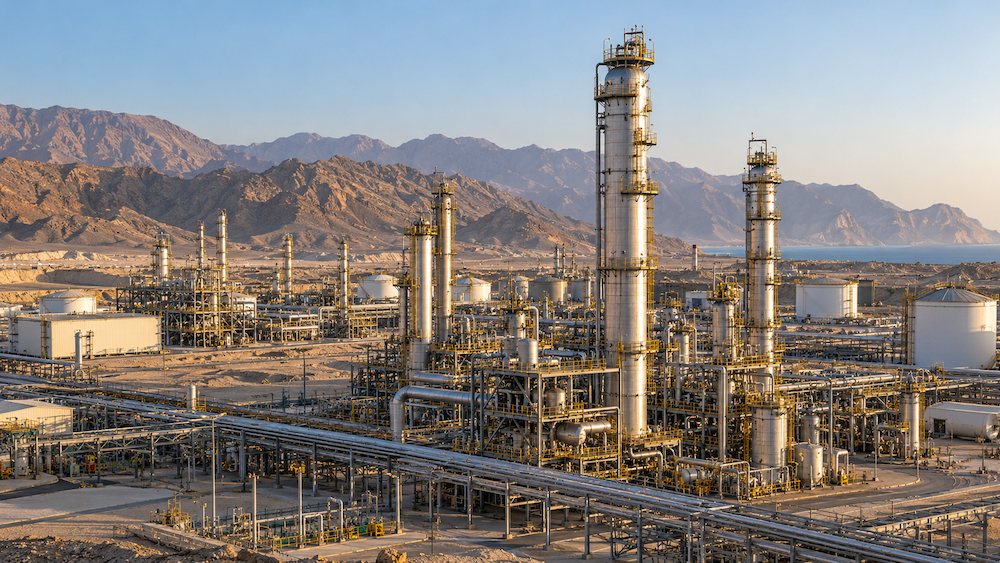
At an annual average of $80 a barrel, Oman would have materially more room to strengthen its finances, provided production and exports remain reliable and expenditure grows at a controlled pace. The scenario offers a more supportive setting for narrowing deficits, reducing financing needs and maintaining development programmes, although the recent fiscal results show why an exact surplus cannot responsibly be inferred from the price alone.
One of the most valuable uses of the additional receipts would be reducing future interest costs, particularly where expensive debt can be repaid or avoided without disproportionate penalties. As a simple illustration, retiring OMR1 billion of debt carrying a 5 per cent annual financing cost would save approximately OMR50 million a year, before transaction costs and other adjustments. That is an arithmetic example rather than an estimate of Oman’s actual borrowing rate, but it shows how a temporary windfall can create a recurring benefit.
The fiscal opportunity is substantial enough to matter beyond the current budget year. Oman’s Ministry of Finance reported public debt of OMR14.16 billion at the end of June 2026, while the approved annual budget allocated OMR911 million to debt-service expenditure. Reducing the cost and refinancing risk of those obligations would leave more capacity to absorb future shocks and sustain spending when oil weakens.
For businesses in Oman, the most useful improvement could be greater predictability in investment and purchasing decisions. A dependable project pipeline allows contractors to schedule equipment, training and recruitment more efficiently, while steady payments reduce the amount of working capital tied up in receivables. Those benefits can be more durable than a sudden burst of tenders followed by retrenchment.
The connection to employment depends on how the money is spent and how much activity takes place locally. An imported equipment purchase and a programme that develops competitive Omani suppliers may involve similar expenditure but generate different domestic income and skills. Evaluating procurement through local value creation, productivity and lasting commercial demand would therefore be central to turning stronger oil receipts into better employment outcomes.
Under a scenario of healthy global demand and functioning trade routes, $80 could possibly provide a comparatively balanced environment: enough support for the Treasury without the same energy-cost shock associated with substantially higher prices.
This assessment is an analytical judgement, rather than an official estimate of an optimal oil price, and it depends heavily on the wider economic conditions producing that price.
$100 Oil: An Opportunity to Build Lasting Financial Strength
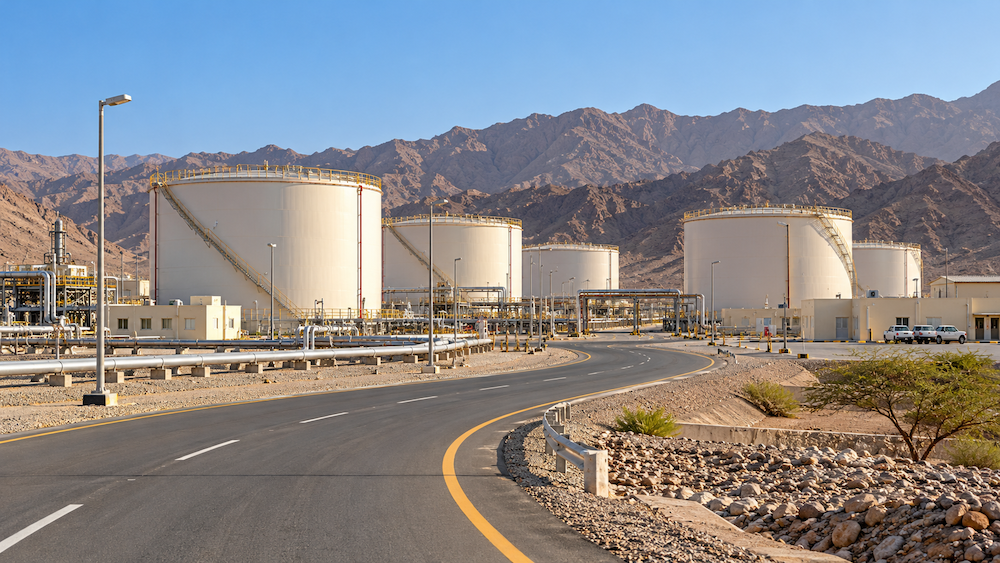
At an annual average of $100 a barrel, Oman’s opportunity would extend beyond near-term fiscal repair towards a substantial strengthening of its financial position and investment capacity. With sales volumes sustained, the government would be better placed to combine debt reduction, reserve accumulation and carefully selected development expenditure, although the distribution between those uses would remain a policy choice.
The first decision would concern how much of the additional income should be treated as temporary. Building permanent salary, subsidy or operating commitments around an unusually high oil price can leave a budget exposed when markets reverse. A more durable approach would match recurring obligations to conservative revenue expectations and direct a meaningful portion of exceptional receipts towards savings and investments with demonstrable economic returns.
A useful distinction would also need to be maintained between debt falling in Omani Rials and debt falling as a percentage of GDP. Higher oil prices can increase nominal GDP, which mechanically improves the debt ratio even if the outstanding debt barely changes. Both measures have analytical value, but only examining the ratio can exaggerate how much financial repair has actually occurred.
The same distinction applies when judging economic growth, because selling the same volume of oil at a higher price increases its current monetary value without increasing physical production. Real GDP measures output after removing price changes, so a move from $80 to $100 cannot be translated directly into an equivalent increase in real growth. Additional activity would have to come through higher production, investment, services or other output.
For the private sector, $100 oil would create a mixed commercial picture. Producers with sustained sales could receive stronger cash flows, while suppliers might benefit from investment and maintenance activity. At the same time, importers, airlines and businesses purchasing energy-intensive materials could face higher costs, meaning that stronger national income would not guarantee stronger margins across every industry.
Refining provides a particularly important example of why the label “energy business” can conceal different exposures. The US Energy Information Administration (EIA) explains that the gap between petroleum-product prices and crude costs, commonly described through crack spreads, helps indicate refining margins.
For Oman’s refining operations, the relevant questions would therefore include product demand, feedstock costs, operating efficiency and the ability to sell output, rather than simply whether crude had reached $100.
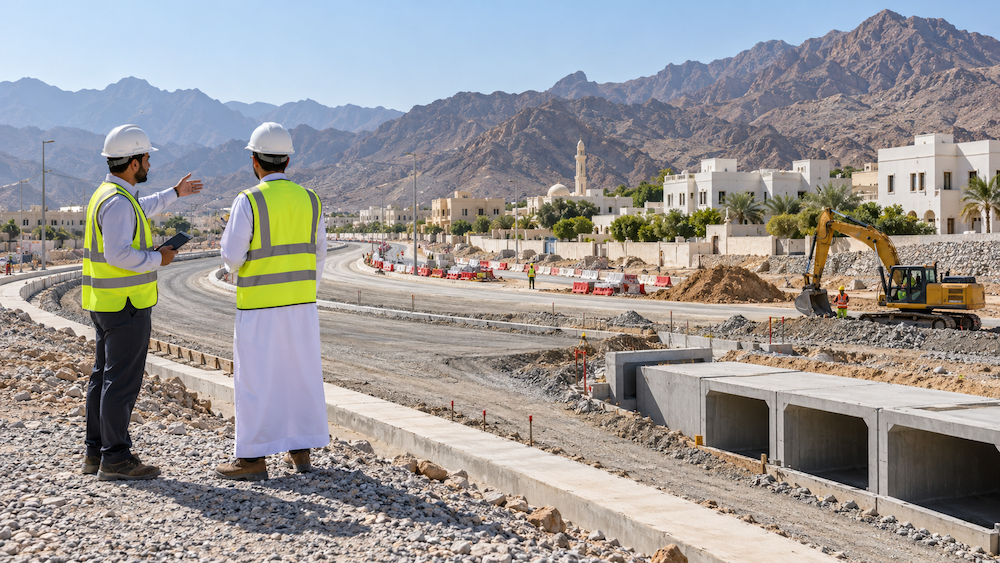
Higher receipts would also need to be assessed alongside the cost of the development they finance. If building materials, specialist equipment, shipping and skilled labour become more expensive, a larger nominal project allocation may deliver less additional infrastructure than expected. The appropriate measure of a successful windfall would be the assets, services and productive capacity created after accounting for these costs.
The difference between favourable oil prices and broadly favourable economic conditions is already visible in institutional assessments. Following its June 2026 discussions with Oman, the IMF, as reported by the Ministry of Finance on June 16, expected stronger fiscal and external positions while also highlighting regional uncertainty as a risk. The two observations can coexist: a country can gain from higher export prices while facing a more difficult environment for trade, investment and tourism.
$120 Oil: A Larger Windfall With Larger Risks
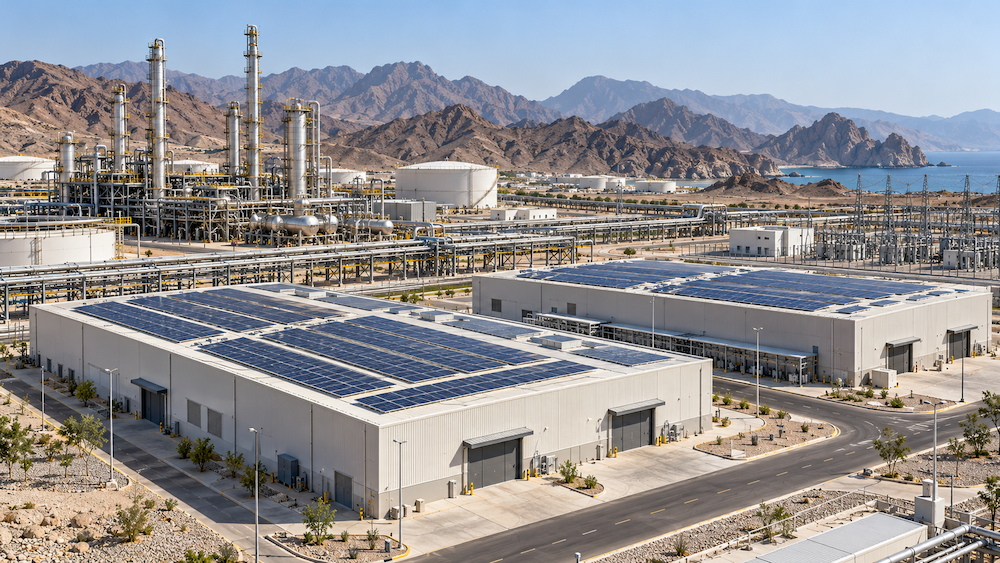
At an annual average of $120 a barrel, Oman could receive an exceptional oil windfall, but the likelihood of serious offsetting costs would demand much closer examination. If high prices reflected strong worldwide demand and Oman could maintain sales, the direct revenue effect would be highly favourable. If they reflected damaged infrastructure, interrupted shipping or wider conflict, the relationship between price and national welfare would become considerably less straightforward.
The importance of physical sales can be demonstrated without forecasting any disruption in Oman. A hypothetical producer selling one million barrels a day at $100 earns gross revenue of $100 million a day; selling 800,000 barrels at $120 produces $96 million. In that example, a 20 per cent rise in price fails to compensate for a 20 per cent fall in volume, leaving gross receipts 4 per cent lower.
The IMF’s regional briefing on October 15, 2026 reinforces this distinction, with its Middle East and Central Asia director, Jihad Azour, describing sharply different outcomes across economies affected by the conflict and emphasising the importance of restoring energy production and trade. His assessment illustrates why a regional oil-price surge cannot be read as a uniform gain for exporters.
Oman’s geography creates opportunities to support trade continuity, although those advantages have limits. The Port of Duqm identifies its Arabian Sea location outside the Strait of Hormuz as a strategic strength and notes the integration of its liquid jetty with the refinery for product exports. Those facilities can support alternative logistics arrangements, but their commercial value depends on available capacity, inland connections, shipping services and customers’ ability to move cargo.
Even where Omani exports continue, businesses can remain exposed to regional insurance premiums, longer delivery schedules and disruption elsewhere in their supply chains. A manufacturer needs its imported components to arrive as reliably as its finished products depart, while a tourism business depends on flight connectivity and traveller confidence. An advantageous port location cannot eliminate every cost generated by a wider regional shock.
The policy challenge at $120 would consequently be to distinguish the revenue that can safely be invested or saved from the expenditure required to absorb the shock. Targeted support for households facing higher essential costs, protection of critical infrastructure and reliable trade logistics could become more urgent. Expanding broad permanent subsidies in response to a temporary price surge would create obligations that might survive long after the additional oil income disappears.
What It Means for Petrol, Household Budgets and Jobs
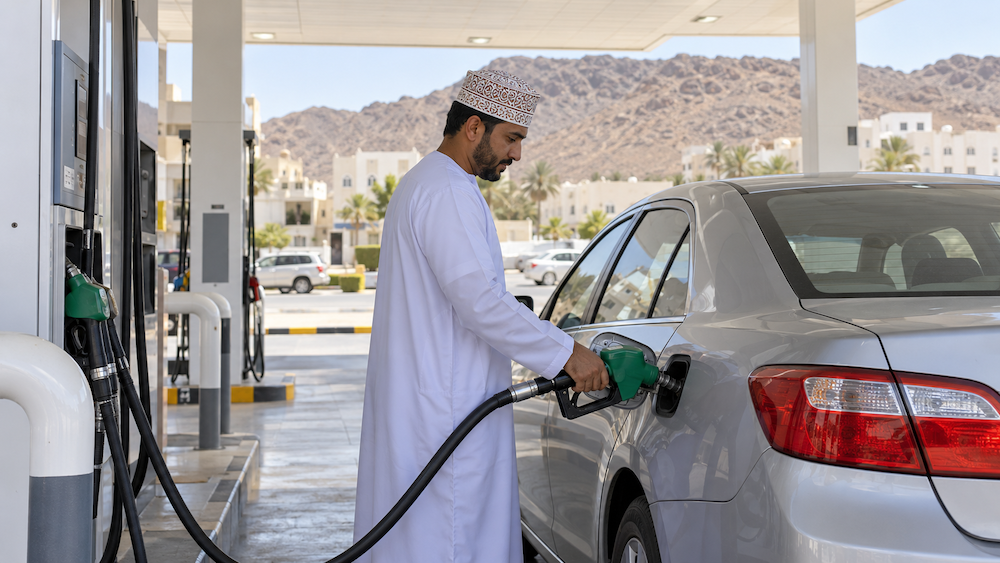
For residents, the most immediate question is often whether expensive crude will make driving more expensive, but Oman’s retail fuel arrangements interrupt a direct pass-through from the global market. Oman Oil Marketing Company’s published October prices list Mogas 91 at 229 baisa a litre, Mogas 95 at 239 baisa and diesel at 258 baisa. These are current retail prices, not guarantees of what prices would be under every future policy or oil-market scenario.
Where government support holds retail prices below the level implied by market costs, part of the adjustment moves to public finances. The Ministry of Finance’s first-half 2026 bulletin recorded OMR162 million in petroleum-product support, showing that protecting consumers can itself require a meaningful fiscal allocation. Higher oil income and higher support costs can therefore occur together.

Even with petrol prices held steady, household budgets can be affected through food, air travel, imported goods and the transport costs embedded in products purchased locally. The IMF’s March 2026 analysis of the Middle East conflict identified energy prices, freight, insurance and disrupted supply chains as major transmission channels. For a household in the Sultanate of Oman , the relevant outcome is the change in disposable purchasing power after these costs, rather than the movement in crude alone.
The employment effect would be similarly uneven, because stronger public finances might support recruitment and commercial activity in some sectors while others remain exposed to rising costs or weaker demand. Salaries and bonuses would still depend on employers’ profitability, labour requirements and decisions.
A household whose income remains unchanged while imported costs rise could feel worse off during an oil boom, even while the national fiscal position improves.
Why Higher Oil Does Not Guarantee Cheaper Loans
Image Courtesy: Shutterstock
Borrowing costs introduce another layer that can move against the apparent benefits of higher oil. The Central Bank of Oman explains that monetary policy operates within the Omani Rial’s fixed peg to the US dollar, while its published money-market framework links the policy rate to the upper bound of the US federal funds target range plus a spread. Domestic interest-rate conditions consequently cannot be inferred from Oman’s oil revenue alone.
Stronger export receipts can also improve Oman’s external position, although the eventual current-account balance depends on imports, services trade and cross-border income and transfers. A large investment programme may increase imported machinery and therefore absorb part of the additional export earnings. Under the dollar peg, higher oil prices do not automatically make the Omani Rial appreciate against the US dollar; their benefit instead comes through income, financing capacity and the potential to strengthen external buffers.
If an energy shock sustains international inflation and keeps US rates elevated, new loans and refinancing in Oman could remain expensive despite stronger sovereign finances. Improved liquidity or a lower risk premium might offset part of that pressure, but neither guarantees cheaper credit for every borrower. Existing fixed-rate obligations would behave differently from borrowing that reprices, making the terms of the loan as important as the broader economic environment.
For banks operating in the country, the balance would depend on whether additional deposits and stronger customer cash flows outweighed pressure on borrowers exposed to higher costs or weaker demand. Meanwhile, for property, the relevant transmission would run through employment, household income, financing costs and the availability of competing supply. A higher oil price alone is insufficient evidence that every location, development or property category will appreciate.
Why Gas and Diversification Still Matter
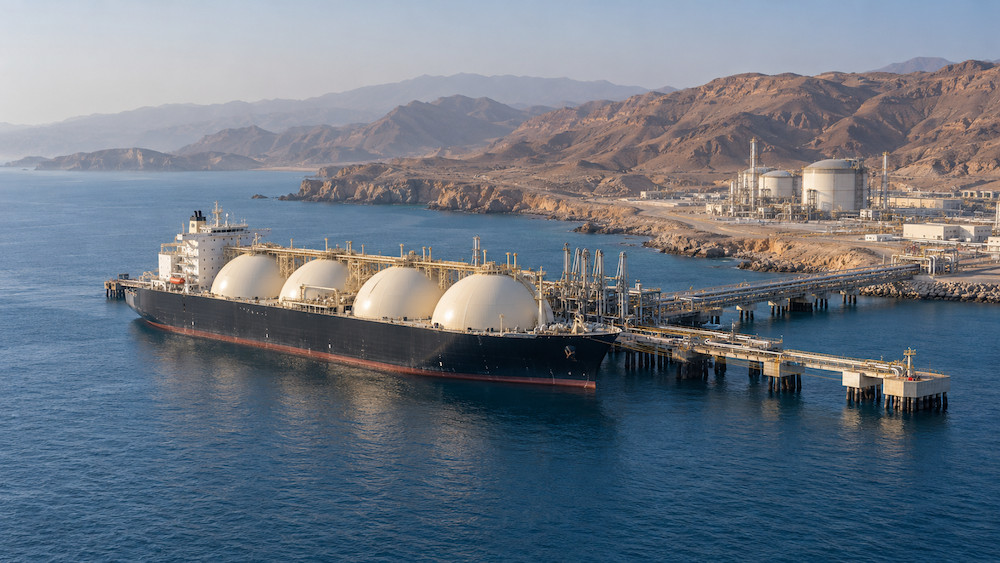
Gas adds a further complication to any attempt to turn four crude prices into four precise national forecasts. Oman’s gas income depends on its own production, sales arrangements, costs and revenue timing, so it should not be assumed to rise in the same proportion as oil. KPMG’s 2026 budget analysis attributes the higher planned gas receipts partly to 17 new gas sale and purchase agreements and an annual increase in gas selling prices, underlining the importance of contractual developments.
The wider diversification question is equally demanding because non-oil activity can still be financed indirectly by oil. A construction firm, retailer or professional-services company may be classified outside the hydrocarbon sector while depending heavily on government projects and spending by energy-sector employees. Growth in those businesses is valuable, but it does not automatically remove their exposure to the oil cycle.
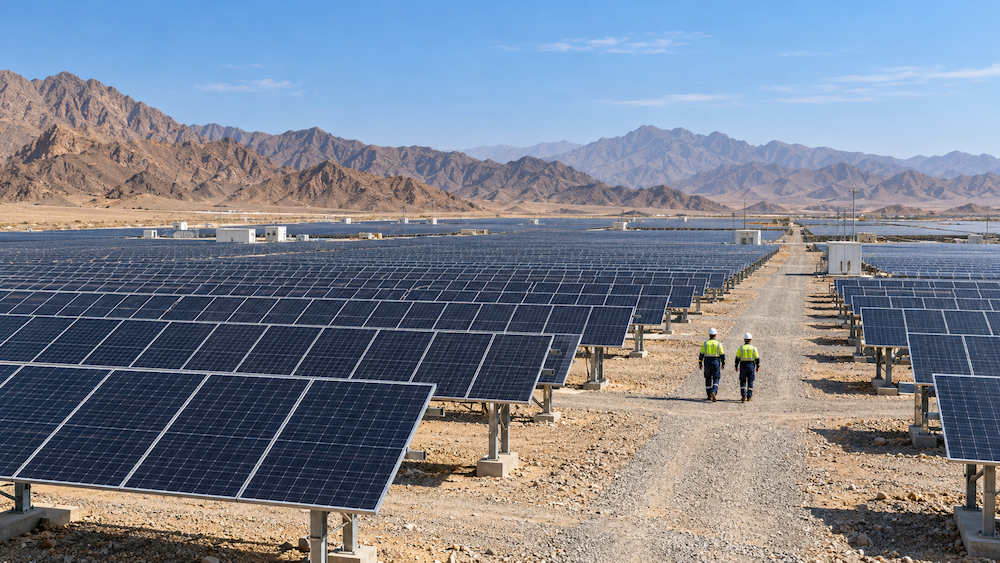
A more resilient economy would earn a larger share of its income from customers whose purchasing decisions are not determined by Oman’s oil receipts. Competitive manufacturing exports, tourism, internationally traded services and logistics serving diverse markets can help broaden that base. Their resilience would still depend on global conditions, but a wider spread of customers and revenue sources would reduce reliance on a single fiscal transmission channel.
Within that framework, oil income can accelerate Oman Vision 2040 by financing the infrastructure, skills and institutional improvements that allow other industries to compete. The test for an investment would be whether it lowers business costs, improves productivity or attracts commercially viable activity that can endure through a weaker oil cycle. Projects that require continuing support at elevated oil prices would need particularly careful scrutiny.
The distinction also matters when evaluating sovereign assets and privatisation receipts, since selling an asset exchanges an existing source of value for immediate proceeds without necessarily creating a recurring revenue stream. Similarly, a portfolio of long-term investments should not be treated as though its entire reported value were immediately available to finance a budget shortfall without costs or consequences.
The Real Test Is How Oman Uses the Windfall
Across the four scenarios, the most revealing indicators would be realised oil prices alongside sales volumes, net cash received by the state, the composition of expenditure and the change in financial buffers. Beyond the budget, business investment, non-oil exports, employment and household purchasing power would show how far the benefits had spread. These measures would make it possible to distinguish an improvement in national accounts from an improvement in everyday economic opportunity.
For Oman, sustained $60 oil would test the quality of spending and the durability of diversification, while $80 would provide greater scope to maintain investment and strengthen finances. At $100, the opportunity to build lasting financial capacity would become larger, while $120 would demand particular attention to the cause of the price surge and the costs accompanying it.
A stable $80 environment with reliable exports, affordable finance and growing trade could therefore deliver better conditions for much of the private economy than $120 driven by disruption and inflation. The enduring measure of success would be how much stronger Oman becomes before the next downturn: lower financing burdens, more competitive businesses, better employment opportunities and public services that can be sustained when the price of oil falls again.
Research cut-off: October 19, 2026. Approved budget allocations, final fiscal outcomes and preliminary in-year results are identified separately. Scenario interpretations and arithmetic illustrations are OERLive analysis, not official government or IMF forecasts.



INVESTIGATION: What Happens to Oman’s Economy at $60, $80, $100 and $120 Oil?

From Liverpool to Sultana: Testimonies to Centuries-Old Omani-British Friendship

What is El Nino – And How Is It Expected To Affect Oman’s Weather & Economy?

VIDEO: Building Oman’s Future – SAH’s Vision for Infrastructure, Innovation and Growth

The Hidden Price of Convenience: What People in Oman Spend on Food Delivery, Coffee & Subscriptions

VIDEO: Oman Cables Breaks Ground on OMR 10 Million-Plus Plant to Power Oman’s Industrial Future

Liva Insurance Recognised for Leadership in Insurance Innovation and Digital Transformation at OERLive DX Oman

Oman Air Launches Winter Schedule with Additional Frequencies, Expanded Capacity & New Codeshare Destinations

IHE and Eicher Trucks and Buses promote school bus safety awareness among students

India’s rising edge in oil, gas and construction projects is enabling Middle East’s growth

Power And Beyond: The Path To A Low-carbon Future

Al Mouj Muscat unveils Ghadeer Villas

Time to Buy Saudi Stocks? Some Investors Look at Dubai Instead

Hospitality Industry in Oman Estimated 90% Growth in 2022

Renewables are booming, but not fast enough to cap greenhouse emissions

Retail Abu Dhabi’s ‘Unbox Amazing’ generates sales of more than AED 2 billion in participating stores

Saudis Sign Deals From Energy to Metals in Bid to Salvage Forum

Saudi Arabia’s Gold Miner Plans to Be a Global Top-20 Supplier

Technology to drive Sultanate’s downstream industry

Digitization and Logistics Service Providers Can Help SMEs Make the Most of Peak Season Retail Trends
VIDEO: Building Oman’s Future – SAH’s Vision for Infrastructure, Innovation and Growth
VIDEO: Oman Cables Breaks Ground on OMR 10 Million-Plus Plant to Power Oman’s Industrial Future

VIDEO: Hitesh Akarte on Khimji Ramdas Infrastructure’s Role in Oman Vision 2040

Oman’s Hospitality Sector Enters a New Phase of Growth: Sadiq Al Matwani Al Lawati

Amr Baabood: Oman Climate Week Is About Moving From Climate Ambition to Climate Action

Mayan Al Asfoor on Leadership, Legacy and Empowering Omani Talent

LEADERSPEAK: Dhofar Insurance CEO Sunil Kohli on Oman’s Insurance Sector, Reinsurance & Market Outlook

VIDEO: Robert MacLean on how NHI is Shaping Oman’s Next Generation of Hospitality Leaders

The Future of Oman: Decoding The Sultanate of Oman’s Strategic Promotional Nation Brand

EXCLUSIVE: AI, Robotics & Wearable Sensors are Changing the Lives of Dementia Patients
-

 Artificial Intelligence1 month ago
Top 5 Interesting Things AI Did This Month – September 2026 Edition
-

 Fashion3 weeks ago
Luxury Watches That Could Appreciate Over the Next Decade [2026 Auction Buyer Guide]
-

 Economy3 weeks ago
OER Magazine September Edition 2026
-

 Banking & Finance1 month ago
The GCC’s 10 Richest Billionaires: Inside US$253.5 Billion of Wealth
-

 Magazines2 months ago
OER Magazine July Edition 2026
-

 Magazines2 months ago
Al Mar’a Magazine July 2026
-

 Banking & Finance1 month ago
INVESTIGATION: What If You Bought Apple Stock Every Time You Bought an iPhone?
-

 Alamaliktistaad Magazines2 months ago
Alam Al-Iktisaad Magazine July 2026 Edition