
Economy
Two Biggest Arab Economies Get in Sync With Best Pickup in Years
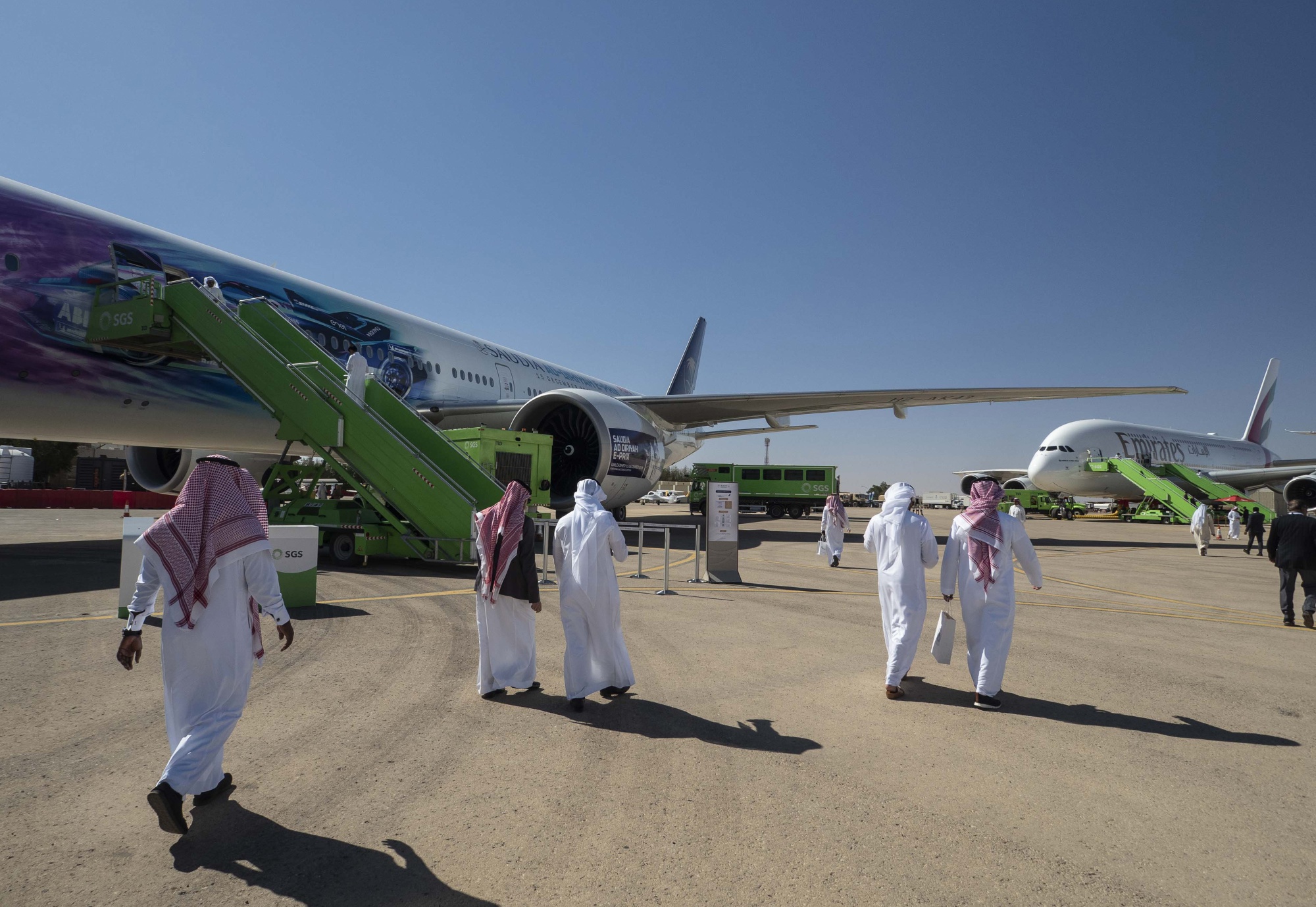
(Bloomberg) — Business conditions in Saudi Arabia and the United Arab Emirates improved the most in years, signaling that recoveries may be taking hold in the Arab world’s two biggest economies.
In May, Saudi Arabia’s Emirates NBD Purchasing Managers’ Index rose to its highest since December 2017. A similar gauge for the U.A.E. posted its best reading since October 2014. Both moved further above the threshold of 50 that separates contraction from growth, reaching 59.4 in the U.A.E. and 57.3 in Saudi Arabia.
In the U.A.E., the improvement was “partly due to external demand, particularly from Saudi Arabia and Oman,” Khatija Haque, head of Middle East and North Africa research at Emirates NBD, said in a report on Monday. Output and new export orders in OPEC’s third-biggest producer expanded the fastest on record.
Even as oil has fallen from a peak in late April, the impact of stronger crude prices may be starting to feed through to the Gulf’s energy powerhouses. A united front from the Organization of Petroleum Exporting Countries and its allies is helping to restore some stability to oil despite deteriorating U.S.-China trade relations and rising tension in the Middle East.
In Saudi Arabia, growth quickened in output and new orders, with companies citing “stronger underlying demand conditions,” according to Haque. “The rebound in the headline PMI this year suggests that the private sector is starting to benefit from higher oil prices and the resulting improvement in the government’s fiscal position,” she said in a separate report.
Discounting probably also supported the gains in new work and output in the U.A.E., with selling prices falling for an eighth consecutive month. Job growth remains stagnant, however, as competition reduced margins and forced companies to look for savings elsewhere.
Fewer than 1% of U.A.E. firms surveyed in May said they increased their headcount even as more than half reported higher output. Wages also remained “broadly unchanged,” according to Emirates NBD.
“The rebound in activity this year has not yet translated into job growth, or higher wages,” Haque said. “This is likely to weigh on expat population growth and household consumption.”


IHE and Eicher Trucks and Buses promote school bus safety awareness among students

India’s rising edge in oil, gas and construction projects is enabling Middle East’s growth

The Financial Services Authority organises the National Health Insurance Platform Forum ‘Dhamani’

Is India’s accelerating export engine driving manufacturing towards global scale?

SAH wins double honours at Dossier Construction Awards & Summit 2026

VIDEO: Hitesh Akarte on Khimji Ramdas Infrastructure’s Role in Oman Vision 2040

Alam Al-Iktisaad Magazine September 2026 Edition

A decade of investing: Tech portfolio returned 1,342% versus Nasdaq-100’s 636%

His Majesty the Sultan arrives in Kazakhstan

Oman’s trade surplus reaches RO5.5 billion in July 2026

Power And Beyond: The Path To A Low-carbon Future

Al Mouj Muscat unveils Ghadeer Villas

Time to Buy Saudi Stocks? Some Investors Look at Dubai Instead

Hospitality Industry in Oman Estimated 90% Growth in 2022

Renewables are booming, but not fast enough to cap greenhouse emissions

Retail Abu Dhabi’s ‘Unbox Amazing’ generates sales of more than AED 2 billion in participating stores

Saudis Sign Deals From Energy to Metals in Bid to Salvage Forum

Saudi Arabia’s Gold Miner Plans to Be a Global Top-20 Supplier

Technology to drive Sultanate’s downstream industry

Digitization and Logistics Service Providers Can Help SMEs Make the Most of Peak Season Retail Trends
VIDEO: Hitesh Akarte on Khimji Ramdas Infrastructure’s Role in Oman Vision 2040

Oman’s Hospitality Sector Enters a New Phase of Growth: Sadiq Al Matwani Al Lawati

Amr Baabood: Oman Climate Week Is About Moving From Climate Ambition to Climate Action

Mayan Al Asfoor on Leadership, Legacy and Empowering Omani Talent

LEADERSPEAK: Dhofar Insurance CEO Sunil Kohli on Oman’s Insurance Sector, Reinsurance & Market Outlook

VIDEO: Robert MacLean on how NHI is Shaping Oman’s Next Generation of Hospitality Leaders

The Future of Oman: Decoding The Sultanate of Oman’s Strategic Promotional Nation Brand

EXCLUSIVE: AI, Robotics & Wearable Sensors are Changing the Lives of Dementia Patients

EXCLUSIVE: Talking Renewable Projects & Sustainability in Oman and Beyond with Vipul Tuli

VIDEO: Eng. Salim Al Thuhli, CEO, Khazaen Economic City on Investment Opportunities
-
 Artificial Intelligence4 weeks ago
Top 5 Interesting Things AI Did This Month – September 2026 Edition
-

 Fashion2 weeks ago
Luxury Watches That Could Appreciate Over the Next Decade [2026 Auction Buyer Guide]
-

 Highlights2 months ago
OERLive: Top 10 Mathematical Problems AI Has Solved or Transformed
-

 Banking & Finance1 month ago
The GCC’s 10 Richest Billionaires: Inside US$253.5 Billion of Wealth
-
 Magazines2 months ago
OER Magazine July Edition 2026
-

 Magazines2 months ago
Al Mar’a Magazine July 2026
-
 Alamaliktistaad Magazines2 months ago
Alam Al-Iktisaad Magazine July 2026 Edition
-

 Economy2 weeks ago
OER Magazine September Edition 2026
You must be logged in to post a comment Login