
Highlights
Slow start to 2016 for EMEA high-yield markets: Moody’s
2016 has started slowly for the high-yield bond market in Europe, the Middle East and Africa as the positive effect of continued euro area quantitative easing is offset by Chinese stock market volatility and continued downward pressure on commodity prices, says Moody’s Investors Service in the October edition of “High Yield Interest — European Edition”.

2016 has started slowly for the high-yield bond market in Europe, the Middle East and Africa as the positive effect of continued euro area quantitative easing is offset by Chinese stock market volatility and continued downward pressure on commodity prices, says Moody’s Investors Service in the October edition of “High Yield Interest — European Edition”.
The cautious start to the year follows reduced high-yield volumes in 2015. Overall, high-yield bond issuance in 2015 reached $72.5 billion, 40% below 2014 levels of $121 billion, while total rated leveraged loan issuance reached $68 billion in 2015, 43% below 2014’s level of $119 billion.
“We continue to believe that there are a number of issuers in the bonds and loans space waiting for the right window of opportunity, ready to access the market in the first quarter of 2016,” says Peter Firth, a Moody’s Associate Managing Director.
Although Moody’s recorded a number of defaults in the last quarter of 2015 that led to a rise in the default rate to 3.4% for Europe at year-end 2015, the rating agency expects corporate credit quality (investment grade and high yield) to be stable in 2016, with default rates near 3% in Europe. Moody’s also recorded a rise in the list of companies rated B3 negative & lower and the Liquidity Stress Index from its record low level in 2015.
Nevertheless, many high-yield corporates are supported by solid aggregate liquidity profiles and limited debt maturities over the next 12 months that should provide some cushion and time to weather uncertainties in 2016, particularly if high-yield markets remain subdued. However, if liquidity becomes more constrained, and as some issuers fall short of performance expectations, investors need to also watch out for different and less obvious forms of financing, including factoring or reverse factoring.



The Financial Services Authority organises the National Health Insurance Platform Forum ‘Dhamani’

Is India’s accelerating export engine driving manufacturing towards global scale?

SAH wins double honours at Dossier Construction Awards & Summit 2026

VIDEO: Hitesh Akarte on Khimji Ramdas Infrastructure’s Role in Oman Vision 2040

Alam Al-Iktisaad Magazine September 2026 Edition

A decade of investing: Tech portfolio returned 1,342% versus Nasdaq-100’s 636%

His Majesty the Sultan arrives in Kazakhstan

Oman’s trade surplus reaches RO5.5 billion in July 2026

Agreements worth over RO1 billion signed at Urban October 2026

Workers’ Remittances from GCC Countries Record Highest Value Globally

Power And Beyond: The Path To A Low-carbon Future

Al Mouj Muscat unveils Ghadeer Villas

Time to Buy Saudi Stocks? Some Investors Look at Dubai Instead

Hospitality Industry in Oman Estimated 90% Growth in 2022

Renewables are booming, but not fast enough to cap greenhouse emissions

Retail Abu Dhabi’s ‘Unbox Amazing’ generates sales of more than AED 2 billion in participating stores

Saudis Sign Deals From Energy to Metals in Bid to Salvage Forum

Saudi Arabia’s Gold Miner Plans to Be a Global Top-20 Supplier

Technology to drive Sultanate’s downstream industry

Digitization and Logistics Service Providers Can Help SMEs Make the Most of Peak Season Retail Trends
VIDEO: Hitesh Akarte on Khimji Ramdas Infrastructure’s Role in Oman Vision 2040

Oman’s Hospitality Sector Enters a New Phase of Growth: Sadiq Al Matwani Al Lawati

Amr Baabood: Oman Climate Week Is About Moving From Climate Ambition to Climate Action

Mayan Al Asfoor on Leadership, Legacy and Empowering Omani Talent

LEADERSPEAK: Dhofar Insurance CEO Sunil Kohli on Oman’s Insurance Sector, Reinsurance & Market Outlook

VIDEO: Robert MacLean on how NHI is Shaping Oman’s Next Generation of Hospitality Leaders

The Future of Oman: Decoding The Sultanate of Oman’s Strategic Promotional Nation Brand

EXCLUSIVE: AI, Robotics & Wearable Sensors are Changing the Lives of Dementia Patients

EXCLUSIVE: Talking Renewable Projects & Sustainability in Oman and Beyond with Vipul Tuli

VIDEO: Eng. Salim Al Thuhli, CEO, Khazaen Economic City on Investment Opportunities
-

 Artificial Intelligence3 weeks ago
Top 5 Interesting Things AI Did This Month – September 2026 Edition
-

 Fashion1 week ago
Luxury Watches That Could Appreciate Over the Next Decade [2026 Auction Buyer Guide]
-

 Highlights2 months ago
OERLive: Top 10 Mathematical Problems AI Has Solved or Transformed
-
 Magazines1 month ago
OER Magazine July Edition 2026
-
 Banking & Finance4 weeks ago
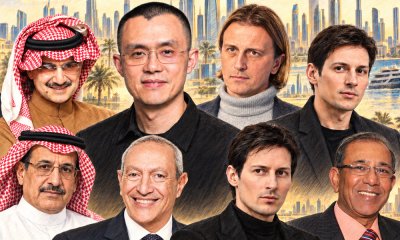
The GCC’s 10 Richest Billionaires: Inside US$253.5 Billion of Wealth
-

 Magazines1 month ago
Al Mar’a Magazine July 2026
-
 Alamaliktistaad Magazines1 month ago
Alam Al-Iktisaad Magazine July 2026 Edition
-

 Magazines2 months ago
OER Magazine – June 2026 Edition
You must be logged in to post a comment Login