
Economy
Mideast Stocks Drop Despite $47 Billion of Central Bank Aid
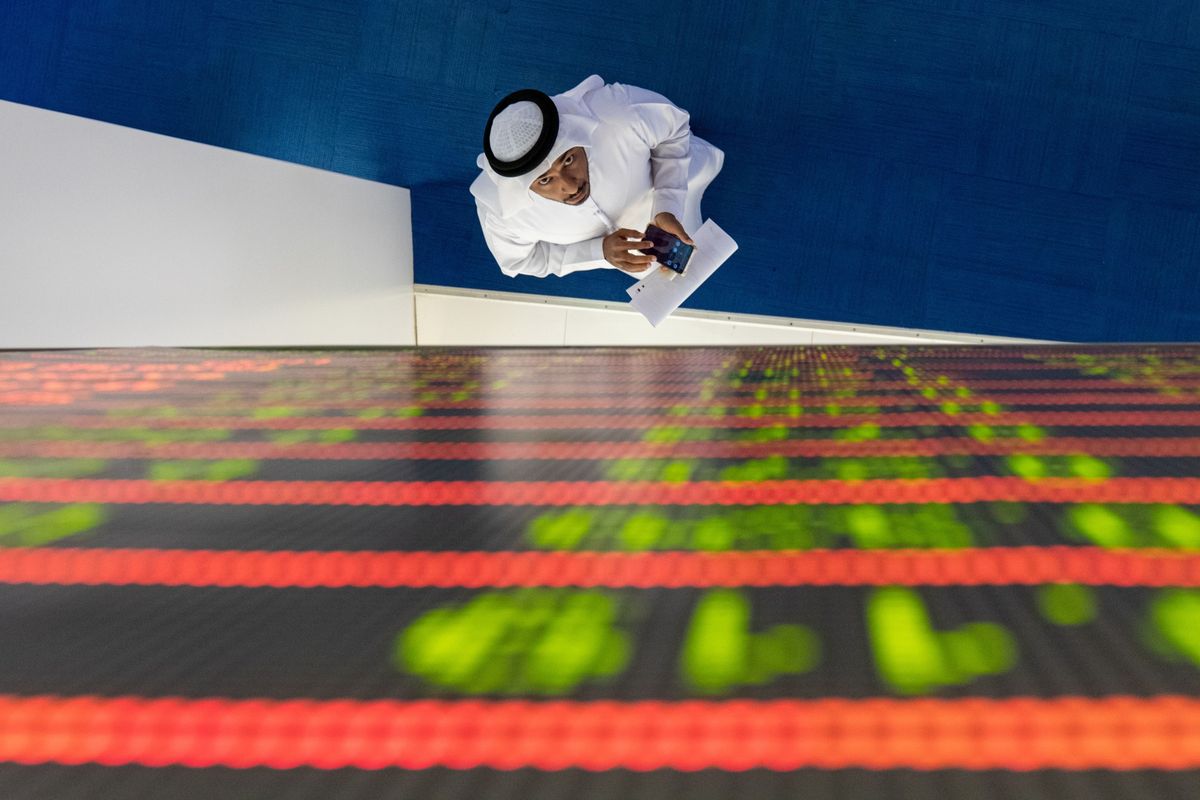
(Bloomberg) — Most equity markets in the Middle East fell on Sunday, despite efforts by central banks across the region to protect economies from shocks related to the coronavirus and plunging oil prices.
Dubai’s main index fell 3.4% by the close and Abu Dhabi’s dropped 1.9%, even after the United Arab Emirates announced 100 billion dirhams ($27.2 billion) of monetary stimulus over the weekend. Egyptian stocks had their worst day since 2012, weakening more than 9%. Gauges in Saudi Arabia and Israel also traded lower.
The U.A.E.’s Targeted Economic Support Scheme includes 50 billion dirhams of zero-interest, collateralized loans for banks. In addition, lenders will be allowed to reduce their capital buffers, which will inject 50 billion dirhams of liquidity.
“I remain focused on the demand side,” Ali Taqi, the head of equities at Rasmala Investment Bank in Dubai, said in an interview with Bloomberg TV. “How are you going to stimulate demand? Restaurants, cafes are a lot emptier now. Having a relief is good, but business is much more concerned with the decline in footfall. It will take some time for people to feel comfortable again.”
The U.A.E.’s measures follow those of other Middle Eastern nations. Saudi Arabia’s central bank unveiled a 50-billion riyal ($13.3 billion) package to support private businesses and Egypt said it will allocate 100 billion pounds ($6.4 billion) to combat the virus. In Israel, the central bank will buy government bonds to moderate volatility.
While the moves should provide relief to small and mid-size enterprises, “what makes the current situation a bit more challenging is the simultaneous hit to both supply and demand,” said Taqi.
An overview of Middle East markets as of 2 p.m. in Dubai:
- Egypt’s EGX 30 lost 9.1%, the most in the region, with Commercial International Bank Egypt, Eastern Co. and Egypt Kuwait Holding losing more than 9%.
- Index retreats the lowest level since Nov. 2016.
- Gauges in Dubai and Abu Dhabi drop 3.4% and 2.5%, respectively, with lenders Emirates NBD PJSC and First abu Dhabi Bank retreating 5.5% and 8.4%.
- Abu Dhabi’s exchange announced it is closing trading halls in main offices, but will continue to provide trading via its digital platform.
- Saudi Arabia’s Tadawul All Share Index falls 0.7%, with almost two thirds of its members falling.
- Saudi Aramco declines 0.7% after the announcing a spending cut for this year.
- Kuwait’s main index dropped 6.5%.
- Israel’s TA-35 rose 1.4%, after earlier falling 1.1%. The yield on the country’s benchmark government bonds fell.
Governments across the region are stepping up efforts to contain the spread of coronavirus.
Saudi Arabia suspended all international flights for two weeks, while the U.A.E. temporally stopped issuing visas. Egypt shut schools for two weeks and Israel’s Benjamin Netanyahu ordered the closure of non-essential businesses and advised workers to stay away from offices.
“These stimulus packages are likely to ease some pressure on businesses,” said Edmond Christou, a financial-industry analyst with Bloomberg Intelligence. “However, that largely depends on the depth and persistence of the coronavirus spread, as well as banks’ appetite to deploy this liquidity into credit growth.”



INVESTIGATION: Top 20 Jobs to Watch in Oman by 2030 – and What You Could Earn

National Finance & Dar Al Atta’a Renew Partnership to Empower Omani Women Through Tamkeen Beekeeping Program

VIDEO: DEEPAL Unveils New Flagship Model S09 in Oman

Win OMR 3,000: ROP & Bank Muscat Launch Cyber Fraud Awareness Short Film Competition

EXCLUSIVE INTERVIEW: Yango’s Big Vision for Oman

Leadership, Transformation Forum Reviews Inspiring Women’s Experiences

OPINION: GCC Navigates Global Macro Volatility as Worldwide Growth Moderates to 2.6%

City Centre Muscat Celebrates 25 Years of Great Moments as Mall of Oman Marks Its Fifth Anniversary

HM The Sultan Accorded Official Reception Ceremony at Windsor Castle

61.7% of Middle Eastern Families Involve the Next Generation As Business Successors or Consultants

Power And Beyond: The Path To A Low-carbon Future

Al Mouj Muscat unveils Ghadeer Villas

Time to Buy Saudi Stocks? Some Investors Look at Dubai Instead

Hospitality Industry in Oman Estimated 90% Growth in 2022

Renewables are booming, but not fast enough to cap greenhouse emissions

Retail Abu Dhabi’s ‘Unbox Amazing’ generates sales of more than AED 2 billion in participating stores

Saudis Sign Deals From Energy to Metals in Bid to Salvage Forum

Saudi Arabia’s Gold Miner Plans to Be a Global Top-20 Supplier

Technology to drive Sultanate’s downstream industry

Digitization and Logistics Service Providers Can Help SMEs Make the Most of Peak Season Retail Trends

VIDEO: Building Oman’s Future – SAH’s Vision for Infrastructure, Innovation and Growth

VIDEO: Oman Cables Breaks Ground on OMR 10 Million-Plus Plant to Power Oman’s Industrial Future

VIDEO: Hitesh Akarte on Khimji Ramdas Infrastructure’s Role in Oman Vision 2040

Oman’s Hospitality Sector Enters a New Phase of Growth: Sadiq Al Matwani Al Lawati

Amr Baabood: Oman Climate Week Is About Moving From Climate Ambition to Climate Action

Mayan Al Asfoor on Leadership, Legacy and Empowering Omani Talent

LEADERSPEAK: Dhofar Insurance CEO Sunil Kohli on Oman’s Insurance Sector, Reinsurance & Market Outlook

VIDEO: Robert MacLean on how NHI is Shaping Oman’s Next Generation of Hospitality Leaders

The Future of Oman: Decoding The Sultanate of Oman’s Strategic Promotional Nation Brand

EXCLUSIVE: AI, Robotics & Wearable Sensors are Changing the Lives of Dementia Patients
-

 Artificial Intelligence1 month ago
Top 5 Interesting Things AI Did This Month – September 2026 Edition
-

 Economy4 weeks ago
OER Magazine September Edition 2026
-

 Fashion4 weeks ago
Luxury Watches That Could Appreciate Over the Next Decade [2026 Auction Buyer Guide]
-

 Banking & Finance2 months ago
The GCC’s 10 Richest Billionaires: Inside US$253.5 Billion of Wealth
-

 Alamaliktistaad Magazines3 weeks ago
Alam Al-Iktisaad Magazine September 2026 Edition
-

 Banking & Finance2 months ago
INVESTIGATION: What If You Bought Apple Stock Every Time You Bought an iPhone?
-

 News2 months ago
OPEC+ Holds Output Steady for October as Focus Shifts to 2027 Quotas
-

 Artificial Intelligence1 month ago
What the World’s Top 10 Tech CEOs Really Earn