
Highlights
Oil at $50 eases burden on Opec ahead of meeting
A recovery in the oil price to around $50 has eased pressure on Opec to turn down the taps when it gathers in Vienna on Thursday for its first meeting with the powerful Saudi crown prince’s new oil minister.

A recovery in the oil price to around $50 has eased pressure on Opec to turn down the taps when it gathers in Vienna on Thursday for its first meeting with the powerful Saudi crown prince’s new oil minister.
“The general consensus is that there will be no agreement to establish quotas or lower production,” said James Williams at WTRG Economics. “The most restrictive outcome might be an agreement to a production ceiling.”
Historically the Organisation of the Petroleum Exporting Countries, which pumps around a third of the world’s oil or some 30 million barrels every day, has responded to a fall in prices by cutting production.
But in the current cycle, which saw prices collapse from over $100 in 2014 to close to $25 this January, producers led by Saudi Arabia have changed strategy, maintaining output even with lower prices.
Around 1200 GMT, US benchmark West Texas Intermediate for delivery in July rose 26 cents to $49.59 per barrel.
Brent North Sea crude for July fell 18 cents to $49.58 a barrel compared with Monday’s close.
The aim, experts say, was to keep hold of market share by seeking to put competitors that need a higher oil price than the Gulf states to make money — particularly US shale oil producers — out of business.
And even though it has taken a while, straining even Saudi Arabia’s public finances — to say nothing of struggling Opec member Nigeria and on-the-brink Venezuela — Riyadh’s approach now looks to be bearing fruit, experts say.
Last week both main oil benchmarks, West Texas Intermediate and Brent crude, briefly touched the psychologically important level of $50 a barrel and remain close to that level despite slipping back slightly.
Dozens of US shale oil firms have gone bankrupt and non-Opec production is on course to drop sharply this year. The International Energy Agency predicted on May 12 that global oversupply will “shrink dramatically”. But this easing of pressure is just as well, because the bitter animosity between Saudi Arabia and Iran — regional rivals engaged in proxy wars in Syria and Yemen — means that any agreement to cut Opec output is highly unlikely.



Wi-Fi at 35,000 Feet: The Real Economics of Installing Starlink on an Airline

Oman’s state revenues rise 13% by end of Q2 2026

The India–Australia Uranium agreement will fuel the future

Talabat Appoints Abdulaziz Al Haddad as General Manager to Lead tMart Oman

Al Mar’a Magazine July 2026

Alam Al-Iktisaad Magazine July 2026 Edition

OER Magazine July Edition 2026

Sohar Aluminium and OMIFCO support construction of investment building for Al Rahma Association

Sohar Port records 52% increase in port handling volume

ahlibank unites community partners to support more than 5,000 students through the 2026/2027 Back-to-School initiative

Power And Beyond: The Path To A Low-carbon Future

Al Mouj Muscat unveils Ghadeer Villas

Time to Buy Saudi Stocks? Some Investors Look at Dubai Instead

Hospitality Industry in Oman Estimated 90% Growth in 2022

Renewables are booming, but not fast enough to cap greenhouse emissions

Retail Abu Dhabi’s ‘Unbox Amazing’ generates sales of more than AED 2 billion in participating stores

Saudis Sign Deals From Energy to Metals in Bid to Salvage Forum

Saudi Arabia’s Gold Miner Plans to Be a Global Top-20 Supplier

Technology to drive Sultanate’s downstream industry

Digitization and Logistics Service Providers Can Help SMEs Make the Most of Peak Season Retail Trends

Mayan Al Asfoor on Leadership, Legacy and Empowering Omani Talent

LEADERSPEAK: Dhofar Insurance CEO Sunil Kohli on Oman’s Insurance Sector, Reinsurance & Market Outlook

VIDEO: Robert MacLean on how NHI is Shaping Oman’s Next Generation of Hospitality Leaders

The Future of Oman: Decoding The Sultanate of Oman’s Strategic Promotional Nation Brand

EXCLUSIVE: AI, Robotics & Wearable Sensors are Changing the Lives of Dementia Patients

EXCLUSIVE: Talking Renewable Projects & Sustainability in Oman and Beyond with Vipul Tuli

VIDEO: Eng. Salim Al Thuhli, CEO, Khazaen Economic City on Investment Opportunities

H.E. Salim Al Aufi, Minister of Energy & Minerals talks about Oman’s Green Hydrogen Goals

VIDEO: Talking Latest Developments in Aircraft Ground Guidance & More at Oman Airports

VIDEO: Dr. Firas Al-Abduwani Discusses Green Hydrogen, Potential Regions for Development & Creating a Green Ecosystem
-

 News2 months ago
INVESTIGATION: Why Nokia Could Matter More in the Quantum Age Than It Ever Did in Mobile
-

 News2 months ago
INVESTIGATION: Is AI in a Bubble? Inside the Trillion-Dollar Question Reshaping Global Markets
-

 News2 months ago
Thales & Ankaa to Deliver Multi-Mission Air Traffic Surveillance Radars for Oman, Capable of Supporting Civil & Military Operations
-
 Economy2 months ago
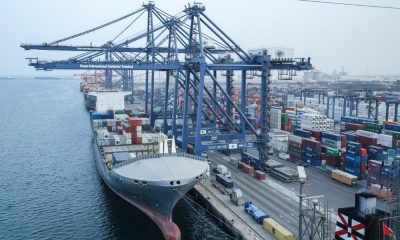
What Higher Oil Prices Mean for Oman’s Economy in 2026
-
 Economy2 months ago
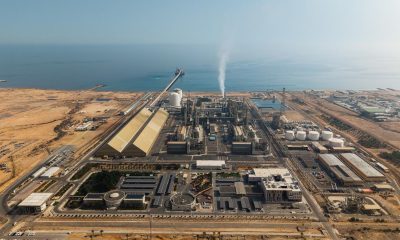
OMIFCO Successfully Completes Bookbuilding & Sets Final IPO Offer Price
-

 Business2 months ago
Oman India Fertiliser Company Lists on Muscat Stock Exchange
-
 Banking & Finance1 month ago
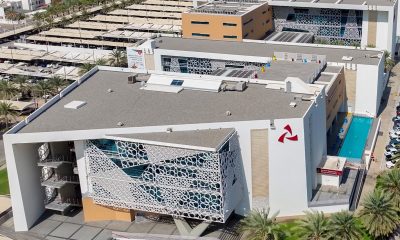
Bank Muscat posts net profit of RO137.49 million in H1 2026
-
 Insurance2 months ago
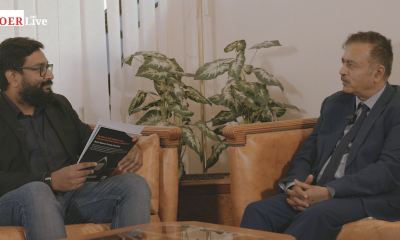
LEADERSPEAK: Dhofar Insurance CEO Sunil Kohli on Oman’s Insurance Sector, Reinsurance & Market Outlook
You must be logged in to post a comment Login