
Banking & Finance
Win OMR 3,000: ROP & Bank Muscat Launch Cyber Fraud Awareness Short Film Competition
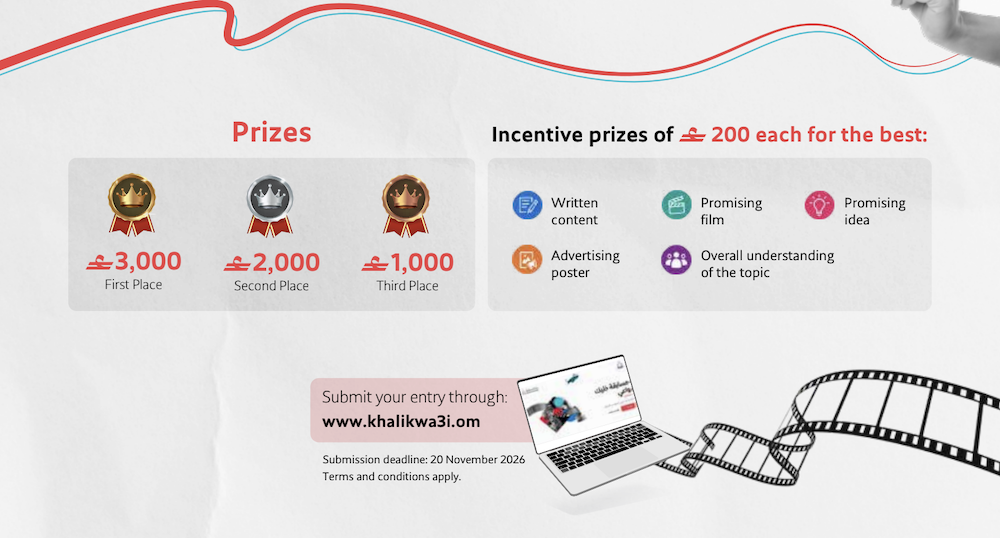
The Short Film Competition on Cyber Fraud Awareness (Khalik Wa’ei), recently launched by the Royal Oman Police (ROP) and Bank Muscat, continues to receive strong participation. The competition comes as part of their joint campaign to enhance awareness of fraud risks, evolving fraudulent methods and ways to combat them.
It aims to highlight some of the most prominent forms of electronic fraud, enhance digital and financial literacy, and encourage members of society to adopt safe practices when using electronic services.
The competition invites participants to produce a short film of no more than 90 seconds highlighting one of the identified electronic fraud methods, while explaining how to recognise and prevent it. The initiative seeks to promote a culture of vigilance and responsible digital behaviour.
Omani individuals aged 18 and above can submit their entries through the dedicated competition website, www.khalikwa3i.om, which also provides full details and guidelines. The deadline for submitting entries is 20 November 2026.
The competition covers eight key themes reflecting some of the most prominent methods that fraudsters may use. Participants are encouraged to focus on these themes when producing their short films, while highlighting the importance of vigilance and never sharing confidential information or verification codes with any party.
The first theme focuses on the takeover of mobile phones and digital accounts, which may occur through hacking a smartphone, remotely gaining control of a device, taking over digital accounts and resetting passwords using stolen information, or gaining access to digital wallets.
This type of fraud aims to take control of accounts and exploit them for criminal activities, including identity and professional impersonation.
The second theme focuses on identity and professional impersonation, where fraudsters pose as employees of government entities, banks, telecommunications companies and other service providers. This may also include the use of video calls to create greater credibility and legitimacy. This method relies on exploiting the victim’s trust to obtain money or confidential information.
The third theme addresses fraud involving official websites and platforms, including the creation of fake websites, payment portals and pages that imitate the visual identity of official entities, with the aim of stealing identity information, bank account details and payment information.
The fourth theme highlights social engineering as one of the common methods used by fraudsters. In such cases, the fraudster may convince the victim that there is an issue requiring account verification, or request that personal information be updated through phone calls, text messages or social media platforms.
The fraudster may also request a One-Time Password (OTP). This method relies on manipulating and persuading the victim to disclose sensitive information without the need for direct technical hacking.
The fifth theme focuses on phishing in its various forms, including malicious links, phishing scams, targeted phishing, fraudulent text messages and scam phone calls, all of which seek to obtain login credentials and financial information.
The sixth theme covers financial and investment fraud, including fake investment opportunities, fraudulent cryptocurrencies and requests to transfer money to fraudulent accounts.
The seventh theme focuses on fraud through digital platforms, which may take the form of fake online stores or applications, fraudulent advertisements, and fake buying and selling offers, with the aim of obtaining money or payment information.
The eighth and final theme focuses on AI-enabled fraud, including voice cloning, deepfake videos, AI-generated messages and conversations, as well as the impersonation of public figures. These methods increase the level of deception and make fraudulent attempts more challenging to detect.
Bank Muscat emphasises that raising awareness remains the first line of defence against electronic fraud, urging members of society to exercise caution and never share passwords, bank card details or One-Time Passwords (OTPs) with anyone.
The Bank also advises individuals to always verify the identity of the person or entity contacting them and check the source of links and messages before responding to any request.
The initiative forms part of the ongoing partnership between Bank Muscat and the Royal Oman Police to enhance awareness of cybercrime and financial fraud risks and support efforts to build a safer and more informed society amid the growing use of banking and digital services.



Win OMR 3,000: ROP & Bank Muscat Launch Cyber Fraud Awareness Short Film Competition

EXCLUSIVE INTERVIEW: Yango’s Big Vision for Oman

Leadership, Transformation Forum Reviews Inspiring Women’s Experiences

OPINION: GCC Navigates Global Macro Volatility as Worldwide Growth Moderates to 2.6%

City Centre Muscat Celebrates 25 Years of Great Moments as Mall of Oman Marks Its Fifth Anniversary

HM The Sultan Accorded Official Reception Ceremony at Windsor Castle

61.7% of Middle Eastern Families Involve the Next Generation As Business Successors or Consultants

Future Fund Oman’s $5.2B Outlook: Where Will the Sultanate’s Next Big Businesses Come From?

Oman and the UK: From Historical Legacy of Over 220 Years to Future Partnership

Sohar International Launches Expatriate Banking Proposition with Housing Loans, Cashback, Insurance & Digital Remittance Solutions

Power And Beyond: The Path To A Low-carbon Future

Al Mouj Muscat unveils Ghadeer Villas

Time to Buy Saudi Stocks? Some Investors Look at Dubai Instead

Hospitality Industry in Oman Estimated 90% Growth in 2022

Renewables are booming, but not fast enough to cap greenhouse emissions

Retail Abu Dhabi’s ‘Unbox Amazing’ generates sales of more than AED 2 billion in participating stores

Saudis Sign Deals From Energy to Metals in Bid to Salvage Forum

Saudi Arabia’s Gold Miner Plans to Be a Global Top-20 Supplier

Technology to drive Sultanate’s downstream industry

Digitization and Logistics Service Providers Can Help SMEs Make the Most of Peak Season Retail Trends

VIDEO: Building Oman’s Future – SAH’s Vision for Infrastructure, Innovation and Growth

VIDEO: Oman Cables Breaks Ground on OMR 10 Million-Plus Plant to Power Oman’s Industrial Future

VIDEO: Hitesh Akarte on Khimji Ramdas Infrastructure’s Role in Oman Vision 2040

Oman’s Hospitality Sector Enters a New Phase of Growth: Sadiq Al Matwani Al Lawati

Amr Baabood: Oman Climate Week Is About Moving From Climate Ambition to Climate Action

Mayan Al Asfoor on Leadership, Legacy and Empowering Omani Talent

LEADERSPEAK: Dhofar Insurance CEO Sunil Kohli on Oman’s Insurance Sector, Reinsurance & Market Outlook

VIDEO: Robert MacLean on how NHI is Shaping Oman’s Next Generation of Hospitality Leaders

The Future of Oman: Decoding The Sultanate of Oman’s Strategic Promotional Nation Brand

EXCLUSIVE: AI, Robotics & Wearable Sensors are Changing the Lives of Dementia Patients
-

 Artificial Intelligence1 month ago
Top 5 Interesting Things AI Did This Month – September 2026 Edition
-

 Fashion4 weeks ago
Luxury Watches That Could Appreciate Over the Next Decade [2026 Auction Buyer Guide]
-

 Economy3 weeks ago
OER Magazine September Edition 2026
-

 Banking & Finance2 months ago
The GCC’s 10 Richest Billionaires: Inside US$253.5 Billion of Wealth
-

 Banking & Finance1 month ago
INVESTIGATION: What If You Bought Apple Stock Every Time You Bought an iPhone?
-

 Alamaliktistaad Magazines2 weeks ago
Alam Al-Iktisaad Magazine September 2026 Edition
-

 News2 months ago
OPEC+ Holds Output Steady for October as Focus Shifts to 2027 Quotas
-

 Aviation2 months ago
Wi-Fi at 35,000 Feet: The Real Economics of Installing Starlink on an Airline