
Economy
Gulf nations need to bring in radical tax reforms, must introduce tax soon: IMF chief
Gulf states should try to introduce radical tax and spending reforms, remarked International Monetary Fund (IMF) chief Christine Lagarde.
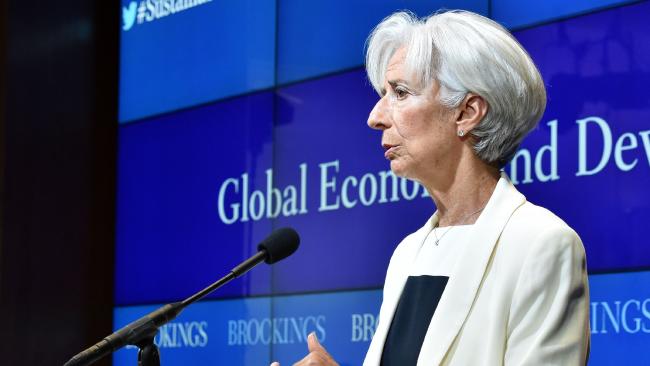
Gulf states should try to introduce radical tax and spending reforms, remarked International Monetary Fund (IMF) chief Christine Lagarde.
Low oil prices have slashed state revenues in the six-nation Gulf Cooperation Council (GCC). All of the countries have begun to restrain spending, but most have so far hesitated to take politically sensitive steps that would directly reduce consumers’ disposable income.
At a meeting with GCC finance ministers in Doha, IMF managing director Christine Lagarde said governments needed to do more to get their budget deficits under control.
She urged governments to slow growth of their current spending, taking aim at their practice of giving cushy, high-paying jobs to their citizens to ensure political support. Most employed GCC citizens work for the public sector.
“Given the new fiscal realities, there is not room for public wage bills to grow further. We have to face that reality,” Lagarde said in a statement after the meeting.
She also urged GCC countries, including Saudi Arabia and the United Arab Emirates, to introduce a regional value-added tax (VAT) as soon as possible. That reform should not be delayed, she said.
The six governments have been debating the introduction of VAT for years but have so far not agreed to act. Officials have said that to limit smuggling and damage to economies’ competitiveness, the tax would probably have to be introduced regionally rather than by individual nations at different times.
The IMF’s public pressure for budget reforms in the Gulf could help governments justify controversial measures to their populations, civil services and the business community.
The GCC states are under different degrees of financial pressure from low oil prices. The United Arab Emirates has such huge fiscal reserves that it is relatively comfortable, but it has been proactive in cutting spending, for example by reducing domestic gasoline subsidies in August.
Saudi Arabia looks much more vulnerable. The IMF estimates it is running an annual budget deficit of over $100 billion, and it has hesitated to make controversial reforms, though it has said it is considering them.
Lagarde said most but not all GCC countries had introduced fiscal policies which would allow them to make adjustments from a position of strength, limiting the impact on their economic growth rates.
“Those who have not done it can certainly learn from those who have,” she said without naming individual countries.
She also warned GCC governments that their spending on public investment projects would have to become more careful and efficient. While they could issue debt to finance deficits, she said, they would have to make sure this did not suck funds away from the private sector.
Money market rates across the region have risen sharply in the last few months as low oil prices reduce the flow of new money into banks, and as the banks anticipate they may have to buy large amounts of government bonds for years to come.



Gulf Financial Markets Post US$618B in Trading Volume

The Top 10 Things Oman Exports to India – And How CEPA Could Reshape the US$11.2bn Trade Corridor

Sohar International Expands Global Footprint with Hong Kong Office

INVESTIGATION: What If You Bought Apple Stock Every Time You Bought an iPhone?

OPINION: Apple’s AED 8,499 iPhone Duo Puts UAE Consumers’ Appetite for Premium Devices to the Test

Here’s Everything Apple Launched: iPhone Duo, iPhone 18 Pro, New Watches, AirPods 5 & Siri AI

What Is This Wind-Powered Giant That Just Arrived in Oman?

GALLERY: HM The Sultan Inaugurates New Headquarters of Internal Security Service in Dhofar

OPINION: Space Stocks Gain Momentum as Investors Search for the Right Price

The Sultanate of Oman & Republic of Rwanda Sign Two Agreements, Six MoUs

Power And Beyond: The Path To A Low-carbon Future

Al Mouj Muscat unveils Ghadeer Villas

Time to Buy Saudi Stocks? Some Investors Look at Dubai Instead

Hospitality Industry in Oman Estimated 90% Growth in 2022

Renewables are booming, but not fast enough to cap greenhouse emissions

Retail Abu Dhabi’s ‘Unbox Amazing’ generates sales of more than AED 2 billion in participating stores

Saudis Sign Deals From Energy to Metals in Bid to Salvage Forum

Saudi Arabia’s Gold Miner Plans to Be a Global Top-20 Supplier

Technology to drive Sultanate’s downstream industry

Digitization and Logistics Service Providers Can Help SMEs Make the Most of Peak Season Retail Trends

Amr Baabood: Oman Climate Week Is About Moving From Climate Ambition to Climate Action

Mayan Al Asfoor on Leadership, Legacy and Empowering Omani Talent

LEADERSPEAK: Dhofar Insurance CEO Sunil Kohli on Oman’s Insurance Sector, Reinsurance & Market Outlook

VIDEO: Robert MacLean on how NHI is Shaping Oman’s Next Generation of Hospitality Leaders

The Future of Oman: Decoding The Sultanate of Oman’s Strategic Promotional Nation Brand

EXCLUSIVE: AI, Robotics & Wearable Sensors are Changing the Lives of Dementia Patients

EXCLUSIVE: Talking Renewable Projects & Sustainability in Oman and Beyond with Vipul Tuli

VIDEO: Eng. Salim Al Thuhli, CEO, Khazaen Economic City on Investment Opportunities

H.E. Salim Al Aufi, Minister of Energy & Minerals talks about Oman’s Green Hydrogen Goals

VIDEO: Talking Latest Developments in Aircraft Ground Guidance & More at Oman Airports
-
 Banking & Finance2 months ago
Bank Muscat posts net profit of RO137.49 million in H1 2026
-

 Highlights4 weeks ago
OERLive: Top 10 Mathematical Problems AI Has Solved or Transformed
-
 Magazines3 weeks ago
OER Magazine July Edition 2026
-

 Banking & Finance2 months ago
Oman Housing Bank launches digital waiting list for housing loans
-

 Magazines3 weeks ago
Al Mar’a Magazine July 2026
-
 Alamaliktistaad Magazines3 weeks ago
Alam Al-Iktisaad Magazine July 2026 Edition
-
 Banking & Finance1 month ago
Oman Arab Bank CEO Sulaiman Al Harthi Retires as Ali Al Mani Is Named Successor
-

 Banking & Finance1 month ago
OERLive ANALYSIS: The Coldcard Hack Shows Why Bitcoin Self-Custody Remains Difficult for Ordinary Users
You must be logged in to post a comment Login