Connect with us

Artificial Intelligence

Top 5 Interesting Things AI Did This Month – September 2026 Edition

From tackling a 90-year-old mathematical mystery worth US$1M to mapping 9 billion DNA mutations, accelerating drug discovery and developing new industrial materials, AI  has delivered several remarkable breakthroughs this week. OERLive examines five major developments and what they could mean for the future of science, technology and business.

Artificial intelligence is more than just chatbots, image generators and everyday productivity tools. Across research laboratories, pharmaceutical companies and technology firms, increasingly sophisticated AI systems are being deployed to investigate scientific problems, accelerate experimentation and perform complex digital tasks.

The developments announced between September 8 and 16, 2026, illustrate the expanding capabilities of these systems. Some represent fundamental advances in scientific research, while others demonstrate how AI is becoming integrated into commercial products and industrial processes.

However, the distinction between a scientific breakthrough, an experimental result and a commercially viable application remains important. Although AI is demonstrating increasingly advanced capabilities, many discoveries still require independent validation and further research before they can deliver real-world benefits.

Here are five developments that stood out this week.

1. AI Tackles a 90-Year-Old Mathematical Problem Worth US$1 Million

On September 8, OpenAI announced that an advanced internal AI system had produced a proposed solution to the Navier-Stokes existence and smoothness problem, one of mathematics’ most challenging unsolved questions.

The problem concerns equations that describe how fluids move. These equations are fundamental to applications ranging from aircraft design and weather forecasting to the study of blood circulation. For decades, mathematicians have attempted to determine whether initially smooth fluid motion can develop a singularity, a mathematical breakdown in which certain quantities become unbounded.

The Clay Mathematics Institute included the question among its seven Millennium Prize Problems in 2000, attaching a US$1 million prize to each problem.

According to OpenAI, approximately 10,000 concurrent AI agents worked on the problem. The system arrived at its proposed solution after approximately 88 hours, with mathematical formalisation and verification requiring another 17 hours.

The effort involved approximately 2.7 million messages and 130 billion output tokens. The resulting proof argues that fluid motion beginning from a smooth state can develop a singularity in finite time under smooth external forcing. OpenAI also released a formal version of the proof using Lean, a mathematical proof assistant designed to verify logical reasoning.

On September 10, the Clay Mathematics Institute acknowledged that the problem had apparently been settled, although its formal process for evaluating the work and determining attribution remains ongoing.

OpenAI, rather unsurprisingly, stated that it does not intend to claim the prize.

Here’s why this matters

The development illustrates how AI systems are beginning to contribute to sophisticated mathematical research rather than simply assisting with calculations or summarising existing knowledge.

If similar approaches prove successful across other scientific disciplines, AI could substantially accelerate research in areas such as engineering, physics and computational mathematics. However, the cost of the computing resources involved and the need for independent scrutiny remain important considerations.

2. Google DeepMind Uses AI to Map 9 Billion DNA Mutations

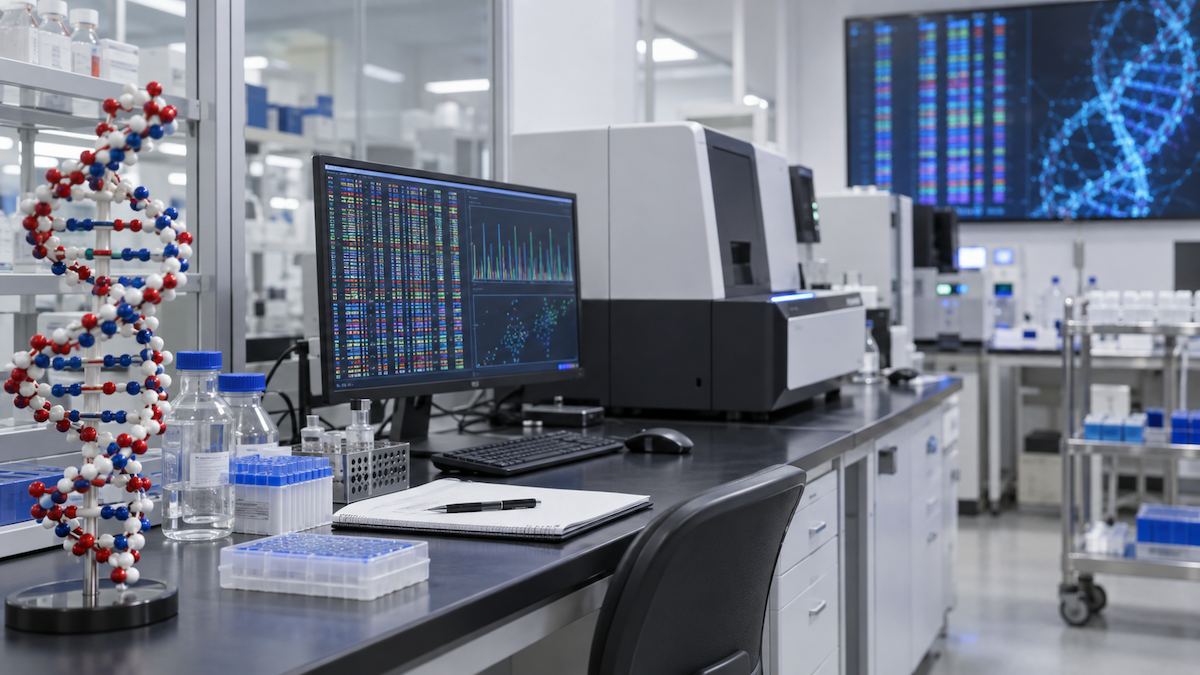
Google DeepMind unveiled AlphaGenome Atlas on September 8, introducing a comprehensive AI-generated database designed to predict the molecular effects of approximately 9 billion possible single-letter changes in human DNA.

The human genome contains roughly 3 billion DNA base pairs, but scientists understand only (approximately) 2 per cent that directly codes for proteins relatively well, but interpreting the remaining 98 per cent remains a major challenge.

Changes within these regions can influence how genes function and contribute to diseases, but determining which mutations are biologically significant is exceptionally difficult.

AlphaGenome Atlas attempts to address this challenge by providing precomputed predictions describing how genetic variations could affect molecular processes, including gene expression and RNA splicing.

The database contains approximately 1 petabyte of information, making it more than 30 times larger than the AlphaFold Database. Its potential applications are already being investigated too.

In collaboration with the GREGoR Consortium, researchers used predictions underlying AlphaGenome Atlas to identify a genetic variation affecting the DNM1 gene, which is associated with epileptic encephalopathy, a severe neurological disorder.

The system predicted how the mutation could disrupt the processing of genetic instructions, and subsequent experimental work validated the proposed mechanism.

In another application, researchers analysed genomic data from more than 54,000 UK Biobank participants. By using AlphaGenome predictions to identify potentially important genetic variations, researchers discovered 22 per cent more associations involving rare mutations in non-coding DNA than the comparison approach had detected.

Nevertheless, the technology could significantly reduce the time researchers spend searching through vast amounts of genetic information.

Here’s why this matters

Understanding how genetic mutations influence disease is essential to precision medicine and pharmaceutical research. By helping scientists prioritise which mutations deserve further investigation, AI could improve the efficiency of drug discovery and enable researchers to identify new therapeutic targets.

3. Five Pharmaceutical Giants Use AI to Improve Drug Discovery Accuracy (not peer-reviewed yet)

Five pharmaceutical companies have demonstrated how AI can improve drug discovery without requiring competitors to share their confidential research data. On September 14, AbbVie, Astex Pharmaceuticals, Bristol Myers Squibb, Johnson & Johnson and Takeda announced the results of a collaboration through the AI Structural Biology Network.

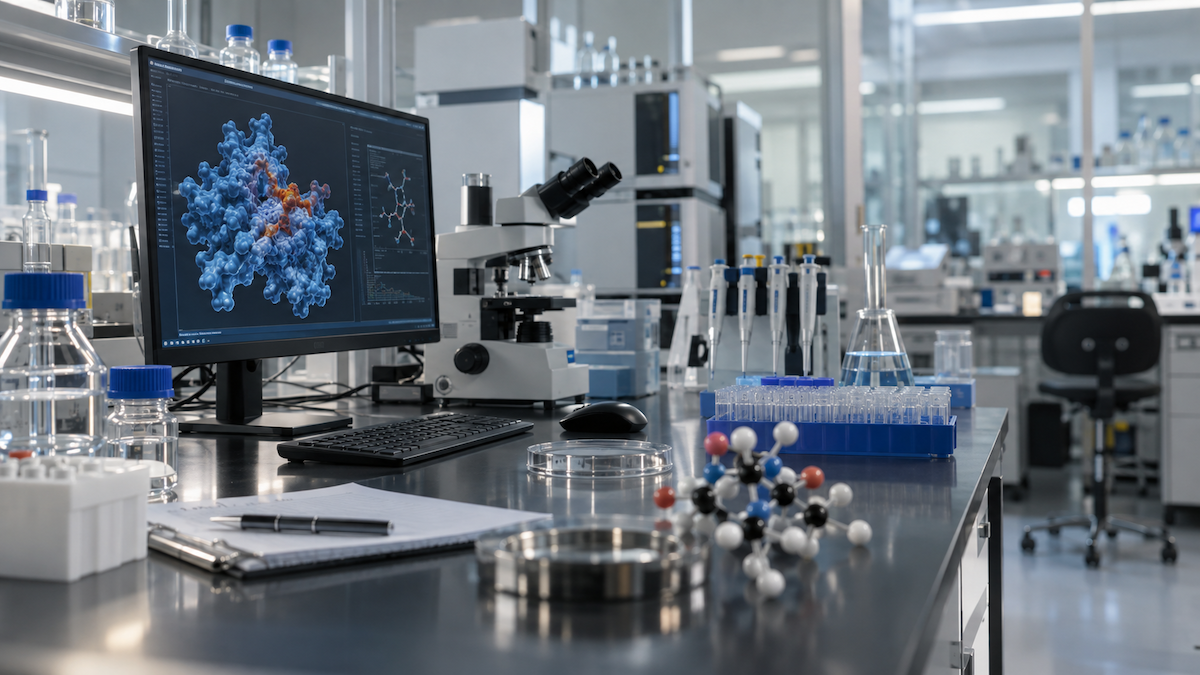
Working with Apheris and Columbia University’s AlQuraishi Lab, the companies trained an AI model called AISB-1-Fed using 20,167 proprietary molecular structures.

The project focused on improving the ability of AI to predict how proteins interact with potential drug molecules, an important stage in pharmaceutical research.

And rather than combining their confidential datasets into a central database, the five companies used federated learning. Under this approach, each organisation trains a version of the AI model within its own computing environment. Model updates are subsequently combined to improve the shared system while the original molecular structures remain with their respective owners.

The results demonstrated a measurable improvement. When tested against 1,056 previously withheld molecular structures, the proportion of predictions meeting a specified high-quality protein-drug interface threshold increased from 35.6 per cent to 52.1 per cent.

The model’s ability to accurately predict the position of potential drug molecules also improved, rising from 28.9 per cent to 46.8 per cent.

The results were reported by Apheris, which said the federated model outperformed the publicly available reference models evaluated in the study.

However, the findings have not yet undergone peer review. The evaluation used private datasets from participating pharmaceutical companies, and the resulting model is not publicly available for independent testing.

The research also demonstrates improvements in molecular-structure prediction rather than the successful development of a new medicine.

Here’s why this matters

Pharmaceutical companies spend substantial resources investigating potential drug candidates, many of which fail during development.

More accurate structural predictions could help researchers identify promising compounds earlier and reduce unnecessary experimentation.

Beyond pharmaceuticals, federated learning offers a model for industries that want to collaborate on artificial intelligence while retaining control over commercially sensitive information.

Banking, insurance and healthcare organisations could potentially use similar approaches to improve specialised AI systems without pooling their underlying customer or institutional datasets.

4. AI Helps Scientists Design a New Catalyst for Ammonia Production

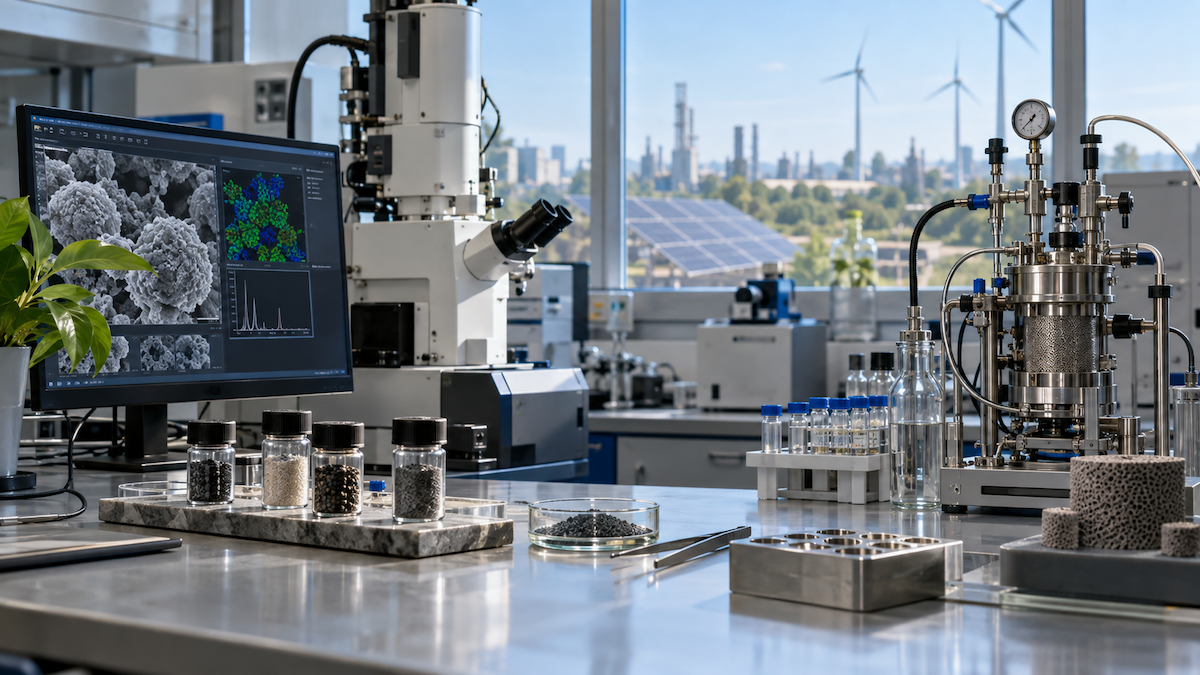
AI is also showing considerable potential in industrial chemistry and material discovery. A study published in npj Computational Materials on September 15 introduced MatSemNet, an AI framework developed to identify promising materials by combining information from scientific literature, numerical measurements and chemical reaction pathways.

Scientists traditionally rely on extensive laboratory experimentation to identify catalysts capable of improving chemical reactions.

MatSemNet offers an alternative approach by learning relationships between the structure of materials and their chemical properties, allowing researchers to predict which combinations could deliver better performance.

The research team applied the system to the conversion of nitrate into ammonia, a chemical widely used in fertiliser production and other industrial applications.

Guided by the AI model, researchers designed rare-earth-doped cobalt oxide catalysts and subsequently tested them in laboratory experiments.

The resulting catalysts achieved a Faradaic efficiency of 85.5 per cent, a measurement indicating how effectively the electrical charge supplied to the reaction contributed to producing the desired chemical.

The researchers also reported an ammonia production rate of 28.3 milligrams per hour per square centimetre under alkaline experimental conditions.

The findings demonstrate that AI-generated predictions can guide the development of new materials that subsequently perform successfully in laboratory testing.

However, the results do not establish that the technology is ready for commercial-scale ammonia production. Further investigation would be required to determine its economic competitiveness, durability and performance under industrial operating conditions.

Here’s why this matters

Discovering new materials through conventional experimentation can be expensive and time-consuming.

AI-guided material discovery could help accelerate innovation in industrial catalysts, batteries, renewable energy and chemical manufacturing.

For Oman, which is pursuing industrial diversification and developing its hydrogen and ammonia value chains, the research illustrates how AI could eventually contribute to industrial efficiency and the development of advanced manufacturing technologies.

5. Apple Introduces an AI-Powered Siri That Understands Personal Context

Apple officially began rolling out Siri AI on September 14, introducing a significantly upgraded version of its digital assistant alongside iOS 27, iPadOS 27 and macOS 27. The development represents Apple’s transition towards a more conversational and context-aware AI assistant capable of helping users perform increasingly complex tasks.

Unlike conventional voice assistants that primarily respond to straightforward questions or predefined commands, Siri AI is designed to understand personal context, interpret information displayed on a device and perform actions across applications.

For example, the assistant can retrieve relevant information from a user’s messages, emails and photos to answer questions. It also incorporates on-screen awareness, allowing users to ask questions about information currently displayed on their devices.

Additional capabilities include improved conversational interactions, more extensive application integration and the ability to perform system-wide actions.

Apple’s broader software updates also introduce AI-powered photo-editing capabilities and other improvements designed to integrate artificial intelligence more deeply into everyday digital experiences.

The new Siri AI is initially rolling out as an English-language beta, with additional language support scheduled for October.

Availability is limited to compatible Apple Intelligence-enabled devices, and certain features depend on regional availability and usage restrictions.

The development comes as technology companies increasingly compete to integrate AI assistants into their operating systems, applications and consumer devices.

However, the release remains a beta, and its capabilities should not be interpreted as evidence that the assistant can reliably complete every complex task without user intervention.

Here’s why this matters

The integration of more sophisticated AI into operating systems could change how consumers interact with digital services.

Instead of navigating multiple applications manually, users may increasingly rely on AI assistants to retrieve information, organise activities and perform certain tasks.

For businesses, this could reshape customer engagement, application development and digital commerce, while introducing new considerations surrounding privacy, security and user control.

Published

on

Continue Reading
Advertisement

Trending global