
Economy
OPINION: War, Climate, and the Costs We Choose Not to See
War does not wait for the smoke to clear before it starts reshaping the future. It arrives through energy markets, shipping lanes, air quality, water systems and the quiet suspension of long-term priorities. By the time governments begin speaking the language of security, the environmental and economic consequences are already unfolding in real time.
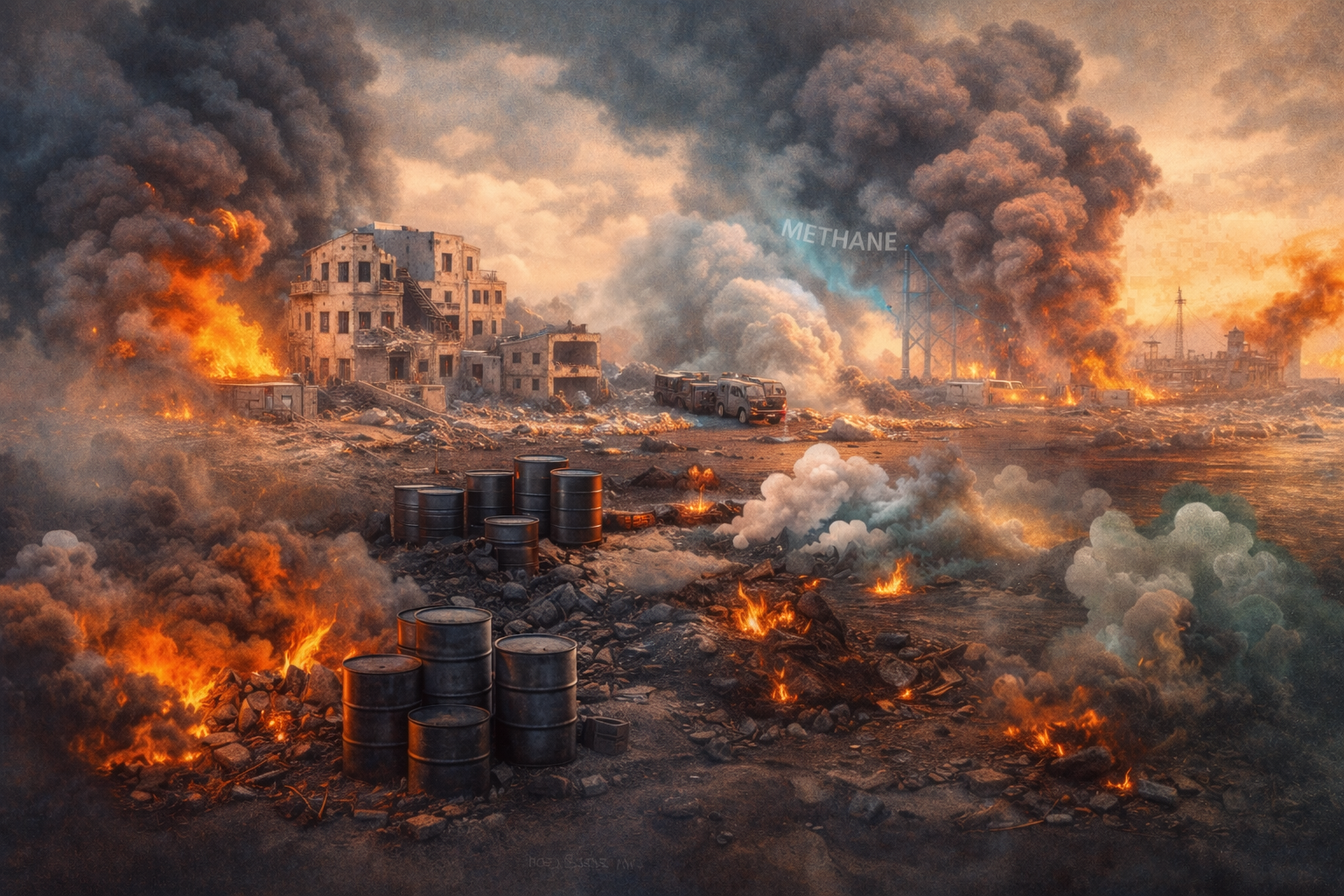
War does not wait for the smoke to clear before it starts reshaping the future. It arrives through energy markets, shipping lanes, air quality, water systems and the quiet suspension of long-term priorities.
Article by Partha Das, CCML; ESG Consultant – Crowe Oman
By the time governments begin speaking the language of security, the environmental and economic consequences are already unfolding in real time.
This is the pattern modern crises keep repeating. The moment geopolitics hardens, sustainability is treated as negotiable. Climate targets are deferred, environmental risks are acknowledged but rarely prioritized, and social consequences are addressed only once they begin to threaten economic or political stability.
The conflict now centered on Iran makes that pattern unusually difficult to ignore. Its environmental, social and governance implications are not a separate narrative running alongside the conflict; they are embedded within it, shaping regional stability, energy security and climate progress in real time.
A Carbon Surge Hidden in Plain Sight
In most climate discussions, emissions are framed through national inventories and long-term reduction pathways. War does not follow that logic. It compresses emissions into short timeframes and disperses them across categories that are not fully captured by existing frameworks.
Research from the Climate and Community Institute (CCI) estimates that in just the first two weeks of the conflict, emissions exceeded 5 million tonnes of CO₂ equivalent. This surpasses the annual emissions of countries such as Iceland and is comparable to placing over one million petrol cars on the road for an entire year. The associated climate damage has already been valued at more than $1.3 billion.
The composition of these emissions reveals a more complex picture than commonly assumed. The largest contributor is the destruction of buildings and infrastructure. Based on reports from the Iranian Red Crescent indicating that approximately 20,000 civilian buildings have been damaged, emissions from this category alone are estimated at around 2.4 million tonnes of CO₂ equivalent. The carbon cost of war, therefore, extends well beyond active combat into the destruction of the built environment and the emissions that will follow during reconstruction.
The second major contributor is fuel consumption. Military operations, including long-range bombing missions and continuous naval deployments, have consumed vast quantities of fuel. Estimates suggest that between 150 million and 270 million litres were used by aircraft, support vessels, and ground operations within the first 14 days, generating approximately 529,000 tonnes of CO₂ equivalent.
That matters because war’s carbon footprint is usually imagined as fire and rubble. In reality, much of it is burned quietly, mission after mission. While explosions and burning oil facilities dominate visual narratives, a substantial share of emissions is driven by the sustained combustion of fuel required to maintain military operations. Keeping aircraft airborne, powering naval fleets, and transporting equipment all rely on continuous, high-intensity fuel use. These operational emissions, though less visible, form a significant part of the overall carbon footprint of war.
The scale becomes clearer in the machinery of war itself. Aircraft, naval vessels and heavy equipment are all highly fuel-intensive, and repeated operations quickly build a sizeable carbon footprint that is far less visible than fire or rubble. The environmental impact is further increased by oil fires. Strikes on major fuel depots and refineries, including those surrounding Tehran, have led to the combustion of millions of barrels of oil. Estimates suggest that between 2.5 million and 5.9 million barrels were burned during early strikes, releasing approximately 1.88 million tonnes of CO₂ equivalent, along with black carbon and other pollutants. The aftermath was visible in dense smoke and rainfall mixed with soot, described as “black rain” across parts of Tehran.
Less visible, but equally significant, are methane emissions. Damage to oil and gas infrastructure has triggered uncontrolled releases of natural gas, detected by satellites as large plumes. Given methane’s higher warming potential in the short term, these emissions carry a disproportionate climate impact despite receiving limited public attention.
In the Gulf, local damage rarely stays local. These impacts are unfolding within a region that plays a central role in global energy supply, meaning disruptions quickly extend beyond national borders.
The Emissions We Still Do Not Count
While these figures are already substantial, they capture only the earliest phase of the conflict. Emissions are likely to rise as military operations continue, driven by sustained activity, the replenishment of equipment, and the expansion of deployed forces.
The harder problem is that much of this never enters the official ledger in the first place. Conventional climate accounting frameworks were not designed to capture emissions generated during conflict. National inventories largely focus on energy, industry, and transport within defined boundaries, leaving significant gaps when it comes to emissions from destroyed infrastructure, military logistics, and humanitarian operations. As a result, a considerable portion of “conflict emissions” remains outside formal reporting systems.
This gap is especially visible in military activity. Lockheed Martin’s 2024 sustainability report put emissions from the use of sold products under Scope 3 at nearly 14 million tonnes of CO₂, suggesting that the climate burden of defense lies as much in deployment as in production. In this war alone, more than 8,000 combat flights have reportedly taken place, much of that operational carbon still only partially reflected in formal accounting.
Despite this, military emissions remain one of the least transparent areas in global climate reporting. The climate implications of armed conflict are rarely integrated into mainstream emissions discussions, creating a gap between measured progress and actual impact.
That opacity is not accidental. Under the Paris transparency framework, countries are required to submit national greenhouse gas inventories, yet disaggregated military-emissions reporting remains patchy and effectively voluntary in practice. IPCC guidance places military fuel use within a broad “1A5 non-specified” category, while emissions from multilateral UN operations are excluded from national totals. One of the most carbon-intensive functions of the state still enters climate accounting only partially and inconsistently.
Meaningful mitigation cannot stop at better optics or greener bases. It requires stronger disclosure, lower operational fuel dependence, cleaner power and storage systems, and the systematic decarbonization of military operations wherever possible. It also requires climate considerations to move from the margins of defense planning into the core of national security strategy. At a deeper level, any honest conversation about military emissions must also acknowledge that the climate cost of war cannot be separated from the persistence of war itself.
Hormuz: From Energy Chokepoint to Sustainability Chokepoint
If emissions from combat represent one dimension of the climate impact, the Strait of Hormuz represents another. This narrow waterway carries approximately 20% of global petroleum liquids consumption, making it one of the most critical energy corridors in the world.
Recent disruptions have reduced shipping activity and forced both ships and aircraft onto longer routes. That means higher fuel use, more emissions and greater strain on supply chains, especially for oil, fertilizers and food. From Muscat, the fragility of this system feels less abstract; it shows up in rerouted flights, delayed cargo and the quiet anxiety that follows any threat to the Gulf’s shipping lanes. Hormuz is no longer only an energy chokepoint; it has also become a sustainability chokepoint, where disruptions simultaneously affect emissions, supply chains, and economic stability.
The newly announced two-week ceasefire between the United States and Iran has reduced neither uncertainty nor exposure in any meaningful sense. It has reopened diplomatic space and, on paper, allowed for the resumption of transit through the Strait of Hormuz. But its terms remain conditional, its scope is disputed, and its operational effect has so far been limited. Shipping through the Strait remains heavily constrained, with Tehran still insisting on controlled passage and maritime actors continuing to treat the corridor as high risk.
That matters because this kind of ceasefire does not unwind the climate burden already set in motion. Continued constraints on shipping mean longer routes, higher fuel burn and deeper supply-chain friction. Ongoing pressure on Gulf infrastructure, including recent attacks on oil, power and desalination assets in Kuwait, is a reminder that even a pause in headline hostilities can leave energy and water systems exposed. The real lesson is not that the crisis has passed, but that the region remains dangerously dependent on systems that are highly exposed to geopolitical disruption.
Energy Security Versus Climate Commitments
Governments have moved quickly to steady markets and protect supply by focusing on maintaining energy security, releasing strategic reserves, and exploring alternative supply routes. The International Energy Agency confirmed that member countries agreed to release 400 million barrels of oil as part of a coordinated effort to ease supply pressures.
While these measures are necessary in the short term, they also highlight the continued reliance on fossil fuels within the global energy system. Analysis from Carbon Brief suggests that crises of this nature can lead to varied outcomes. In some cases, they encourage greater investment in renewable energy and efficiency. In others, they support the case for expanding fossil fuel production to ensure supply stability.
The irony is hard to miss. The same disruption that draws attention to the risks associated with fossil fuel dependence can also lead to decisions that reinforce it in the near term. Higher energy prices contribute to inflation, which may lead to increased interest rates. This raises financing costs for renewable energy projects, making them harder to scale, particularly in developing markets. At the same time, fossil fuel investments may appear more practical due to immediate supply needs.
The Paris Agreement relies on steady, long-term progress. Crises such as this may not change commitments directly, but they can slow implementation, delay investment, and shift focus toward immediate priorities.
Environmental Damage and Social Stress
The environmental impacts of the conflict are already visible. Oil fires have degraded air quality, methane leaks are contributing to warming, and pollutants are entering soil and water systems. These effects persist long after active conflict subsides, particularly in regions where monitoring and remediation are limited.
At the same time, the social dimension is becoming increasingly apparent. Energy price spikes are affecting households, particularly in import-dependent economies. Supply chain disruptions are impacting industries and employment, while fertilizer shortages are placing pressure on food systems.
These pressures compound over time, creating a cycle where economic strain and widening inequality begin to erode livelihoods. In such conditions, migration increasingly becomes a response to these pressures. What begins as internal displacement can evolve into cross-border movement as environmental and economic pressures intensify.
The human cost is already visible in the labor systems that keep Gulf economies running and in the scale of displacement inside Iran itself. The region relies heavily on migrant workers from across Asia, many of them in low-paid and precarious employment, while within Iran an estimated 600,000 to 1 million households have been temporarily displaced. Together, these pressures show how quickly environmental stress and economic insecurity can spill into labor systems, mobility and social stability.
The Marine Ecosystem as a Casualty Zone
The environmental consequences of this conflict extend beyond land into the Gulf, where naval operations and strikes on coastal infrastructure are placing new pressure on already fragile ecosystems. At sea, damage rarely remains confined to ships and ports; fuel leakage, debris and damage to coastal facilities spread quickly into surrounding waters, affecting fisheries, shorelines and marine habitats.
Following United States strikes on Iranian naval forces, dozens of vessels were damaged or sunk, alongside disruption to port infrastructure in Bandar Abbas and Konarak. These incidents released fuel, wreckage, and other pollutants into coastal waters, complicating recovery in an area where marine ecosystems are already under strain from heavy shipping traffic, industrial activity, and warming seas.
Marine risk has not remained confined to the Gulf. After the sinking of Iran’s Dena off Sri Lanka, local authorities reported oil patches and debris at sea, while strikes on energy facilities tied to export terminals, tanker routes and coastal industrial zones across the wider region have broadened the risk of contamination. In the Gulf, that damage accumulates across ecosystems already under pressure from warming seas, desalination discharges, dredging and petrochemical activity.
Coastal ecosystems in the Gulf are already under pressure from rising sea temperatures, desalination discharges, dredging, and petrochemical activity. Additional contamination from fuel leaks, damaged port facilities, and disrupted shipping raises the risk not only to marine biodiversity, but also to the coastal economies that depend on fisheries, desalination, tourism, and port operations.
Bushehr and the Gulf’s Water Risk
Bushehr introduces a different order of risk. Iran says the plant has been struck repeatedly since the war began, while the International Atomic Energy Agency has said radiation levels did not rise after the latest reported projectile incident. Even so, Bushehr’s repeated appearance in the conflict matters.
As Iran’s only operating nuclear power plant on the Gulf coast, Bushehr carries consequences that extend well beyond the site itself. IAEA director general Rafael Grossi has warned that a direct strike could release radioactivity beyond Iran’s borders. In a region deeply dependent on seawater desalination, that would become not only a nuclear safety issue, but also a marine and water-security issue.
The Long-Term Cost We Are Not Prepared For
The environmental burden of war does not end when the fighting stops. Some effects are immediate in fires, damaged infrastructure and polluted air. Others unfold more slowly through soil degradation, groundwater contamination, habitat loss and weakened ecosystems, especially where damaged institutions struggle to monitor or remediate pollution. As reconstruction begins, governments understandably prioritize housing, transport, power, water and markets, while environmental remediation is often delayed. Yet rebuilding itself is carbon-intensive, meaning the climate cost of war can continue to rise well after active operations have ended.
The harder question comes later: what kind of recovery is left once the pollution settles?
In the short term, recovery is measured by whether roads reopen, power returns and markets stabilize. In the longer term, the quality of land, water, air and ecosystems will shape whether that recovery is sustainable.
Historical experience reinforces this pattern. From Vietnam and Iraq to more recent conflicts in Gaza and Ukraine, war has repeatedly left behind environmental damage that outlasts the political and military phases of conflict. The deeper lesson is that environmental harm becomes part of the postwar reality, shaping livelihoods, health, and resilience long after the headlines fade.
A System Under Strain
The conflict in Iran reflects broader pressures on a global system that remains closely linked to fossil fuel infrastructure and exposed to disruption. The structure of energy systems plays an important role in how countries absorb shocks of this kind. Centralized systems built around large-scale infrastructure can be more exposed during periods of instability. More distributed energy systems, including renewable generation and localized grids, can reduce some of that exposure by limiting single points of failure.
That is one reason the energy transition now looks less like a climate preference and more like a resilience strategy. Beyond its environmental benefits, it can also strengthen energy security. Countries that generate a larger share of their energy domestically from renewable sources may be less exposed to supply disruptions and price volatility.
If this conflict proves anything, it is that the transition to a low-carbon economy is no longer only a climate objective. It is also a resilience strategy. Economies need stronger buffers against supply disruption: strategic reserves, more diversified suppliers and routes, more flexible LNG and regasification capacity where gas remains necessary, stronger grid interconnection, and much deeper cybersecurity across energy infrastructure. The lesson is not simply to secure more fuel, but to build systems that can absorb shocks without deepening the vulnerabilities that created them.
But resilience cannot end with emergency stockpiles and rerouting plans. The more durable answer is to reduce structural dependence on the chokepoints that make these crises so destabilizing. That means scaling energy efficiency, renewables, storage and flexible grids, while accelerating green hydrogen from pilot ambition to industrial reality. Oman is already positioning itself in that direction: its hydrogen strategy targets more than one million tonnes per annum by 2030, official institutions now link hydrogen and renewable energy to energy security and decarbonization, authorities have signaled plans for hydrogen-powered electricity generation, and the country has already moved into utility-scale solar-plus-storage. For the Gulf, the lesson is clear: the more diversified, electrified and low-carbon the system becomes, the less destructive each geopolitical shock will be.



ROHM Opens Landmark 15th Anniversary Season with its Acclaimed Production of Zeffirelli’s Rigoletto

Luxury Watches That Could Appreciate Over the Next Decade [2026 Auction Buyer Guide]

How Much Are People in Oman Saving Every Month – And What Could It Become if Invested in the MSX?

Liva Insurance Secures Three Major Honours at the Alam Al-Iktisaad Awards 2026

F5 Puts Spotlight on AI Security Innovation in Oman

bp’s New Programmes Set to Benefit Communities Across Oman

The Gulf Salary Equation: The Real Cost of Living in Muscat and Dubai

Al Mouj Muscat Hands Over Completed Buildings of Al Mouj Business Park

OER Magazine August Edition 2026

What the World’s Top 10 Tech CEOs Really Earn

Power And Beyond: The Path To A Low-carbon Future

Al Mouj Muscat unveils Ghadeer Villas

Time to Buy Saudi Stocks? Some Investors Look at Dubai Instead

Hospitality Industry in Oman Estimated 90% Growth in 2022

Renewables are booming, but not fast enough to cap greenhouse emissions

Retail Abu Dhabi’s ‘Unbox Amazing’ generates sales of more than AED 2 billion in participating stores

Saudis Sign Deals From Energy to Metals in Bid to Salvage Forum

Saudi Arabia’s Gold Miner Plans to Be a Global Top-20 Supplier

Technology to drive Sultanate’s downstream industry

Digitization and Logistics Service Providers Can Help SMEs Make the Most of Peak Season Retail Trends

Amr Baabood: Oman Climate Week Is About Moving From Climate Ambition to Climate Action

Mayan Al Asfoor on Leadership, Legacy and Empowering Omani Talent

LEADERSPEAK: Dhofar Insurance CEO Sunil Kohli on Oman’s Insurance Sector, Reinsurance & Market Outlook

VIDEO: Robert MacLean on how NHI is Shaping Oman’s Next Generation of Hospitality Leaders

The Future of Oman: Decoding The Sultanate of Oman’s Strategic Promotional Nation Brand

EXCLUSIVE: AI, Robotics & Wearable Sensors are Changing the Lives of Dementia Patients

EXCLUSIVE: Talking Renewable Projects & Sustainability in Oman and Beyond with Vipul Tuli

VIDEO: Eng. Salim Al Thuhli, CEO, Khazaen Economic City on Investment Opportunities

H.E. Salim Al Aufi, Minister of Energy & Minerals talks about Oman’s Green Hydrogen Goals

VIDEO: Talking Latest Developments in Aircraft Ground Guidance & More at Oman Airports
-

 Artificial Intelligence2 weeks ago
Top 5 Interesting Things AI Did This Month – September 2026 Edition
-

 Highlights1 month ago
OERLive: Top 10 Mathematical Problems AI Has Solved or Transformed
-

 Magazines1 month ago
OER Magazine July Edition 2026
-

 Magazines1 month ago
Al Mar’a Magazine July 2026
-

 Alamaliktistaad Magazines1 month ago
Alam Al-Iktisaad Magazine July 2026 Edition
-

 Magazines2 months ago
OER Magazine – June 2026 Edition
-

 Banking & Finance2 months ago
Oman Arab Bank CEO Sulaiman Al Harthi Retires as Ali Al Mani Is Named Successor
-

 Banking & Finance3 weeks ago
The GCC’s 10 Richest Billionaires: Inside US$253.5 Billion of Wealth