
Trade
The India–Australia Uranium agreement will fuel the future
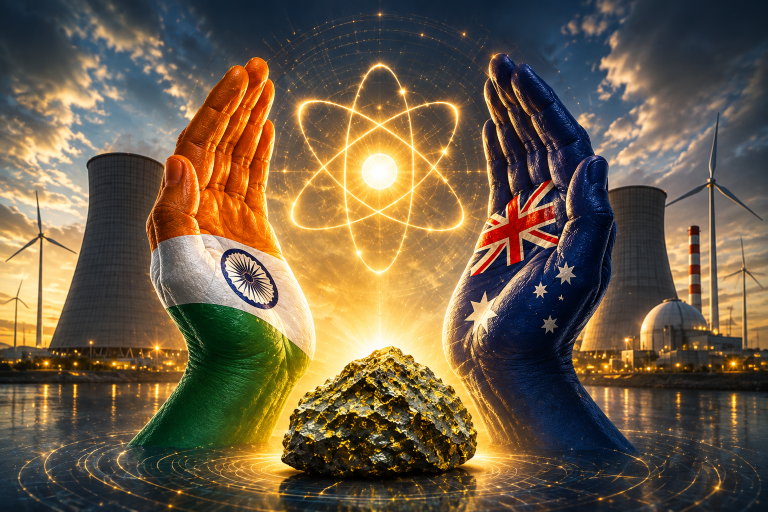
The India–Australia Uranium Agreement strengthens India’s energy security, clean-energy transition, industrial growth and strategic resilience through assured uranium supplies, deeper cooperation on critical minerals and a trusted partnership.
The Third India–Australia Annual Summit marks a defining moment in the evolution of bilateral relations, transforming an already strong Comprehensive Strategic Partnership into a more purposeful and future-oriented alliance. While cooperation between the two countries has steadily expanded across trade, defence, education, technology and maritime security, the summit has elevated the partnership to a new strategic level by placing long-term economic resilience and energy security at its core.
Among the many outcomes, the operationalisation of civil nuclear cooperation through the uranium agreement stands out as the most consequential achievement, promising to reshape India’s energy landscape and to reinforce the strategic trust that increasingly characterises relations between the two democracies.
India-Australia bilateral cooperation so far
1. Trade ties deepen: India’s exports to Australia have doubled under the ECTA from USD 12bn in FY2021 to USD 24bn in FY2025 2. Major investment boost: Australian Super announced an additional AU$500mn investment in NIIF, increasing its total India exposure to AU$3.3bn.
3. Strategic sector collaboration: India invited Australian investment in clean energy, critical minerals, AI, infrastructure, manufacturing and digital technologies.
4. Clean energy partnership: Australia’s uranium, technology and capital will support India’s expansion targets for renewable energy and nuclear power.
5. Stronger economic partnership: India called for deeper partnerships among CEOs, at the state level and in education to drive long-term trade, innovation and investment.
As global energy systems undergo profound transformation amid geopolitical uncertainties and supply chain disruptions, both countries have chosen to deepen cooperation in areas that will shape their future economic competitiveness. The uranium agreement therefore represents not merely a commercial arrangement but a strategic investment in India’s long-term energy independence and industrial future.
From Legal Framework to Strategic Reality
The India–Australia Civil Nuclear Agreement has evolved from a legal framework into an operational strategic partnership following the finalisation of the administrative arrangement, which permits Australian uranium exports to India’s civilian nuclear programme under IAEA safeguards. This milestone provides India with assured access to one of the world’s most reliable uranium resource bases, significantly strengthening long-term energy security. As domestic uranium production remains inadequate to meet the growing fuel requirements of India’s expanding reactor fleet, the agreement diversifies fuel sources, reduces dependence on limited suppliers, and reinforces the country’s clean-energy transition by ensuring reliable, uninterrupted nuclear fuel supplies.
Strengthening the Foundations of Energy Security
Reliable access to uranium is essential to the success of India’s civilian nuclear programme, ensuring long-term fuel security and maximising the value of investments in nuclear infrastructure. The India–Australia uranium partnership strengthens India’s nuclear ambitions by supporting the efficient operation of existing reactors and providing confidence for future capacity expansion. It also reinforces India’s clean energy transition, as nuclear power delivers reliable, low-carbon baseload electricity that complements renewable energy and meets rising demand for industry and infrastructure. Furthermore, stable uranium supplies enhance energy and economic security by encouraging long-term investment, supporting industrial growth, and reducing exposure to volatility in global energy markets.
Powering India’s Industrial Transformation
Assured uranium supplies deliver benefits beyond the nuclear sector by ensuring reliable electricity for advanced manufacturing, semiconductors, electric vehicles, batteries and other high-value industries. During the summit, India and Australia also deepened cooperation on critical minerals, recognising the close link between energy security and industrial competitiveness. While critical minerals support manufacturing and clean technologies, dependable nuclear fuel provides the stable power needed to sustain these industries. Together, these initiatives enhance India’s manufacturing capabilities, promote domestic value addition and technological advancement, reduce supply chain vulnerabilities, and strengthen long-term economic resilience, enabling India to move up the global manufacturing value chain.
Reducing Strategic Vulnerabilities in an Uncertain World
The operationalisation of the India–Australia Uranium Agreement assumes even greater significance in an increasingly uncertain geopolitical environment, where access to strategic resources is often shaped by geopolitical rivalries, supply-chain disruptions and shifting global alignments. For a rapidly expanding economy with ambitious clean-energy goals, uninterrupted access to nuclear fuel is not merely an energy requirement but a strategic necessity. By providing a dependable, long-term source of uranium, the agreement reduces India’s exposure to concentrated supply networks and strengthens its capacity to pursue national priorities with greater confidence and continuity.
Countering the Influence of Geopolitical Pressures
In an era when access to strategic resources is increasingly shaped by geopolitics, India and Australia have built a trusted partnership grounded in shared democratic values and long-term economic interests. The uranium agreement strengthens India’s energy security by diversifying fuel sources, reducing dependence on a limited number of suppliers, and insulating its civilian nuclear programme from geopolitical uncertainties. This enhances India’s strategic flexibility and supports a resilient energy architecture capable of sustaining long-term economic growth and development. Australia’s continued support for India’s membership of the Nuclear Suppliers Group further reflects deepening bilateral trust and reinforces India’s integration into the global civil nuclear framework, strengthening both countries’ broader strategic and economic partnership.
Building a Comprehensive Resource Partnership
One of the most distinctive features of the Australia Summit is that uranium cooperation was not pursued in isolation. Instead, it forms part of a broader framework encompassing critical minerals, advanced manufacturing, clean energy, technology and resilient supply chains. This integrated approach reflects an understanding that future economic competitiveness will depend on securing every component of the industrial ecosystem, not individual resources alone.
Australia’s strength as a resource-rich economy complements India’s rapidly expanding manufacturing capabilities. Critical minerals are essential inputs for batteries, semiconductors, renewable energy technologies and advanced electronics, while reliable uranium supplies ensure the stable electricity needed to power these industries. The partnership therefore creates a comprehensive ecosystem in which resource security, manufacturing capability and technological advancement reinforce one another, contributing to India’s long-term industrial transformation.
A boost to the Make in India trajectory
The alignment between India’s Make in India initiative and Australia’s Future Made in Australia strategy further illustrates the long-term nature of this cooperation. Rather than focusing solely on resource trade, both countries have embraced collaboration across exploration, mining, processing, refining, downstream manufacturing and technology transfer. Such cooperation has the potential to strengthen industrial competitiveness and create a more resilient and diversified economic relationship, enabling a response to future global challenges.
Energy Security as the Foundation of Sustainable Growth
Every major economy requires a secure energy foundation to sustain industrial expansion, technological innovation and economic development. For India, whose electricity demand continues to grow alongside its manufacturing ambitions, reliable energy is strategically important. The uranium agreement directly supports this objective by strengthening the long-term viability of nuclear power as a reliable source of low-carbon baseload electricity.
Stable nuclear fuel supplies provide confidence not only for existing reactor operations but also for future investments under India’s Nuclear Energy Mission. In doing so, the agreement supports the country’s transition towards a diversified energy portfolio in which nuclear energy complements renewable sources and ensures an uninterrupted power supply for industries that require continuous electricity. This balanced approach reinforces India’s commitment to sustainable economic growth without compromising energy reliability or industrial productivity.
The agreement therefore contributes to energy security, manufacturing competitiveness, technological advancement and environmental sustainability. Few strategic partnerships can influence so many dimensions of national development through a single initiative, making the uranium agreement one of the most consequential outcomes of the India–Australia relationship.
A Partnership That Will Fuel the Future
In conclusion, the Third India–Australia Annual Summit marks a new phase in bilateral relations by turning strategic intent into tangible outcomes. The operationalisation of the uranium agreement is a landmark achievement, ensuring reliable nuclear fuel supplies, advancing India’s clean-energy transition, strengthening industrial competitiveness, and enhancing supply-chain resilience.
It also shows how trusted partnerships can strengthen national resilience by reducing reliance on concentrated supply chains and mitigating geopolitical risks. Together with expanded cooperation in critical minerals, advanced manufacturing, and clean technologies, the partnership is set to become a key driver of India’s future growth. Beyond securing uranium, the agreement strengthens India’s energy security, economic resilience, strategic autonomy,



Win OMR 3,000: ROP & Bank Muscat Launch Cyber Fraud Awareness Short Film Competition

EXCLUSIVE INTERVIEW: Yango’s Big Vision for Oman

Leadership, Transformation Forum Reviews Inspiring Women’s Experiences

OPINION: GCC Navigates Global Macro Volatility as Worldwide Growth Moderates to 2.6%

City Centre Muscat Celebrates 25 Years of Great Moments as Mall of Oman Marks Its Fifth Anniversary

HM The Sultan Accorded Official Reception Ceremony at Windsor Castle

61.7% of Middle Eastern Families Involve the Next Generation As Business Successors or Consultants

Future Fund Oman’s $5.2B Outlook: Where Will the Sultanate’s Next Big Businesses Come From?

Oman and the UK: From Historical Legacy of Over 220 Years to Future Partnership

Sohar International Launches Expatriate Banking Proposition with Housing Loans, Cashback, Insurance & Digital Remittance Solutions

Power And Beyond: The Path To A Low-carbon Future

Al Mouj Muscat unveils Ghadeer Villas

Time to Buy Saudi Stocks? Some Investors Look at Dubai Instead

Hospitality Industry in Oman Estimated 90% Growth in 2022

Renewables are booming, but not fast enough to cap greenhouse emissions

Retail Abu Dhabi’s ‘Unbox Amazing’ generates sales of more than AED 2 billion in participating stores

Saudis Sign Deals From Energy to Metals in Bid to Salvage Forum

Saudi Arabia’s Gold Miner Plans to Be a Global Top-20 Supplier

Technology to drive Sultanate’s downstream industry

Digitization and Logistics Service Providers Can Help SMEs Make the Most of Peak Season Retail Trends

VIDEO: Building Oman’s Future – SAH’s Vision for Infrastructure, Innovation and Growth

VIDEO: Oman Cables Breaks Ground on OMR 10 Million-Plus Plant to Power Oman’s Industrial Future

VIDEO: Hitesh Akarte on Khimji Ramdas Infrastructure’s Role in Oman Vision 2040

Oman’s Hospitality Sector Enters a New Phase of Growth: Sadiq Al Matwani Al Lawati

Amr Baabood: Oman Climate Week Is About Moving From Climate Ambition to Climate Action

Mayan Al Asfoor on Leadership, Legacy and Empowering Omani Talent

LEADERSPEAK: Dhofar Insurance CEO Sunil Kohli on Oman’s Insurance Sector, Reinsurance & Market Outlook

VIDEO: Robert MacLean on how NHI is Shaping Oman’s Next Generation of Hospitality Leaders

The Future of Oman: Decoding The Sultanate of Oman’s Strategic Promotional Nation Brand

EXCLUSIVE: AI, Robotics & Wearable Sensors are Changing the Lives of Dementia Patients
-

 Artificial Intelligence1 month ago
Top 5 Interesting Things AI Did This Month – September 2026 Edition
-

 Fashion4 weeks ago
Luxury Watches That Could Appreciate Over the Next Decade [2026 Auction Buyer Guide]
-

 Economy4 weeks ago
OER Magazine September Edition 2026
-

 Banking & Finance2 months ago
The GCC’s 10 Richest Billionaires: Inside US$253.5 Billion of Wealth
-

 Alamaliktistaad Magazines3 weeks ago
Alam Al-Iktisaad Magazine September 2026 Edition
-

 Banking & Finance1 month ago
INVESTIGATION: What If You Bought Apple Stock Every Time You Bought an iPhone?
-

 News2 months ago
OPEC+ Holds Output Steady for October as Focus Shifts to 2027 Quotas
-
 Artificial Intelligence1 month ago
What the World’s Top 10 Tech CEOs Really Earn