
Technology
Forest Microbes Found To Survive & Multiply In Megafires: Research
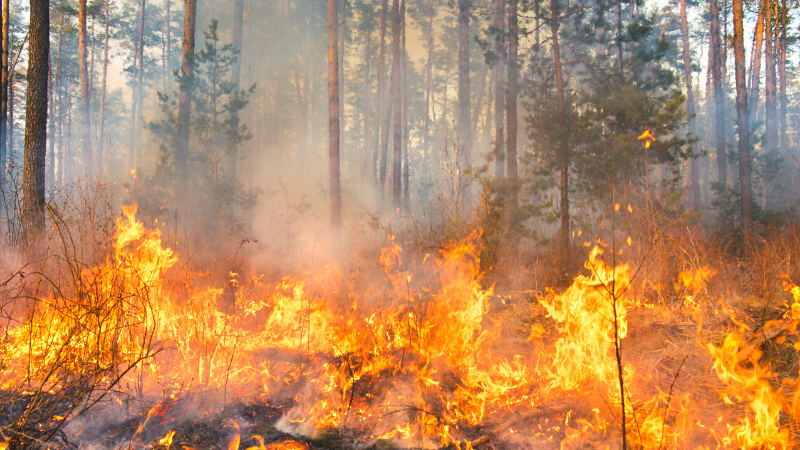
New research from the University of California (UC), Riverside shows that the fungi and bacteria that survived the redwood tanoak forest megafires were microbial ‘cousins’ that often increased in abundance after ‘feeling the flames’.
Fires of unprecedented size and intensity, called megafires, are becoming increasingly common. In the West, climate change is causing rising temperatures and earlier snowmelt, extending the dry season when forests are most vulnerable to burning.
Though some ecosystems are adapted for less intense fires, little is known about how plants or their associated soil microbiomes respond to megafires, particularly in California’s charismatic redwood tanoak forests.
The UCR team is contributing to this understanding with a paper in the journal Molecular Ecology.
In addition to examining megafire effects on redwood tanoak forest microbes, the study is unusual for another reason. Soil samples were pulled from the same plots of land both before and immediately after the 2016 Soberanes fire in Monterey County on the Pacific coast in the US state of California.
The team was not surprised to find that the Soberanes fire had a massive impact on bacterial and fungal communities, with as much as a 70 per cent decline in the number of microbe species. They were surprised that some yeast and bacteria not only survived the fire but increased in abundance.
Bacteria that increased included Actinobacteria, which are responsible for helping plant material decompose. The team also found an increase in Firmicutes, known for promoting plant growth, helping control plant pathogens, and remediating heavy metals in soil.
In the fungal category, the team found a massive increase in heat resistant Basidioascus yeast, which is able to degrade different components in wood, including lignin, the tough part of plant cell walls that gives them structure and protects them from insect attacks.
Perhaps the team’s most significant finding is that fungi and bacteria – both those that survived the megafire and those that didn’t – appear to be genetically related to one another.
In general, little is known about fungi and the full extent of their effects on the environment. It is imperative that studies like these continue to reveal the ways they can help the environment recover from fires.



Oman Air Launches Winter Schedule with Additional Frequencies, Expanded Capacity & New Codeshare Destinations

IHE and Eicher Trucks and Buses promote school bus safety awareness among students

India’s rising edge in oil, gas and construction projects is enabling Middle East’s growth

The Financial Services Authority organises the National Health Insurance Platform Forum ‘Dhamani’

Is India’s accelerating export engine driving manufacturing towards global scale?

SAH wins double honours at Dossier Construction Awards & Summit 2026

VIDEO: Hitesh Akarte on Khimji Ramdas Infrastructure’s Role in Oman Vision 2040

Alam Al-Iktisaad Magazine September 2026 Edition

A decade of investing: Tech portfolio returned 1,342% versus Nasdaq-100’s 636%

His Majesty the Sultan arrives in Kazakhstan

Power And Beyond: The Path To A Low-carbon Future

Al Mouj Muscat unveils Ghadeer Villas

Time to Buy Saudi Stocks? Some Investors Look at Dubai Instead

Hospitality Industry in Oman Estimated 90% Growth in 2022

Renewables are booming, but not fast enough to cap greenhouse emissions

Retail Abu Dhabi’s ‘Unbox Amazing’ generates sales of more than AED 2 billion in participating stores

Saudis Sign Deals From Energy to Metals in Bid to Salvage Forum

Saudi Arabia’s Gold Miner Plans to Be a Global Top-20 Supplier

Technology to drive Sultanate’s downstream industry

Digitization and Logistics Service Providers Can Help SMEs Make the Most of Peak Season Retail Trends
VIDEO: Hitesh Akarte on Khimji Ramdas Infrastructure’s Role in Oman Vision 2040

Oman’s Hospitality Sector Enters a New Phase of Growth: Sadiq Al Matwani Al Lawati

Amr Baabood: Oman Climate Week Is About Moving From Climate Ambition to Climate Action

Mayan Al Asfoor on Leadership, Legacy and Empowering Omani Talent

LEADERSPEAK: Dhofar Insurance CEO Sunil Kohli on Oman’s Insurance Sector, Reinsurance & Market Outlook

VIDEO: Robert MacLean on how NHI is Shaping Oman’s Next Generation of Hospitality Leaders

The Future of Oman: Decoding The Sultanate of Oman’s Strategic Promotional Nation Brand

EXCLUSIVE: AI, Robotics & Wearable Sensors are Changing the Lives of Dementia Patients

EXCLUSIVE: Talking Renewable Projects & Sustainability in Oman and Beyond with Vipul Tuli

VIDEO: Eng. Salim Al Thuhli, CEO, Khazaen Economic City on Investment Opportunities
-

 Artificial Intelligence4 weeks ago
Top 5 Interesting Things AI Did This Month – September 2026 Edition
-

 Fashion2 weeks ago
Luxury Watches That Could Appreciate Over the Next Decade [2026 Auction Buyer Guide]
-

 Highlights2 months ago
OERLive: Top 10 Mathematical Problems AI Has Solved or Transformed
-

 Banking & Finance1 month ago
The GCC’s 10 Richest Billionaires: Inside US$253.5 Billion of Wealth
-
 Magazines2 months ago
OER Magazine July Edition 2026
-

 Economy2 weeks ago
OER Magazine September Edition 2026
-

 Magazines2 months ago
Al Mar’a Magazine July 2026
-

 Alamaliktistaad Magazines2 months ago
Alam Al-Iktisaad Magazine July 2026 Edition