
International
Iran to benefit the most from greater integration in South Asia, says GI Survey
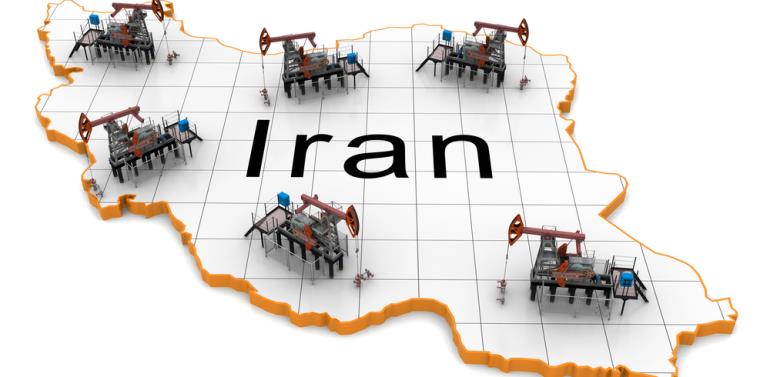
Iran stands to gain the most from the growing integration of commodity-related trades within South Asia (India-Pakistan-Iran), according to 34 per cent of respondents to a Gulf Intelligence Industry Survey of 250 energy professionals operating in the Middle East.
The lifting of sanctions on Iran on January 17 will have a far-reaching impact on both political and energy dynamics within South Asia and the wider Silk Road, which stretches from Beijing to Lagos. Iran is highly ambitious about its plans to utilize its vast oil and gas resources, with the Oil Minister Bijan Namdar Zangeneh saying the country can bring as much as 1 million barrels a day of oil to the global market by the end of 2016. The announcements reveal Tehran’s confidence in their growing energy network within South Asia and the Gulf countries, although 500,000 barrels a day of oil is a more likely target. Iran still needs significant investments to improve its energy infrastructure after years of sanctions.
Iran is especially keen to leverage its position as the owner of the world’s second largest gas reserves, which includes the giant South Pars field. A sanctions-free Iran means the oft-delayed plans to build a 2,700km gas pipeline stretching from the South Pars field, through Pakistan to India’s New Delhi may gain traction this year. The historic China-Iran trade relationship is also regaining momentum following the lifting of sanctions, with the two countries signing a 10-year deal on January 24 to boost bilateral trade worth up to $600 billion.
India (16 per cent) and Pakistan (12 per cent) will also benefit from greater integration in South Asia. India’s recent fiscal reforms have lifted direct foreign investment ceilings in key sectors – defense, insurance and transportation – and inflation, interest rate and current account deficits have reduced. With revenues also expanding, energy investors are increasingly taking note of India’s potential and hopes of becoming a refining superpower by 2025. India’s economic growth – distinguishing it from fellow BRIC members; Brazil, Russia and China – illustrates the country’s ability to take advantage of Iran’s energy offerings this year, if the often turbulent politics with Pakistan allow.
Iran’s economy, along with other major gas producers like Qatar, will likely take a hit from lower gas prices in 2016. Investments in new capacity projects, coal-fired power plants switching to gas in the US and China, plus the EU saying – yet again – it will diversify from Russia’s supply are unlikely to generate enough price support, 69 per cent of respondents to the GI Industry Survey said. It is still unclear whether a sanctions-free Iran will adopt long-term gas sales pricing formulas, or revert to its preference for an annual price reopener – a condition that has dissuaded investors and stymied previous contract discussions.
Meanwhile, oil prices continue to hover around $30/bl, putting considerable fiscal pressure on energy companies and governments and triggering redundancies worldwide. Half (51 per cent) of the respondents to the GI Industry Survey said oil prices are unlikely to rise above an average of $40/bl this year, while nearly a third of respondents (28 per cent) cited $30/bl.



The Hidden Price of Convenience: What People in Oman Spend on Food Delivery, Coffee & Subscriptions

VIDEO: Oman Cables Breaks Ground on OMR 10 Million-Plus Plant to Power Oman’s Industrial Future

Liva Insurance Recognised for Leadership in Insurance Innovation and Digital Transformation at OERLive DX Oman

Oman Air Launches Winter Schedule with Additional Frequencies, Expanded Capacity & New Codeshare Destinations

IHE and Eicher Trucks and Buses promote school bus safety awareness among students

India’s rising edge in oil, gas and construction projects is enabling Middle East’s growth

The Financial Services Authority organises the National Health Insurance Platform Forum ‘Dhamani’

Is India’s accelerating export engine driving manufacturing towards global scale?

SAH wins double honours at Dossier Construction Awards & Summit 2026

VIDEO: Hitesh Akarte on Khimji Ramdas Infrastructure’s Role in Oman Vision 2040

Power And Beyond: The Path To A Low-carbon Future

Al Mouj Muscat unveils Ghadeer Villas

Time to Buy Saudi Stocks? Some Investors Look at Dubai Instead

Hospitality Industry in Oman Estimated 90% Growth in 2022

Renewables are booming, but not fast enough to cap greenhouse emissions

Retail Abu Dhabi’s ‘Unbox Amazing’ generates sales of more than AED 2 billion in participating stores

Saudis Sign Deals From Energy to Metals in Bid to Salvage Forum

Saudi Arabia’s Gold Miner Plans to Be a Global Top-20 Supplier

Technology to drive Sultanate’s downstream industry

Digitization and Logistics Service Providers Can Help SMEs Make the Most of Peak Season Retail Trends
VIDEO: Oman Cables Breaks Ground on OMR 10 Million-Plus Plant to Power Oman’s Industrial Future
VIDEO: Hitesh Akarte on Khimji Ramdas Infrastructure’s Role in Oman Vision 2040

Oman’s Hospitality Sector Enters a New Phase of Growth: Sadiq Al Matwani Al Lawati

Amr Baabood: Oman Climate Week Is About Moving From Climate Ambition to Climate Action

Mayan Al Asfoor on Leadership, Legacy and Empowering Omani Talent

LEADERSPEAK: Dhofar Insurance CEO Sunil Kohli on Oman’s Insurance Sector, Reinsurance & Market Outlook

VIDEO: Robert MacLean on how NHI is Shaping Oman’s Next Generation of Hospitality Leaders

The Future of Oman: Decoding The Sultanate of Oman’s Strategic Promotional Nation Brand

EXCLUSIVE: AI, Robotics & Wearable Sensors are Changing the Lives of Dementia Patients

EXCLUSIVE: Talking Renewable Projects & Sustainability in Oman and Beyond with Vipul Tuli
-
 Artificial Intelligence4 weeks ago
Top 5 Interesting Things AI Did This Month – September 2026 Edition
-

 Fashion3 weeks ago
Luxury Watches That Could Appreciate Over the Next Decade [2026 Auction Buyer Guide]
-

 Highlights2 months ago
OERLive: Top 10 Mathematical Problems AI Has Solved or Transformed
-

 Banking & Finance1 month ago
The GCC’s 10 Richest Billionaires: Inside US$253.5 Billion of Wealth
-

 Economy2 weeks ago
OER Magazine September Edition 2026
-
 Magazines2 months ago
OER Magazine July Edition 2026
-
 Magazines2 months ago
Al Mar’a Magazine July 2026
-
 Alamaliktistaad Magazines2 months ago
Alam Al-Iktisaad Magazine July 2026 Edition
You must be logged in to post a comment Login