
Economy
Oman State General Budget 2022 Estimates Strong Revenues, Lowest Deficit Since 2014

Estimated total revenues for the State General Budget 2022 stood at RO10 billion and 580 million, based on the price of oil as US$50 a barrel, which is 6 per cent higher than estimated revenues for 2021.
Oil and gas revenues in Budget 2022 have been estimated at RO7.24 billion, constituting 68 per cent of total revenues. Non-oil revenues have been estimated at RO3.34 billion, comprising 32 per cent of the total.
Total Public spending is set at RO12.13 billion, 2 per cent higher than public spending estimated for 2021, and this includes the cost of public debt service, which stands as RO1.3 billion.
Deficit for the 2022 Budget is estimated to be RO1.5 billion, constituting 15 per cent of the total revenues and 5 per cent of the Gross Domestic Product (GDP), which falls within the range of the deficit estimated in the Medium Term Fiscal Plan (MTFP).
Part of the deficit will be financed from external and internal borrowing, while the rest of the deficit, estimated to be RO400 million, will be funded through withdrawal from the State’s reserves.
Sultan Salim Al Habsi, Minister of Finance, said that preliminary data point to the fact that the State Budget 2022 tends to register the lowest deficit since 2014, despite the fluctuation in oil prices over the past period.
The accomplishment, the minister explained, is attributed to the government’s resolve to stick to the MTFP, both at the level of revenues and spending, with the overall aim of meeting the main objectives and increasing the confidence of lenders and credit rating agencies.
Al Habsi added that Budget 2022 was drafted in a manner that conforms with the targets and pillars of the 10th Five Year Plan (2021-2025), the first leg in Oman Vision 2040, the country’s long-term strategy to achieve fiscal sustainability and motivate economic diversification sectors.
The minister affirmed that the most significant objective in drafting public spending estimates was to maintain spending on basic services like education, health, housing, and social welfare.
This is in addition to maintaining procedures and instruments aimed at improving the business climate and expanding partnership projects undertaken with the private sector, he added.
Al Habsi pointed out that, in case oil prices go up beyond the price endorsed in the budget, priority will be given to using the surplus to cut down the deficit and repay the installments of loans.



The Gulf Salary Equation: The Real Cost of Living in Muscat and Dubai

Al Mouj Muscat Hands Over Completed Buildings of Al Mouj Business Park

OER Magazine August Edition 2026

What the World’s Top 10 Tech CEOs Really Earn

Executive Regulations Issued for Special Economic Zones & Free Zones Law in Oman

UAE Moves 6G ‘Golden Band’ Closer to Commercial Reality

Can You Earn 4.5% on Your Savings in Oman? The Truth About Money Market Funds

Top 5 Interesting Things AI Did This Month – September 2026 Edition

Casino Lookalikes Hide Gambling, Scams & Cybercrime: Infoblox Research

Yango Ride Introduces Group Accounts in Oman for Families & Businesses

Power And Beyond: The Path To A Low-carbon Future

Al Mouj Muscat unveils Ghadeer Villas

Time to Buy Saudi Stocks? Some Investors Look at Dubai Instead

Hospitality Industry in Oman Estimated 90% Growth in 2022

Renewables are booming, but not fast enough to cap greenhouse emissions

Retail Abu Dhabi’s ‘Unbox Amazing’ generates sales of more than AED 2 billion in participating stores

Saudis Sign Deals From Energy to Metals in Bid to Salvage Forum

Saudi Arabia’s Gold Miner Plans to Be a Global Top-20 Supplier

Technology to drive Sultanate’s downstream industry

Digitization and Logistics Service Providers Can Help SMEs Make the Most of Peak Season Retail Trends

Amr Baabood: Oman Climate Week Is About Moving From Climate Ambition to Climate Action

Mayan Al Asfoor on Leadership, Legacy and Empowering Omani Talent

LEADERSPEAK: Dhofar Insurance CEO Sunil Kohli on Oman’s Insurance Sector, Reinsurance & Market Outlook

VIDEO: Robert MacLean on how NHI is Shaping Oman’s Next Generation of Hospitality Leaders

The Future of Oman: Decoding The Sultanate of Oman’s Strategic Promotional Nation Brand

EXCLUSIVE: AI, Robotics & Wearable Sensors are Changing the Lives of Dementia Patients

EXCLUSIVE: Talking Renewable Projects & Sustainability in Oman and Beyond with Vipul Tuli

VIDEO: Eng. Salim Al Thuhli, CEO, Khazaen Economic City on Investment Opportunities

H.E. Salim Al Aufi, Minister of Energy & Minerals talks about Oman’s Green Hydrogen Goals

VIDEO: Talking Latest Developments in Aircraft Ground Guidance & More at Oman Airports
-
 Artificial Intelligence6 days ago
Top 5 Interesting Things AI Did This Month – September 2026 Edition
-

 Highlights1 month ago
OERLive: Top 10 Mathematical Problems AI Has Solved or Transformed
-
 Magazines1 month ago
OER Magazine July Edition 2026
-

 Magazines1 month ago
Al Mar’a Magazine July 2026
-

 Banking & Finance2 months ago
Oman Housing Bank launches digital waiting list for housing loans
-
 Alamaliktistaad Magazines1 month ago
Alam Al-Iktisaad Magazine July 2026 Edition
-

 Magazines1 month ago
OER Magazine – June 2026 Edition
-
 Banking & Finance1 month ago
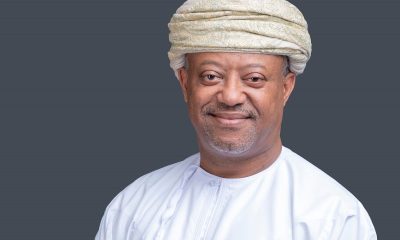
Oman Arab Bank CEO Sulaiman Al Harthi Retires as Ali Al Mani Is Named Successor