
Economy
Internet is human right, must be free for all: Nicholas Negroponte
Professor Nicholas Negroponte, a Greek American founder of the Massachusetts Institute of Technology’s Media Lab, addressed the audience on the second day of the 4th World Government Summit (WGS 2016) through a session entitled “Future of The Future.”
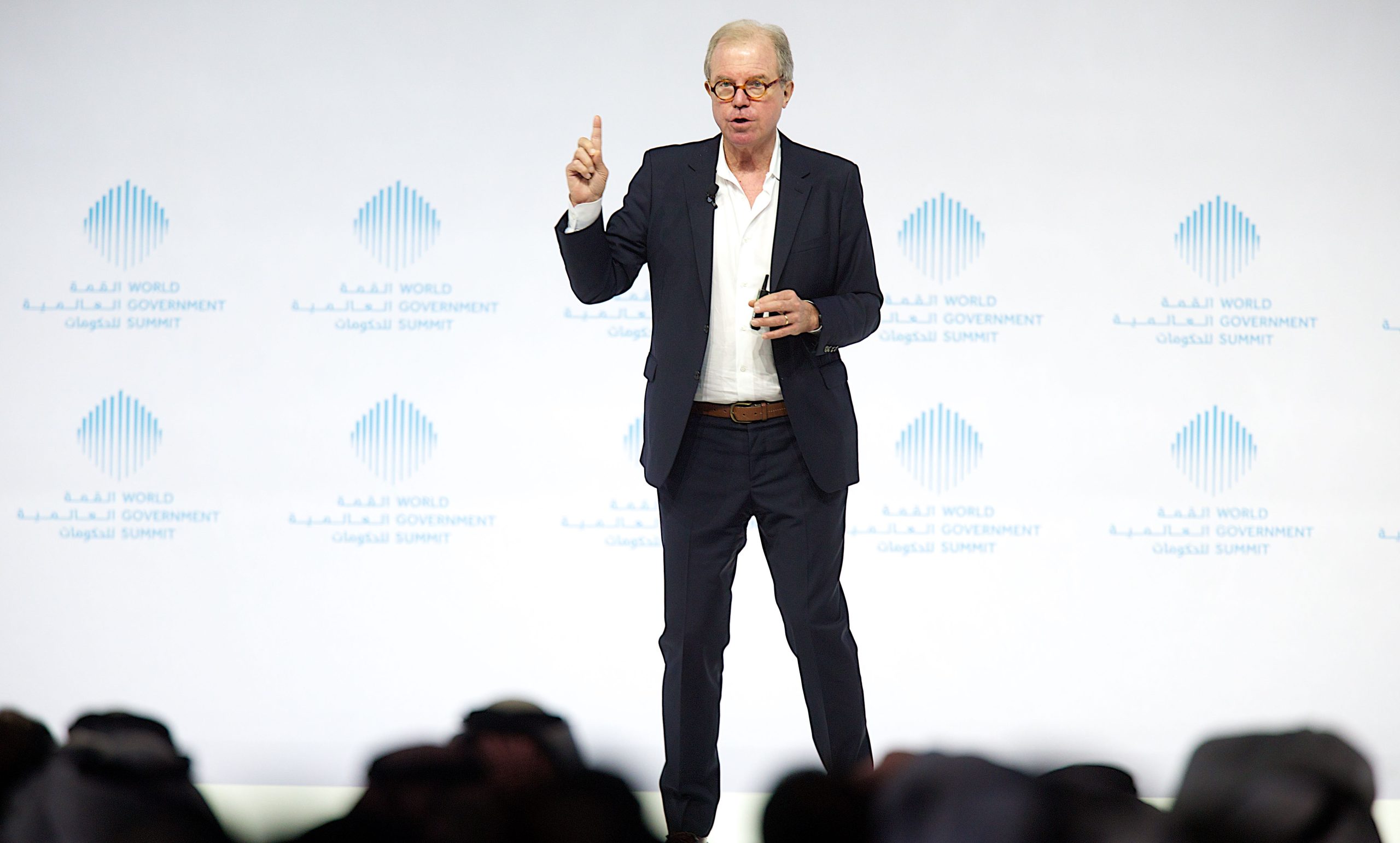
“My belief is that you do not have to measure the impact of what you do…do things that are self-evident and big,” remarked, renowned visionary Professor Negroponte reiterating his longstanding belief that the internet should be free for everyone, just as street lights and libraries.
Professor Nicholas Negroponte, a Greek American founder of the Massachusetts Institute of Technology’s Media Lab, addressed the audience on the second day of the 4th World Government Summit (WGS 2016) through a session entitled “Future of The Future.”
In his address, he remained critical of governments and private entities that rely on market forces and stressed the importance of shared responsibility, or what he dubbed as ‘civil society.’ The professor claimed, “It’s time to rethinks over certain things.”
Emphasizing that capitalism has hurt those who believe the concept to be the core element, Professor Negroponte added that the mission for doing certain deeds and the market are separate. “Doing good and producing positive outcomes for society need not be input into the equation,” he noted.
A prominent figure for challenging the current private education system, the professor shed light on the unfortunate reality of governments and private entities that put a price on education – which should fundamentally be free and available to all – and creates unnecessary competition.
The core idea Professor Negroponte highlighted was that because nations remain at such a meta-level and stay fixated on nationalism, they fail to see the weakened global civic responsibility. Putting all this behind, the key to an equal opportunity to learning and giving all people the basic human rights is prompting free Internet.
He added, “The future is coming, but it won’t be evenly distributed.” To transform this inequality, the professor suggested low-orbit satellites that would cost just US$10 billion – including 10 years of operational costs. The Internet access is such an essential part of learning that to a certain extent, it is a human right. The low-orbit satellites will not only be orbiting outside the jurisdiction of countries, but provide web access even for people living in remote parts of the world. Professor Negroponte stressed that if nations and the United Nations are dedicated to promoting human rights, then certainly this kind of altruistic scheme is needed now.
The World Government Summit has attracted more than 3,000 personalities from over 125 countries, and 125 speakers in over 70 sessions. The attendees include VIPs and senior experts from the public and private sectors globally, ministers, decision makers, CEOs, innovators, officials, experts, entrepreneurs, academics, and university students. A number of initiatives, reports and studies are set to be launched during the summit and throughout the year. The summit runs from February 8 – 10, 2016 at the Madinat Jumeirah in Dubai.


Win OMR 3,000: ROP & Bank Muscat Launch Cyber Fraud Awareness Short Film Competition

EXCLUSIVE INTERVIEW: Yango’s Big Vision for Oman

Leadership, Transformation Forum Reviews Inspiring Women’s Experiences

OPINION: GCC Navigates Global Macro Volatility as Worldwide Growth Moderates to 2.6%

City Centre Muscat Celebrates 25 Years of Great Moments as Mall of Oman Marks Its Fifth Anniversary

HM The Sultan Accorded Official Reception Ceremony at Windsor Castle

61.7% of Middle Eastern Families Involve the Next Generation As Business Successors or Consultants

Future Fund Oman’s $5.2B Outlook: Where Will the Sultanate’s Next Big Businesses Come From?

Oman and the UK: From Historical Legacy of Over 220 Years to Future Partnership

Sohar International Launches Expatriate Banking Proposition with Housing Loans, Cashback, Insurance & Digital Remittance Solutions

Power And Beyond: The Path To A Low-carbon Future

Al Mouj Muscat unveils Ghadeer Villas

Time to Buy Saudi Stocks? Some Investors Look at Dubai Instead

Hospitality Industry in Oman Estimated 90% Growth in 2022

Renewables are booming, but not fast enough to cap greenhouse emissions

Retail Abu Dhabi’s ‘Unbox Amazing’ generates sales of more than AED 2 billion in participating stores

Saudis Sign Deals From Energy to Metals in Bid to Salvage Forum

Saudi Arabia’s Gold Miner Plans to Be a Global Top-20 Supplier

Technology to drive Sultanate’s downstream industry

Digitization and Logistics Service Providers Can Help SMEs Make the Most of Peak Season Retail Trends

VIDEO: Building Oman’s Future – SAH’s Vision for Infrastructure, Innovation and Growth

VIDEO: Oman Cables Breaks Ground on OMR 10 Million-Plus Plant to Power Oman’s Industrial Future

VIDEO: Hitesh Akarte on Khimji Ramdas Infrastructure’s Role in Oman Vision 2040

Oman’s Hospitality Sector Enters a New Phase of Growth: Sadiq Al Matwani Al Lawati

Amr Baabood: Oman Climate Week Is About Moving From Climate Ambition to Climate Action

Mayan Al Asfoor on Leadership, Legacy and Empowering Omani Talent

LEADERSPEAK: Dhofar Insurance CEO Sunil Kohli on Oman’s Insurance Sector, Reinsurance & Market Outlook

VIDEO: Robert MacLean on how NHI is Shaping Oman’s Next Generation of Hospitality Leaders

The Future of Oman: Decoding The Sultanate of Oman’s Strategic Promotional Nation Brand

EXCLUSIVE: AI, Robotics & Wearable Sensors are Changing the Lives of Dementia Patients
-

 Artificial Intelligence1 month ago
Top 5 Interesting Things AI Did This Month – September 2026 Edition
-

 Fashion4 weeks ago
Luxury Watches That Could Appreciate Over the Next Decade [2026 Auction Buyer Guide]
-

 Economy4 weeks ago
OER Magazine September Edition 2026
-
 Banking & Finance2 months ago
The GCC’s 10 Richest Billionaires: Inside US$253.5 Billion of Wealth
-
 Alamaliktistaad Magazines3 weeks ago
Alam Al-Iktisaad Magazine September 2026 Edition
-
 Banking & Finance1 month ago
INVESTIGATION: What If You Bought Apple Stock Every Time You Bought an iPhone?
-

 News2 months ago
OPEC+ Holds Output Steady for October as Focus Shifts to 2027 Quotas
-
 Artificial Intelligence1 month ago
What the World’s Top 10 Tech CEOs Really Earn
You must be logged in to post a comment Login