
Economy
Workshop Highlights Oman’s Circular Economy Gap Calculation Project
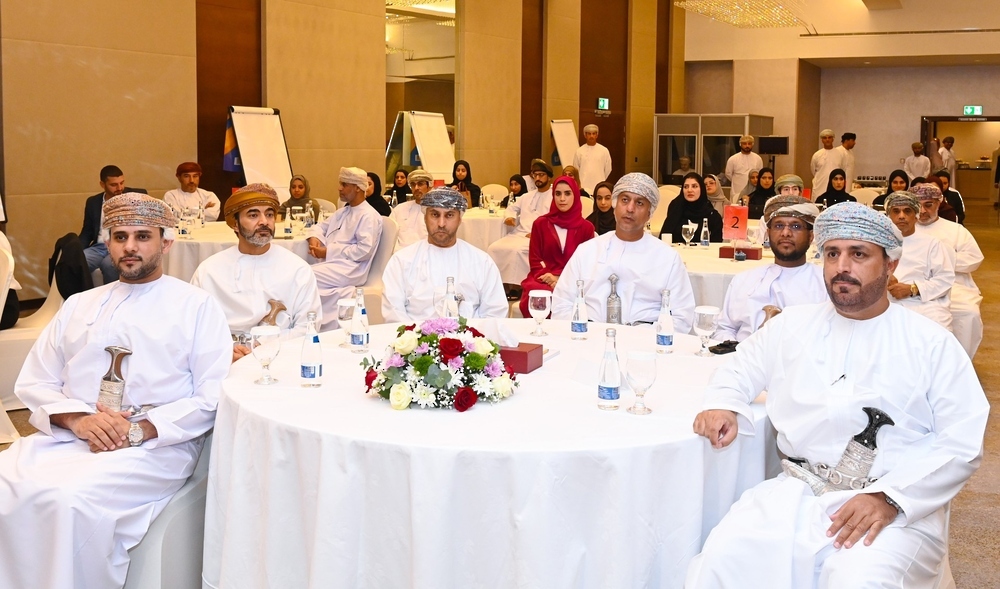
The Ministry of Economy recently organised the second workshop on the “Circularity Gap Report – Oman.” This initiative aims to develop a national roadmap for the circular economy. HE Dr. Nasser Rashid Al Maawali, Undersecretary of the Ministry of Economy, clarified that the project to calculate the circular economy gap in Oman is the first of its kind in the Middle East and North Africa. This underscores Oman’s commitment to achieving net-zero emissions by 2050.
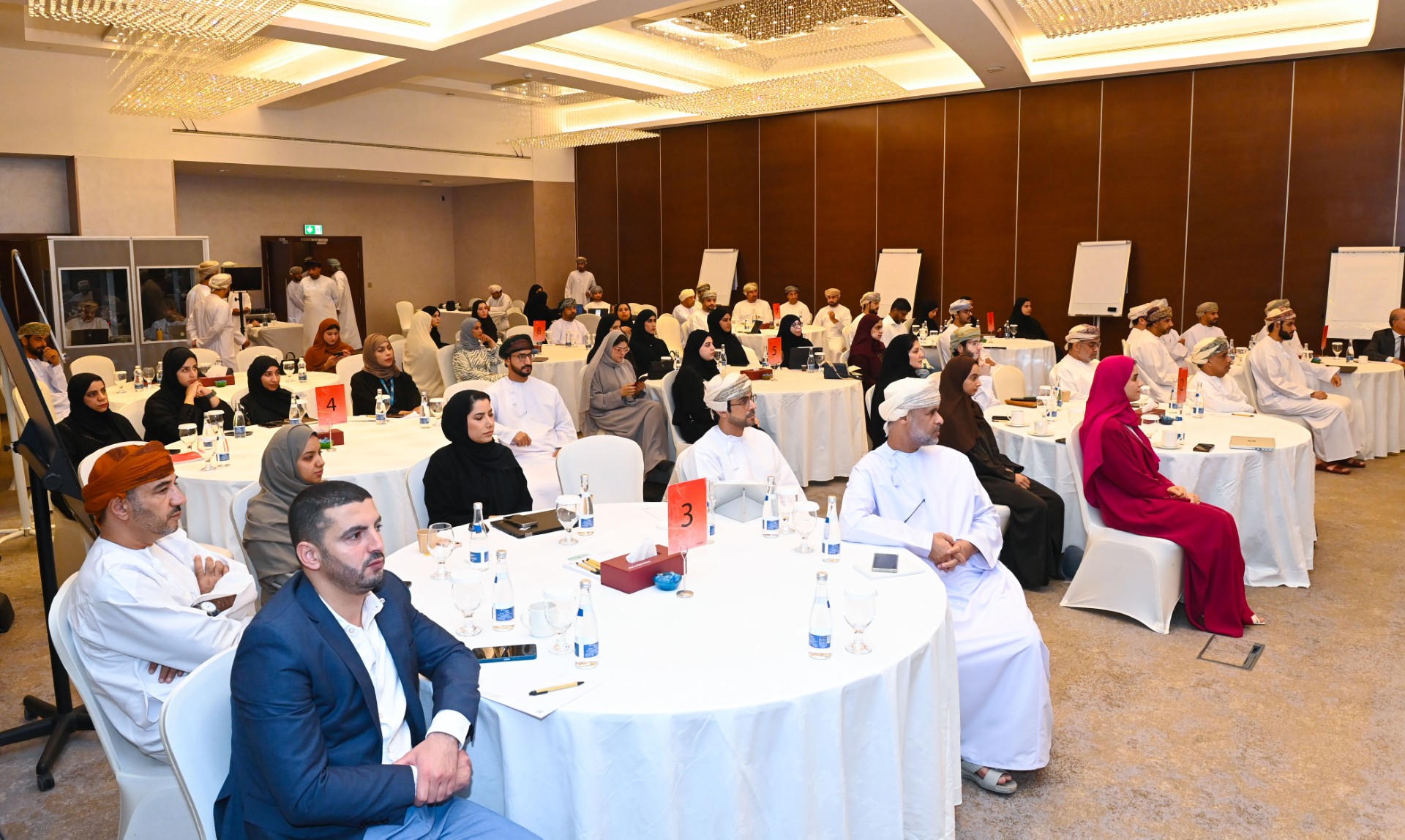
In a press statement, the Minister explained that this crucial national project has three main objectives: establishing a national baseline to measure the circular economy gap and compare it with other countries, designing a circular economy roadmap for Oman, and empowering and enhancing national capabilities in the circular economy sector for both public and private entities.
Al Maawali affirmed that the project will foster sustainable, low-carbon economic development and create new investment opportunities in renewable areas related to alternative energy and the green economy.
Earlier in the workshop, Ahmed Said Al Siyabi, Director General of Economic Policies and Programs at the Ministry of Economy, delivered a speech. He emphasized that the workshop aimed to review and discuss the preliminary results of calculating the baseline for the circular economy gap across various sectors.
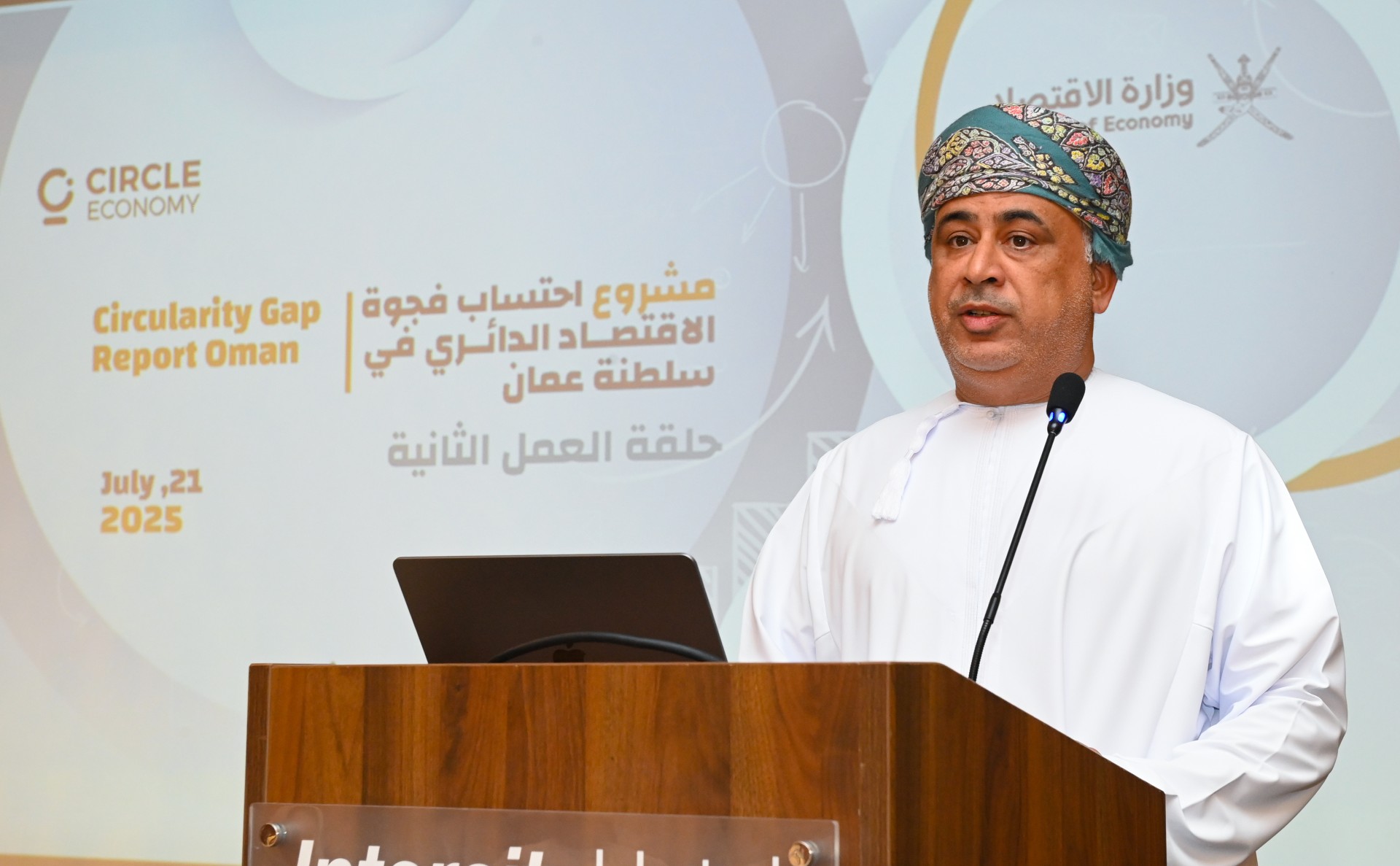
He added that the workshop also introduced accompanying initiatives, such as training programs and a proposed interactive platform to showcase project results and outputs. Furthermore, the workshop presented preliminary models illustrating the impact of applying circular economy policies on environmental and economic indicators, including employment opportunities.
During the workshop, visual presentations showcased developments in the study to calculate the circular economy gap in Oman, along with a presentation and discussion of the project’s preliminary results. Attendees also participated in group discussions to present and analyse models and scenarios for measuring the impact of implementing circular economy strategies and policies on environmental impact and job opportunities.
The significance of the circular economy lies in its pivotal role in promoting sustainability, efficient resource utilisation, waste reduction, and recycling as a sustainable model, moving away from the traditional resource-depleting model.



Real Estate Price Index in Oman Grows By 13.9%

Oil Surges More Than 2% as Supply Disruptions Mount

Ibri Industrial City Localises Two Projects Worth RO2M in 2025

VIDEO: Al Khamayil Oman Scales Up Production with New Rusail Facility

Cadillac Enhances Ramadan Ownership Value With Premium Benefits Package

CONNECT and OCEC Partnership Strengthens Oman’s Position as a Global Events Destination

Exclusive: Inside Oman’s Evolving MSME Finance Ecosystem – An Interview with Hussain Al Lawati, CEO, Development Bank

Middle East Tensions Heighten Risks to Strait of Hormuz, Raising Uncertainty for Global Oil Markets

Air India Express Announces ‘Payday Sale’; Offers Lowest Fares Across Domestic & International Network

OER, February 26

Power And Beyond: The Path To A Low-carbon Future

Al Mouj Muscat unveils Ghadeer Villas

Time to Buy Saudi Stocks? Some Investors Look at Dubai Instead

Renewables are booming, but not fast enough to cap greenhouse emissions

Retail Abu Dhabi’s ‘Unbox Amazing’ generates sales of more than AED 2 billion in participating stores

Hospitality Industry in Oman Estimated 90% Growth in 2022

Saudis Sign Deals From Energy to Metals in Bid to Salvage Forum

Saudi Arabia’s Gold Miner Plans to Be a Global Top-20 Supplier

Technology to drive Sultanate’s downstream industry

Digitization and Logistics Service Providers Can Help SMEs Make the Most of Peak Season Retail Trends

VIDEO: Robert MacLean on how NHI is Shaping Oman’s Next Generation of Hospitality Leaders

The Future of Oman: Decoding The Sultanate of Oman’s Strategic Promotional Nation Brand

EXCLUSIVE: AI, Robotics & Wearable Sensors are Changing the Lives of Dementia Patients

EXCLUSIVE: Talking Renewable Projects & Sustainability in Oman and Beyond with Vipul Tuli

VIDEO: Eng. Salim Al Thuhli, CEO, Khazaen Economic City on Investment Opportunities

H.E. Salim Al Aufi, Minister of Energy & Minerals talks about Oman’s Green Hydrogen Goals

VIDEO: Talking Latest Developments in Aircraft Ground Guidance & More at Oman Airports

VIDEO: Dr. Firas Al-Abduwani Discusses Green Hydrogen, Potential Regions for Development & Creating a Green Ecosystem

VIDEO: Discussing The Future of Green Hydrogen in Oman with H.E. Salim Al Aufi

Celebrating Infoline’s Remarkable 20-Year Journey
-
 Dossier1 month ago
Dossier, 2026
-
 Banking & Finance1 month ago
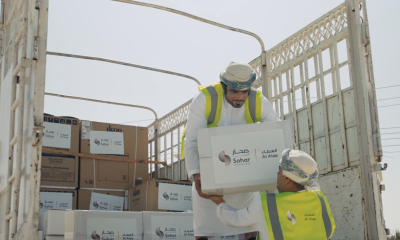
Sohar International and Sohar Islamic Supports Over 100 Families in Al Wusta Governorate Through Its ‘Sohar Al Attaa’ Initiative
-
 Banking & Finance1 month ago
National Finance Unveils Exclusive Ramadan Offers on Auto Financing
-
 OER Magazines4 weeks ago
OER, February 26
-

 Economy1 month ago
Analysis: Oman-India CEPA Opens Path to Deeper Trade Investment and Growth
-

 Economy1 month ago
New Regulations Issued for Buy Now, Pay Later Services in Oman
-

 Economy1 month ago
ANALYSIS: Oil Near Seven-Month Highs Amid US, Iran Tensions
-
 Investment2 months ago
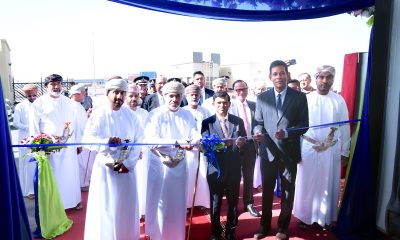
Lalan Inaugurates Its First Overseas Manufacturing Facility, Marking Sri Lanka’s First Investment in SOHAR Freezone