
Economy
Meet the economy that the IMF sees growing 86% in 2020
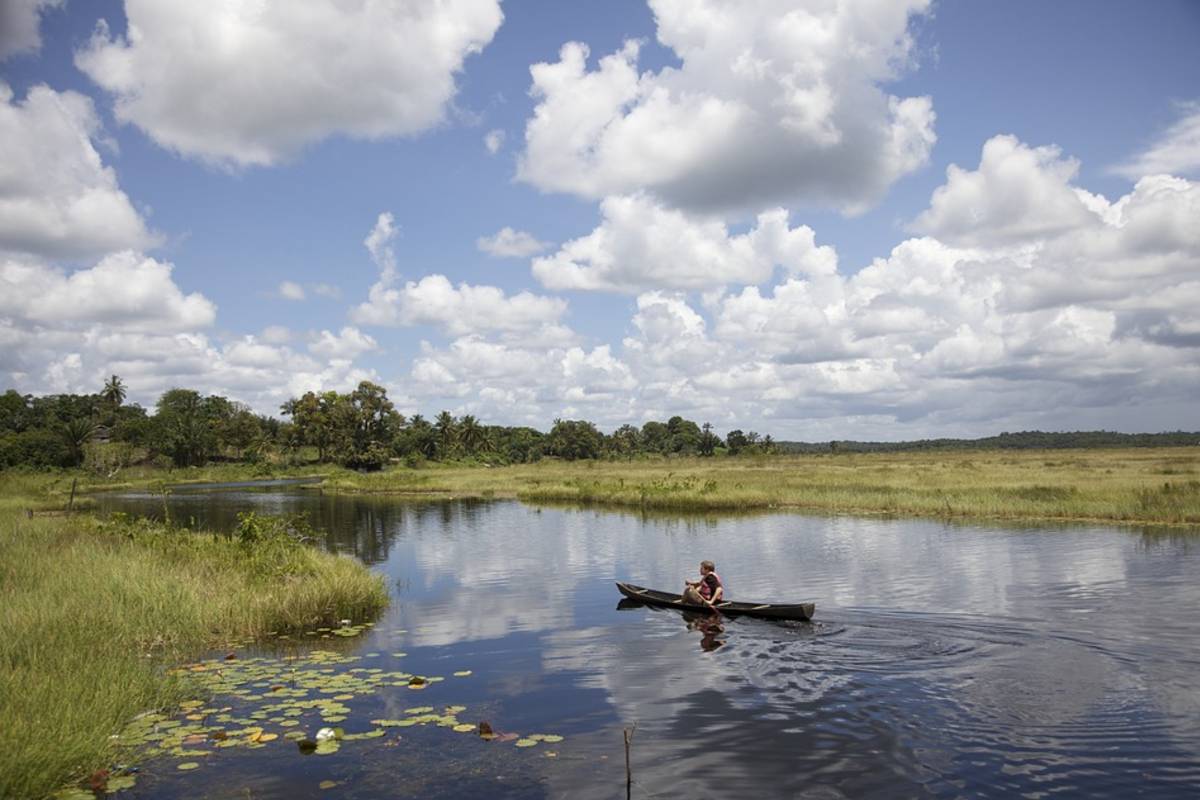
(Bloomberg) — South America may be battered by weak growth, unrest and austerity but one of its smallest countries is about to experience the fastest economic growth on the planet.
Guyana, a country of 780,000 that neighbors Brazil and Venezuela in the region’s northeast corner, will see its economy balloon 86% next year after expanding 4.4% this year, according to the International Monetary Fund. That’s 14 times the projected pace of China and driven by Exxon Mobil Corp.’s discovery of oil.
“We’re moving from a very low base to a stratospheric leap,” Finance Minister Winston Jordan said in a telephone interview from Georgetown.
South America’s only English-speaking nation owes the anticipated windfall to offshore oil deposits discovered in 2015. At the moment, the country doesn’t produce any crude, though its neighbor Venezuela holds the world’s largest reserves.
While Guyana’s $4 billion annual gross domestic product is about a tenth the size of Vermont’s, it will expand to about $15 billion by 2024, according to the IMF.
The government plans to use some of the money derived from its royalties to build highways to connect coastal towns to the sparsely populated interior, which has gold, diamond and bauxite deposits, Jordan said. The oil sector will represent about 40% of the economy within five years, the IMF calculates.
The fund says its forecast may be subject to large revisions, since even small changes to the projected oil output in 2020 would result in big swings in the overall economic performance.
Exxon has partnered with Hess Corp. and China’s CNOOC Ltd. to develop one of the world’s biggest new deepwater oil discoveries off the country’s coast.
Exxon said it will begin pumping from its first well next month, and by 2025 Guyana will produce at least 750,000 barrels a day.
Total SA, Tullow Oil Plc and Repsol SA are also among the companies exploring for oil in Guyana’s waters.
The government expects the initial $300 million a year in revenue from profit-sharing and royalties to more than double after a second offshore well starts production around 2022. That money will go directly to a sovereign wealth fund the country established this year, which will be used for “inter-generational” savings, to protect against oil price swings, and to fund development plans, Jordan said.
–With assistance from Kevin Crowley.



Win OMR 3,000: ROP & Bank Muscat Launch Cyber Fraud Awareness Short Film Competition

EXCLUSIVE INTERVIEW: Yango’s Big Vision for Oman

Leadership, Transformation Forum Reviews Inspiring Women’s Experiences

OPINION: GCC Navigates Global Macro Volatility as Worldwide Growth Moderates to 2.6%

City Centre Muscat Celebrates 25 Years of Great Moments as Mall of Oman Marks Its Fifth Anniversary

HM The Sultan Accorded Official Reception Ceremony at Windsor Castle

61.7% of Middle Eastern Families Involve the Next Generation As Business Successors or Consultants

Future Fund Oman’s $5.2B Outlook: Where Will the Sultanate’s Next Big Businesses Come From?

Oman and the UK: From Historical Legacy of Over 220 Years to Future Partnership

Sohar International Launches Expatriate Banking Proposition with Housing Loans, Cashback, Insurance & Digital Remittance Solutions

Power And Beyond: The Path To A Low-carbon Future

Al Mouj Muscat unveils Ghadeer Villas

Time to Buy Saudi Stocks? Some Investors Look at Dubai Instead

Hospitality Industry in Oman Estimated 90% Growth in 2022

Renewables are booming, but not fast enough to cap greenhouse emissions

Retail Abu Dhabi’s ‘Unbox Amazing’ generates sales of more than AED 2 billion in participating stores

Saudis Sign Deals From Energy to Metals in Bid to Salvage Forum

Saudi Arabia’s Gold Miner Plans to Be a Global Top-20 Supplier

Technology to drive Sultanate’s downstream industry

Digitization and Logistics Service Providers Can Help SMEs Make the Most of Peak Season Retail Trends

VIDEO: Building Oman’s Future – SAH’s Vision for Infrastructure, Innovation and Growth

VIDEO: Oman Cables Breaks Ground on OMR 10 Million-Plus Plant to Power Oman’s Industrial Future

VIDEO: Hitesh Akarte on Khimji Ramdas Infrastructure’s Role in Oman Vision 2040

Oman’s Hospitality Sector Enters a New Phase of Growth: Sadiq Al Matwani Al Lawati

Amr Baabood: Oman Climate Week Is About Moving From Climate Ambition to Climate Action

Mayan Al Asfoor on Leadership, Legacy and Empowering Omani Talent

LEADERSPEAK: Dhofar Insurance CEO Sunil Kohli on Oman’s Insurance Sector, Reinsurance & Market Outlook

VIDEO: Robert MacLean on how NHI is Shaping Oman’s Next Generation of Hospitality Leaders

The Future of Oman: Decoding The Sultanate of Oman’s Strategic Promotional Nation Brand

EXCLUSIVE: AI, Robotics & Wearable Sensors are Changing the Lives of Dementia Patients
-

 Artificial Intelligence1 month ago
Top 5 Interesting Things AI Did This Month – September 2026 Edition
-

 Economy4 weeks ago
OER Magazine September Edition 2026
-

 Fashion4 weeks ago
Luxury Watches That Could Appreciate Over the Next Decade [2026 Auction Buyer Guide]
-

 Banking & Finance2 months ago
The GCC’s 10 Richest Billionaires: Inside US$253.5 Billion of Wealth
-
 Alamaliktistaad Magazines3 weeks ago
Alam Al-Iktisaad Magazine September 2026 Edition
-

 Banking & Finance2 months ago
INVESTIGATION: What If You Bought Apple Stock Every Time You Bought an iPhone?
-

 News2 months ago
OPEC+ Holds Output Steady for October as Focus Shifts to 2027 Quotas
-

 Artificial Intelligence1 month ago
What the World’s Top 10 Tech CEOs Really Earn