
Banking & Finance
Car Loan vs Cash: The Hidden Financial Advantage of Taking a Car Loan in Oman
Buying a car outright might seem like the most financially responsible choice, particularly for individuals who have accumulated sufficient savings to avoid borrowing altogether. However, financing a vehicle while keeping that money available for investments, emergencies and other financial opportunities could sometimes prove more advantageous. OERLive examines the mathematics behind this strategy, the potential for wealth creation and why maintaining liquidity could be just as important as avoiding debt.
For many car buyers in Oman, having enough money in their bank account to purchase a vehicle outright represents a financial milestone, allowing them to avoid monthly installments, interest payments and the obligations associated with borrowing.
Conventional financial wisdom often encourages consumers to pay cash whenever possible, particularly when purchasing depreciating assets such as vehicles, but this approach overlooks an important consideration: whether committing a substantial amount of personal capital to a car is necessarily the most efficient way to manage money.
While taking a loan introduces additional costs and financial obligations, individuals with stable incomes, sufficient savings and a disciplined investment strategy may find that financing a vehicle offers advantages beyond simply spreading the purchase price over several years.
By retaining a significant portion of their capital, buyers could potentially generate investment returns, maintain access to funds during unexpected financial difficulties and avoid concentrating too much of their available wealth in an asset that generally depreciates over time.

The argument is not that borrowing money to purchase a car is inherently better than paying cash, nor that investments will necessarily outperform the interest charged by financial institutions. Rather, the decision deserves closer examination because the true cost of buying a vehicle extends beyond its showroom price, and the value of retaining accessible capital can be considerably greater than it initially appears.
For financially disciplined buyers, the question therefore becomes less about whether they can afford to purchase a vehicle outright and more about whether doing so represents the most effective allocation of their available money.
The Financial Case for Keeping Your Capital Instead of Spending It
One of the most significant differences between purchasing a vehicle outright and financing it involves what happens to the buyer’s existing capital, particularly when the purchase represents a substantial proportion of their accumulated savings.
A person with OMR 20,000 available could use the entire amount to acquire a vehicle without incurring debt, but that decision would also mean converting OMR 20,000 of liquid financial resources into a physical asset whose resale value is likely to decline with age, mileage and market conditions.
Alternatively, the same individual could make a down payment, finance the remaining balance and retain much of that money in savings or investments, provided their monthly income is sufficient to comfortably service the loan. The vehicle would still depreciate, and the borrower would incur financing costs, but the capital that would otherwise have been committed to the purchase could remain available for other purposes.
This distinction is particularly relevant for individuals who have spent several years building savings, because accumulated capital can serve multiple purposes simultaneously when it remains accessible. It can provide a financial buffer against unemployment, support unforeseen family obligations, fund investment opportunities or potentially generate income through carefully selected financial instruments.
The central principle is known as opportunity cost, which refers to the potential benefit sacrificed when money is committed to one use instead of another. Paying cash avoids borrowing costs but also removes the opportunity to earn returns on that capital, whereas financing preserves the money at the expense of interest, fees and the responsibility of making regular payments.
Neither approach is automatically superior, and the financial outcome depends on how the retained money is managed, the actual cost of borrowing and whether the buyer can withstand periods of financial uncertainty.
How Much Does Financing a Car Actually Cost in Oman?
The cost of vehicle financing in Oman varies considerably depending on the lending institution, the borrower’s income and employment profile, the age of the vehicle and the duration of the loan, making it essential for buyers to understand the total repayment obligation rather than focusing exclusively on the monthly installment.
Although banks and finance companies frequently advertise attractive starting rates, the actual financing cost can differ substantially between applicants and even between products offered by the same institution.
For example, National Bank of Oman advertises vehicle loans starting from 4.75% annually on a reducing-balance basis, with financing of up to 80% of the vehicle’s value. Its published terms specify a minimum down payment of 20% for new vehicles and an early repayment charge of 1%, excluding VAT, on the outstanding amount. Bank Muscat also advertises Sayyarati vehicle financing with starting interest rates of 4.25% annually, subject to eligibility and other conditions.
Meanwhile, finance companies may quote flat interest rates, which should not be compared directly with reducing-balance rates. National Finance, for example, displays a flat-rate calculator on its vehicle financing website, highlighting why buyers must understand the calculation method before evaluating competing offers.
For the purposes of this analysis, OERLive has used an illustrative annual interest rate of 5% on a reducing-balance basis, rather than presenting the calculation as an actual lending offer.
The OMR 20,000 Car: Paying Cash Versus Financing
Consider an individual in Oman who has accumulated OMR 20,000 in savings and wishes to purchase a vehicle costing exactly that amount, with the decision involving two alternatives: paying the entire purchase price immediately or financing 80% of the vehicle while retaining the remaining funds for investment or financial security.
Illustrative Car Financing Scenario
| Particulars | Amount |
|---|---|
| Vehicle purchase price | OMR 20,000 |
| Initial down payment (20%) | OMR 4,000 |
| Amount financed | OMR 16,000 |
| Annual interest rate (reducing balance) | 5% |
| Loan tenure | 5 years |
| Monthly instalment | OMR 301.94 |
| Total repayment over 60 months | OMR 18,116.38 |
| Total interest paid | OMR 2,116.38 |
| Total vehicle acquisition cost, including down payment | OMR 22,116.38 |
| Capital initially retained through financing | OMR 16,000 |
Source: OERLive calculations. Assumes a fixed 5% nominal annual reducing-balance interest rate, repaid through 60 equal monthly instalments. Processing fees, insurance-related charges and other transaction expenses are excluded.
Under the cash purchase arrangement, the individual would spend OMR 20,000 immediately and own the vehicle without any financing obligations, eliminating interest payments and freeing up monthly income for other purposes.
However, the transaction would also remove the entire OMR 20,000 from the individual’s savings, leaving no portion of that particular sum available for investment or unexpected expenses.
Under the financing arrangement, the same buyer would make an initial payment of OMR 4,000 and borrow OMR 16,000 over five years, producing an approximate monthly instalment of OMR 301.94 and total interest of OMR 2,116.38 over the repayment period. Including the down payment, the overall cost of acquiring the vehicle would rise to approximately OMR 22,116 before processing fees, insurance-related charges and other applicable costs.
The financial advantage of the second arrangement would therefore depend on whether retaining OMR 16,000 creates sufficient additional value to justify the borrowing costs, while also taking into account what the cash buyer could do with the income saved by avoiding monthly instalments.
What Could OMR 16,000 Become if Invested Instead?
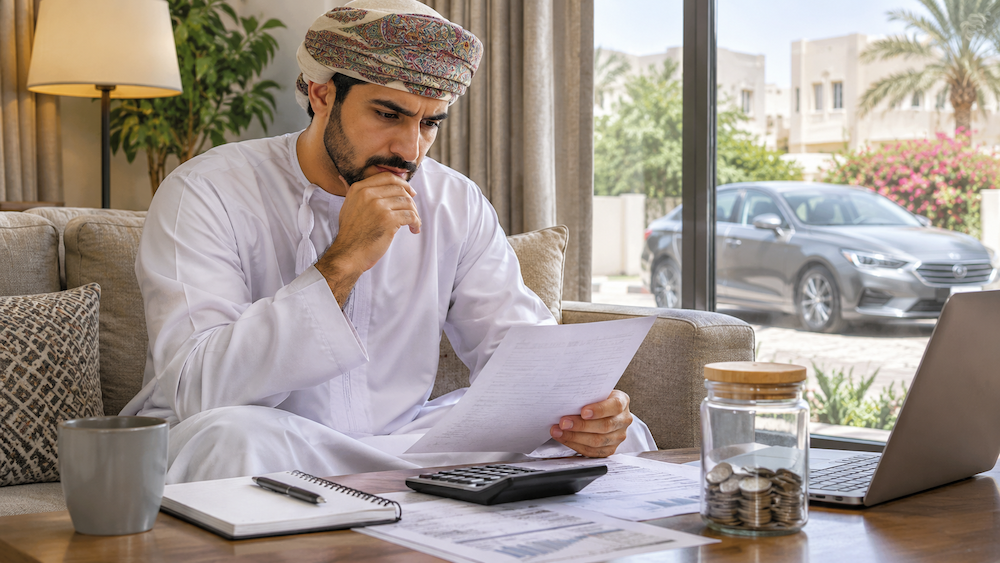
The potential attraction of financing a vehicle becomes more apparent when the retained capital is invested over the same five-year period, particularly because compounding allows investment returns to generate additional returns when they remain invested.
Rather than committing the entire purchase price to a depreciating vehicle, the buyer could allocate the retained OMR 16,000 to suitable financial instruments and allow that capital to grow over time.
Assuming the individual invests the full OMR 16,000 at the beginning of the five-year period, with all returns reinvested, the following scenarios illustrate how different annual returns would affect its future value.
How OMR 16,000 Could Grow Over Five Years
| Hypothetical annual return | Initial investment | Value after 5 years | Investment gain |
|---|---|---|---|
| 0% | OMR 16,000 | OMR 16,000 | OMR 0 |
| 3% | OMR 16,000 | OMR 18,548 | OMR 2,548 |
| 5% | OMR 16,000 | OMR 20,421 | OMR 4,421 |
| 7% | OMR 16,000 | OMR 22,441 | OMR 6,441 |
| 9% | OMR 16,000 | OMR 24,618 | OMR 8,618 |
Source: OERLive calculations using annual compounding over five years. All values are rounded to the nearest Omani rial. These are hypothetical constant-return scenarios, not investment forecasts, and exclude investment expenses, taxes and currency effects.
At a hypothetical annual return of 7%, the retained OMR 16,000 would grow to approximately OMR 22,441 after five years, representing an investment gain of OMR 6,441. After subtracting the illustrative financing interest of OMR 2,116, the investment gain would exceed the loan’s interest expense by around OMR 4,325, before other costs.
However, this calculation alone does not establish that financing is more profitable than paying cash, because a cash buyer would also have the opportunity to invest the money they would otherwise have spent servicing the loan.
The More Important Comparison: What if the Cash Buyer Invested the Monthly Installments?
A meaningful comparison between cash purchases and vehicle financing must account for the financial opportunities available to both buyers, particularly because someone who purchases a car outright would not have the monthly obligation faced by the individual who borrowed to acquire the same vehicle.
If both individuals have identical incomes and other expenses, the cash buyer could invest approximately OMR 301.94 every month while the financed buyer makes the corresponding loan repayment.
For a fairer comparison, OERLive has calculated the potential investment outcomes over five years using the same OMR 20,000 starting capital and the same monthly cash flow, with one individual investing OMR 16,000 immediately after financing the vehicle and the other investing OMR 301.94 at the end of each month after purchasing the vehicle with cash.
Car Loan vs Cash Purchase – Investment Comparison After Five Years
| Annual investment return | Financed buyer: OMR 16,000 invested upfront | Cash buyer: OMR 301.94 invested monthly | Advantage/disadvantage of financing |
|---|---|---|---|
| 0% | OMR 16,000 | OMR 18,116 | -OMR 2,116 |
| 3% | OMR 18,548 | OMR 19,500 | -OMR 951 |
| 5% | OMR 20,421 | OMR 20,476 | -OMR 55 |
| 7% | OMR 22,441 | OMR 21,497 | +OMR 944 |
| 9% | OMR 24,618 | OMR 22,565 | +OMR 2,053 |
Source: OERLive calculations. Both buyers are assumed to own an identical vehicle after five years. The financed buyer invests OMR 16,000 at the outset and services the loan from income. The cash buyer invests the equivalent instalment of approximately OMR 301.94 at the end of each month. Returns are assumed to compound at a constant effective annual rate, with investment costs, financing fees, taxes and insurance differences excluded. Figures are rounded independently to the nearest rial.
What emerges from this comparison is an important difference between the apparent attractiveness of investment growth and the actual financial advantage of borrowing. At a 7% annual investment return, the financed buyer would end the five-year period with approximately OMR 944 more in financial assets than the cash buyer, but that advantage would be reduced by loan processing fees and other applicable costs.
At 3%, the cash buyer would finish approximately OMR 951 ahead, while an investment return of 5% would leave the two approaches almost identical before additional costs. Under these assumptions, the approximate investment return required for financing to break even is 5.12% a year, before additional financing expenses.
The figures demonstrate that borrowing to preserve investment capital can create additional wealth, but only when investment performance is sufficiently strong to offset the financing cost and the opportunities available to a cash buyer.
More importantly, investment performance is not guaranteed, and periods of negative returns could leave the financed buyer with a smaller portfolio while still being contractually required to make the same monthly loan repayments.
The Argument Beyond Investment Returns: Why Liquidity Matters
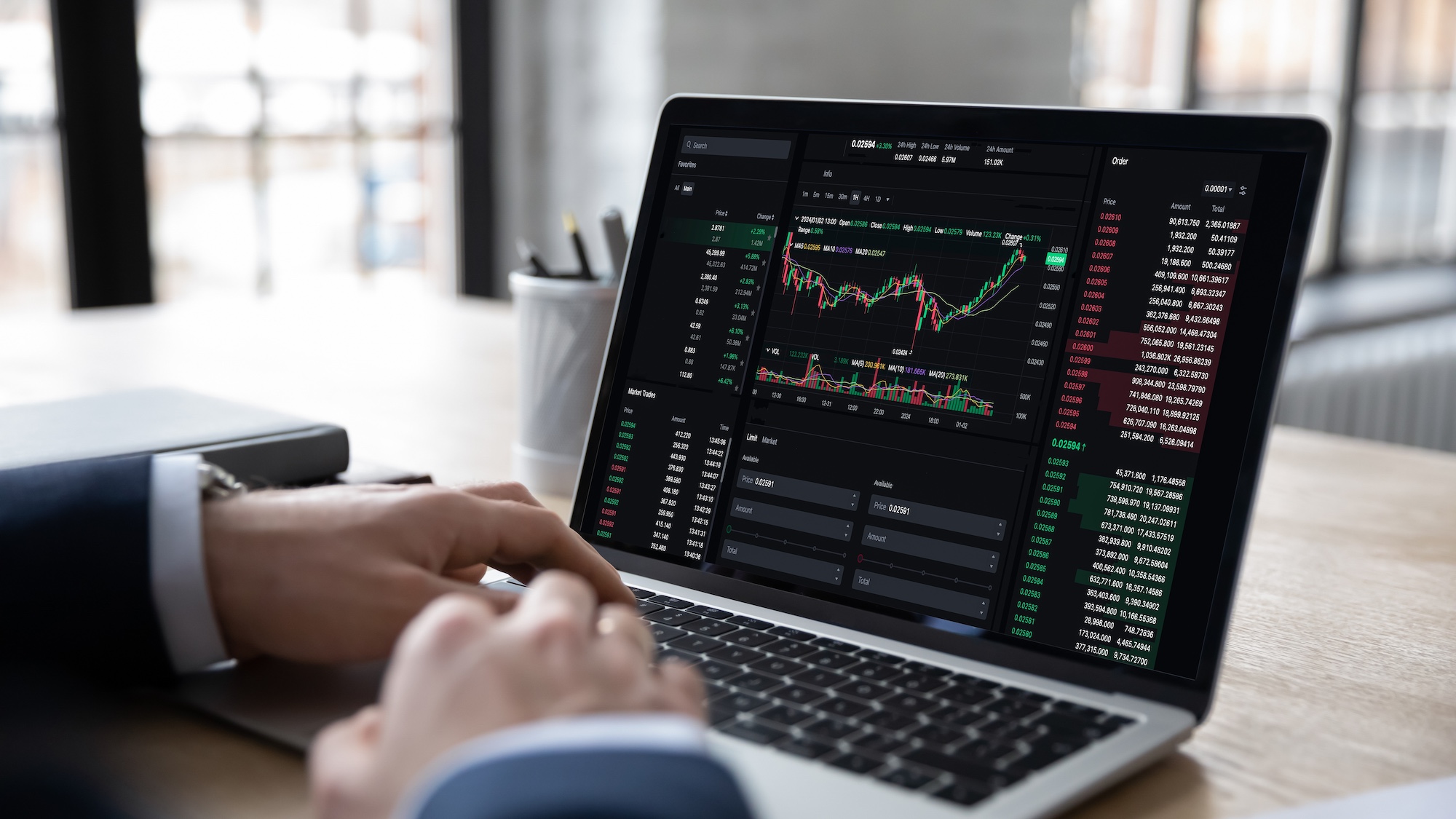
While potential investment gains provide one justification for retaining capital, an equally important argument involves the financial flexibility associated with maintaining accessible savings, especially during circumstances that cannot be anticipated when a vehicle is initially purchased.
Unexpected unemployment, urgent medical expenses, family emergencies, business difficulties or a sudden relocation can create significant financial pressure, making access to cash particularly valuable.
Consider the individual who used their entire OMR 20,000 to purchase a vehicle outright and subsequently experienced a major financial setback shortly after completing the purchase. Although the individual would have no car loan to repay, the money previously held in their bank account would now be tied up in the vehicle, requiring them to rely on other savings, sell the car or explore alternative sources of funds to meet urgent obligations.
The financed buyer, assuming they retained the OMR 16,000 in readily accessible savings rather than committing it to illiquid investments or spending it elsewhere, would enter the same financial difficulty with a substantial reserve of available capital.
That money could support living expenses, accommodate a temporary interruption in earnings or provide time to make considered financial decisions without immediately liquidating valuable assets.
This flexibility is not free, since the borrower continues to face a monthly repayment obligation and the associated interest expense. Nevertheless, for some individuals, the additional cost of borrowing could be viewed partly as the price paid for maintaining access to capital during uncertain circumstances.
There is also an important difference between money that is technically invested and money that is genuinely available in an emergency. A diversified equity portfolio might be saleable relatively quickly, but market conditions could force the investor to realise losses at precisely the moment they require funds, whereas appropriately structured cash reserves and highly liquid, lower-risk investments generally offer greater predictability.
The US Securities and Exchange Commission’s investor education platform, Investor.gov, highlights the importance of maintaining accessible emergency savings to address events such as unemployment, while also recognising that longer-term investments may offer opportunities for growth.
The principle is particularly relevant when borrowing to preserve capital, because a portfolio intended to support a household during financial difficulties should not depend entirely on volatile investments.
Selling the Car During Financial Difficulties: Even With Negative Equity
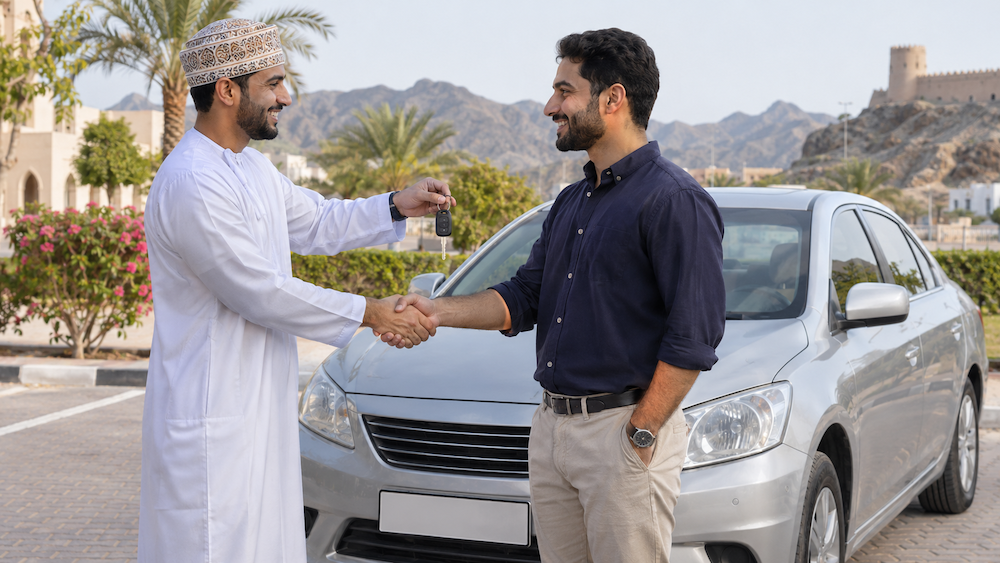
Another consideration for buyers who choose to finance a vehicle is the possibility of selling the car before the loan has been fully repaid, particularly when their financial circumstances change and maintaining the existing monthly instalment is no longer practical.
Although selling a financed vehicle involves additional procedures and potential costs, it may allow the borrower to eliminate a recurring liability while retaining some or most of the capital originally preserved through financing.
The process becomes particularly interesting when a vehicle has depreciated faster than the outstanding loan balance has declined, creating a situation commonly referred to as negative equity.
This occurs when the amount required to settle the loan exceeds the vehicle’s current resale value, meaning the borrower must contribute additional money to extinguish the debt before completing the sale.
Consider the same OMR 20,000 vehicle financed through a five-year loan of OMR 16,000 at 5% reducing interest, but assume the owner decides to sell it after two years because of a major change in financial circumstances.
Selling a Financed Car After Two Years – Negative Equity Scenario
| Particulars | Amount |
|---|---|
| Original vehicle purchase price | OMR 20,000 |
| Original loan amount | OMR 16,000 |
| Loan instalments paid over 24 months | OMR 7,246.55 |
| Outstanding loan principal after 24 months | OMR 10,074.43 |
| Assumed resale value after two years | OMR 9,000 |
| Negative equity to be covered | OMR 1,074.43 |
| Illustrative early settlement fee including VAT (1.05%) | OMR 105.78 |
| Total additional cash required to close loan | OMR 1,180.21 |
| Original retained cash reserve | OMR 16,000 |
| Cash remaining after covering shortfall and settlement fee | OMR 14,819.79 |
Source: OERLive calculations. Assumes the OMR 16,000 was retained in cash without earning interest or being spent, and that all monthly instalments were paid from regular income. The OMR 9,000 resale value is a hypothetical stress scenario, not a forecast of normal vehicle depreciation. The illustrative settlement fee reflects a 1% charge plus 5% VAT; actual contractual charges and accrued interest adjustments may differ.
Despite selling a vehicle for considerably less than its original purchase price and incurring negative equity, the individual could still retain approximately OMR 14,820 of the original OMR 16,000 preserved through financing, assuming the money had remained untouched and all installments had been paid from regular income.
By settling the shortfall and completing the sale, the borrower would also eliminate the remaining monthly installments, which could materially reduce financial pressure during a period of uncertainty.
The calculation does not suggest that the financed buyer has become wealthier as a result of the transaction, particularly because they have already paid OMR 4,000 as a down payment, approximately OMR 7,247 in instalments over two years and an additional amount to clear the negative equity.
Rather, it demonstrates that a person who had retained their capital might still have access to a substantial cash reserve after disposing of the vehicle.
A cash buyer could also sell the same car, receive the OMR 9,000 resale proceeds and retain any money they had separately saved during the preceding two years. In fact, someone who paid cash and consistently saved the OMR 301.94 that would otherwise have gone towards loan repayments could be financially better off than the borrower under these assumptions.
Financial Position After Selling the Car at Two Years
| Financial position | Paid cash | Took a car loan |
|---|---|---|
| Initial cash retained after purchase | OMR 0 | OMR 16,000 |
| Savings from monthly income over 24 months | OMR 7,246.55 | OMR 0 |
| Vehicle resale proceeds available before loan settlement | OMR 9,000 | OMR 9,000 |
| Outstanding loan settlement and early settlement fee | OMR 0 | OMR 10,180.21 |
| Total cash remaining after sale | OMR 16,246.55 | OMR 14,819.79 |
Source: OERLive calculations. Assumes neither individual’s savings earned investment returns, that the cash buyer saved the equivalent of every loan instalment, and that the financed buyer preserved the initial OMR 16,000 throughout the period. The cash buyer finishes approximately OMR 1,426.77 ahead, reflecting the financed buyer’s interest paid during the first 24 months and illustrative early settlement fee.
The comparison reveals a crucial distinction between possessing greater liquidity throughout the ownership period and ultimately accumulating greater wealth.
While the individual who financed the car had access to OMR 16,000 immediately after the purchase, the cash buyer avoided borrowing costs and could gradually rebuild savings by investing or retaining the equivalent monthly installments. But this requires financial discipline and monthly investments into the savings pool.
The potential advantage of financing therefore lies less in the proceeds of the eventual vehicle sale and more in having retained access to a larger pool of capital throughout the ownership period.
Can You Actually Sell a Car With an Outstanding Loan in Oman?
Although selling a financed vehicle is possible in Oman, owners must distinguish between finding a buyer and legally completing an ownership transfer, since vehicles subject to financing arrangements may carry lender interests or other registered restrictions that must be resolved before the sale can be finalised.
According to the Royal Oman Police, its electronic vehicle ownership transfer service requires the vehicle, buyer and seller to be cleared of fines and other restrictions, alongside meeting the applicable registration, insurance and inspection requirements.
This means a financed owner should not assume that they can immediately transfer ownership without first coordinating with the institution holding the financial interest in the vehicle.
The practical approach generally involves obtaining an official settlement quotation from the financing institution, determining whether the proposed sale price is sufficient to clear the debt and arranging payment and release of the lender’s interest before finalising the ownership transfer.
Where the vehicle’s resale price falls below the settlement amount, the owner must cover the difference or obtain another arrangement expressly approved by the lender.
Bank Muscat’s published schedule of service charges, version 2.9/2025, lists a 1% prepayment charge plus VAT for its Sayyarati Auto Loan, equivalent to a total of 1.05% of the prepaid amount. The exact settlement cost faced by an individual will depend on their lender, contract and applicable tariff at the time of repayment.
The ability to sell the vehicle should therefore be treated as a potential financial exit strategy rather than a guaranteed or immediate solution, because selling may take time, the market value could be lower than expected, and the borrower must still meet their obligations until the financing institution confirms settlement.
The Importance of Knowing the Difference Between Flat and Reducing Interest Rates
One of the most consequential mistakes car buyers can make when evaluating financing offers involves comparing advertised interest rates without understanding how the interest is calculated, particularly because a flat interest rate can result in a substantially higher effective borrowing cost than an identical percentage quoted on a reducing-balance basis.
Using the same OMR 16,000 loan over five years, the difference is significant.
Comparing Flat and Reducing-Balance Interest Rates
| Particulars | 5% reducing balance | 5% flat rate |
|---|---|---|
| Loan amount | OMR 16,000 | OMR 16,000 |
| Repayment period | 60 months | 60 months |
| Advertised annual interest rate | 5% | 5% |
| Monthly instalment | OMR 301.94 | OMR 333.33 |
| Total interest over five years | OMR 2,116.38 | OMR 4,000 |
| Total repayment | OMR 18,116.38 | OMR 20,000 |
Source: OERLive calculations. The reducing-balance example uses a 5% nominal annual interest rate with monthly repayments, while the flat-rate example applies 5% annually to the original principal throughout the five-year period. Figures exclude fees and other financing costs.
While both products might advertise an annual rate of 5%, the flat-rate example generates almost twice as much interest over five years because the calculation applies the rate to the original principal rather than the declining balance.
A borrower who finances a vehicle at a higher effective cost would need correspondingly stronger investment performance to justify preserving the money instead of paying cash.
For this reason, buyers evaluating vehicle financing in Oman should request a complete repayment schedule and the effective annual borrowing rate, including a breakdown of processing charges, insurance-related expenses and early settlement costs.
Only after calculating the total financing expense can a meaningful comparison be made against the potential returns from alternative investments.
What Should Buyers Do With the Capital They Retain?

The financial case for financing a vehicle depends heavily on what happens to the money that would otherwise have been spent purchasing it outright, because preserving OMR 16,000 provides little long-term wealth-creation benefit if the buyer subsequently consumes that money through unnecessary expenditure or takes excessive investment risks.
For the strategy to be meaningful, the retained funds must serve a clearly defined purpose, whether that involves maintaining a reliable emergency reserve, generating investment returns or preserving flexibility for future financial commitments.
For individuals prioritising access to capital, bank savings accounts, suitable fixed deposits and money market funds may be worth evaluating, although their yields, withdrawal conditions and exposure to risk differ considerably.
In Oman, Bank Muscat offers a money market fund intended for liquidity management and returns through short-term financial instruments, but the institution also makes clear that mutual fund returns depend on market performance and that historical results do not guarantee future outcomes.
Those with longer investment horizons and greater tolerance for market volatility might instead consider diversified equity funds or exchange-traded funds, including instruments tracking broad international stock market indices. Such investments offer the possibility of stronger long-term returns, but they also introduce the risk of capital losses, currency exposure, transaction costs and periods during which the portfolio could be worth substantially less than the original investment.
The distinction becomes particularly important when an individual is simultaneously servicing a fixed loan obligation, because an investment portfolio can lose value without reducing the borrower’s debt.
A market downturn that cuts the value of an OMR 16,000 investment by 25%, for example, would leave the investor with OMR 12,000 in market value while the outstanding vehicle loan would continue to be governed by its repayment schedule.
Consequently, an individual choosing to finance a vehicle primarily for financial flexibility may find greater value in separating emergency savings from longer-term investments, rather than placing all retained capital into higher-risk assets. This approach reduces the likelihood that a sudden financial shock will force the individual to sell investments during an unfavourable market period.
When Financing a Car May Be the Better Financial Decision

For individuals who have accumulated substantial savings, receive stable and predictable monthly incomes, maintain sufficient financial reserves and follow a disciplined investment strategy, vehicle financing can offer a reasonable way to preserve capital while distributing the cost of ownership over several years.
The attraction is strongest when the borrowing rate is competitive, the monthly installment represents a manageable share of disposable income and the retained money has a specific purpose that is financially more valuable than eliminating the debt.
The case can also be compelling for buyers whose available savings would be significantly depleted by an outright purchase, even if their primary objective is not investment growth.
Someone with OMR 25,000 in readily accessible savings who spends OMR 20,000 on a vehicle would retain only OMR 5,000, whereas financing part of the purchase could leave a substantially larger emergency reserve, albeit with an additional monthly liability.
However, using borrowing to preserve capital becomes more difficult to justify when the buyer already possesses significant financial resources beyond the vehicle’s purchase price, has limited opportunities to earn returns above the cost of financing or simply prefers the certainty of being debt-free.
There is little economic benefit in paying substantial interest to retain money that will remain idle indefinitely, unless the value of additional liquidity itself justifies the expense.
The strategy also becomes considerably more hazardous when the borrower has an unstable income, existing high-interest debts (including credit cards), an inadequate emergency fund or a tendency to make speculative investments. Under such circumstances, the obligation to repay a vehicle loan can amplify financial pressure rather than improve long-term security.
Importantly, car financing should not become a justification for purchasing a more expensive vehicle than one would otherwise buy with cash. A larger loan may preserve the appearance of healthy bank balances in the short term, but it can simultaneously increase total interest expense, depreciation exposure and the risk of financial distress.
The Special Consideration for Expats in Oman
For expat residents working in Oman, preserving financial flexibility may carry additional significance because employment changes, contract renewals and potential relocation can affect both access to income and the practical management of outstanding financial commitments.
However, financing can also create contractual complications when the borrower intends to leave the country or changes employment before the loan has been settled.
National Bank of Oman’s published vehicle financing terms, for example, specify a maximum loan tenure of five years for expat borrowers, compared with up to ten years for eligible Omani nationals. These differences highlight why financing conditions should be reviewed according to the borrower’s individual residency, income and employment circumstances rather than assuming that every customer qualifies for identical repayment arrangements.
For expatriates who expect to remain in Oman for several years and have a reliable source of income, financing may offer useful flexibility, but the possible need for early repayment should be incorporated into the initial decision. This includes calculating the likely settlement balance at different points during the loan, evaluating probable resale conditions and understanding whether the retained capital would be available to close the financing arrangement if circumstances change.
The terms governing an expatriate borrower’s loan following resignation, termination of employment or relocation should also be established directly with the lending institution, since contractual settlement requirements can materially affect the practicality of the strategy.
The Final Question: Is Being Debt-Free Always More Valuable Than Having Cash?
The decision to purchase a car outright or use financing ultimately involves balancing two different forms of financial security, with a cash purchase providing freedom from borrowing obligations and a financed purchase potentially providing greater access to immediately available capital.
Neither form of security should be underestimated, particularly because households differ considerably in their income stability, existing assets, financial commitments and tolerance for risk.
For individuals with ample savings, stable employment and little appetite for investing, paying cash may remain the simplest and most financially effective decision, allowing them to avoid interest, eliminate a recurring liability and allocate future monthly income towards savings or other goals.
For others, particularly those who would otherwise tie up a large proportion of their available funds in a depreciating vehicle, retaining capital through carefully structured financing could offer a valuable degree of financial flexibility.
What the mathematics demonstrates is that investment returns alone do not automatically make financing superior, especially when the cash buyer’s ability to invest the equivalent monthly installments is properly considered. Yet the potential to earn returns, retain an emergency reserve and dispose of the vehicle during difficult financial circumstances illustrates why an outright purchase should not necessarily be regarded as the default choice for everyone who has sufficient money in the bank.
Ultimately, the smartest car purchase is not always the one with the lowest interest expense, nor the one that leaves the largest amount of cash untouched. It is the one that preserves the strongest overall financial position after accounting for borrowing costs, investment risks, liquidity needs and the possibility that personal circumstances may change.
A vehicle can be replaced, upgraded or sold, but rebuilding substantial savings after they have been committed to a depreciating asset may take years.
Editor’s Note: All financial scenarios are hypothetical illustrations prepared by OERLive, not investment forecasts or personalised financial advice. Actual financing costs, lending eligibility, resale values and investment outcomes will vary. Investment returns are illustrative and are not guaranteed. Readers should independently verify prevailing lending terms and assess their ability to meet monthly obligations before deciding whether to finance a vehicle.
Calculation methodology: The loan examples use standard amortisation with a monthly interest rate of 5% divided by 12. Lump-sum investment values use annual compounding, while monthly investment contributions are modelled at the equivalent monthly rate derived from each assumed effective annual return. Results are rounded for presentation, and minor differences between displayed totals may arise from rounding.



Car Loan vs Cash: The Hidden Financial Advantage of Taking a Car Loan in Oman

Al Mouj Muscat Welcomes First Residents to Exclusive Jinan Island Community

Inside Binance’s $6.3 Billion Hack: How the Attack Unfolded and What Happens Next

National Finance Marks Exceptional Growth With Strong Q3 2026 Performance

Energy Oman announces OMR 50 million Sukuk (Series 2)

OERLive ANALYSIS: Which Companies in Oman Have Paid Investors the Most Dividends?

OTE Group and SINOPEC Lubricant Company Partner to Expand Lubricants Business in Oman

Phaze Ventures Announces US$75M+ Global Venture Platform from Oman

INVESTIGATION: Top 20 Jobs to Watch in Oman by 2030 – and What You Could Earn

National Finance & Dar Al Atta’a Renew Partnership to Empower Omani Women Through Tamkeen Beekeeping Program

Power And Beyond: The Path To A Low-carbon Future

Al Mouj Muscat unveils Ghadeer Villas

Time to Buy Saudi Stocks? Some Investors Look at Dubai Instead

Hospitality Industry in Oman Estimated 90% Growth in 2022

Renewables are booming, but not fast enough to cap greenhouse emissions

Retail Abu Dhabi’s ‘Unbox Amazing’ generates sales of more than AED 2 billion in participating stores

Saudis Sign Deals From Energy to Metals in Bid to Salvage Forum

Saudi Arabia’s Gold Miner Plans to Be a Global Top-20 Supplier

Technology to drive Sultanate’s downstream industry

Digitization and Logistics Service Providers Can Help SMEs Make the Most of Peak Season Retail Trends

VIDEO: Building Oman’s Future – SAH’s Vision for Infrastructure, Innovation and Growth

VIDEO: Oman Cables Breaks Ground on OMR 10 Million-Plus Plant to Power Oman’s Industrial Future

VIDEO: Hitesh Akarte on Khimji Ramdas Infrastructure’s Role in Oman Vision 2040

Oman’s Hospitality Sector Enters a New Phase of Growth: Sadiq Al Matwani Al Lawati

Amr Baabood: Oman Climate Week Is About Moving From Climate Ambition to Climate Action

Mayan Al Asfoor on Leadership, Legacy and Empowering Omani Talent

LEADERSPEAK: Dhofar Insurance CEO Sunil Kohli on Oman’s Insurance Sector, Reinsurance & Market Outlook

VIDEO: Robert MacLean on how NHI is Shaping Oman’s Next Generation of Hospitality Leaders

The Future of Oman: Decoding The Sultanate of Oman’s Strategic Promotional Nation Brand

EXCLUSIVE: AI, Robotics & Wearable Sensors are Changing the Lives of Dementia Patients
-

 Artificial Intelligence2 months ago
Top 5 Interesting Things AI Did This Month – September 2026 Edition
-

 Economy1 month ago
OER Magazine September Edition 2026
-

 Fashion1 month ago
Luxury Watches That Could Appreciate Over the Next Decade [2026 Auction Buyer Guide]
-

 Alamaliktistaad Magazines4 weeks ago
Alam Al-Iktisaad Magazine September 2026 Edition
-

 Banking & Finance2 months ago
The GCC’s 10 Richest Billionaires: Inside US$253.5 Billion of Wealth
-
 Banking & Finance2 months ago
INVESTIGATION: What If You Bought Apple Stock Every Time You Bought an iPhone?
-

 News2 months ago
OPEC+ Holds Output Steady for October as Focus Shifts to 2027 Quotas
-

 Artificial Intelligence1 month ago
What the World’s Top 10 Tech CEOs Really Earn