
News
FIFA In Talks For Biennial Men’s World Cup
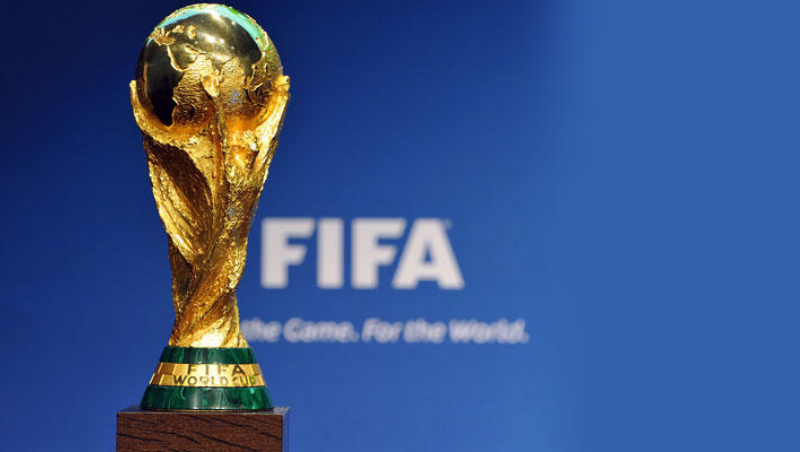
FIFA will finally start speaking to football clubs, leagues, and players’ unions during September 2021 in the latest steps announced today in its push to organize a men’s World Cup every two years.
All 211 member federations have also been invited to online talks on 30 September 2021 as part of consulting on the future of national team football, including a biennial men’s World Cup.
FIFA first sought approval this month from retired players, including World Cup winners who went to Qatar for a two-day conference and commissioned surveys of fans in selected countries.
That process was criticized as flawed by FIFPRO, the global union for active players, which is now set to get a meeting with FIFA.
A “new phase of consultation” will start with organizations representing players, clubs, leagues and the six continental governing bodies, FIFA said today in a statement.
European football body UEFA has warned it could boycott if the World Cup moves from its historic four-year cycle, and South American counterpart CONMEBOL is also opposed. Their members dominate World Cups on the field, but combine for fewer than one-third of the 211 federations who vote.
FIFA argues biennial World Cups will give more players and teams the chance to compete in meaningful games, improve talent globally and raise more money to fuel development programs.
The opposition has focused on diluting the World Cup’s appeal, distorting the balance between domestic and international football, and overloading players in a crowded schedule. The prestige of UEFA’s European Championship and CONMEBOL’s Copa America also risk being hit by playing more World Cups.
The World Cup debate has overshadowed an ongoing review of the FIFA-managed International Match Calendars, which mandate when clubs must release players to national teams.
The men’s calendar expires in 2024 and there is broad agreement the current system is outdated. It requires players to travel for matches in separate windows at least four times during each domestic season.
FIFA has proposed streamlining the calendar with smaller tournament qualifying groups, potentially playing all matches in a single block in October.
The women’s calendar expires in 2023 when their next World Cup will be hosted by Australia and New Zealand.
Women’s football could be crowded out by clashes forced by having more men’s World Cups, the German football federation said last week.
FIFA’s proposed changes are being led by Arsène Wenger, the former Arsenal coach who is now the global development director for world football. He has suggested decisions could be made by December 2021, the Associated Press (AP) reported.



The Hidden Price of Convenience: What People in Oman Spend on Food Delivery, Coffee & Subscriptions

VIDEO: Oman Cables Breaks Ground on OMR 10 Million-Plus Plant to Power Oman’s Industrial Future

Liva Insurance Recognised for Leadership in Insurance Innovation and Digital Transformation at OERLive DX Oman

Oman Air Launches Winter Schedule with Additional Frequencies, Expanded Capacity & New Codeshare Destinations

IHE and Eicher Trucks and Buses promote school bus safety awareness among students

India’s rising edge in oil, gas and construction projects is enabling Middle East’s growth

The Financial Services Authority organises the National Health Insurance Platform Forum ‘Dhamani’

Is India’s accelerating export engine driving manufacturing towards global scale?

SAH wins double honours at Dossier Construction Awards & Summit 2026

VIDEO: Hitesh Akarte on Khimji Ramdas Infrastructure’s Role in Oman Vision 2040

Power And Beyond: The Path To A Low-carbon Future

Al Mouj Muscat unveils Ghadeer Villas

Time to Buy Saudi Stocks? Some Investors Look at Dubai Instead

Hospitality Industry in Oman Estimated 90% Growth in 2022

Renewables are booming, but not fast enough to cap greenhouse emissions

Retail Abu Dhabi’s ‘Unbox Amazing’ generates sales of more than AED 2 billion in participating stores

Saudis Sign Deals From Energy to Metals in Bid to Salvage Forum

Saudi Arabia’s Gold Miner Plans to Be a Global Top-20 Supplier

Technology to drive Sultanate’s downstream industry

Digitization and Logistics Service Providers Can Help SMEs Make the Most of Peak Season Retail Trends
VIDEO: Oman Cables Breaks Ground on OMR 10 Million-Plus Plant to Power Oman’s Industrial Future
VIDEO: Hitesh Akarte on Khimji Ramdas Infrastructure’s Role in Oman Vision 2040

Oman’s Hospitality Sector Enters a New Phase of Growth: Sadiq Al Matwani Al Lawati

Amr Baabood: Oman Climate Week Is About Moving From Climate Ambition to Climate Action

Mayan Al Asfoor on Leadership, Legacy and Empowering Omani Talent

LEADERSPEAK: Dhofar Insurance CEO Sunil Kohli on Oman’s Insurance Sector, Reinsurance & Market Outlook

VIDEO: Robert MacLean on how NHI is Shaping Oman’s Next Generation of Hospitality Leaders

The Future of Oman: Decoding The Sultanate of Oman’s Strategic Promotional Nation Brand

EXCLUSIVE: AI, Robotics & Wearable Sensors are Changing the Lives of Dementia Patients

EXCLUSIVE: Talking Renewable Projects & Sustainability in Oman and Beyond with Vipul Tuli
-

 Artificial Intelligence4 weeks ago
Top 5 Interesting Things AI Did This Month – September 2026 Edition
-

 Fashion3 weeks ago
Luxury Watches That Could Appreciate Over the Next Decade [2026 Auction Buyer Guide]
-

 Highlights2 months ago
OERLive: Top 10 Mathematical Problems AI Has Solved or Transformed
-

 Banking & Finance1 month ago
The GCC’s 10 Richest Billionaires: Inside US$253.5 Billion of Wealth
-

 Economy2 weeks ago
OER Magazine September Edition 2026
-
 Magazines2 months ago
OER Magazine July Edition 2026
-

 Magazines2 months ago
Al Mar’a Magazine July 2026
-
 Alamaliktistaad Magazines2 months ago
Alam Al-Iktisaad Magazine July 2026 Edition