Banking & Finance
The GCC’s 10 Richest Billionaires: Inside US$253.5 Billion of Wealth

An OERLive analysis of the region’s largest fortunes reveals a new billionaire landscape — one increasingly shaped by crypto, fintech, technology and healthcare alongside real estate, infrastructure and retail.
The Middle East’s billionaire landscape is changing. For decades, discussions about private wealth in the region were largely associated with oil, construction, property, trading houses and family-owned conglomerates. Those industries remain enormously important – and sometimes anonymous – but the composition of the region’s largest fortunes is becoming far more diverse.
Today, some of the biggest fortunes connected to the Middle East have been created through cryptocurrency exchanges, digital finance, private technology companies, healthcare, global investment portfolios and international retail, alongside more traditional industries such as infrastructure and real estate.
An OERLive analysis of publicly available wealth estimates, corporate disclosures, regulatory filings, investment information and market data places the combined estimated wealth of the 10 individuals in this ranking at approximately US$253.5 billion as of September 7, 2026.
The concentration at the top is extraordinary. Changpeng Zhao alone accounts for approximately 45% of the combined wealth represented by the top 10. Meanwhile, seven of the names in the ranking are based in the UAE, collectively representing around US$208 billion – more than 80% of the total wealth analysed.
It paints a broader picture of how Dubai and Abu Dhabi are positioning themselves within the global movement of capital, entrepreneurs and privately controlled businesses.
The Ranking
- Changpeng Zhao – US$114.6 billion – Dubai, UAE
- Vinod Adani – US$26.5 billion – Dubai, UAE
- Prince Alwaleed bin Talal – US$25.5 billion – Riyadh, Saudi Arabia
- Andrey Melnichenko & Family – US$20.4 billion – Ras Al Khaimah, UAE
- Nik Storonsky – US$18.8 billion – Dubai, UAE
- Hussain Sajwani – US$15.3 billion – Dubai, UAE
- Dr. Sulaiman Al Habib – US$10.2 billion – Riyadh, Saudi Arabia
- Nassef Sawiris – US$9.7 billion – Egypt/Abu Dhabi-linked
- Pavel Durov – US$6.6 billion – Dubai, UAE
- M.A. Yusuff Ali – US$5.9 billion – Abu Dhabi, UAE
1. Changpeng Zhao: US$114.6 Billion
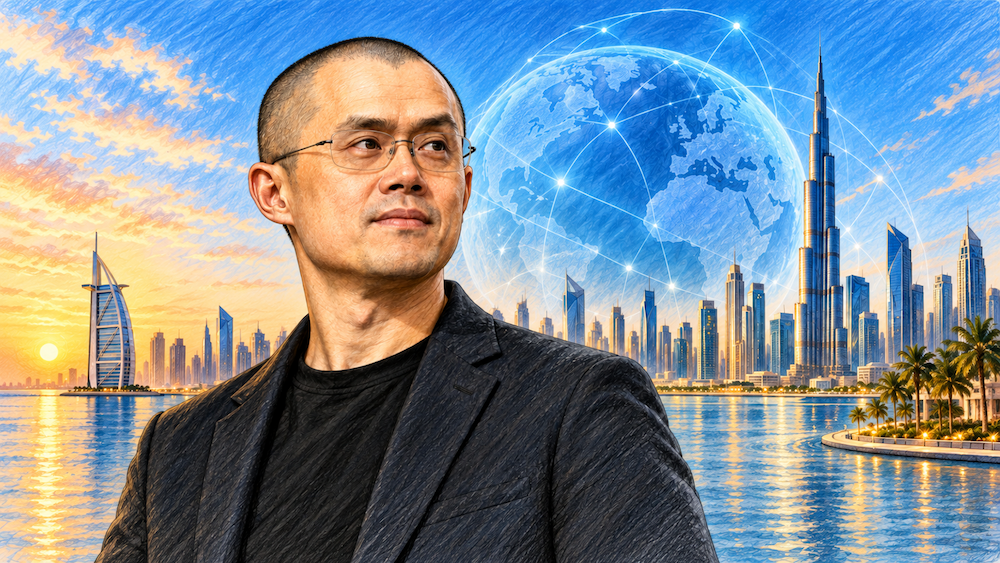

Base: Dubai, UAE
Primary source of wealth: Cryptocurrency and Binance
At an estimated US$114.6 billion, Changpeng Zhao – universally known in the cryptocurrency industry as CZ – sits far ahead of every other billionaire in this OERLive ranking.
Zhao co-founded Binance in 2017 and helped build it into the world’s largest cryptocurrency exchange by trading volume. His personal fortune is unusual even by billionaire standards because it is connected to two exceptionally difficult-to-value asset classes: a major privately held cryptocurrency business and digital assets themselves.
Unlike the founder of a listed corporation, whose equity stake can be multiplied by a publicly quoted share price, the value of Zhao’s Binance interest depends substantially on private-company valuation assumptions. His cryptocurrency holdings can simultaneously move sharply as digital-asset markets rise or fall.
That helps explain why estimates of Zhao’s wealth can change dramatically over relatively short periods. His position nevertheless represents something much larger than one individual’s wealth. The richest person in this analysis did not create his fortune from oil fields, ports, malls or construction. He built it principally through the digital financial economy.
And that is a significant shift in the profile of extreme wealth associated with the region.
2. Vinod Adani: US$26.5 Billion
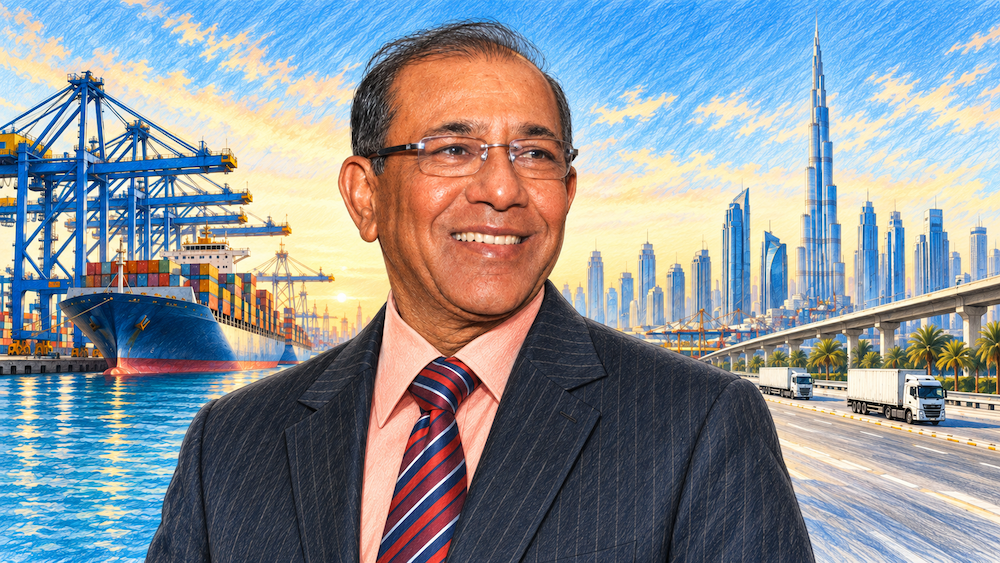
Base: Dubai, UAE
Primary source of wealth: Infrastructure and commodities
Vinod Adani, the elder brother of Indian industrialist Gautam Adani, occupies second place with an estimated fortune of US$26.5 billion. His wealth is connected to interests across businesses associated with the wider Adani promoter group.
The broader Adani portfolio operates across infrastructure-intensive industries including transportation and logistics, energy and utilities, airports, resources, cement and other large-scale businesses.
For Vinod Adani, the underlying significance is diversification across several major businesses rather than reliance on a single operating company.
His inclusion also highlights an important characteristic of the UAE’s wealth ecosystem: Dubai is no longer home to only locally created fortunes but also to individuals whose business interests extend across multiple countries and continents.
Also Read: Invest It All or Invest Gradually – Which Strategy Builds More Wealth Over Time?
3. Prince Alwaleed Bin Talal: US$25.5 Billion
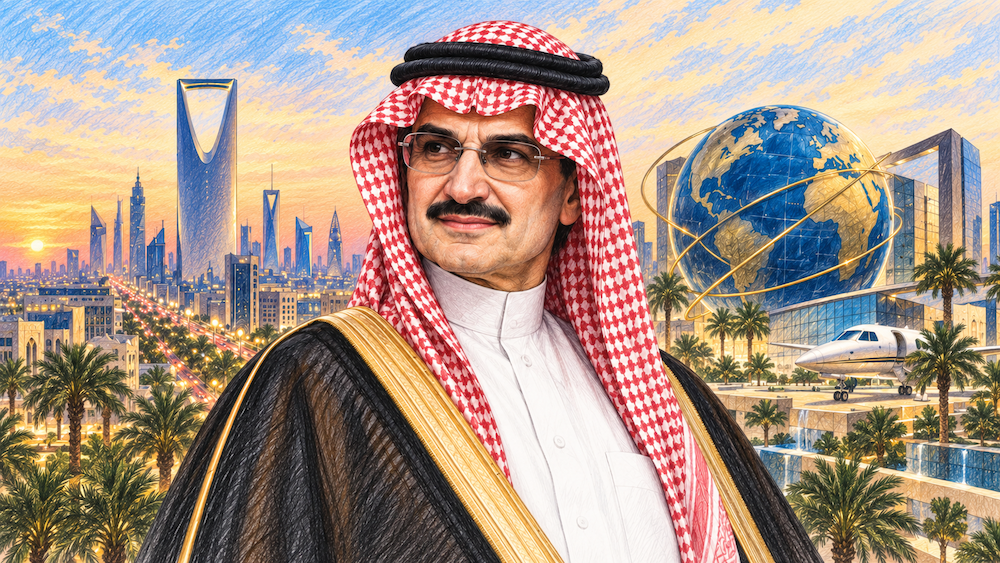
Base: Riyadh, Saudi Arabia
Primary source of wealth: Global investments
At an estimated US$25.5 billion, Prince Alwaleed bin Talal represents one of the Middle East’s most established examples of globally diversified investment wealth. Much of his business identity is associated with Kingdom Holding Company, the Riyadh-listed investment company he chairs.
Kingdom Holding’s portfolio extends across hospitality, financial services, real estate, aviation, technology and other sectors. Its international investments have included exposure to major companies and assets across luxury hospitality, digital technology, financial services and property.
Prince Alwaleed’s fortune therefore offers a contrast to the founder-led fortunes elsewhere on this list. His wealth represents capital allocation across industries and geographies rather than dependence on one dominant operating company.
4. Andrey Melnichenko & Family: US$20.4 Billion
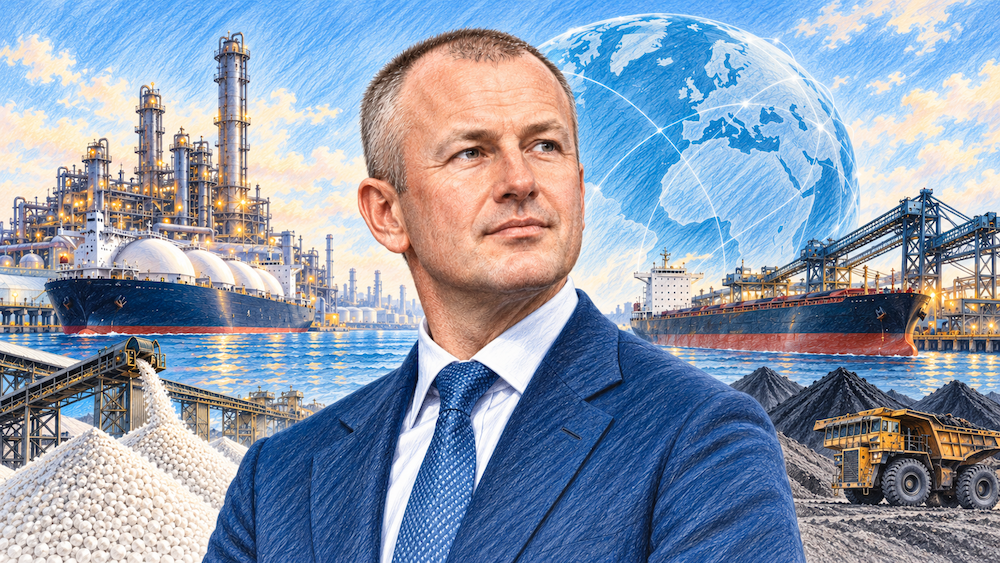
Base: Ras Al Khaimah, UAE
Primary source of wealth: Fertilisers and industrial assets
Andrey Melnichenko and his family have an estimated fortune of US$20.4 billion, primarily associated with large-scale industrial businesses. Melnichenko founded fertiliser producer EuroChem and was also associated with the development of energy and coal group SUEK.
His wealth has fundamentally different economic characteristics from that of a technology billionaire. Fertiliser, mining and energy-related businesses depend on physical production assets, commodity cycles, international trade, transportation infrastructure and significant capital expenditure.
Melnichenko’s presence among the UAE-based names in the ranking therefore illustrates another aspect of the country’s appeal: it has attracted not only technology founders and financiers, but owners of major global industrial fortunes.
5. Nik Storonsky: US$18.8 Billion
Base: Dubai, UAE
Primary source of wealth: Fintech and Revolut
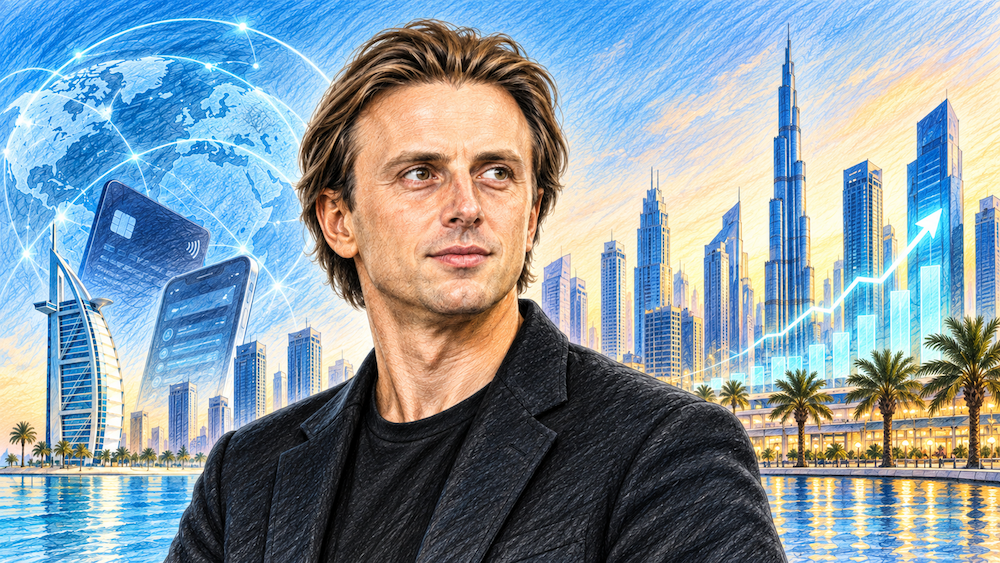
Few companies have disrupted European consumer finance as rapidly as Revolut. Its co-founder and chief executive Nik Storonsky ranks fifth in the OERLive analysis with an estimated fortune of US$18.8 billion.
Founded in 2015, Revolut developed from a foreign-exchange-focused financial application into a broad financial platform offering services spanning payments, transfers, cards, investment products and other financial services.
The company reached an implied valuation of US$75 billion in a secondary share transaction in late 2025, providing an important reference point for valuing stakes held by its founders and investors.
The company has also grown to serve tens of millions of customers across multiple markets. Because Revolut remains privately held, however, its valuation can differ substantially depending on the price established through private transactions, investor demand and subsequent fundraising activity.
Storonsky’s position on the list is therefore another sign of technology’s increasing influence over the region’s billionaire hierarchy.
6. Hussain Sajwani: US$15.3 Billion
Base: Dubai, UAE
Primary source of wealth: Real estate and diversified investments
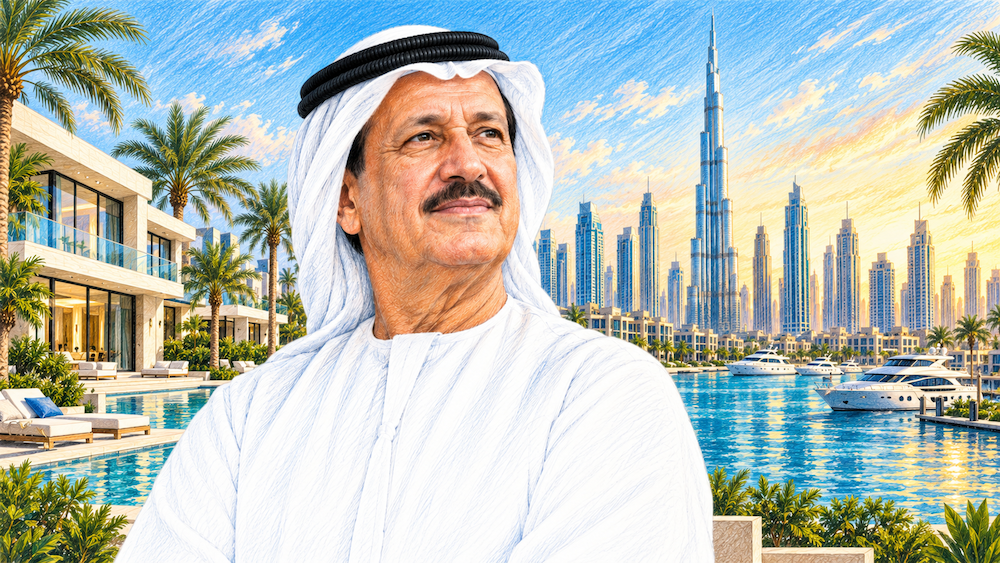
Hussain Sajwani is perhaps the billionaire on this list most closely associated with the physical transformation of Dubai. The Emirati businessman has an estimated fortune of US$15.3 billion and is the founder of the DAMAC business empire.
DAMAC Properties was established in 2002, as Dubai’s property market was opening more widely to international ownership. The developer subsequently became one of the most recognisable names in luxury property across the emirate.
But Sajwani’s interests today extend significantly beyond residential property. The wider DAMAC Group spans property development, hospitality, investments and, increasingly, digital infrastructure.
Its expansion into data centres through EDGNEX Data Centers by DAMAC has positioned the group within another fast-growing industry as global demand for cloud computing and artificial intelligence infrastructure rises.
Sajwani’s trajectory therefore mirrors Dubai’s own economic development: from trading and services into property, luxury, technology infrastructure and global capital deployment.
7. Dr. Sulaiman Al Habib: US$10.2 Billion
Base: Riyadh, Saudi Arabia
Primary source of wealth: Healthcare
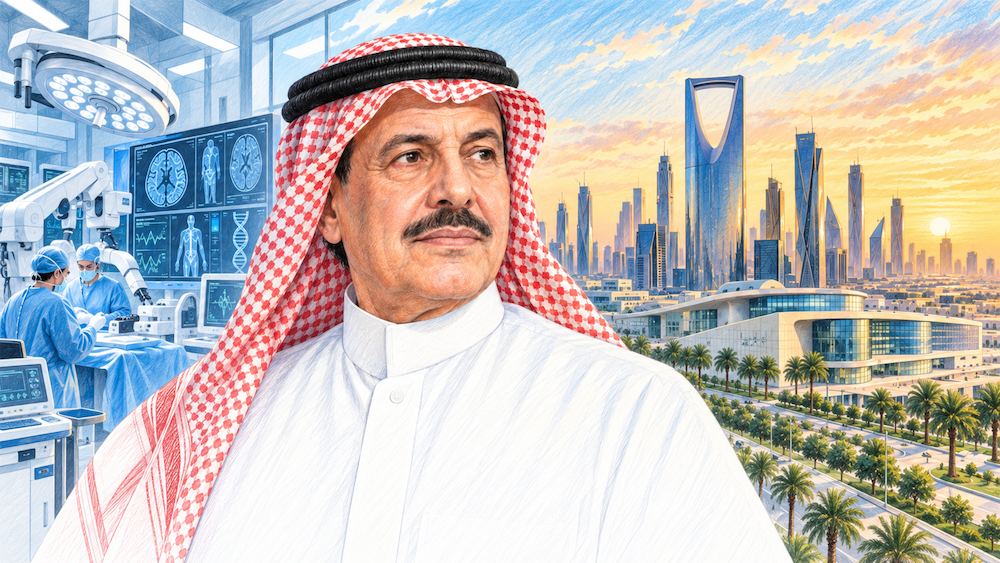
Dr. Sulaiman Al Habib represents one of the most striking examples on the ranking because his estimated US$10.2 billion fortune has been built predominantly through healthcare. The Saudi physician established the business that became Dr. Sulaiman Al Habib Medical Services Group, or HMG, in 1995.
What began as a medical complex has developed into one of the Middle East’s largest private healthcare groups, operating hospitals, medical facilities, pharmacies and specialist healthcare services.
A substantial portion of Dr. Al Habib’s wealth can be linked to his ownership of the publicly listed healthcare company. But because HMG is publicly traded in Saudi Arabia, changes in the company’s share price can directly influence estimates of his personal net worth as well.
His rise also demonstrates the changing economic structure of the Gulf. Healthcare – alongside technology, financial services and education – is becoming capable of generating fortunes previously associated mainly with property, natural resources and industrial conglomerates.
8. Nassef Sawiris: US$9.7 Billion
Base: Egypt/significant Abu Dhabi investment presence
Primary source of wealth: Investments, construction and industrial holdings
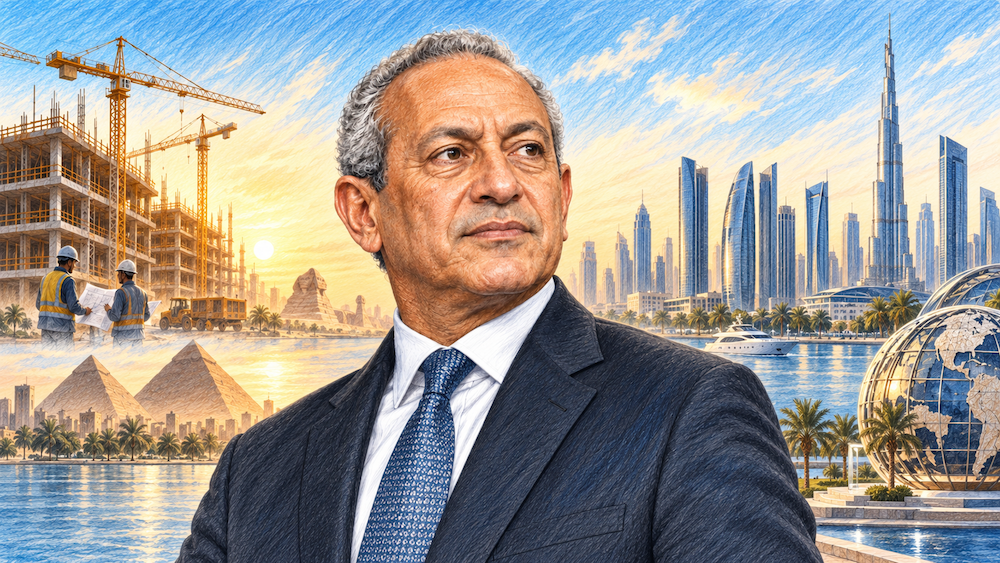
Egyptian investor Nassef Sawiris has an estimated fortune of US$9.7 billion, built through a portfolio spanning industrial companies, construction, publicly traded equities and professional sport. His interests include significant ownership in Orascom Construction, as well as international equity investments.
He has also maintained exposure to Adidas and is closely associated with the ownership of Aston Villa Football Club in England. The UAE connection has strengthened significantly through his investment activities.
Sawiris’ family investment operation has established a major presence in Abu Dhabi, reflecting the emirate’s increasing importance as a centre for international family offices, investment firms and private capital.
His inclusion illustrates a wider trend in which Abu Dhabi is becoming an increasingly important home for globally diversified investment activity, even when the underlying fortune was originally created elsewhere.
9. Pavel Durov: US$6.6 Billion
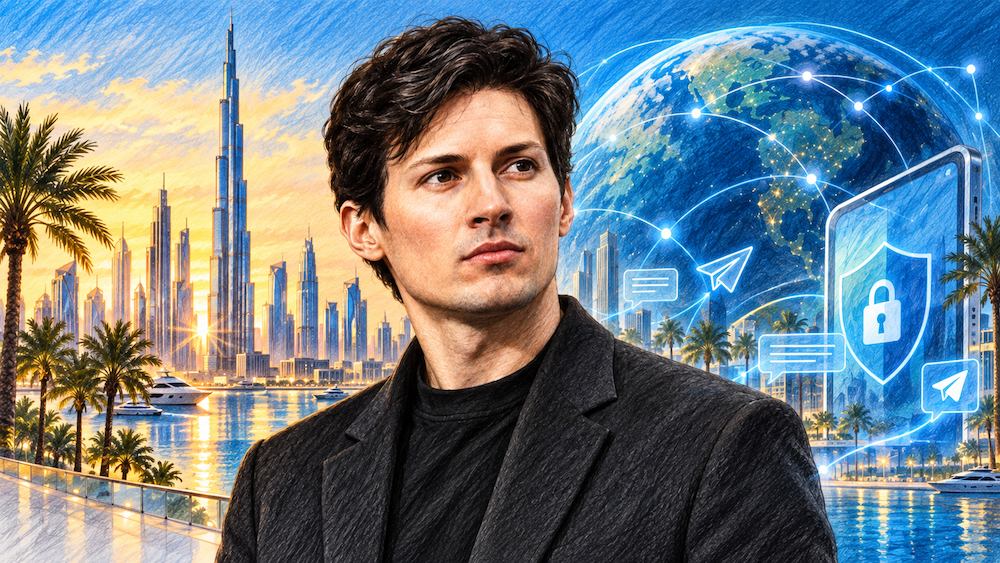
Base: Dubai, UAE
Primary source of wealth: Telegram (Software/Application)
Pavel Durov’s estimated US$6.6 billion fortune is closely tied to one of the world’s largest private messaging platforms. Durov is the founder, owner and CEO of Telegram, which is based in Dubai.
Telegram has grown to more than one billion monthly active users, placing it among the world’s largest communication platforms. The company’s private ownership creates the same valuation challenge seen with Binance and Revolut.
There is no continuously quoted Telegram share price available to the public. Consequently, estimates of Durov’s wealth depend heavily on assumptions about what investors might currently value Telegram at, together with other identifiable holdings.
The broader significance is nevertheless clear. Three of the 10 biggest fortunes analysed by OERLive – Zhao, Storonsky and Durov – are primarily associated with crypto, fintech and digital communications. Together, the three alone represent approximately US$140 billion, or more than half of the entire US$253.5 billion represented in this ranking.
10. M.A. Yusuff Ali: US$5.9 Billion
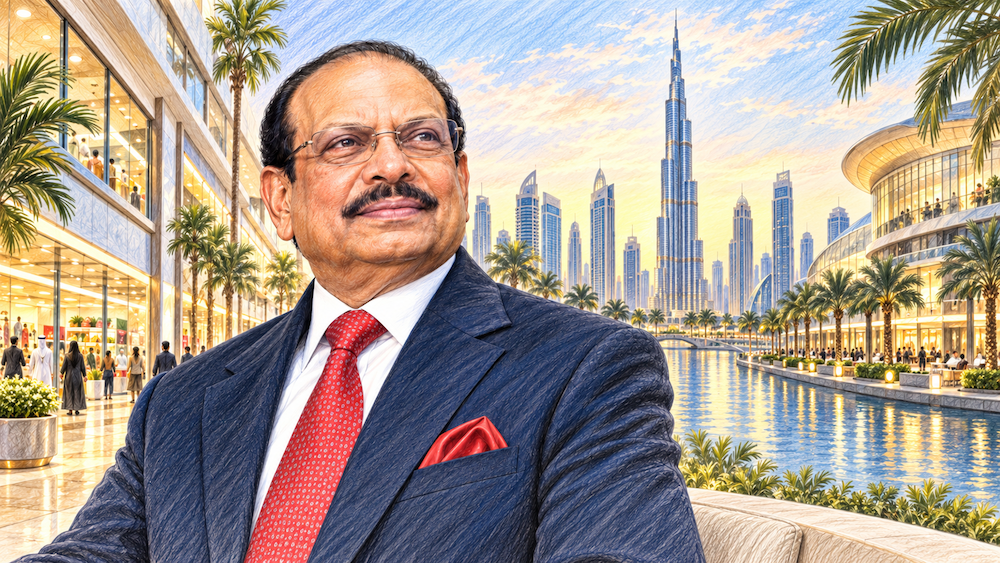
Base: Abu Dhabi, UAE
Primary source of wealth: Retail
M.A. Yusuff Ali completes the top 10 with an estimated fortune of US$5.9 billion. His story is closely intertwined with the development of modern Gulf retail. Having moved to Abu Dhabi from Kerala in the 1970s, M.A. Yusuff Ali eventually developed the business that became LuLu, today one of the GCC’s largest retail operators.
LuLu Retail operates hundreds of stores across the six GCC countries and serves hundreds of thousands of shoppers every day. The business reached another milestone when LuLu Retail went public in Abu Dhabi in 2024, in one of the region’s largest retail listings.
The IPO raised approximately US$1.7 billion and provided investors with a clearer market reference point for the value of the retail business built over several decades.
Yusuff Ali’s fortune is consequently rooted not in speculative technology or financial assets but in something considerably more familiar: supermarkets, hypermarkets, distribution networks, consumer spending and decades of Gulf population growth.
What The Ranking Really Shows
The most interesting story here may not be who ranks first or tenth; it is where the US$253.5 billion came from.
Technology-linked fortunes now dominate the upper end of the ranking. Changpeng Zhao, Nik Storonsky and Pavel Durov together account for approximately US$140 billion – around 55% of the wealth represented by all 10 billionaires.
At the same time, the traditional pillars of regional wealth remain powerful. Vinod Adani’s fortune is tied to infrastructure and commodities. Prince Alwaleed represents global investment capital. Melnichenko represents heavy industry. Sajwani reflects real estate. Al Habib represents healthcare. Sawiris represents industrial and investment diversification, while Yusuff Ali demonstrates the scale that can be created through consumer retail.
The UAE’s US$208 Billion Concentration
The other remarkable feature is geography. Seven of the 10 names in this ranking are either based in the UAE or have their primary regional residence there: Changpeng Zhao, Vinod Adani, Andrey Melnichenko, Nik Storonsky, Hussain Sajwani, Pavel Durov and M.A. Yusuff Ali.
Together, their estimated fortunes amount to approximately US$208.1 billion, which is around 82% of all the wealth represented in the top 10. The reasons cannot be reduced to a single factor.
Dubai and Abu Dhabi have built extensive international aviation connections, financial centres, company formation ecosystems, family-office infrastructure, global real-estate markets and increasingly sophisticated regulatory frameworks across sectors ranging from investment management to digital assets.
The UAE has also consequently developed into something broader than a destination for wealthy residents. It is increasingly functioning as a base from which internationally mobile capital is managed.
Many of the billionaires on the list did not make their fortunes primarily inside the UAE but have chosen the country as a residence, investment centre or operating base after becoming internationally successful.
From a long-term economic perspective, attracting the owner of capital can eventually attract family offices, professional advisers, investment teams, technology businesses, private banks and further investment activity alongside them.
Private Wealth Is Becoming Harder To Measure
There is another important conclusion from the OERLive analysis. Modern billionaire wealth is becoming more difficult to value accurately.
Consider three examples. A publicly traded stake in a listed healthcare company can be calculated relatively easily: the number of shares owned multiplied by the prevailing market price. A privately owned stake in a company such as Revolut requires the most recent credible private transaction or valuation. And a fortune connected simultaneously to Binance equity, Bitcoin, BNB and other digital assets can move substantially without there being a conventional stock-market price for the underlying operating company.
That means billionaire rankings should never be interpreted as audited equity balances. A person described as being worth US$20 billion does not necessarily have US$20 billion sitting in cash. Most billionaire wealth consists of ownership interests in businesses, securities, investment vehicles, real estate and other assets. The numbers therefore represent estimated economic value, not immediately spendable money.
OERLive Methodology and Data Disclaimer
Analysis timestamp: September 7, 2026, approximately 3:22 pm Gulf Standard Time.
This ranking has been independently compiled and edited by OERLive using information available in the public domain.
Sources reviewed include publicly available billionaire wealth estimates, company disclosures, annual reports, investor-relations materials, securities-exchange filings, regulatory ownership notifications, corporate announcements, publicly reported investment transactions and available market and private-company valuation information.
The estimated net-worth figures are an editorial snapshot and should not be interpreted as audited statements of personal wealth.
Publicly traded assets can change in value continuously as financial markets move. Cryptocurrency prices can change around the clock. Private businesses such as Binance, Revolut and Telegram do not have continuously quoted public market capitalisations, meaning estimates of their value depend partly on private transactions, investor valuations and other publicly available information.
Changes in corporate ownership, debt, share pledges, trusts, investment vehicles, currencies and undisclosed private assets or liabilities can also materially change an individual’s actual net worth.
Accordingly, OERLive’s figures represent the latest reasonable public-source estimates available at the time this analysis was compiled, rather than a claim that each individual’s entire personal balance sheet has been independently verified in real time.
For the purposes of this feature, OERLive’s Middle East special feature focuses on billionaires resident in or substantially economically linked to the GCC, including internationally born entrepreneurs who have established their principal regional residence or investment base in the UAE.
It is therefore an editorial Middle East business ranking rather than a census of every billionaire in every country sometimes included within broader geographic definitions of the Middle East.
The ranking, regional classification, calculations and analysis are OERLive’s own editorial presentation based on publicly available information.