Highlights
OERLive: Top 10 Mathematical Problems AI Has Solved or Transformed

From overturning an 80-year-old conjecture to discovering faster algorithms, artificial intelligence is beginning to move beyond answering textbook questions and contribute to original mathematical research.
For decades, mathematicians have used computers to test conjectures, perform large calculations and verify proofs. But the newest generation of artificial intelligence is beginning to play a more creative role: suggesting unfamiliar approaches, discovering mathematical structures and, in a small but growing number of cases, producing complete proofs.
The change is quite significant too as earlier systems largely depended on carefully programmed rules, while newer AI models can generate possible strategies, compare different approaches and revise their reasoning. Some systems are also connected to formal proof assistants such as Lean, which can verify every logical step and prevent a convincing-looking but incorrect argument from being accepted.
However, claims that AI has “solved mathematics” require caution. Only a handful of genuinely open research problems have been fully resolved by AI. In several other celebrated cases, the technology established a new record, improved a mathematical bound or helped human researchers complete the proof without settling the entire underlying problem.
Based on published papers, formal proofs and assessments by mathematicians, these are ten of the most important mathematical problems that AI has either solved or substantially advanced.
1. Overturning Erdős’s 80-Year-Old Unit-Distance Conjecture
AI model: An unnamed internal OpenAI reasoning model

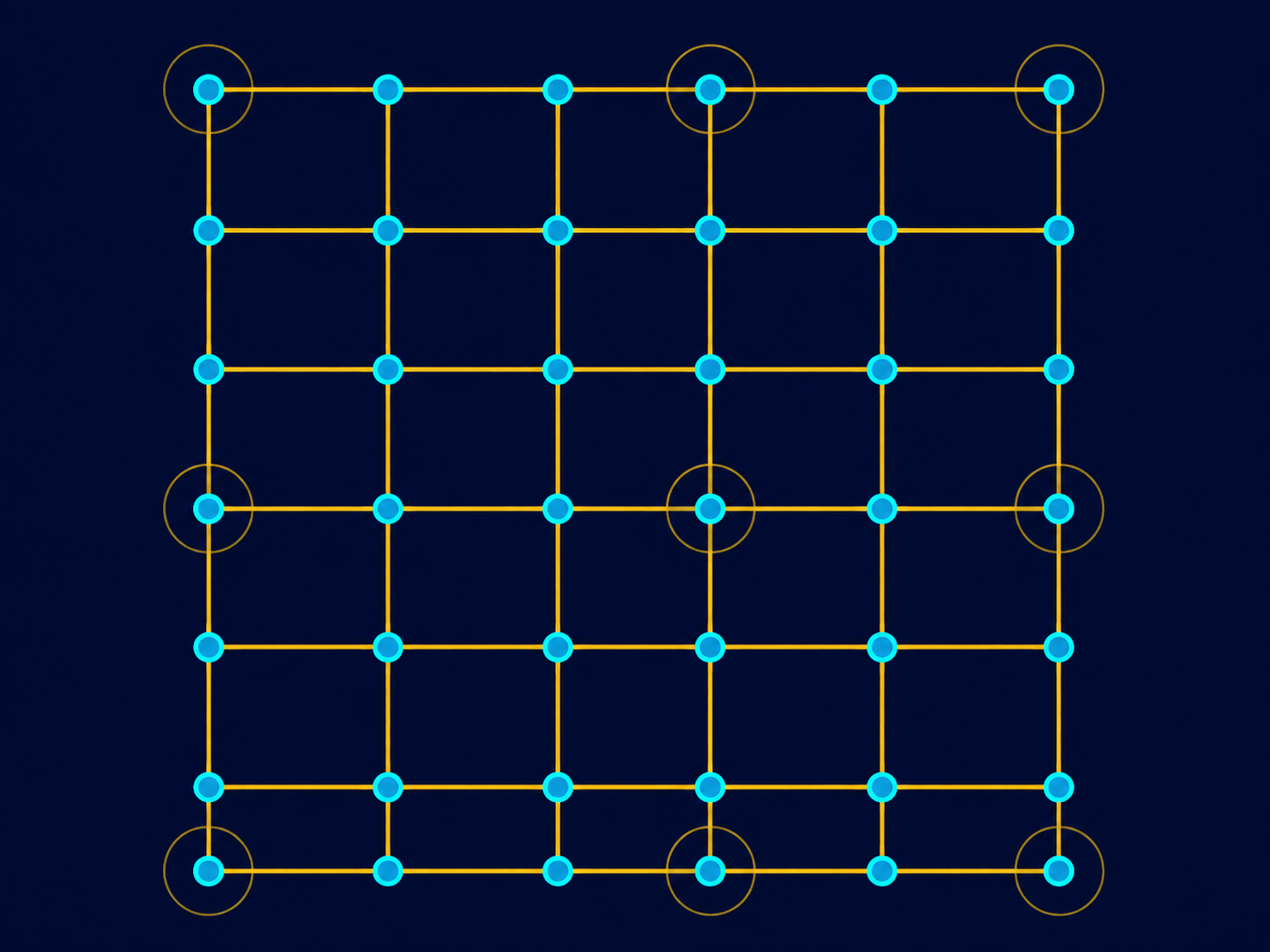
Image for illustrative purposes only
In May 2026, OpenAI announced what is arguably the most consequential AI-generated mathematical result to date. The planar unit-distance problem, introduced by Hungarian mathematician Paul Erdős in 1946, asks a deceptively simple question: if (n) points are placed on a flat plane, how many pairs can be exactly one unit apart?
For nearly eight decades, mathematicians believed that arrangements resembling square grids were essentially the best possible. Erdős conjectured that the maximum number of unit-distance pairs would grow only slightly faster than the number of points.
An internal OpenAI model overturned that belief when it discovered an infinite family of configurations producing polynomially more unit distances than previously thought possible. Remarkably, the proof connected the elementary-looking geometry problem with sophisticated ideas from algebraic number theory.
The result was checked by prominent external mathematicians, including Noga Alon, Tim Gowers, Arul Shankar and Jacob Tsimerman. Fields Medal winner Tim Gowers called it a milestone in AI mathematics and said that an equivalent paper written by a human would merit publication in one of the world’s leading mathematical journals.
The broader unit-distance problem has not been completely solved – the precise maximum remains unknown – but AI decisively disproved its central, long-standing conjecture.
2. Resolving Erdős Problem #728
AI models: GPT-5.2 Pro and Harmonic’s Aristotle
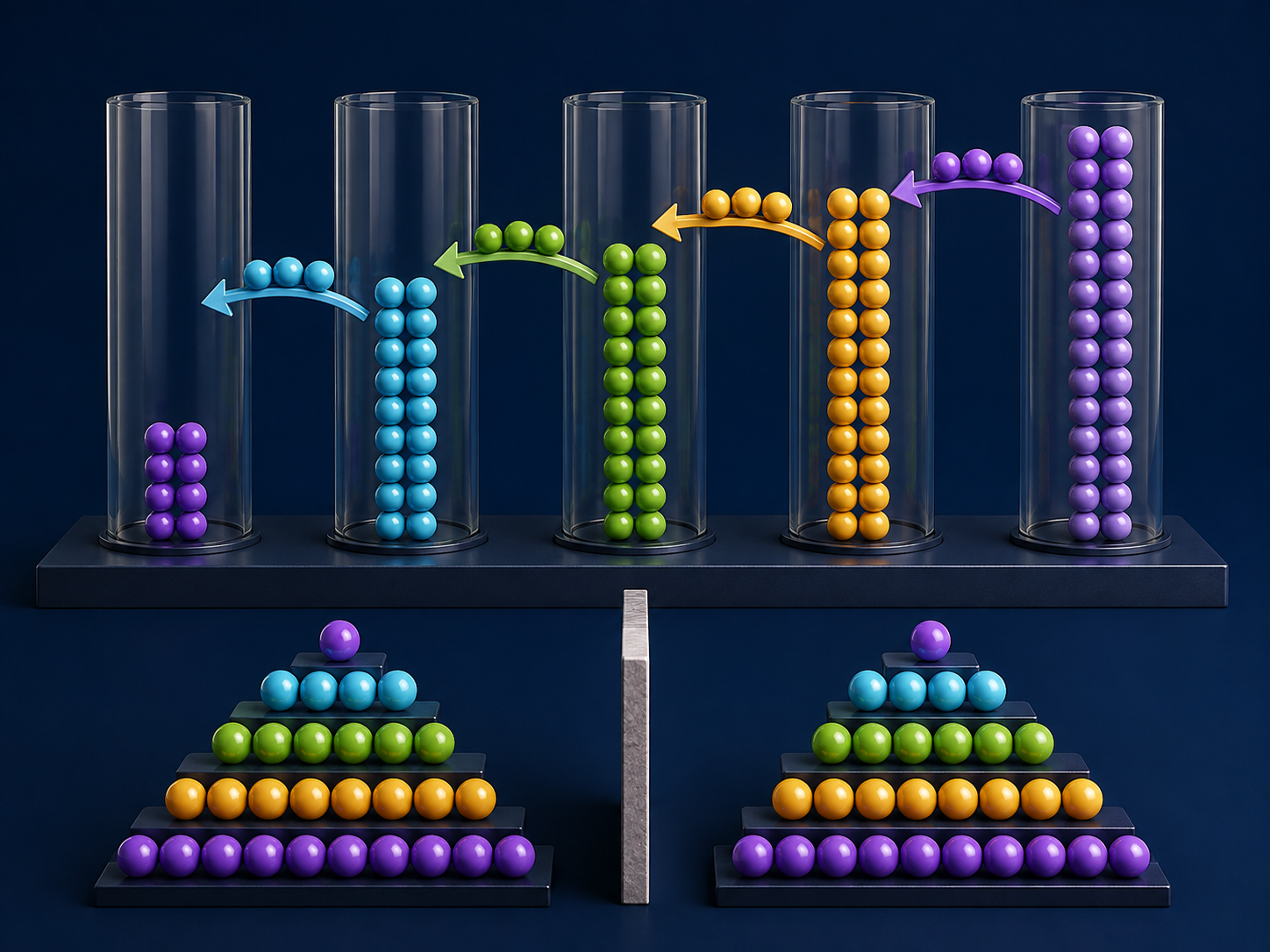
Image for illustrative purposes only
In January 2026, a combination of OpenAI’s GPT-5.2 Pro and Harmonic’s Aristotle system produced a formally verified solution to Erdős Problem #728.
The number-theory problem concerns the divisibility of products of factorials. It asks whether infinitely many triples of natural numbers ((a,b,n)) can satisfy:
a! × b! divides n! × (a + b − n)!
with
C₁ log(n) < a + b − n < C₂ log(n), where 0 < C₁ < C₂
while the difference (a+b-n) lies within a specified logarithmic range.
The AI-generated argument converted the question into one involving binomial coefficients and then analysed the problem prime by prime. It used Kummer’s theorem, which connects the prime factors of binomial coefficients to the number of carries generated during arithmetic in different numerical bases.
GPT-5.2 Pro developed the mathematical reasoning, while Aristotle generated a formal proof in Lean. Because Lean mechanically checked each step, the result did not depend only on humans deciding that the argument appeared convincing.
Mathematician Nat Sothanaphan later translated the Lean proof into conventional mathematical language. The resulting paper described it as the first Erdős problem considered fully and autonomously resolved by an AI system.
3. Solving Erdős Problem #1026
AI systems: Aristotle, AlphaEvolve and other AI-assisted research tools
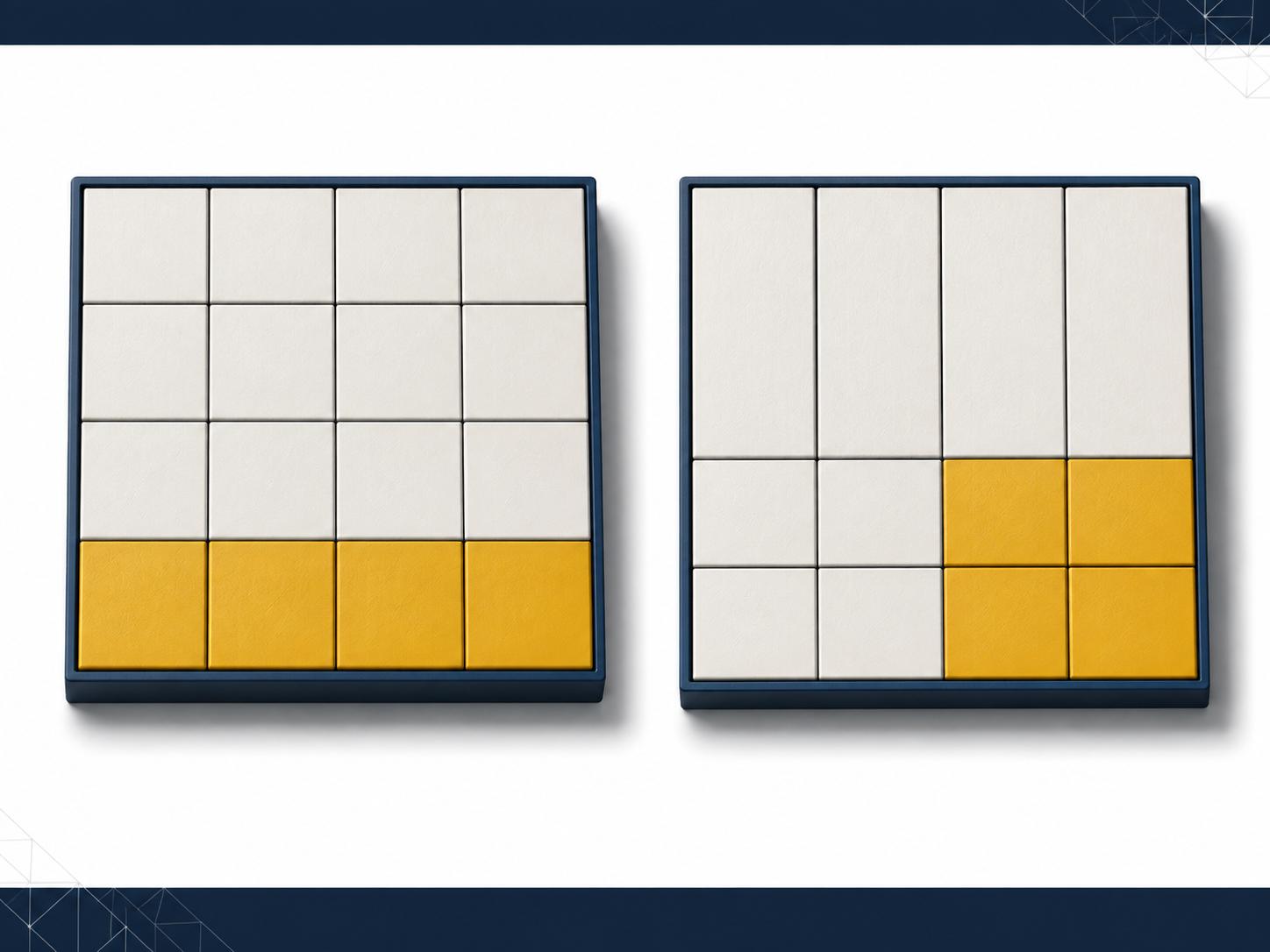
Image for illustrative purposes only
Another Erdős problem was resolved through a fast-moving collaboration involving professional mathematicians and several AI systems.
Erdős Problem #1026 involved determining a combinatorial quantity that could be reformulated as a rectangle-packing problem. A central part of the challenge was proving the formula:
c(k²) = 1/k
Human mathematicians helped reinterpret and decompose the problem. Google DeepMind’s AlphaEvolve searched for optimal constructions, while Harmonic’s Aristotle generated a formal Lean proof of an important conjecture within the solution.
AI-assisted literature searches were also used to determine which components were genuinely new and which could already be found in earlier mathematical work.
The case is not an example of a model independently solving a problem from a single prompt. Instead, it demonstrates a new form of distributed research in which human insight, AI-generated constructions, automated literature review and formal verification operate together.
Mathematician Terence Tao documented how the central pieces came together in less than two days, making it one of the clearest demonstrations of AI accelerating the pace of mathematical collaboration.
4. Calculating Eigenweights Across All Classical Groups
AI system: Aletheia, powered by Gemini Deep Think
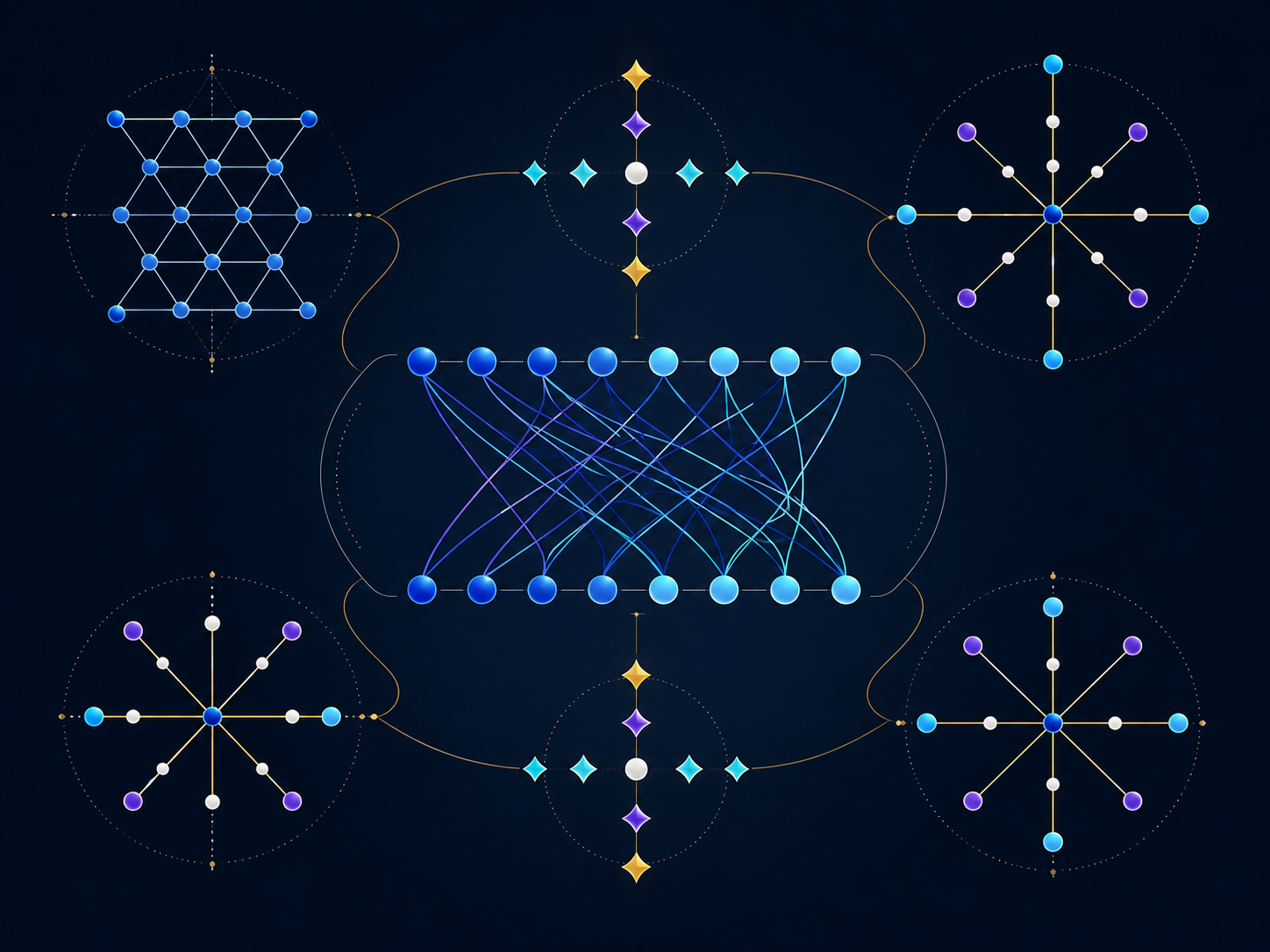
Image for illustrative purposes only
Google DeepMind’s Aletheia research agent has shown that AI can work in highly specialised areas of pure mathematics—not merely on problems that can be reduced to computational searches.
Aletheia was used to study “eigenweights” appearing in arithmetic Hirzebruch proportionality, an advanced area connecting arithmetic geometry, number theory and representation theory.
Earlier researchers had calculated these eigenweights in relatively simple cases but had not produced a general determination. Aletheia connected the quantities to the representation theory of symmetric groups and calculated them for all classical groups.
According to Google DeepMind, the central research argument was generated without human intervention during the problem-solving process. Mathematician Tony Feng subsequently documented and checked the work.
As of August 2026, the result had been published as a research preprint rather than completing the full traditional journal peer-review process. Nevertheless, it represents one of the earliest cases of an AI research agent producing the central content of a paper in advanced pure mathematics.
5. Solving a 40-Year-Old Problem in Optimisation
AI model: GPT-5 Pro through ChatGPT
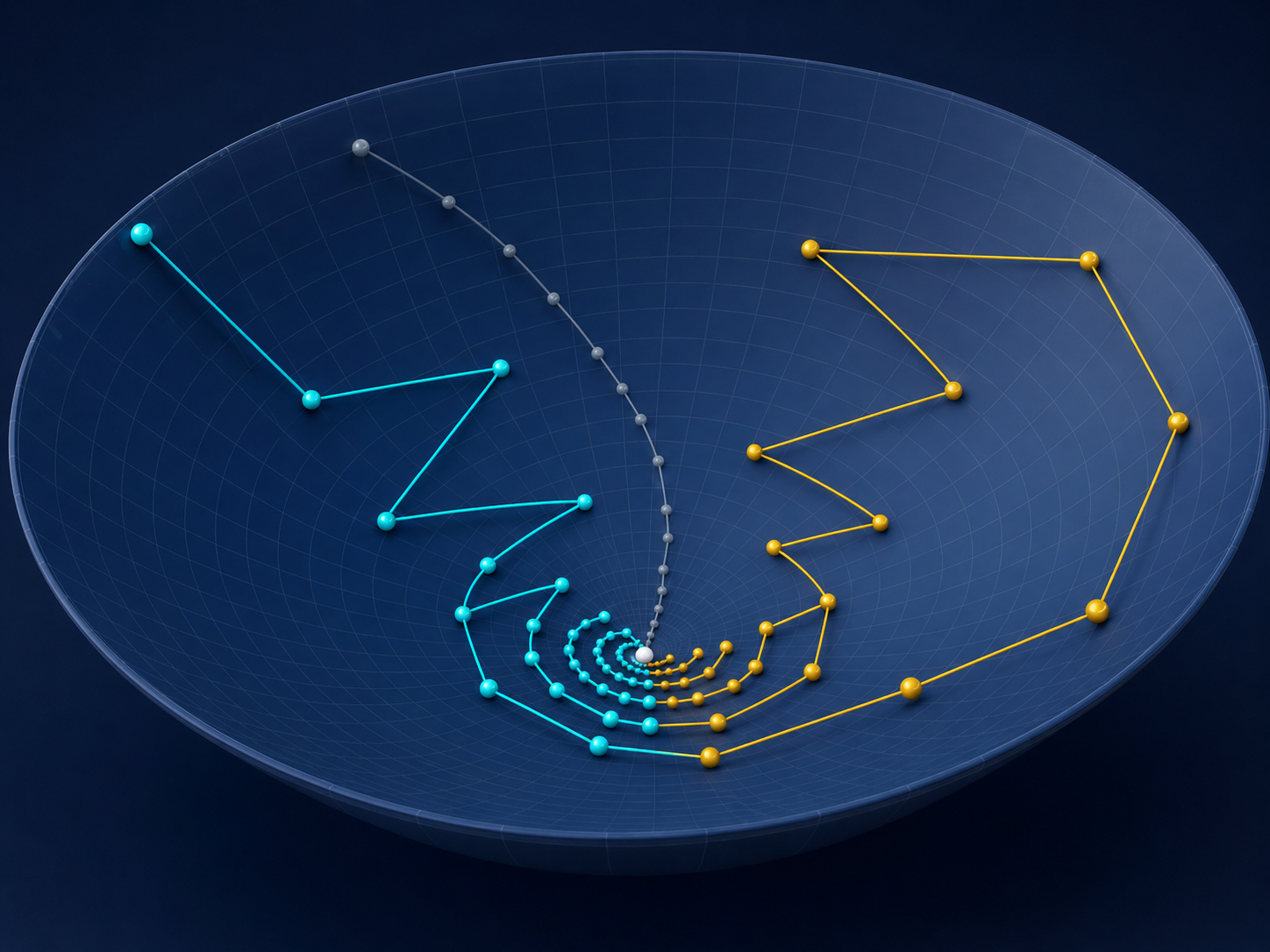
Image for illustrative purposes only
Nesterov’s accelerated-gradient method, introduced in 1983, is one of the most influential algorithms in modern optimisation. It accelerates the process of finding the minimum of a function and is closely connected to techniques used in machine learning.
Although the algorithm’s performance had been extensively studied, one fundamental question remained unresolved: do the actual points generated by the method always converge to a minimiser?
Mathematicians Uijeong Jang and Ernest Ryu eventually proved that they do. Their work established point convergence in the form
xₖ → x∞, yₖ → x∞, and x∞ is a minimiser of f.
GPT-5 Pro played an important role in the discovery. During approximately 12 hours of interaction, the model proposed numerous strategies. Many were incorrect, but several introduced connections and intermediate steps that enabled Ryu to construct the final proof.
This was not an autonomous AI solution. The human researchers selected the problem, rejected incorrect suggestions, developed the promising ideas and verified the final argument. But it demonstrated how AI can dramatically increase the number of approaches a mathematician can investigate within a limited period.
6. Finding the Extremes of Descendant Integrals
AI models: GPT-5, Gemini 3 Pro, Claude Opus 4.5 and GPT-5.2
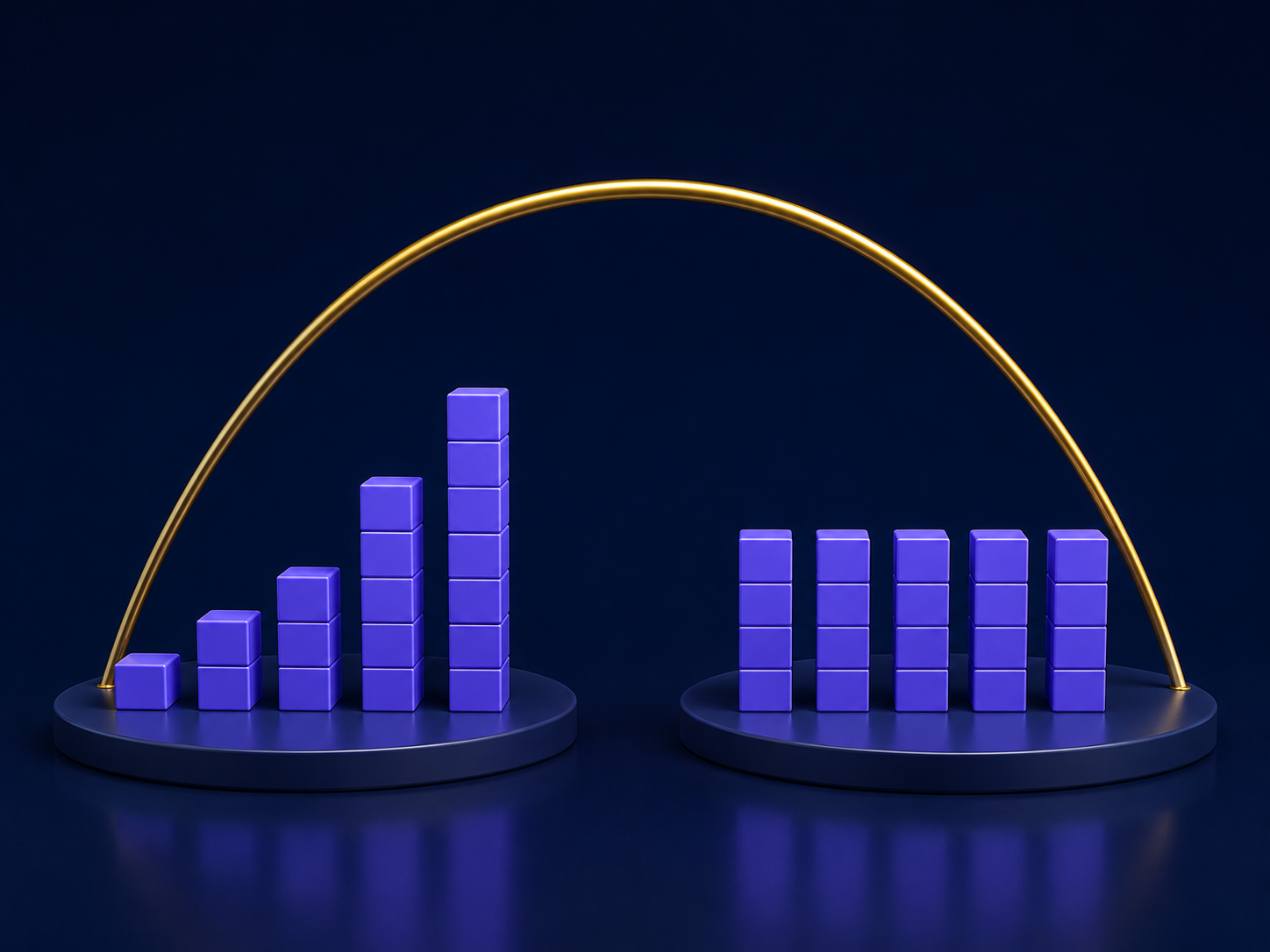
Image for illustrative purposes only
Descendant integrals are sophisticated mathematical objects associated with moduli spaces of stable curves. They play an important role in algebraic geometry and the celebrated Witten–Kontsevich theorem.
Researchers asked which distribution of exponents would maximise or minimise a descendant integral when the total exponent remained fixed.
The resulting theorem showed that the maximum occurs when the exponents are distributed as evenly as possible. GPT-5 generated the main proof for the maximum statement, using symmetry and an advanced mathematical principle known as the Khovanskii-Teissier log-concavity inequality. Gemini 3 Pro helped prove another part of the result.
A separate combinatorial formulation was formally verified in Lean using Claude Code and GPT-5.2, while a human mathematician supplied the geometric argument connecting the formalised result to the original problem.
The research paper is notable for clearly labelling which parts were written by humans and which were generated by AI. It also disclosed an error in an early GPT-5 response that had to be corrected – an important reminder that mathematical AI still requires rigorous verification.
7. Solving Six Previously Unpublished Research Problems
AI system: Aletheia, powered by Gemini 3 Deep Think
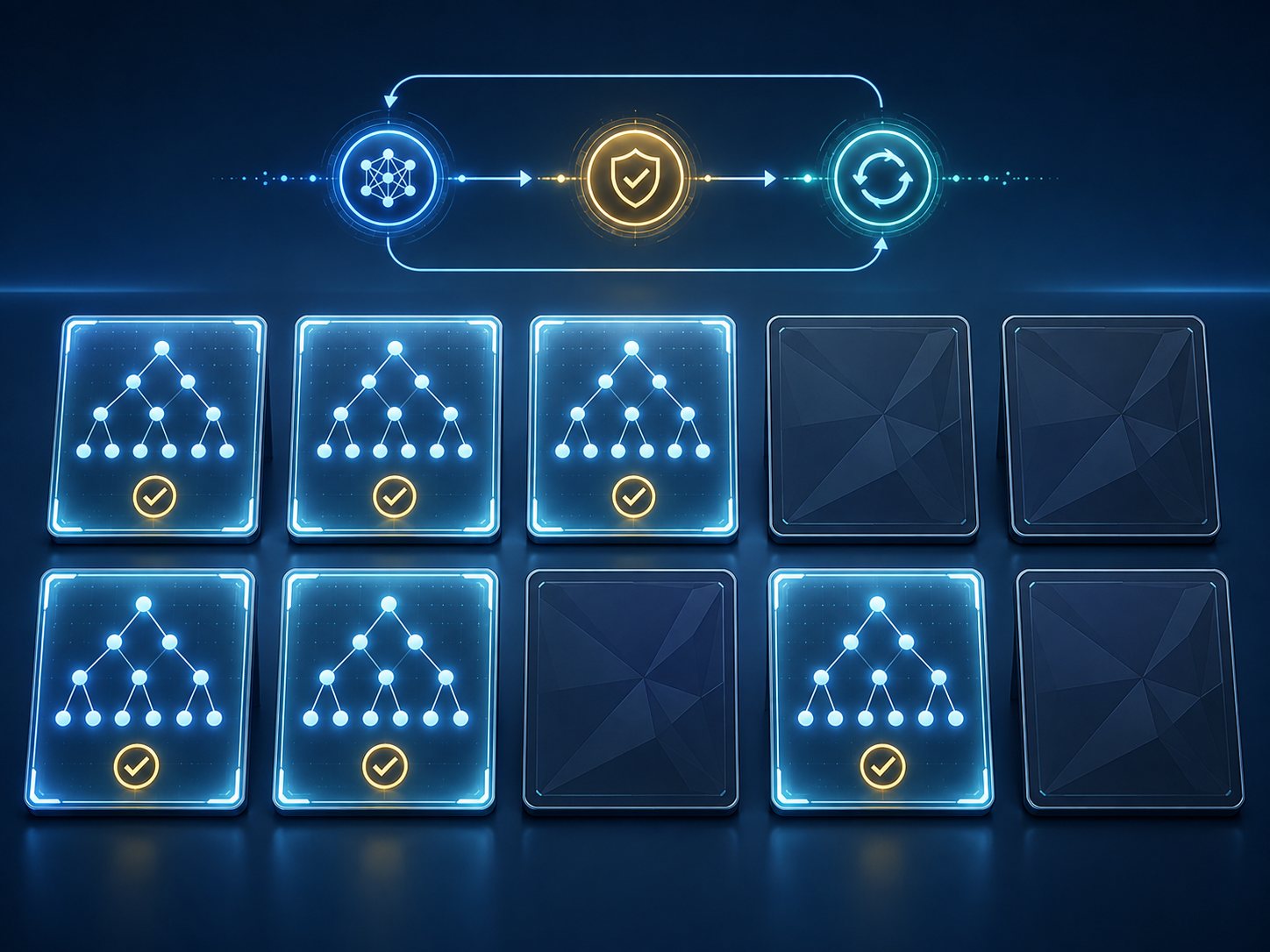
Image for illustrative purposes only
One of the strongest controlled tests of AI’s mathematical abilities came through FirstProof, a collection of ten previously unpublished research-level problems contributed by professional mathematicians.
The questions were released in February 2026, while the official human-written solutions were withheld until after the submission deadline. This reduced the possibility that an AI system could reproduce an answer encountered in its training data or retrieve an existing proof online.
Aletheia autonomously produced solutions to six of the ten problems – Problems 2, 5, 7, 8, 9 and 10.
Independent expert assessments unanimously accepted five of the six solutions. The answer to Problem 8 received approval from five of seven evaluators and should therefore be regarded more cautiously.
Most of the FirstProof questions were technical lemmas arising naturally in ongoing research rather than famous century-old conjectures. Even so, the results demonstrated that AI could solve unfamiliar, unpublished problems requiring research-level mathematical reasoning.
8. Improving the Mathematical Limits of the Travelling-Salesman Problem
AI system: AlphaEvolve
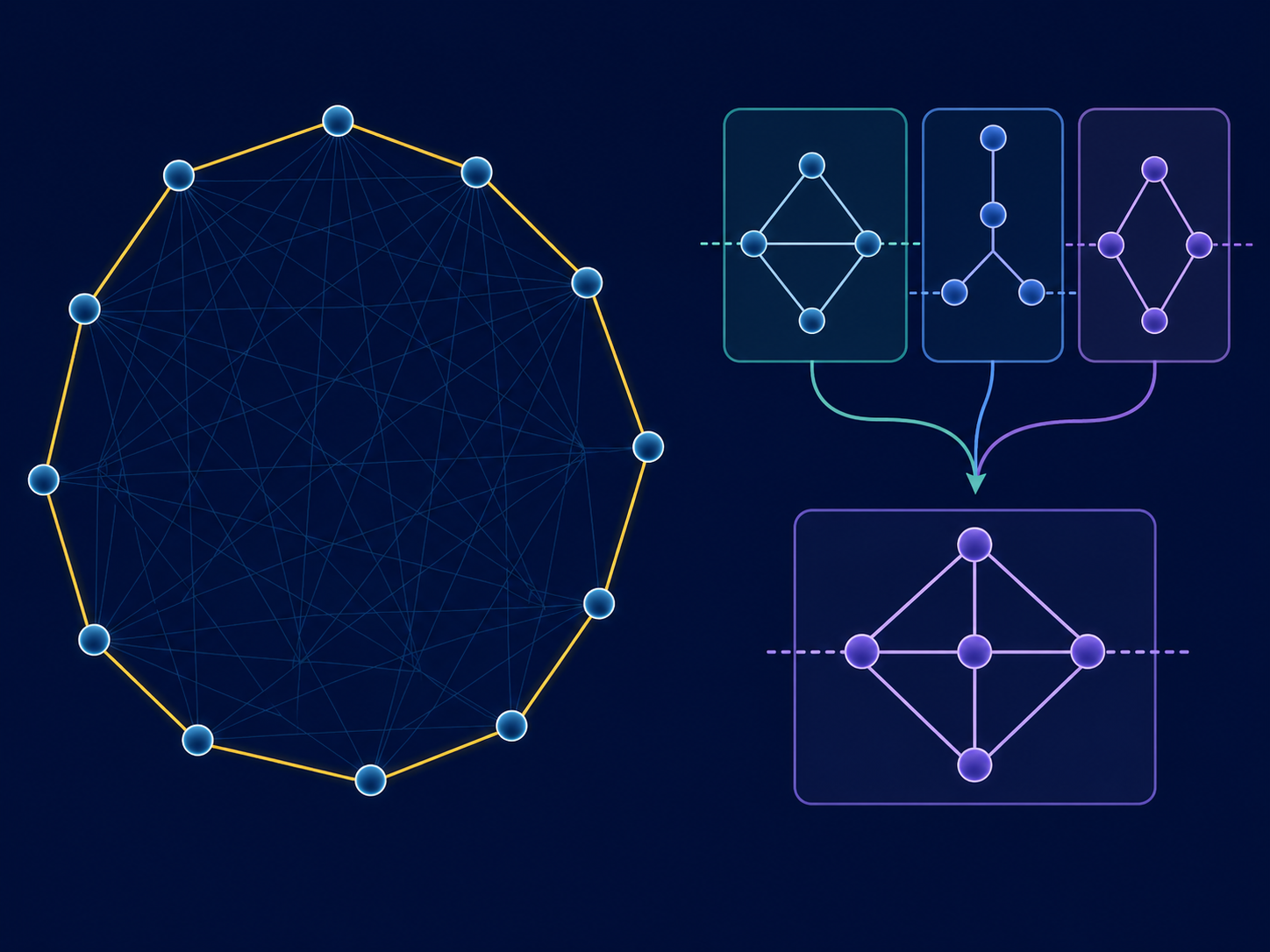
Image for illustrative purposes only
The travelling-salesman problem asks for the shortest possible route connecting a collection of locations before returning to the starting point. It is one of the most important optimisation problems in computer science.
Researchers also study how closely any efficient algorithm can approximate the best route. In this field, proving that a certain level of approximation is computationally difficult often requires constructing intricate mathematical objects known as reduction gadgets.
Google DeepMind’s AlphaEvolve discovered a new gadget that improved the known NP-hardness ratio for the metric travelling-salesman problem from 117/116 to 111/110.
AlphaEvolve also improved the code used to verify its candidate constructions, in some cases producing speed increases of up to 10,000 times. This allowed the researchers to examine structures too large for their original verification process.
The general travelling-salesman problem was not solved. Instead, AI improved the mathematical understanding of how closely the problem can be approximated efficiently.
9. Discovering New Cap Sets
AI system: FunSearch using Google’s PaLM 2
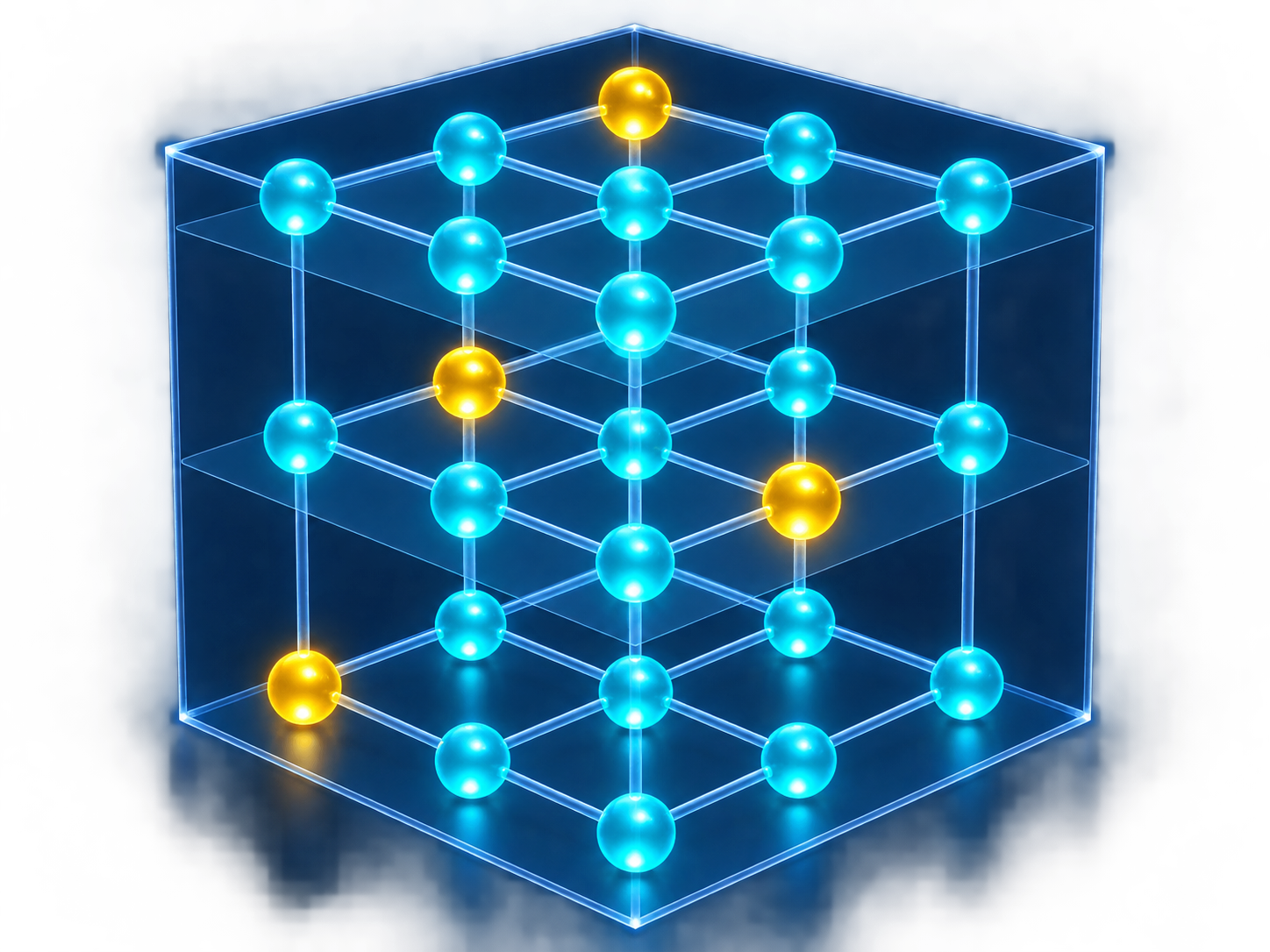
Image for illustrative purposes only
The cap-set problem asks how many points can be selected from a high-dimensional grid without allowing any three of them to lie on a straight line.
It is an important problem in extremal combinatorics, with connections to number theory, coding theory and other areas of mathematics.
Google DeepMind’s FunSearch system combined the PaLM 2 language model with an automated evaluator. PaLM 2 generated small computer programs describing potential constructions. The evaluator executed the programs, rejected ineffective candidates and returned the most successful ones for further improvement.
FunSearch discovered the largest known cap sets in several mathematical settings, producing what DeepMind described as the biggest improvement in approximately 20 years.
The system did not completely resolve the cap-set problem. It established improved lower bounds by constructing larger examples than had previously been known. Its importance also came from the form of its output: instead of returning only a large set of numbers, FunSearch produced compact programs that mathematicians could examine and interpret.
10. Discovering Faster Matrix-Multiplication Algorithms
AI system: AlphaTensor
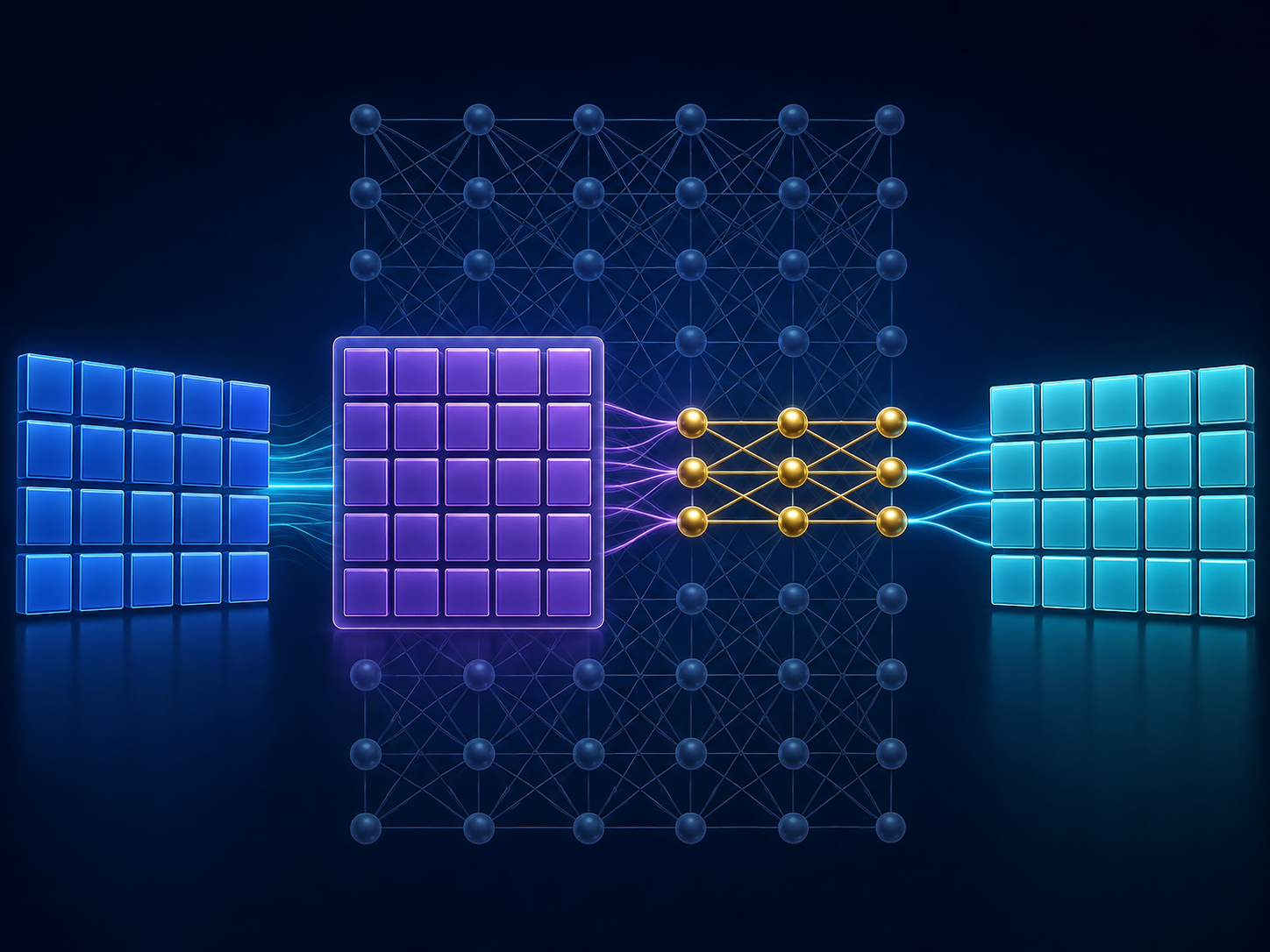
Image for illustrative purposes only
Matrix multiplication is fundamental to modern computing. It is used in computer graphics, engineering simulations, communications, data analysis and the training of artificial-intelligence models themselves.
The standard multiplication method is easy to understand but can require a large number of individual operations. Mathematicians and computer scientists have therefore spent decades searching for more efficient algorithms.
DeepMind’s AlphaTensor transformed the search into a single-player game and applied reinforcement-learning techniques derived from AlphaZero.
Among its discoveries was an algorithm that multiplies a (4\times5) matrix by a (5\times5) matrix using 76 scalar multiplications in the relevant mathematical setting. The best previously known method required 80.
AlphaTensor also discovered thousands of alternative matrix-multiplication algorithms. When optimised for specific hardware, some of its algorithms ran between 10 and 20 per cent faster on Google TPUs and Nvidia GPUs than commonly used alternatives.
AlphaEvolve later extended this line of research by finding an algorithm that multiplies two (4\times4) complex-valued matrices using 48 scalar multiplications, improving on a result associated with Strassen’s pioneering work.
Neither system has solved the broader question of the fastest possible method for multiplying matrices of arbitrary size. But both have demonstrated that AI can discover algorithms that had escaped decades of human search.
What AI Has Not Solved

Despite the pace of recent progress, there is no credible evidence that AI has solved the Riemann hypothesis, the Goldbach conjecture, the Collatz conjecture, (P) versus (NP), the Birch and Swinnerton-Dyer conjecture or any of the remaining Millennium Prize Problems.
There have also been cases in which models appeared to solve open problems but had actually reproduced results buried in existing literature. In other instances, researchers later found serious gaps in AI-generated proofs.
This makes independent review, transparent disclosure and formal verification essential. A language model can produce an argument that sounds authoritative even when a crucial step is false.
From Mathematical Assistant to Research Partner
The evolution of AI in mathematics can be divided into several stages. Early neural networks helped mathematicians recognise patterns in large collections of data. Systems such as AlphaTensor, FunSearch and AlphaEvolve then began discovering new algorithms and mathematical constructions that could be tested automatically.
Models such as GPT-5 demonstrated that general-purpose AI could contribute meaningful proof ideas. Formal systems such as Aristotle added the ability to verify those arguments line by line. Aletheia went further by autonomously generating substantial research-level solutions.
The unit-distance breakthrough represents another significant step. It showed that a general-purpose reasoning model could challenge a belief held by expert mathematicians for nearly 80 years and introduce ideas from a branch of mathematics that researchers had not expected to be decisive.