OER Exclusive
India–Oman strategic partnership spans energy corridors to innovation-driven economic integration

India–Oman bilateral cooperation is evolving from energy dependence to a future-ready strategic alliance powered by trade, innovation, logistics, digital transformation, start-ups, and sustainable economic integration. Bilateral trade has exceeded $11 bn in 2025-2026.
Seventy years after establishing diplomatic relations in 1955, India and Oman now rank among the most stable, trusted, and strategically significant partners in the Gulf region. What began as centuries-old maritime exchanges across the Arabian Sea has evolved into a multi-dimensional partnership spanning trade, energy security, logistics, investment, technology, innovation, and people-to-people engagement. The bilateral relationship has steadily evolved from traditional commercial cooperation to a forward-looking strategic alliance rooted in economic resilience, regional connectivity, and shared developmental aspirations.
Unlike many geopolitical relationships in West Asia, which are shaped by volatility and episodic political shifts, India–Oman ties have demonstrated continuity, pragmatism, and mutual confidence. Oman’s balanced foreign policy and India’s expanding global economic profile have created a durable framework for cooperation that continues to deepen despite global uncertainties.
This consistency has enabled both nations to institutionalise long-term cooperation across energy, infrastructure, logistics, services, digital transformation, and strategic investments. The partnership today reflects not merely diplomatic goodwill but a shared vision of economic integration and regional stability.
In the contemporary era, economic engagement underpins the India–Oman partnership. Bilateral trade has grown steadily, reaching nearly USD 11.2 billion in 2025–26, driven by crude oil, liquefied natural gas, fertilisers, engineering goods, and machinery, alongside a growing basket of non-oil exports from India. India is now among Oman’s leading non-oil trading partners, while Oman remains strategically important to India’s energy security and maritime trade architecture.
The partnership extends far beyond commodity trade. A large Indian expatriate community in Oman contributes significantly across sectors, including construction, healthcare, retail, services, logistics, hospitality, and SMEs. These people-to-people ties create deep commercial linkages, institutional familiarity, and social trust, strengthening the long-term sustainability of bilateral relations. The Indian diaspora has effectively become a bridge between the economic ambitions of both nations.
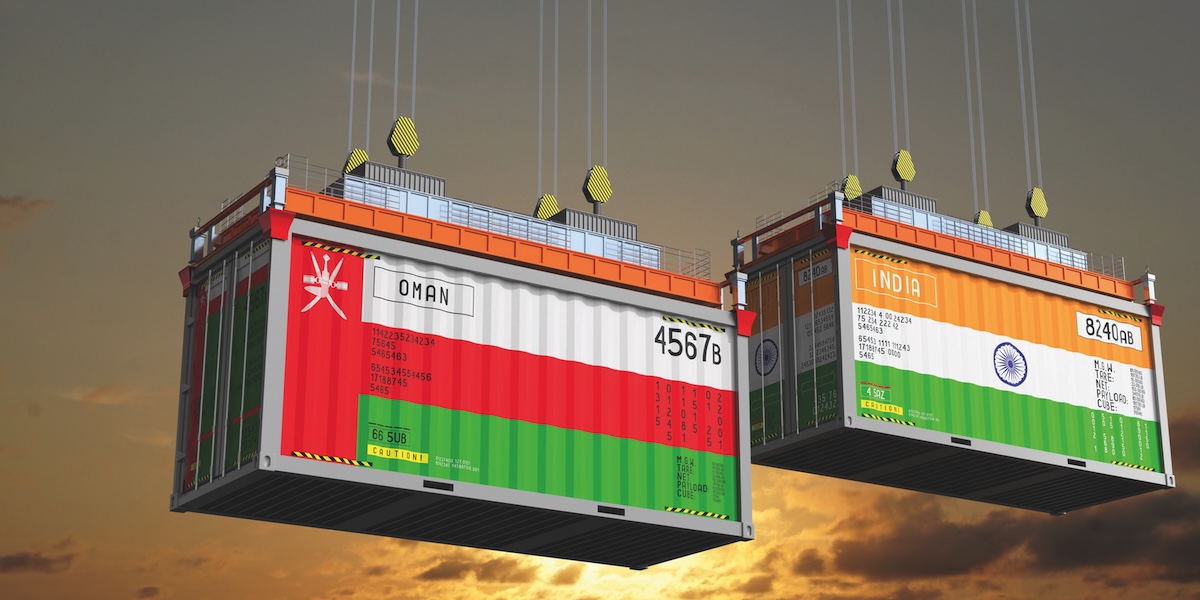

A defining turning point in bilateral relations came with the signing of the Comprehensive Economic Partnership Agreement (CEPA) in 2025. The agreement marked a transformational shift from conventional trade engagement to deeper economic integration. The CEPA is not merely a tariff-reduction arrangement but a comprehensive framework covering goods, services, investment, digital cooperation, regulatory harmonisation, and institutional collaboration.By granting near-universal duty-free market access to Indian products in Oman, the agreement substantially improves competitiveness, lowers transaction costs, and creates predictable market conditions for exporters and investors. Leaders on both sides view the CEPA as a strategic instrument capable of doubling bilateral trade to beyond USD 20 billion over the coming decade.
One of the CEPA’s most significant features is its focus on labour-intensive, employment-generating sectors. Industries such as textiles, gems and jewellery, footwear, auto components, agro-chemicals, electronics, renewable energy equipment, and processed foods are expected to benefit substantially from tariff liberalisation.
As these industries are closely linked to India’s MSME ecosystem and employment generation, the agreement aligns trade expansion with inclusive economic growth. Enhanced access to Oman and the wider Gulf region can stimulate manufacturing, improve capacity utilisation, and strengthen the export competitiveness of Indian enterprises.
India’s export basket to Oman has also diversified gradually over the years. Beyond traditional commodities, Indian exports increasingly include machinery, electrical equipment, plastics, iron and steel products, consumer goods, pharmaceuticals, processed foods, and engineering products.
The CEPA is expected to accelerate the transition from volume-driven trade to value-added integration, encouraging Indian firms to upgrade product quality, invest in Oman-specific supply chains, and integrate more deeply with regional logistics networks.
Energy remains central to the economic relationship. Oman has consistently served as a reliable supplier of crude oil, LNG, fertilisers, and petrochemical products to India. This energy partnership plays a crucial role in supporting India’s industrial expansion and food security. Historically, India’s dependence on energy imports from Oman contributed to trade imbalances, but the CEPA provides a pathway towards rebalancing bilateral trade through higher non-oil exports, investment, and services integration.
Beyond trade, investment linkages between the two countries have become increasingly dense and diversified. Thousands of India–Oman joint ventures operate across the manufacturing, logistics, infrastructure, construction, healthcare, tourism, and services sectors.
Indian entrepreneurs are deeply integrated into Oman’s SME ecosystem, while Omani investors continue to show growing interest in Indian infrastructure, ports, energy, and industrial projects. These joint ventures facilitate technology transfer, managerial learning, local value creation, and long-term commercial interdependence. As the CEPA’s investment facilitation provisions are operationalised, cross-border investment is expected to deepen further.
One of Oman’s most strategic advantages for India lies in its geography. Oman’s ports, freezones, and advanced logistics infrastructure give Indian companies access not only to Gulf markets but also to East Africa, Central Asia, and the wider Western Indian Ocean region. Situated near critical maritime chokepoints, Oman offers political stability, commercial reliability, and logistical efficiency. For Indian exporters and manufacturers, Oman serves as a gateway economy that can integrate them into broader regional value chains.
Recent geopolitical developments in West Asia have further reinforced Oman’s strategic significance for India. Disruptions arising from tensions around the Strait of Hormuz and the Iran conflict have significantly affected shipping routes and trade flows across the Gulf region.
Trade disruptions arising from geopolitical instability have sharply affected India’s commerce with West Asia. India’s exports and imports with the region reportedly declined by over 28 per cent in April 2026 due to disruptions in ship movement and a surge in freight rates. However, amid these disruptions, imports from Oman increased markedly, underscoring Oman’s growing strategic role in ensuring trade continuity and supply-chain resilience for India.
This evolving logistics role demonstrates that the India–Oman partnership is no longer confined to traditional bilateral trade. Oman is increasingly emerging as a strategic connectivity and supply-chain stabilisation partner for India’s broader Gulf and Western Indian Ocean engagement strategy. In a world characterised by geopolitical fragmentation and supply-chain disruptions, such resilient logistics partnerships are becoming critical components of economic security.


Another transformative dimension of bilateral relations lies in technology, innovation, and startups. Oman Vision 2040 places technology, digital transformation, human capital, and knowledge-based growth at the centre of the Sultanate’s economic diversification strategy. India’s rise as one of the world’s largest technology and startup ecosystems aligns naturally with these ambitions.
With more than 200,000 startups, globally recognised digital infrastructure, rapid advances in artificial intelligence, fintech, SaaS, deep-tech innovation, and strong entrepreneurial capabilities, India offers valuable complementarities for Oman’s long-term economic transformation.
India’s startup ecosystem also offers valuable lessons for Oman’s diversification journey. Government-supported incubators, innovation networks, venture capital ecosystems, and public digital infrastructure have helped India emerge as a global innovation hub. Venture capital investment in Indian technology startups rebounded strongly in 2025, supported by growing momentum in deep tech and AI-driven innovation.
Partnerships between Indian startups and Omani institutions can accelerate innovation in sectors such as logistics, clean energy, industrial automation, healthcare technologies, fintech, and smart infrastructure.
Digital transformation is another major area of cooperation. Oman Vision 2040 identifies artificial intelligence, automation, smart systems, and digital governance as essential tools for improving productivity and efficiency. India’s experience with digital public infrastructure, particularly the success of the Unified Payments Interface (UPI), offers a globally admired model for scalable digital innovation. India’s low-cost, interoperable digital platforms have transformed financial inclusion and SME participation in the formal economy. Adapting similar digital frameworks within Oman’s institutional ecosystem can significantly strengthen financial inclusion, SME digitisation, and e-governance reforms.
The future trajectory of India–Oman relations will be shaped by cooperation on sustainability and the energy transition. Both countries are increasingly focusing on renewable energy, green hydrogen, battery storage technologies, and green ammonia. These sectors create opportunities for joint investments, industrial partnerships, research collaboration, and clean-energy value chains. By collaborating on sustainable technologies, India and Oman can strengthen climate resilience while generating new employment and export opportunities.
Institutional mechanisms will remain crucial to translating strategic intent into measurable outcomes. Bilateral working groups on trade facilitation, digital transformation, investment promotion, logistics integration, startup cooperation, and skills mobility can help operationalise CEPA provisions. Export credit support, co-investment platforms, regulatory cooperation, startup exchange programmes, and faster customs digitisation can further strengthen commercial integration between the two countries.
At a broader strategic level, India–Oman relations increasingly reflect a convergence of regional economic priorities. Oman’s stable foreign policy, balanced diplomatic posture, and strategic location complement India’s ambitions in the Gulf and the Western Indian Ocean. In an era marked by energy market volatility, geopolitical fragmentation, and supply-chain realignments, the partnership offers both countries an opportunity to build resilient, future-ready economic corridors.
The seventy-year milestone in India–Oman relations, therefore, signifies far more than diplomatic continuity. It represents the emergence of a comprehensive strategic partnership built on trade, technology, logistics, innovation, energy security, and people-centric cooperation. With trade already exceeding USD 11 billion, a transformational CEPA in place, expanding startup collaboration, growing logistics integration, and deep-rooted people-to-people ties, the foundations of the relationship are stronger than ever.
The next phase of the partnership will be on converting agreements into implementation, connectivity into competitiveness, and trust into long-term economic ecosystems. By leveraging cooperation in technology, energy transition, digital transformation, manufacturing, logistics, and innovation, India and Oman have the potential to transform seven decades of quiet diplomacy into a powerful engine of shared prosperity, regional leadership, and sustainable growth in the decades ahead.
Data sources: Ministry of Commerce, DPIIT, MEA, India