Entertainment
A Look at the World’s Greatest Auction Houses & Their Record-Breaking Sales

The world’s most prestigious auction houses have spent centuries shaping the global luxury market, facilitating extraordinary transactions involving some of history’s most coveted possessions and attracting the attention of royalty, billionaires, renowned collectors and international investors.
Beyond the record-breaking prices and headline-grabbing sales lies an exclusive yet increasingly accessible world where rarity, provenance and historical significance determine value, offering discerning buyers the opportunity to acquire exceptional assets that may never become available through conventional markets.
We explore their histories, record-breaking sales, celebrated collectors, bidding requirements and the advantages of buying through institutions that have shaped the global luxury market for centuries.
The Extraordinary World of Auction Houses
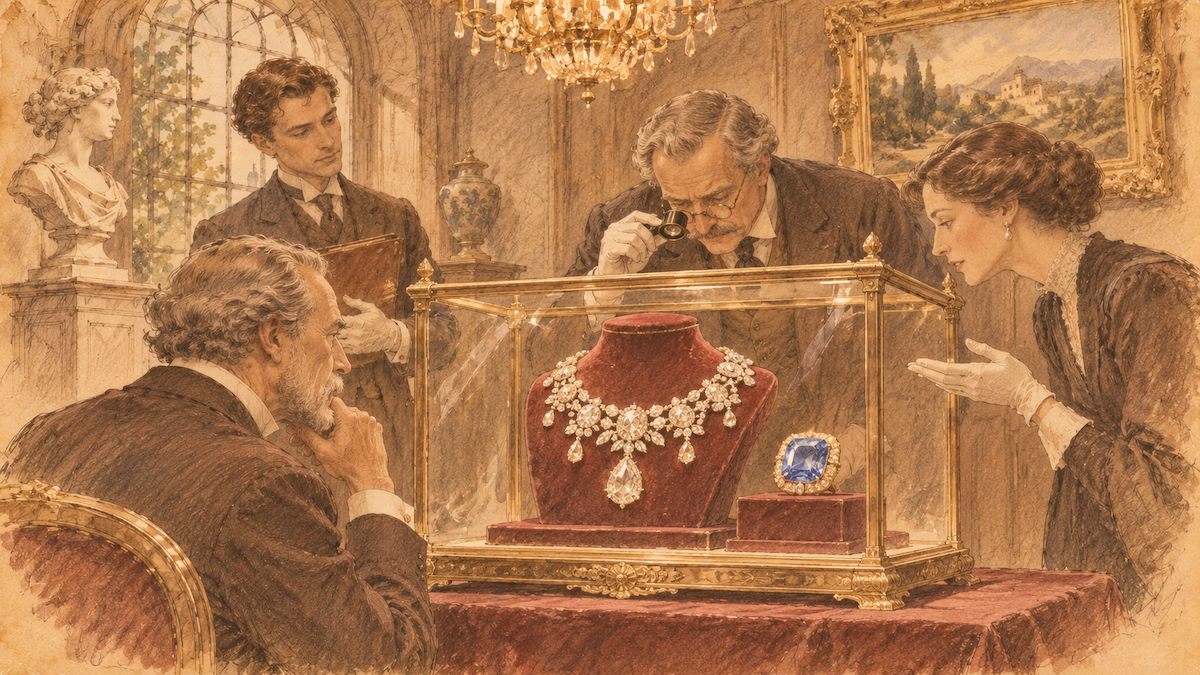

For centuries, the world’s most prestigious auction houses have occupied a unique position at the intersection of wealth, history, culture and investment, providing a marketplace where extraordinary objects change ownership and, occasionally, establish entirely new definitions of value.
Behind the polished auction rooms of London, New York, Paris, Geneva and Hong Kong lies an international industry that connects collectors with everything from paintings created by Renaissance masters to automobiles produced in extraordinarily limited numbers, jewellery once owned by royalty and watches whose provenance makes them considerably more valuable than their original retail prices.
Although spectacular multimillion-dollar transactions have made institutions such as Sotheby’s and Christie’s synonymous with the lifestyles of billionaires and established collectors, the auction market is considerably more accessible than its reputation suggests.
Also Read: How Much Does It Cost to Buy at the World’s Leading Auction Houses?
Many leading houses offer jewellery, prints, decorative objects, vintage watches and other collectibles at prices within the reach of aspiring collectors, while their specialist departments provide opportunities to research provenance, examine condition reports, study historical valuations and acquire objects that may rarely appear through conventional retail channels.

What distinguishes the auction market from traditional luxury retail is the relationship between rarity, provenance, historical significance and competitive demand, rather than the intrinsic value of an object alone. A watch belonging to a celebrated actor can command many times the price of an otherwise comparable model, while a painting with an exceptional ownership history may attract competition from international collectors and museums.
Such transactions demonstrate why auction houses have become important intermediaries in the ownership of cultural and historical assets, even though the prices achieved at auction should never be confused with guaranteed future investment returns.
For collectors in Oman and across the GCC, international auctions also provide access to specialist markets that are not always represented in regional luxury boutiques or galleries, particularly in categories such as vintage horology, historic automobiles, important gemstones, Islamic art and rare manuscripts.
The expansion of online bidding, regional client services and international private-sale networks has made participation increasingly practical, although successful collecting still demands an understanding of auction commissions, authenticity, documentation, shipping regulations and the financial implications of purchasing from overseas.
Nine of the World’s Most Prestigious Auction Houses
1. Sotheby’s

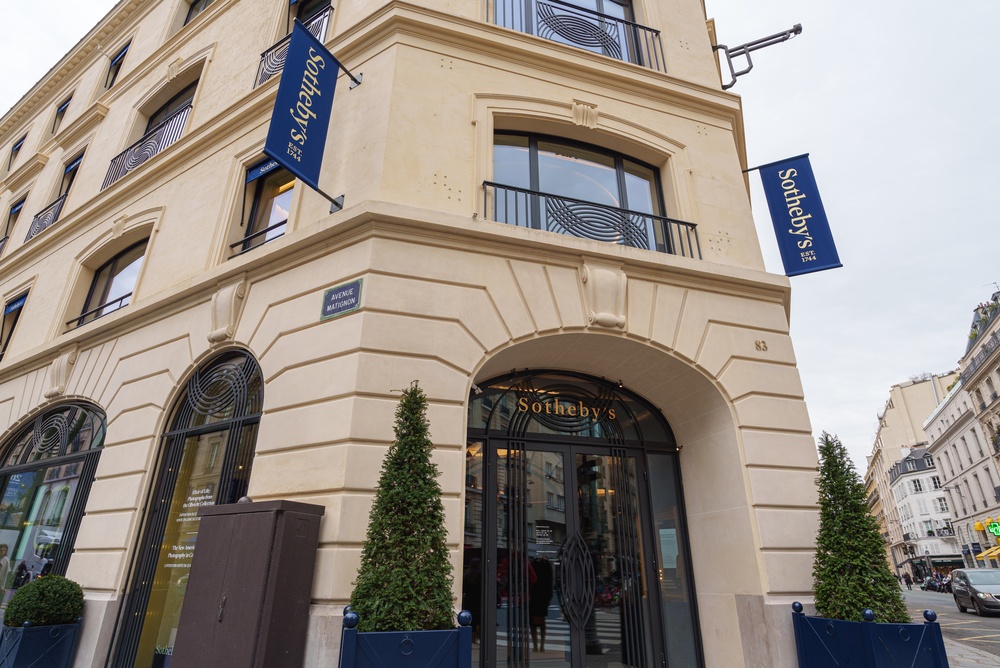
Editorial credit: Alexander Fedosov / Shutterstock.com
Founded: 1744, London, England
Specialities: Fine art, jewellery, watches, rare books, historical manuscripts and important collections.
Among the world’s most recognisable names in the auction industry, Sotheby’s has developed from an eighteenth-century bookselling business into a global marketplace for fine art, luxury objects and historically important collectibles.
Its origins date to 11 March 1744, when Samuel Baker organised an auction of books from the library of Sir John Stanley in London, generating £826 in sales. Over the following centuries, the company expanded through international acquisitions, specialist departments and pioneering auction formats, eventually establishing itself as a destination for collectors seeking objects of exceptional cultural and financial significance.


The remarkable prices achieved through Sotheby’s are illustrated by its November 2025 auction of Gustav Klimt’s Portrait of Elisabeth Lederer, a painting executed between 1914 and 1916 that sold for US$236.4 million (approximately OMR 90.90 million).
Offered from the collection of the late philanthropist Leonard A. Lauder, the work became the most expensive artwork ever sold by Sotheby’s and the second-most expensive painting sold at auction globally, behind Leonardo da Vinci’s Salvator Mundi.
The painting’s significance extended beyond its artistic merit because it had been seized during the Nazi period and was subsequently restituted to the Lederer family after the Second World War, making its provenance an essential part of its historical importance.
Another defining moment in Sotheby’s history occurred in May 2017, when Japanese entrepreneur and art collector Yusaku Maezawa purchased Jean-Michel Basquiat’s 1982 painting Untitled for US$110,487,500 (approximately OMR 42.48 million).
Maezawa publicly identified himself as the purchaser shortly after the sale, providing an unusual glimpse into the identities of buyers operating at the highest levels of the international art market.
For prospective buyers, Sotheby’s offers access to an unusually broad catalogue encompassing museum-quality paintings, rare jewels, important watches, collectible design and objects connected to influential historical personalities.
Its auction platform also includes specialist sales featuring prints, furniture, photographs and other collectibles available at substantially lower prices than its marquee evening auctions. There is no single financial threshold for participating across the entire company, although bidder verification and additional financial requirements may apply to particular sales or high-value purchases.
Notable historical sales:
- Gustav Klimt’s Portrait of Elisabeth Lederer – US$236.4 million (2025).
- Jean-Michel Basquiat’s Untitled – US$110.49 million (2017).
- Rare first printing of the United States Constitution – US$43.2 million (2021).
Official website: www.sothebys.com
2. Christie’s

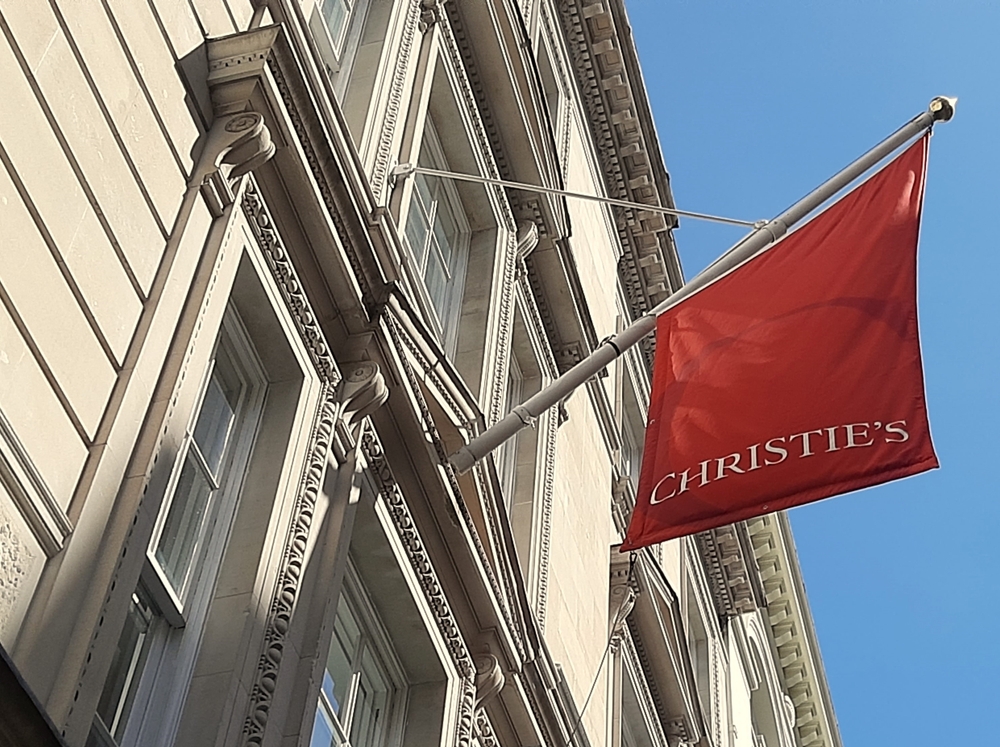
Editorial credit: DJSully / Shutterstock.com
Founded: 1766, London, England
Specialities: Fine art, exceptional jewellery, private collections, rare objects and luxury goods.
Established in London by James Christie in 1766, Christie’s has played a central role in transforming the ownership of art and luxury objects into a sophisticated international market that serves private collectors, museums, royal families and institutional investors.
The company’s reputation rests not simply on its longevity but on its ability to assemble extraordinary collections, attract buyers from different continents and generate market-defining prices for works that may not have been publicly available for generations.
Its operations span more than 80 art and luxury categories, with the company indicating that its auction price points range from approximately US$500 to more than US$100 million.
Perhaps the most extraordinary transaction in the history of the public art market took place at Christie’s New York on 15 November 2017, when Salvator Mundi, a painting attributed to Renaissance master Leonardo da Vinci, sold for US$450,312,500 (approximately OMR 173.14 million).
The sale shattered the previous auction record for an artwork and remains the benchmark against which the world’s most expensive paintings are measured. Although the painting’s attribution, history and subsequent whereabouts have generated considerable debate, the verified auction result established the extraordinary sums that collectors may commit to works associated with the Renaissance’s most celebrated artists.
The identity of the ultimate beneficial owner has been the subject of extensive reporting and should not be presented as conclusively established by the public auction record.
Beyond Renaissance art, Christie’s has consistently demonstrated its ability to create significant markets for twentieth-century artworks, important collections and new collecting categories.


In May 2022, Andy Warhol’s Shot Sage Blue Marilyn sold for US$195.04 million, while the March 2021 auction of Beeple’s digital artwork EVERYDAYS: THE FIRST 5000 DAYS achieved US$69,346,250. The latter transaction was particularly important because it introduced a purely digital NFT-based artwork to a major international auction platform at a price previously associated almost exclusively with established physical masterpieces, although subsequent volatility in digital-asset markets underscores the risks involved in treating technological novelty as enduring financial value.
Christie’s also possesses a distinguished history of selling objects once owned by famous personalities, including the spectacular jewellery collection of Elizabeth Taylor, which achieved US$137,235,575 (approximately OMR 52.77 million) across two auctions held on 13 and 14 December 2011. The opening evening alone generated US$115,932,000, demonstrating the extraordinary influence of celebrity provenance in the international luxury market.
Among the pieces offered were extraordinary examples from Van Cleef & Arpels, many associated with gifts from Richard Burton, demonstrating how celebrity provenance can add another dimension to jewellery valuation. For collectors in Oman and the wider GCC, the company’s long-standing presence in the Middle East is particularly relevant: it established its Dubai headquarters in 2005 and held its inaugural Modern and Contemporary Middle Eastern Art auction in 2006.
Notable historical sales:
- Leonardo da Vinci’s Salvator Mundi – US$450.31 million (2017).
- Andy Warhol’s Shot Sage Blue Marilyn – US$195.04 million (2022).
- Beeple’s EVERYDAYS: THE FIRST 5000 DAYS – US$69.35 million (2021).
- Elizabeth Taylor’s jewellery collection — US$137.24 million in total (2011).
Official website: www.christies.com
3. Phillips

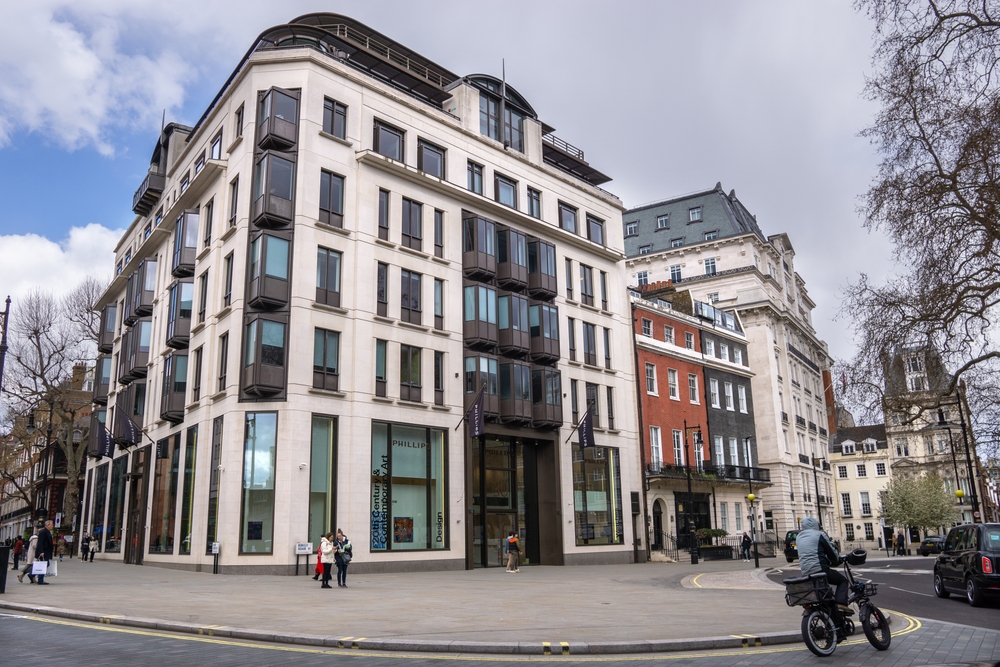
Editorial credit: cktravels.com / Shutterstock.com
Founded: 1796, London, England
Specialities: Collectible watches, contemporary art, design, photographs and jewellery.
While Christie’s and Sotheby’s command considerable attention through record-breaking fine art sales, Phillips has cultivated a distinctive reputation among collectors of twentieth- and twenty-first-century art, innovative design and historically significant timepieces.
Founded by Harry Phillips in Westminster in 1796, the company developed an early association with prestigious collections, including objects linked to Marie Antoinette and Napoleon Bonaparte. Its modern operations place particular emphasis on contemporary collecting, positioning the house as an important destination for those seeking rare watches, significant works of modern design and objects associated with influential cultural figures.
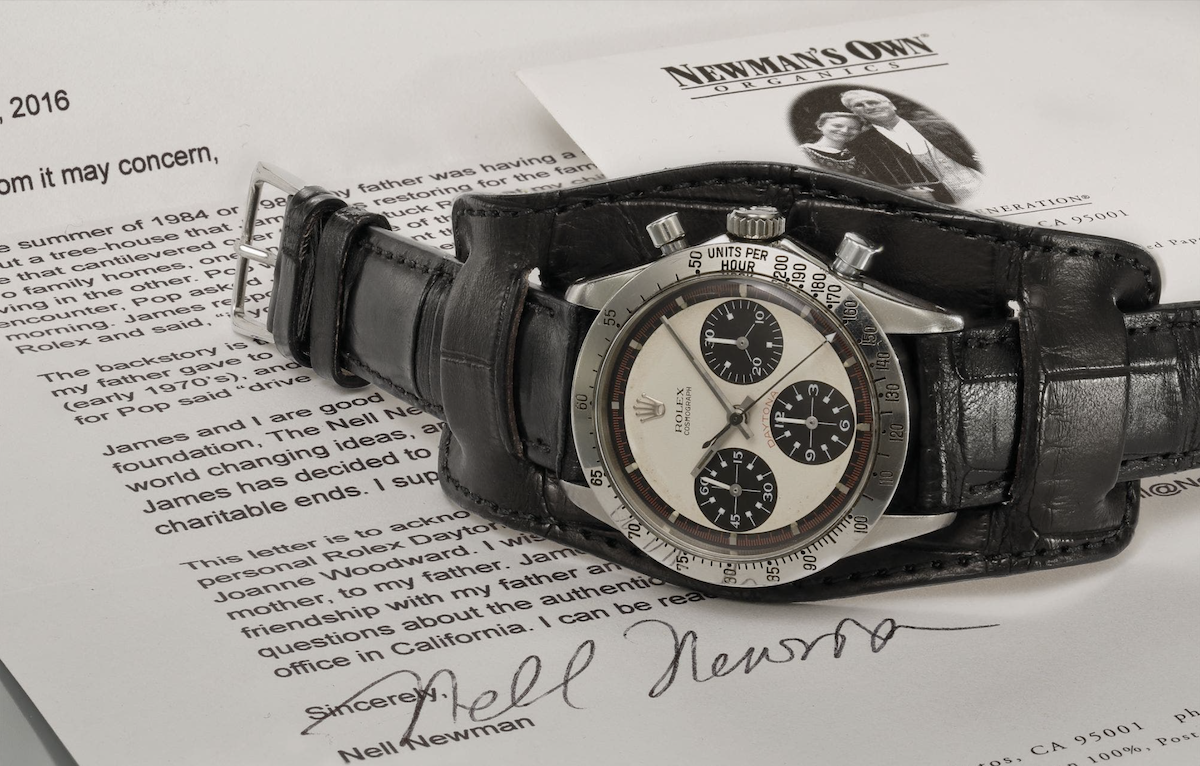

The transaction that transformed Phillips into a particularly significant name in the luxury-watch market occurred on 26 October 2017, when a Rolex Cosmograph Daytona formerly owned by American actor and racing driver Paul Newman sold for US$17,752,500 (approximately OMR 6.83 million).
Offered through Phillips in Association with Bacs & Russo, the stainless-steel reference 6239 was historically important because its ownership by Newman helped establish the celebrated association between the actor and the exotic-dial Daytona models. A twelve-minute bidding contest concluded with a telephone bidder acquiring the watch, illustrating how documented ownership and cultural significance can elevate a mechanical timepiece far beyond conventional valuations based on materials, movement and scarcity alone.
For serious horological afficionados, the relationship between Phillips and watch specialists Aurel Bacs and Livia Russo provides access to specialist research, historical documentation and carefully curated auctions of vintage and modern watches. Its sales frequently attract interest in exceptional Rolex and Patek Philippe references, while other departments provide opportunities to collect photographs, limited-edition prints, furniture and contemporary art.
Although major watch auctions can involve six- or seven-figure bidding, prospective collectors can explore lower-value lots in other categories, with actual participation costs determined by individual catalogue estimates, bidding approval requirements and applicable buyer’s premiums.
Notable historical sale:
- Paul Newman’s Rolex Cosmograph Daytona Reference 6239 – US$17.75 million (2017).
Official website: www.phillips.com
4. Bonhams


Editorial credit: DW labs Incorporated / Shutterstock.com
Founded: 1793, London, England
Specialities: Antiques, specialist art, jewellery, historical objects and collector automobiles.
With an institutional history extending to 1793, Bonhams occupies an important position in the international auction market by combining the prestige of a longstanding British auction business with a wide range of specialist collecting categories.
Whereas the highest-profile sales of Christie’s and Sotheby’s often concentrate attention on exceptional paintings, Bonhams provides opportunities across decorative arts, historic objects, jewellery, motor vehicles and specialised collections. Its breadth makes it particularly relevant to collectors interested in acquiring objects for their historical significance or craftsmanship rather than exclusively pursuing the most expensive items in an established category.


One of the most significant transactions in Bonhams’ automotive history occurred at the Goodwood Festival of Speed on 12 July 2013, when a 1954 Mercedes-Benz W196R Formula One racing car, associated with legendary driver Juan Manuel Fangio, sold for £19,601,500 including premium.
The car’s exceptional value reflected its competition history, engineering significance and direct association with one of motorsport’s most celebrated drivers. At the time, the sale established an auction record for an automobile, illustrating the extraordinary premiums collectors may pay for vehicles with documented racing provenance rather than merely aesthetic or mechanical desirability.
For buyers seeking more accessible entry points, Bonhams’ broad auction calendar offers a different proposition from the exclusivity of invitation-only or flagship evening sales.
Its specialist auctions may include relatively inexpensive automobilia, decorative objects, antiques and other collectibles, with some lots selling for hundreds rather than thousands of pounds. However, buyers must distinguish between the estimate, hammer price and final invoice, while also paying attention to condition descriptions, restoration history and the fact that many auction lots are sold subject to limited warranties or specific sale conditions.
Notable historical sale:
- 1954 Mercedes-Benz W196R Formula One racing car – £19.60 million (2013).
Official website: www.bonhams.com
5. Heritage Auctions

Editorial credit: John Hanson Pye / Shutterstock.com
Founded: 1976, Dallas, United States
Specialities: Rare coins, comic books, sports memorabilia, historical documents, luxury accessories and popular culture.
Unlike the traditional European auction houses whose reputations were established through centuries of selling paintings, antiques and aristocratic collections, Heritage Auctions represents a more contemporary approach to collecting that places considerable emphasis on historical memorabilia, specialist collectibles and objects associated with popular culture.
Established in Dallas in 1976, Heritage has developed into one of the largest collectibles auction businesses in the world, providing access to categories ranging from rare currencies and comic books to sports memorabilia, historical documents, entertainment artefacts, jewellery and luxury accessories.
Its digital platform and extensive auction archives have made it particularly useful for collectors interested in researching past sale prices and identifying historically significant items within relatively specialised markets.
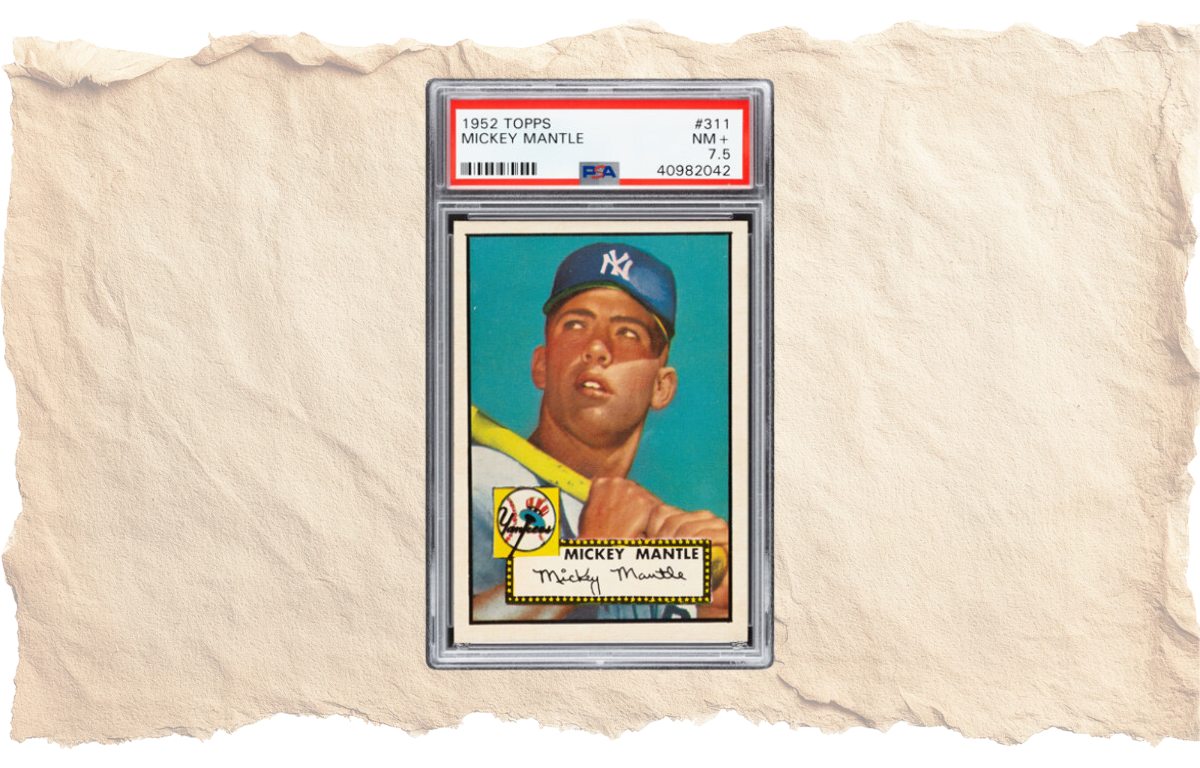
A defining moment in the company’s history occurred on 28 August 2022, when a 1952 Topps baseball card featuring American sporting legend Mickey Mantle sold for US$12.6 million (approximately OMR 4.84 million).
The card, graded Mint+ 9.5 by Sportscard Guaranty Corporation, established an extraordinary benchmark for sports collectibles and demonstrated how scarcity, condition and cultural importance can transform an originally inexpensive mass-produced object into a highly valuable collectible. The transaction also highlighted the emergence of specialist markets in which expert grading and verifiable authenticity are central to establishing an object’s value.
For those looking beyond traditional fine art and luxury watches, Heritage provides an opportunity to pursue collecting interests that may begin with comparatively modest purchases before progressing into rarer and more expensive objects.
Historical coins, vintage photographs, illustrated books and selected memorabilia can offer accessible starting points, although the premiums attached to exceptional specimens may be substantial.
The company’s extensive price archives can provide valuable research material, but prospective buyers must distinguish between completed transactions and asking prices, while recognising that the markets for specialised collectibles can be considerably less liquid than those for widely traded financial assets.
Notable historical sale:
- 1952 Topps Mickey Mantle baseball card – US$12.6 million (2022).
Official website: www.ha.com
6. RM Sotheby’s
Editorial credit: Alexandre Prevot / Shutterstock.com
Specialities: Historic automobiles, important automotive collections, rare Ferraris, classic racing cars and historically significant vehicles.
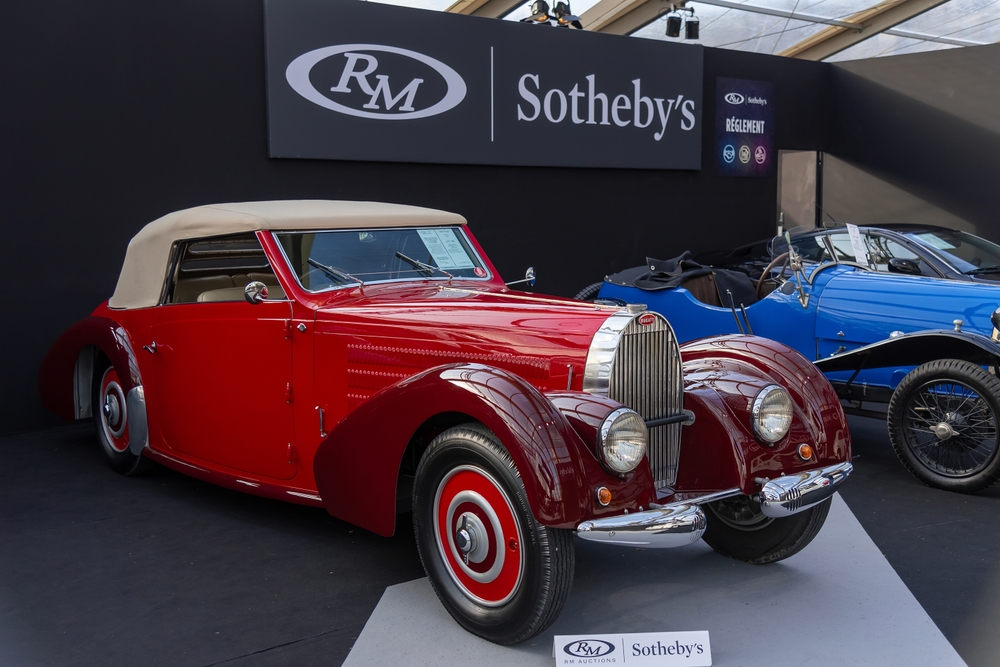
Within the international collector-car market, RM Sotheby’s has established a formidable reputation for handling some of the world’s most desirable automobiles, combining specialist automotive expertise with Sotheby’s international network of collectors and luxury clients.
The business operates in a sector where an individual vehicle’s value can be determined by factors extending far beyond its mechanical specifications, including competition achievements, originality, restoration history, production rarity and the identities of its former owners. For those collectors who regard historically important cars as cultural assets as much as engineering achievements, the company’s auctions provide access to vehicles that are rarely available through conventional dealerships.


The most extraordinary example of this market’s potential came on 5 May 2022, when RM Sotheby’s conducted a special auction at the Mercedes-Benz Museum in Stuttgart that resulted in the sale of a 1955 Mercedes-Benz 300 SLR Uhlenhaut Coupé for €135 million.
One of only two examples produced, the vehicle had remained within the manufacturer’s collection since its creation and was offered to a specially selected audience of collectors. The sale established a record price for an automobile sold at auction, with Mercedes-Benz subsequently directing the proceeds towards an initiative supporting education and research in environmental science and decarbonisation.
Although the €135 million sale represents an exceptional event rather than a conventional collector-car transaction, it demonstrates the considerable importance of provenance, scarcity and manufacturer heritage in determining the value of landmark automobiles.
Most RM Sotheby’s sales operate at substantially lower levels, with prices varying according to vehicle type, rarity and condition. However, participation in major auctions can involve additional bidder approval, financial verification and significant logistical commitments, particularly when a vehicle is purchased internationally and requires specialist transportation, insurance and registration.
Notable historical sale:
- 1955 Mercedes-Benz 300 SLR Uhlenhaut Coupé – €135 million (2022).
Official website: rmsothebys.com
7. Gooding Christie’s

Established: 2003 as Gooding & Company, United States
Specialities: Important Ferraris, Porsches, Bugattis, pre-war automobiles and celebrated automotive collections.
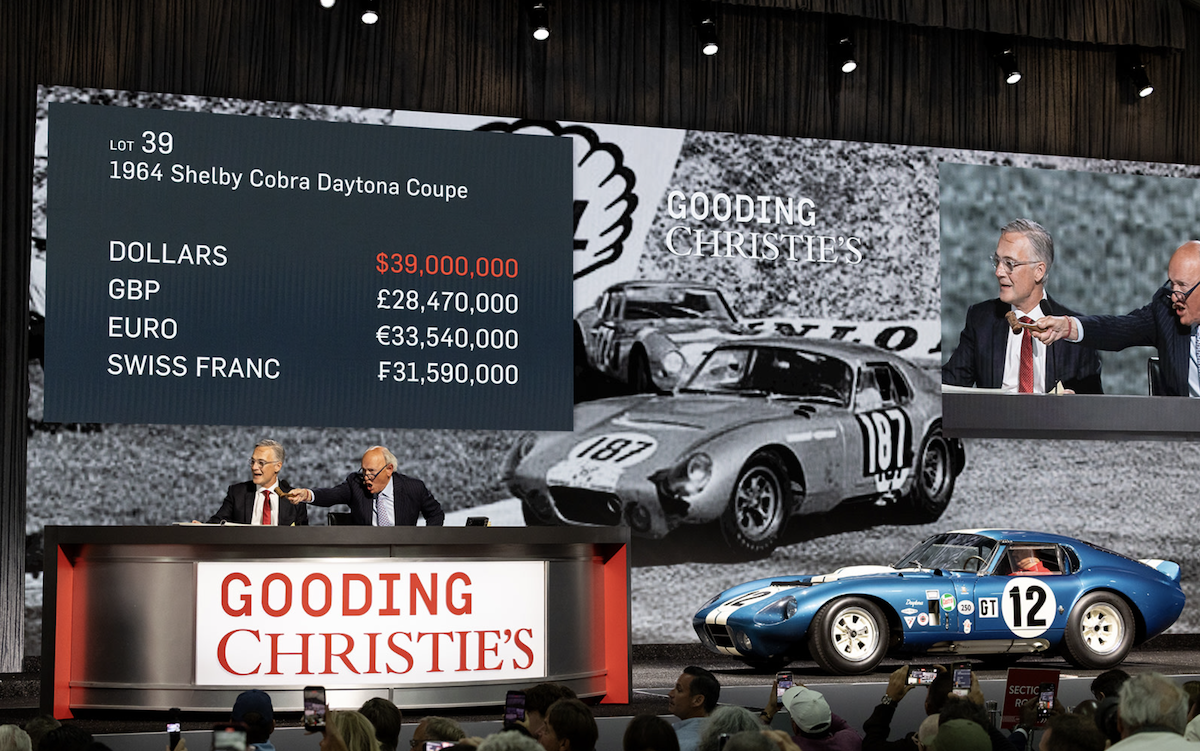
Among the specialist businesses operating at the upper end of the automotive auction market, Gooding Christie’s has developed a reputation for presenting rare automobiles with significant ownership histories, exceptional specifications and considerable historical importance.
Originally established as Gooding & Company in 2003, the business was acquired by Christie’s at the end of 2024 and subsequently adopted the Gooding Christie’s name, creating a closer relationship between the international fine-art auction industry and the luxury automotive market.
Its sales at prestigious automotive events have attracted established collectors seeking cars distinguished by their originality, historical documentation and rarity.
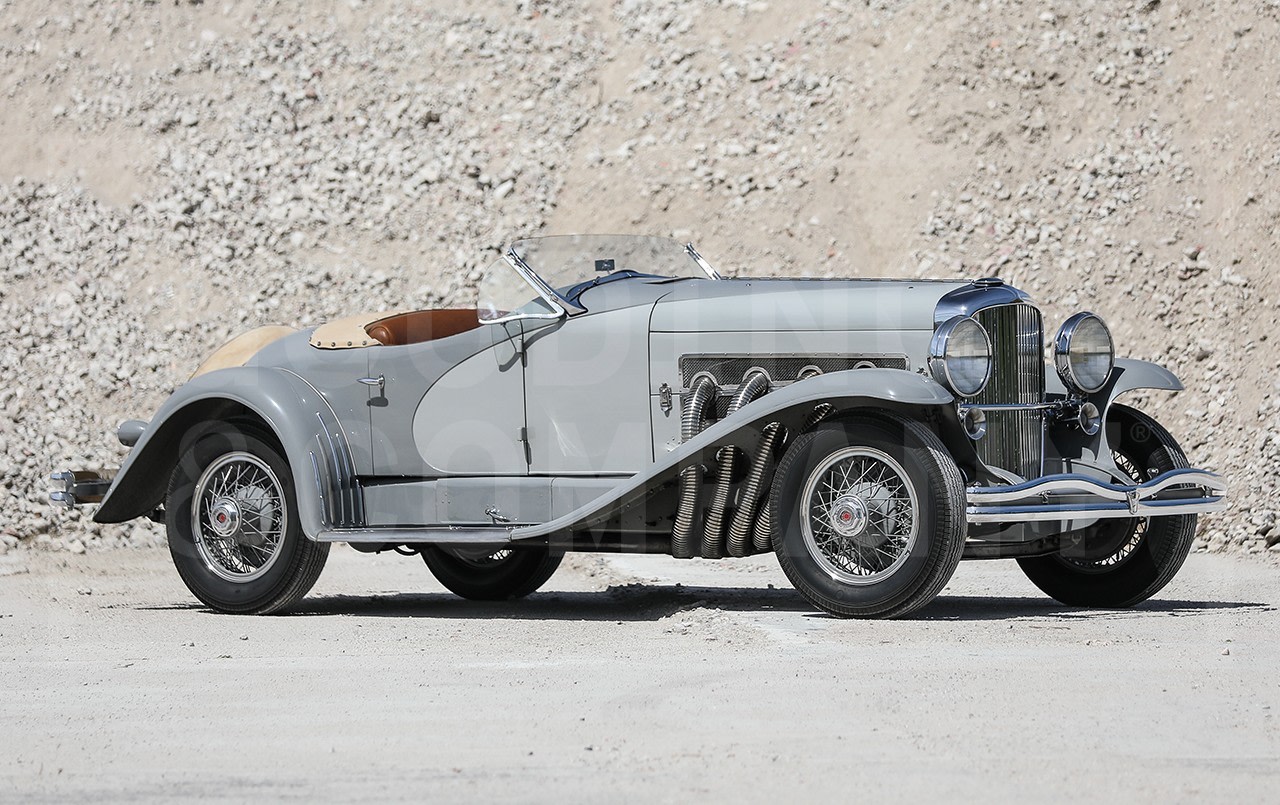

One of the company’s most significant historical transactions occurred during its August 2018 Pebble Beach auction, when a 1935 Duesenberg SSJ formerly owned by Hollywood actor Gary Cooper sold for US$22 million (approximately OMR 8.46 million).
The automobile’s significance rested on the combination of its exceptional engineering, limited production and association with a prominent figure from Hollywood’s golden age. That company auction record was subsequently surpassed in August 2025, when a 1961 Ferrari 250 GT SWB California Spider Competizione achieved US$25,305,000, making it the most valuable car sold by Gooding Christie’s since the business was established.
For discerning automotive collectors, Gooding Christie’s offers the advantages of specialist cataloguing, detailed historical research and access to international collectors interested in investment-grade automobiles. Its services also extend beyond live auctions to private brokerage, appraisals and collection management, which can be particularly relevant to high-net-worth individuals seeking discreet transactions rather than publicly competitive bidding.
Nevertheless, the market for rare vehicles remains sensitive to condition, authenticity, changing collector preferences and the substantial maintenance and preservation costs associated with ownership.
Notable historical sales:
- 1961 Ferrari 250 GT SWB California Spider Competizione – US$25.31 million (2025).
- Gary Cooper’s 1935 Duesenberg SSJ – US$22 million (2018).
Official website: www.goodingco.com
8. Artcurial
Editorial credit: Vernerie Yann / Shutterstock.com
Founded: 2002, Paris, France
Specialities: Modern art, French decorative arts, collector cars, jewellery, watches and twentieth-century design.
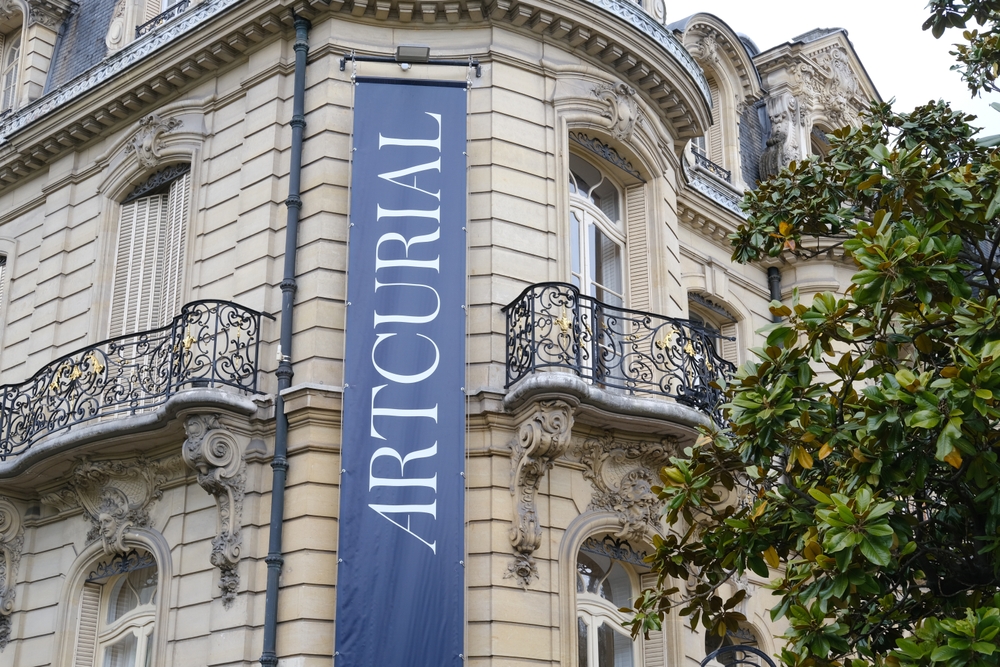
Established in Paris in 2002, Artcurial has emerged as an important alternative to the more established British and American auction houses by building its identity around French collecting traditions, European luxury and a broad range of specialist markets.
Founded by Nicolas Orlowski in association with auctioneers Francis Briest and Hervé Poulain, the business developed during a period of structural change in the French auction industry, subsequently expanding its operations into Monaco, Marrakech and other international markets. Its departments encompass fine art, furniture, decorative objects, watches, jewellery and automobiles, providing collectors with access to categories closely associated with European design and craftsmanship.


Artcurial’s reputation within the historic automobile market was strengthened in February 2016, when a 1957 Ferrari 335 Sport Scaglietti from the collection of renowned French Ferrari collector Pierre Bardinon sold for €32,100,000.
The transaction established a remarkable benchmark for the company and demonstrated the strength of demand for historically significant racing automobiles with well-documented ownership histories.
The sale followed the 2015 auction of the Roger Baillon collection, which included a 1961 Ferrari 250 GT SWB California Spider, formerly owned by French actor Alain Delon, that achieved €16,288,000 after attracting international attention as part of a remarkable collection of long-stored classic vehicles.
In 2022, Jean-Siméon Chardin’s The Basket of Wild Strawberries achieved approximately €24.4 million at Artcurial, establishing a major result within the Old Master market. Although the painting was initially acquired on behalf of the Kimbell Art Museum in the United States, the French authorities subsequently blocked its export by designating it a national treasure.
Following an extensive fundraising effort supported by private donors and major corporate patrons, including LVMH, the painting entered the Louvre’s collection in 2024. The episode illustrates how culturally significant artworks can become the subject of government intervention even after a successful international auction transaction.
Notable historical sales:
- 1957 Ferrari 335 Sport Scaglietti – approximately €32 million (2016).
- Jean-Siméon Chardin’s The Basket of Wild Strawberries – approximately €24.4 million (2022).
- Ferrari 250 GT SWB California Spider from the Roger Baillon collection – €16.4 million (2015).
Official website: www.artcurial.com
9. Dorotheum

Founded: 1707, Vienna, Austria
Specialities: European Old Masters, antiques, jewellery, decorative arts, historical objects and imperial memorabilia.
Few auction institutions possess a history as closely connected to European imperial culture as Dorotheum, which was established in Vienna in 1707 during the reign of Holy Roman Emperor Joseph I.
Founded decades before both Sotheby’s and Christie’s, the business developed alongside the political and cultural institutions of the Habsburg Empire, eventually becoming one of Central Europe’s most important marketplaces for art and historical objects.
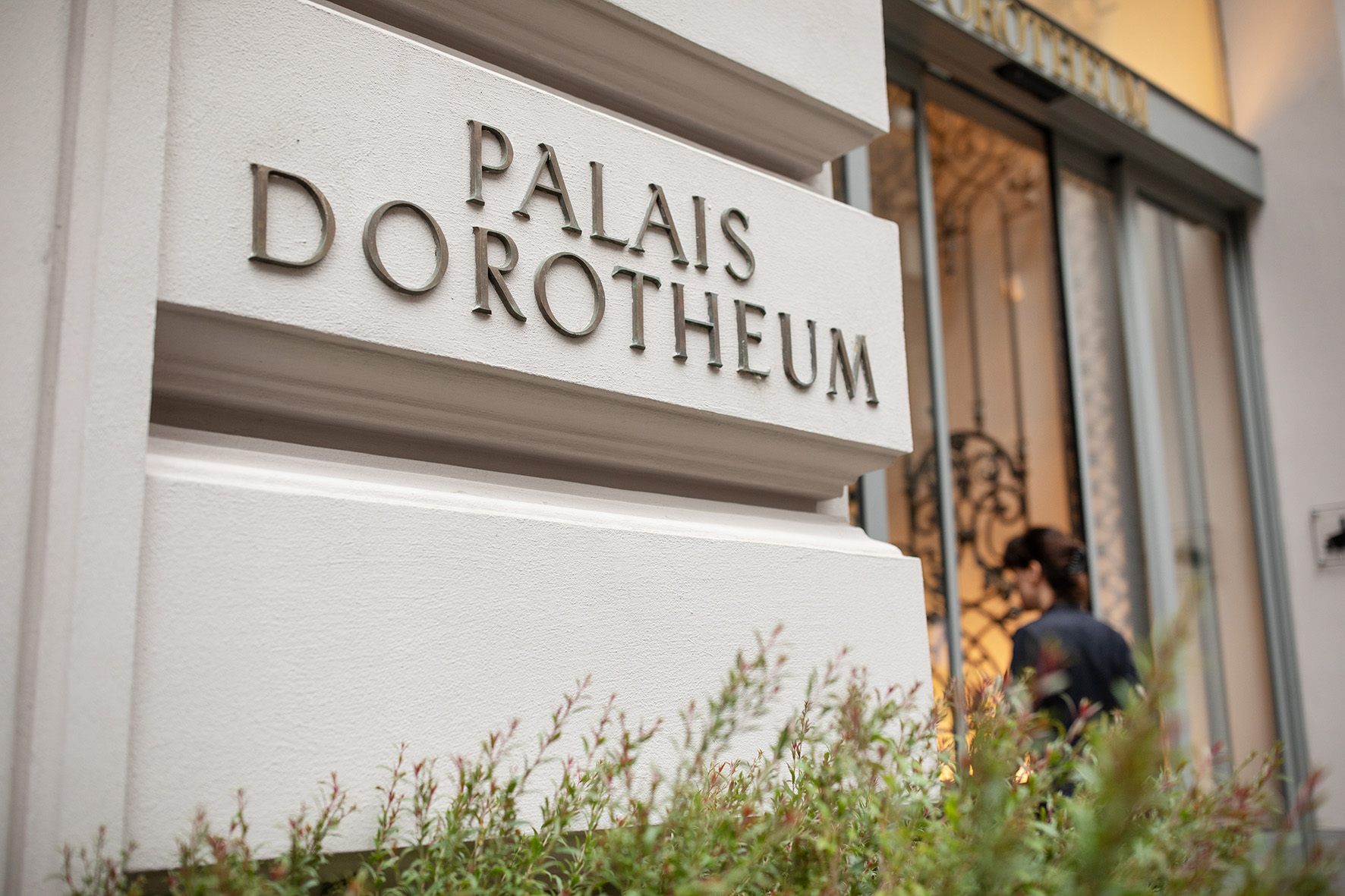
The company’s headquarters in Vienna’s Palais Dorotheum, a building inaugurated in 1901 during the reign of Emperor Franz Joseph I, remains a reminder of the institution’s long association with European artistic and cultural traditions.
Although Dorotheum may be less familiar to collectors primarily focused on the highly publicised auctions of New York and London, the company maintains considerable expertise in Old Master paintings, nineteenth-century European art, decorative objects and historically important collectibles.
Its 2025 auction results included an Egon Schiele work on paper that achieved approximately €3.23 million, while its first-half 2026 sales produced significant results for works by Artemisia Gentileschi, Claude Monet and other established artists.
These transactions demonstrate the house’s ability to attract international demand for historically significant European works without relying exclusively on the extremely high-value marquee auctions that dominate global headlines.
Dorotheum offers the advantage of specialist knowledge developed across more than 300 years of auction activity. Its numerous collecting categories provide opportunities to acquire furniture, jewellery, historical artefacts, prints and other objects across different price levels, potentially making it a useful starting point for buyers developing an interest in European decorative arts.
However, collectors purchasing older objects must pay particular attention to conservation requirements, authenticity, provenance and export documentation before arranging international transportation.
Notable historical sale:
- Egon Schiele work on paper – approximately €3.23 million (2025).
Official website: www.dorotheum.com
The Famous Buyers Who Helped Shape Auction History
While the world’s leading auction houses routinely publicise record-breaking sale prices, the identities of successful bidders are frequently protected through telephone bidding, representatives and private-client arrangements.
This distinction is important because the public announcement of an extraordinary transaction does not necessarily establish who ultimately owns the object, particularly when purchases are conducted through corporate entities, family offices, trusts or professional advisers.
Several significant transactions, however, have involved purchasers whose identities were publicly confirmed, providing a clearer understanding of the individuals and organisations operating within the international collecting market.
Yusaku Maezawa: US$110.49 Million Basquiat Painting


Japanese entrepreneur Yusaku Maezawa purchased Jean-Michel Basquiat’s 1982 painting Untitled through Sotheby’s in 2017 for US$110.49 million. The acquisition became one of the most celebrated examples of a contemporary Asian collector making a record-breaking purchase in the international art market, strengthening Maezawa’s reputation as a prominent collector of modern and contemporary masterpieces.
Ken Griffin: US$43.2 Million US Constitution


Editorial credit: Erlin Diah / Shutterstock.com
American billionaire and Citadel founder Ken Griffin purchased a rare first printing of the United States Constitution at Sotheby’s in November 2021 for US$43.2 million. The transaction attracted considerable attention because it followed an unsuccessful crowdfunding effort by ConstitutionDAO, a group of cryptocurrency enthusiasts who had raised funds to compete for the document. Griffin subsequently arranged for the historically significant document to be displayed publicly, reflecting the role wealthy collectors can play in preserving important cultural artefacts.
Chow Tai Fook: US$71.2 Million Pink Star Diamond
Editorial credit: Sorbis / Shutterstock.com
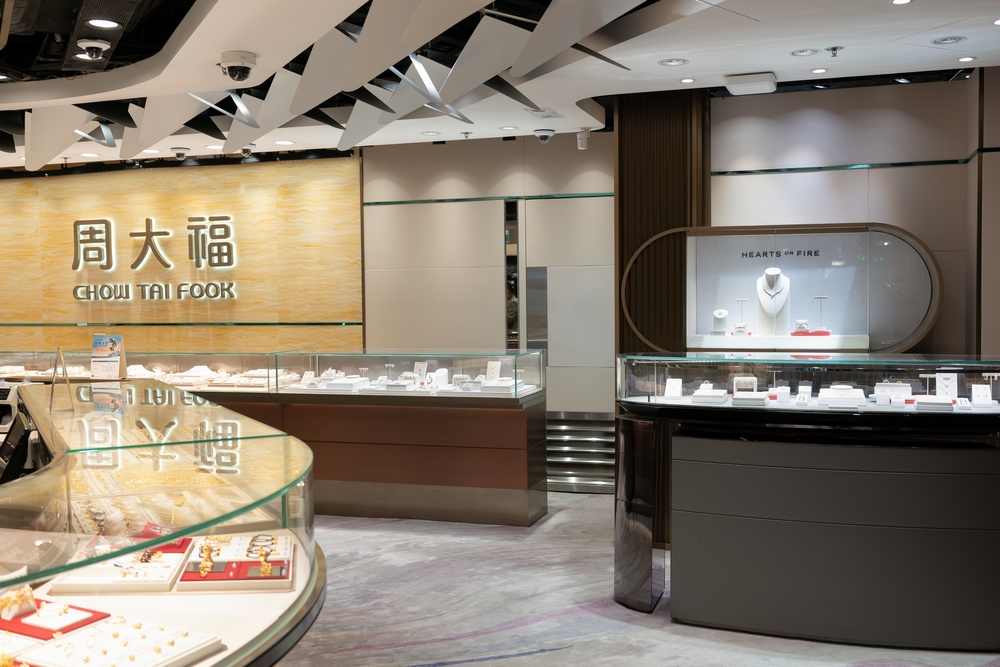
Hong Kong jewellery group Chow Tai Fook acquired the extraordinary 59.60-carat Pink Star diamond at Sotheby’s Hong Kong in April 2017 for approximately US$71.2 million. The sale established a remarkable benchmark for a polished gemstone at auction, illustrating the demand for extraordinarily rare natural diamonds among major jewellery companies and international collectors.
Vignesh Sundaresan: US$69.35 Million Digital Artwork


Singapore-based cryptocurrency investor Vignesh Sundaresan, widely known by the pseudonym Metakovan, emerged as the purchaser of Beeple’s EVERYDAYS: THE FIRST 5000 DAYS following its March 2021 sale at Christie’s for US$69.35 million. The transaction represented an important moment in the brief but highly influential expansion of NFT-based art collecting, although subsequent changes in the digital-asset market highlighted the considerable volatility associated with this emerging category.
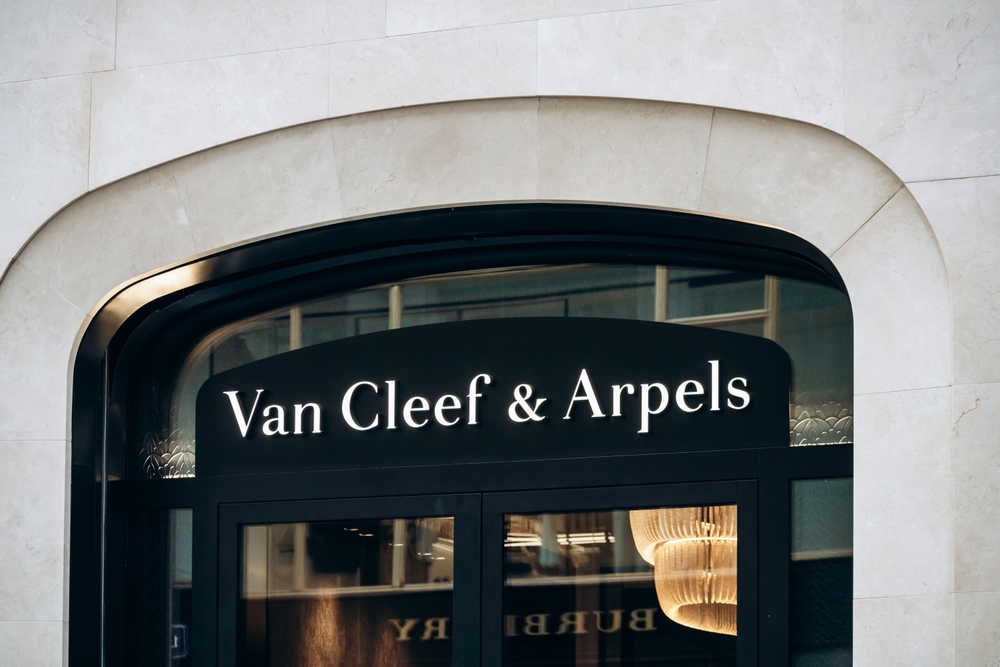
Van Cleef & Arpels: Approximately US$4 Million Historic Necklace
Editorial credit: Andrei Antipov / Shutterstock.com
In 2013, luxury jewellery house Van Cleef & Arpels acquired an important historic Art Deco necklace originally made for Princess Faiza of Egypt at Christie’s for approximately US$4 million. The transaction highlighted the importance of archival preservation and brand heritage within the luxury jewellery industry, where historically significant creations can have considerable value beyond their gemstone content.
Editorial note: Historical auction results generally include the buyer’s premium unless otherwise indicated. USD-to-OMR conversions are rounded using the official exchange-rate peg of US$2.6008 per OMR 1. Historical GBP and EUR prices are retained in their original currencies, while participation requirements, commissions and fees should be reconfirmed with the relevant auction house before purchase.