Investment
EXCLUSIVE: Five Innovations Developed in Oman That Deserve Attention

From turning carbon dioxide into minerals to building local AI capabilities, these five developments show how research and engineering in Oman are addressing practical economic challenges.
Innovation becomes economically meaningful when it solves a problem: reducing emissions, improving construction methods, protecting food and water, or making public services more efficient. The Sultanate of Oman’s contribution to these fields deserves attention, particularly where local companies and researchers have moved from an idea to a working system or a published experimental result.
OERLive’s selection examines five developments with documented milestones between September 2021 and October 2026. It is an editorial shortlist based on evidence, local development and potential economic relevance, rather than an official ranking.
Some projects began earlier; their recent demonstrations, research findings and deployment milestones are identified below.
1. 44.01: Demonstrating that Oman’s rocks can store carbon dioxide


Image Courtesy: 44.01.earth
Oman’s geology has become the setting for a significant carbon-storage experiment. Through Project Chalk, 44.01 and academic collaborators investigated how captured carbon dioxide could be converted into solid carbonate minerals inside peridotite, a rock found in the Samail ophiolite.
A peer-reviewed paper published in Communications Earth & Environment on 26 July 2025 reported that mass-balance calculations indicated approximately 88 per cent of the injected carbon dioxide had mineralised within 45 days. The experiment used carbon dioxide from an ammonia plant in Oman.
The process involves dissolving carbon dioxide in water and injecting it into reactive rock. The chemical reaction binds carbon into minerals, providing a route to durable storage. The Omani advance is the field demonstration in peridotite, developed through collaboration between the company and international researchers.
Its scale must be understood correctly: the experiment described in the paper injected 44 kilograms of carbon dioxide. It established an encouraging result under pilot conditions, while the researchers identified questions around fluid flow and larger injection volumes that require further testing.
For Oman, the potential business opportunity is to combine geology, engineering and carbon-accounting expertise into a storage service. That opportunity depends on demonstrating reliable performance and competitive costs at substantially larger scales.
2. InnoTech: Building with a locally developed concrete printer

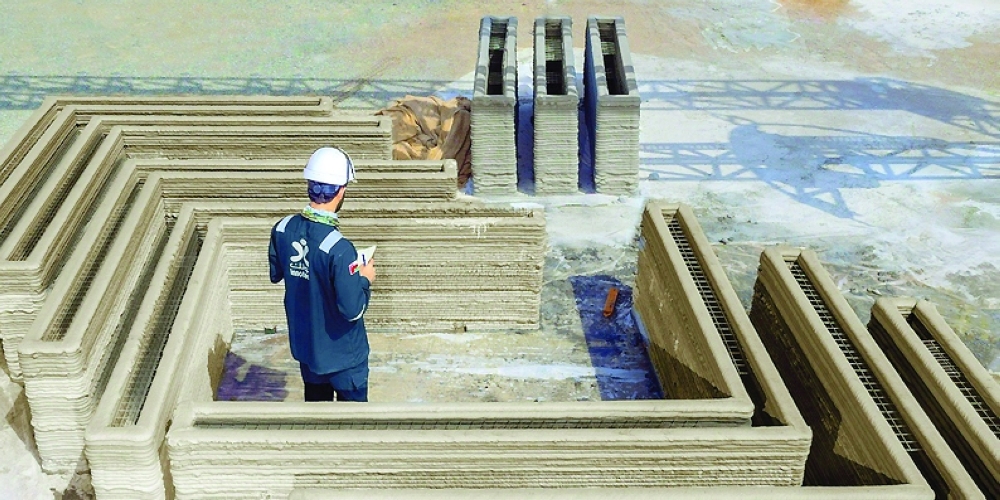
Image Courtesy: Oman News Agency
InnoTech’s contribution to construction innovation lies in developing the equipment and local capability to print concrete structures. The company states that its engineers designed and manufactured a concrete construction printer in 2021.
A tangible milestone followed in November 2022, when completion of a 40-square-metre building for Petroleum Development Oman (PDO) was reported.
InnoTech co-founder Walid Al Saidi described the locally developed printer and the collaboration behind the project, which involved Galfar and NJP Oman. The reported printing time was approximately 55 hours, following preparation of the site and foundations. This was printing time, not the entire construction programme.
It must be said that concrete printing is an established international technology, but the significance here is the development and practical use of an Omani-built system, supported by local materials and engineering work.
The commercial possibility extends beyond an individual building as locally developed printing equipment could support machinery production, materials development, design services and specialist maintenance. Whether it delivers lower overall construction costs will depend on the building type, materials, approvals and finishing requirements; the demonstration alone does not establish a universal cost advantage.
3. RAID: An Omani robot for solar-panel maintenance

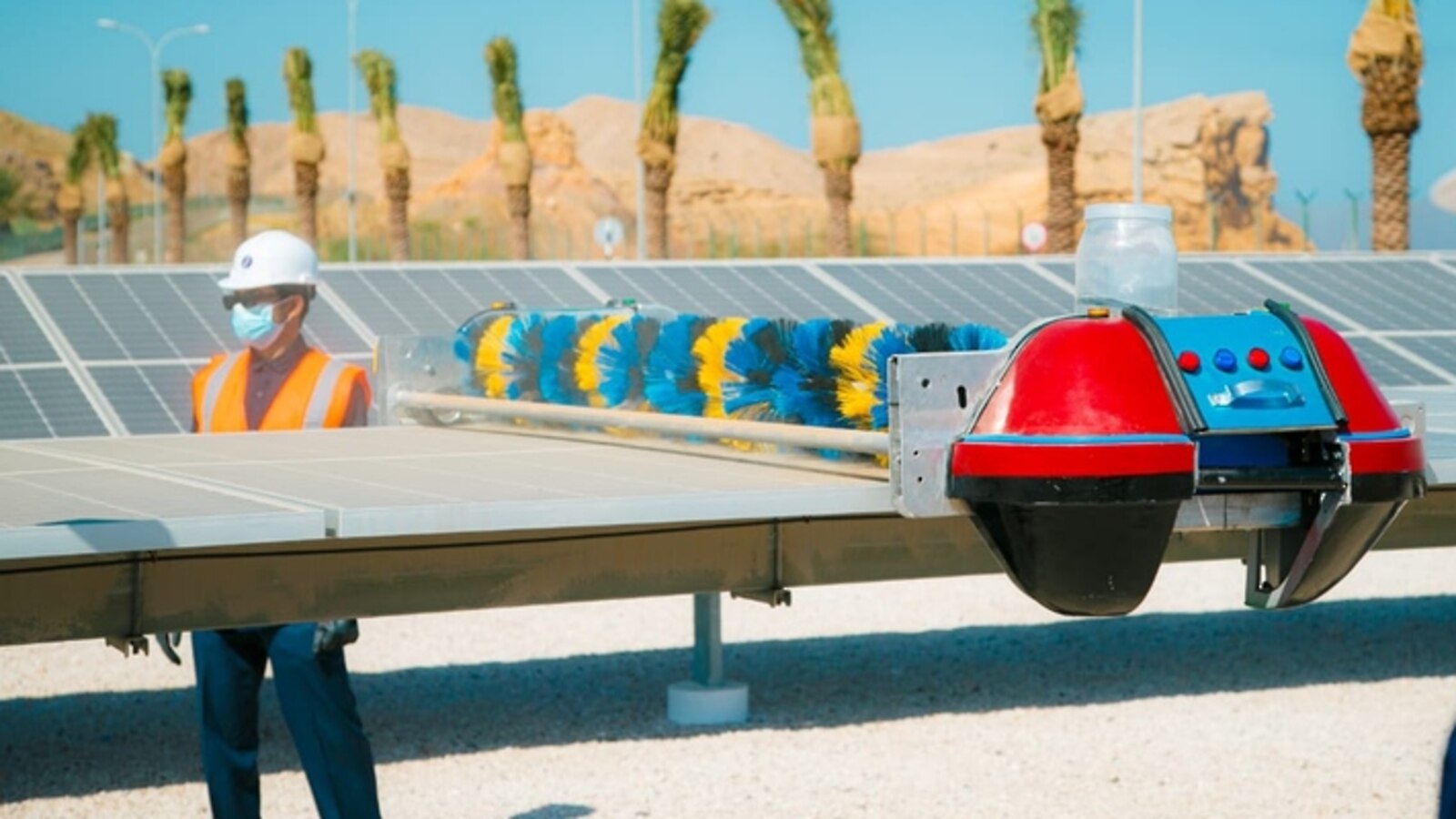
Image Courtesy: Oman News Agency
Solar-energy innovation also involves keeping installed equipment productive. RAID, the Robotics and AI Development company, developed an Omani-made robot to automate solar-panel cleaning, with Petroleum Development Oman providing a field-testing environment.
PDO’s own account confirms that the robot was piloted at its WAHAJ solar project and supported both wet and dry cleaning. The company reported improved energy output and reduced reliance on direct human intervention during cleaning.
An Oman News Agency report carried on 24 July 2024 added that the locally designed and manufactured robot used solar power and sensors, and had been tested cleaning more than 700 panels at PDO. Albeit, these are reported project results; the coverage did not provide an independently audited percentage improvement in electricity production or water savings.
Its business relevance is practical. A locally engineered maintenance robot could create opportunities in equipment manufacture, servicing and solar-plant operations. Field trials also give developers a setting in which to refine the product against operational requirements.
The verified achievement is a working, field-tested cleaning system. Its eventual commercial value will depend on reliability, maintenance costs and performance across different installations.
4. Sultan Qaboos University: A gold-nanoparticle sensor for detecting bacteria

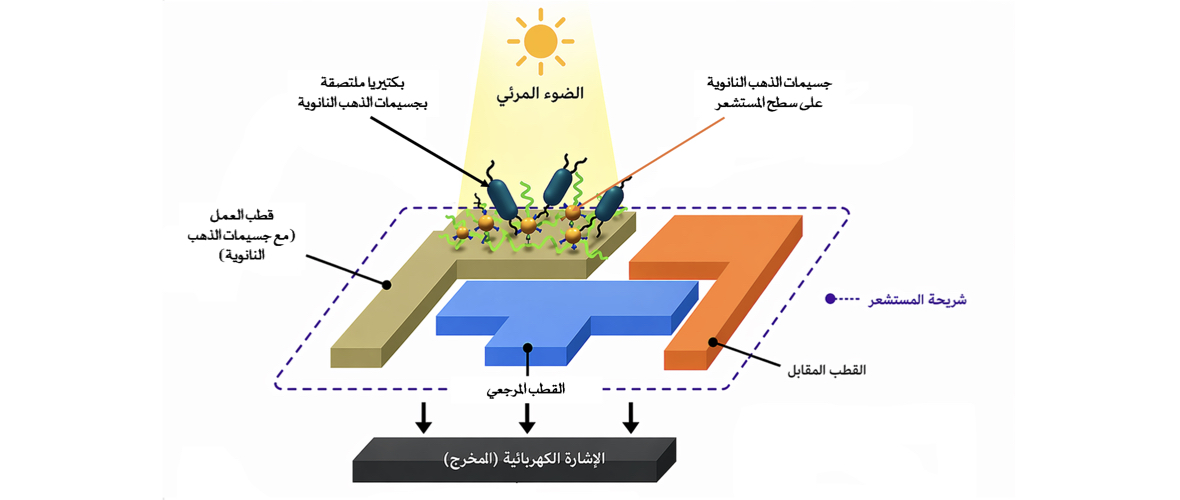
Image Courtesy: Anwaar by Sultan Qaboos University
Researchers at Sultan Qaboos University have developed a sensing approach that could contribute to faster testing of water and food-related contamination.
A study published in Discover Nano on 18 March 2023 described a sensor using gold nanoparticles on an electrode surface. The researchers tested it against Escherichia coli and Exiguobacterium aurantiacum, measuring electrical changes associated with bacterial interaction at the sensing surface.

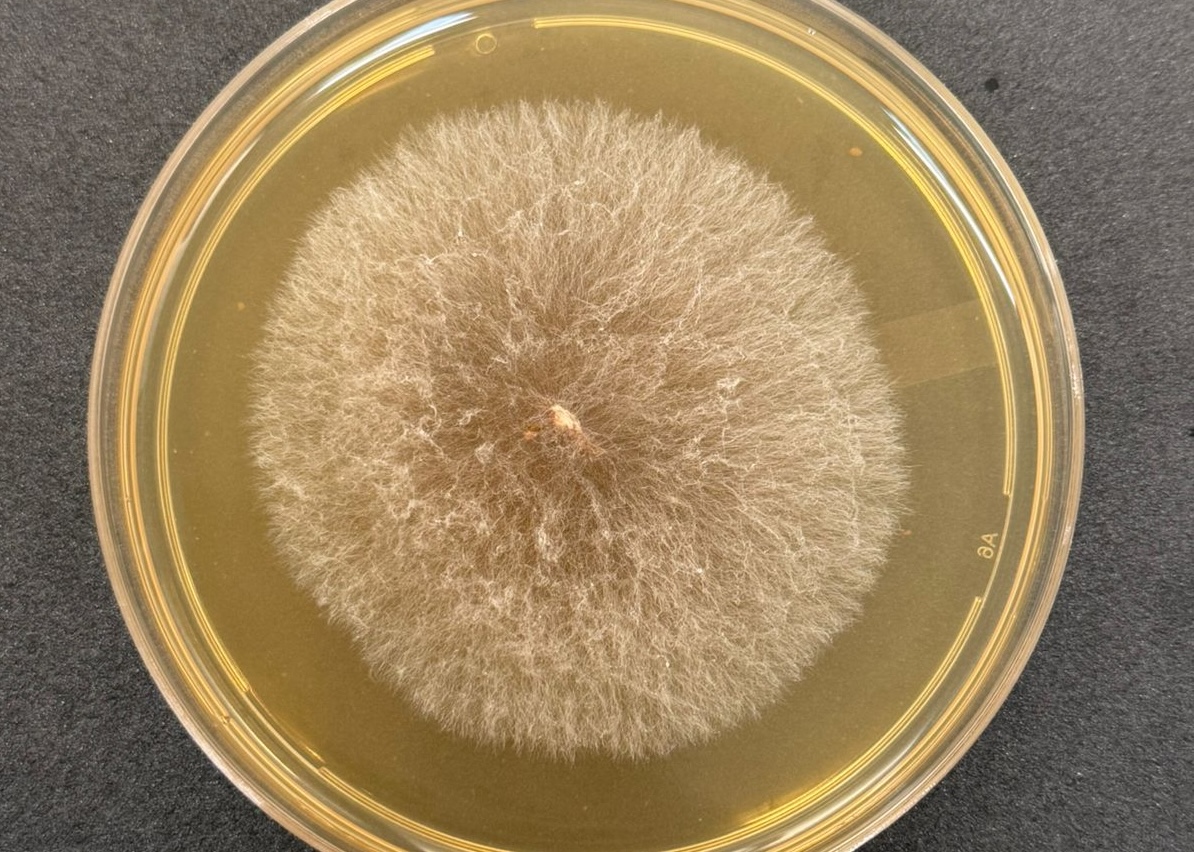
Image Courtesy: Anwaar by Sultan Qaboos University
For E. coli, the better-performing sensor configuration achieved a reported detection limit of 1.07 colony-forming units per millilitre under the study’s laboratory conditions. This measures sensitivity to a low bacterial concentration; it is not a clinical accuracy percentage or proof that the device detects every dangerous organism.
The researchers identified further development, including the addition of recognition elements for more specific detection, as a future step. Separately, SQU announced a US patent in April 2026 for a light-assisted portable pathogen sensor developed by its researchers.
The potential economic application is testing closer to where samples are collected, particularly in food production and environmental monitoring. The published evidence supports a laboratory technology with development potential; it does not establish a widely deployed replacement for accredited laboratory testing.
5. Mu’een (also known as ‘Maeen’ or ‘Mueen’: Developing AI around Oman’s government needs
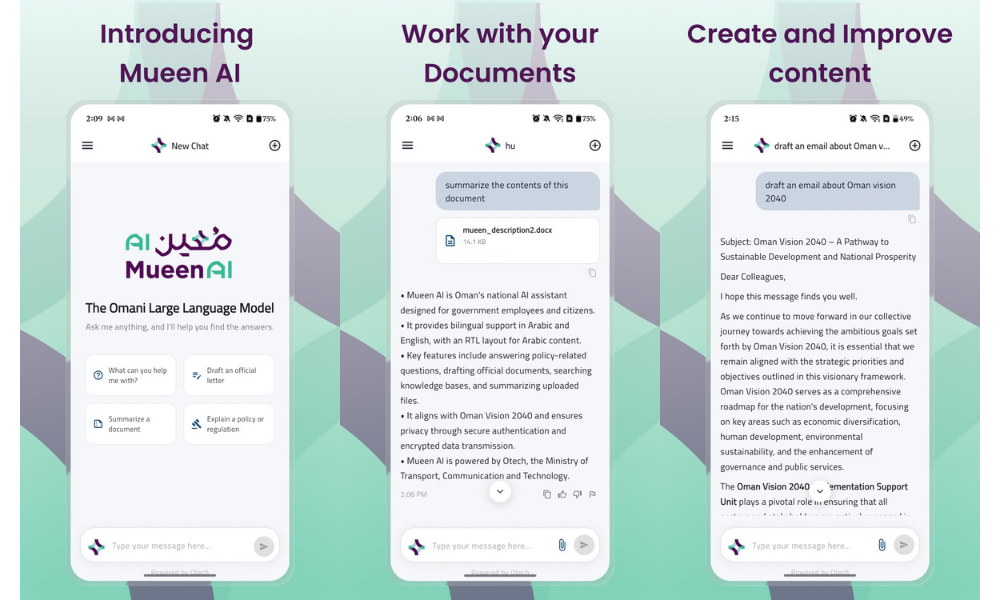

Oman’s Mueen initiative illustrates a different form of innovation: engineering AI for local language, documents and institutional requirements.
The Ministry of Transport, Communications and Information Technology announced the national language-model initiative at COMEX on 8 September 2025. In December that year, the Ministry said the system had been developed and trained on local data to support Arabic-language work, analysis, summarisation and content creation.
By 19 May 2026, the Ministry was reporting practical demonstrations of official correspondence drafting, document translation, report summarisation and information extraction. It also stated that the model and its infrastructure were hosted entirely within Oman, and reported utilisation rates above 50 per cent in 14 government entities. The announcement did not explain the denominator behind that utilisation measure, so it should not be interpreted as a percentage of all government employees.
The verified contribution is local AI engineering and deployment for government workflows. The available official material does not establish that Oman created a new foundational model architecture from scratch, nor does it supply independent benchmarks showing superiority over international models.
Its potential value lies in making AI useful within local institutions while retaining domestic hosting and implementation expertise. Demonstrating sustained productivity gains will require measurement of time saved, output quality and the human review required.
These developments point to several possible sources of future value for Oman: engineering intellectual property, specialist equipment, scientific services and locally developed software.
Their next tests are commercial as well as technical. Repeatable performance, paying customers and credible measurement will determine how far they progress from promising innovation to durable economic contribution.